As regular CFZ-watchers will know, for some time Corinna has been doing a column for Animals & Men and a regular segment on On The Track... particularly about out-of-place birds and rare vagrants. There seem to be more and more bird stories from all over the world hitting the news these days so, to make room for them all - and to give them all equal and worthy coverage - she has set up this new blog to cover all things feathery and Fortean.
Showing posts with label Alabama. Show all posts

Monday, 24 February 2020

About 300 birds killed in Alabama's first sandhill crane season in over a century

by The Associated Press

Saturday, February 15th 2020

MONTGOMERY, Ala. (AP) — About 300 sandhill cranes were killed during Alabama’s first hunting season for the birds in more than a century, the state conservation agency said.

A news release from the state conservation agency said about 400 people bought permits to hunt the large birds, which some people like to eat.

While not everyone with a permit got a bird, migratory game bird coordinator Seth Maddox said the final numbers will probably be in line with other states that have hunting seasons for sandhill cranes.

The state last allowed sandhill crane hunting in 1916 after hunting nearly wiped out the species. A hunting ban allowed the bird’s populations to recover enough to allow a season.


Wednesday, 27 March 2019

Bird watcher spots rare yellow cardinal


By: Natalie Dreier, Cox Media Group National Content Desk
Updated: Mar 20, 2019 - 12:17 PM
THEODORE, Ala. - A rare yellow cardinal once again has been spotted by a bird watcher, this time in Theodore, Alabama.
Karem Maldonado has nine bird feeders scattered about her yard. Normally, Maldonado doesn’t have time to sit and watch the birds who visit, saying she’s “one of those persons who are always go, go, go,” AL.com reported. But for her 6-year-old granddaughter, the go, go, going got to be too much, so she took a break, sitting down for some quality time with the little girl.
The break was well-rewarded when the yellow bird flew up for a snack on Feb. 28. 
But it was March 11 when she got the perfect photo of the male cardinal that she has named Mr. Sunshine, and the photos have started going viral, according to WKRG.
When a yellow cardinal was spotted last year, a biology professor at Auburn University said it was very rare to see the bird with the genetic mutation.
Geoffrey Hill, who is a cardinal expert, has never seen one in wild, calling it a one in a million mutation, AL.com reported.


Wednesday, 14 March 2018

Bird watchers in a twitter over this extremely rare cardinal


February 28, 2018 | 2:11pm | Updated

Bird watchers are flocking to a small Alabama city this week to catch a glimpse of a cardinal with a one-in-a-million genetic mutation that causes its bright red feathers to be a striking shade of yellow.

Alabaster resident Charlie Stephenson first noticed the unusual feathered creature in her backyard bird feeder in late January and posted about it on Facebook.

“I thought ‘well there’s a bird I’ve never seen before,’” said Stephenson, who’s been birdwatching for decades, AL.com reported. “Then I realized it was a cardinal… and it was a yellow cardinal.”

The special bird is still around, stopping by the bird feeder at least once a day, Stephenson said.

Sunday, 17 January 2016

Rare Whooping Cranes follow ultralight over Alabama


Posted: Jan 13, 2016 8:56 PM GST
Updated: Jan 14, 2016 5:52 PM GST
By Ken HareCONNECT

MONTGOMERY, AL (WSFA) -
If you glanced into the Alabama sky Wednesday and thought you saw an ultralight aircraft being followed by five huge birds, it wasn't a mirage. Those birds were Whooping Cranes, one of the nation's most endangered bird species, and they were following what they have been taught to think of as  "mama".

The entourage is part of Operation Migration, a project designed to reintroduce the endangered Whooping Crane to the wild by teaching it to migrate, a learned behavior.

The young birds are taught to recognize keepers and their ultralights as parental figures -- even to the point of being exposed to aircraft motor noises while still in the egg. To keep the birds from imprinting on humans, handlers and pilots wear featureless white suits while with the birds.

The group left the Hayneville area just after daybreak Wednesday morning and reached its next stop in Pike County by midday, covering 51 miles.

Five "whoopers" were following the lead aircraft Wednesday. Six birds are usually in the group, but one was uncooperative Wednesday morning and had to be crated and driven to the next stop. Another ultralight follows the group in case one of the birds grows tired and lands.

The birds leave the Wisconsin training site in late September heading for their ultimate destination -- the St. Marks National Wildlife Refuge in Florida. The trip takes so long because the high winds and poor weather ground the ultralight aircraft on many days.

Continued ...

Wednesday, 23 December 2015

Rare whooping crane migrates to north Alabama


POSTED 2:57 PM, DECEMBER 2, 2015, BY MEGAN BRANTLEY, UPDATED AT 04:06PM, DECEMBER 2, 2015

DECATUR, Ala. – The International Crane Foundation is asking for your help to protect a rare breed of crane that has made its way to north Alabama. The whooping crane has been migrating to our region since 2003, but conservationists say many still don’t know they’re here.
“Whooping cranes are the rarest of the crane species,” said Lizzie Condon of the International Crane Foundation.

There are only 600 of these cranes left in existence, even fewer still in the wild.  “You can find them only in North America. Some of them are in Canada, but most of them are here in the United States,” said Condon.

One of the tallest birds in the world, the cranes stand five feet in height. 


Sunday, 15 June 2014

Ala. wildlife officials tag endangered woodpeckers

Posted: Jun 12, 2014 2:40 PM GDTUpdated: Jun 12, 2014 2:40 PM GDT
By MARTY RONEY
Montgomery Advertiser

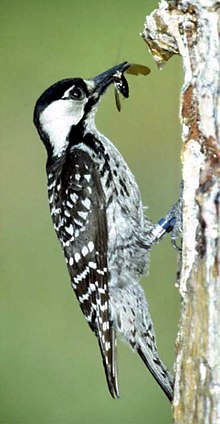
Picoides borealis USMC2005729133853B.jpgLAKE MITCHELL, Ala. (AP) - Eric Spadgenske carefully places a noose of twine inside the cavity of a long-leaf pine and fishes out a rare thing - a red cockaded woodpecker nestling.

He balances atop a narrow, aluminum ladder, some 20 feet above the ground and carefully places the seven-day-old chick in a padded metal coffee can held in a pocket of his orange safety vest. The creak of his leather safety belt signals his attention has returned to the tree to bring out the other nestling.

Spadgenske is state coordinator of the Partners for Fish & Wildlife with the U.S. Fish and Wildlife Service. He made the trip to Chilton County on Monday from his Daphne office to band nestlings at Lake Mitchell. Alabama Power Co. owns some 1,500 acres of red cockaded woodpecker habitat. The bird has been on the endangered species list since 1973, and there are about 200 nesting pairs throughout the state, Spadgenske said.

"The reason they are endangered is they are very habitat specific," Spadgenske said, giving his Woodpecker 101 speech to a small group that has tagged along to watch the banding. The trip included a boat ride and then a hike through steep and rocky terrain to get to the nest tree. "They are the only woodpecker that nests in living trees, and they prefer the long leaf pine.

Wednesday, 12 February 2014

Dismantled cockfighting ring reportedly used birds with knives tied to their legs

ANDALUSIA, Alabama -- Six people were arrested on Sunday and charged with aggravated animal cruelty as Covington County authorities – along with investigators with the Alabama Alcohol Beverage Control Board and the Humane Society of the United States – dismantled a cockfighting ring near the small town of Babbie.

According to the director of animal cruelty policy for the Humane Society, John Goodwin, the individuals were arrested with nine birds, which they were pitting against each other with knives and metal gaffs attached to each bird’s leg. Goodwin said three of the birds were dead when investigators arrived, and one had to be immediately euthanized due to severe injury. The remaining five were rescued and are now at an undisclosed location enjoying “big, open pens,” lots of food and clean water, he said.

According to Goodwin, the injuries the birds receive during a fight are the same as would be delivered during severe abuse.


Monday, 22 October 2012

30 years of bird banding by Alabama couple has changed our understanding of migration


A north wind at his back, the migrating catbird flew over the white capped waves rolling across Mobile Bay and into the dense woods of the Fort Morgan peninsula.
There, in a thicket at the edge of the seaside forest, his journey south across the Gulf of Mexico was temporarily interrupted as he tumbled into a nearly invisible wall of mesh netting.
Wings flapping impotently, the bird thrashed and called out as a pair of humans approached.
“There you go. Ooh, you’re mad. I can see that,” said Bob Sargent, big hands delicately removing the pewter gray bird from the entangling netting and then placing it in a small mesh bag. “Let’s see what we can do about getting you on your way.”
Within minutes, the bird had been weighed, fitted with a tiny metal identification band, given a physical, and then released to continue his southbound journey.
For more than 20 years, Sargent, his wife Martha, and a gypsy caravan’s worth of volunteer bird lovers have gathered in this place to band as many migrating birds as possible each spring and fall. The couple created non-profit Hummer/Bird Study Group to finance their efforts.