As regular CFZ-watchers will know, for some time Corinna has been doing a column for Animals & Men and a regular segment on On The Track... particularly about out-of-place birds and rare vagrants. There seem to be more and more bird stories from all over the world hitting the news these days so, to make room for them all - and to give them all equal and worthy coverage - she has set up this new blog to cover all things feathery and Fortean.
Showing posts with label Isle of Wight. Show all posts

Friday, 3 April 2020

White-Tailed Eagles: ‘Doing Well And Finding Food Independently’ On Isle Of Wight


12th March 2020

Three white-tailed eagles released on the Isle of Wight have survived the winter and are ‘doing well and finding food independently’, according to Forestry England.
EXCLUSIVE:

Six of the rare birds were reintroduced to the Island for the first time in 240 years last summer – three of which have survived and are being ‘closely monitored’.

The news comes after conservationists warned on Tuesday food short shortages and stormy weather caused by climate change, are creating tough conditions for the country’s seabirds and putting many at risk.

As previously reported, Forestry England said it hoped two of the birds released on the Island will breed.

A spokesperson for Forestry England told Isle of Wight Radio:

“The White-tailed eagles released on the Island last summer are closely monitored by the project team. Three are currently on the Isle of Wight and the fourth is still in Oxfordshire. All birds are doing well and finding food independently.

“Throughout the winter we have been providing supplementary food at the release site and so this is available if required by the birds.”

Sunday, 8 December 2019

Rare birds spotted on the Isle of Wight


16th November

Exclusive by Dominic Kureen Reporter
THE Isle of Wight has had the pleasure of some rare visitors this week.
A bevy of black swans were spotted at Newport Harbour and along the River Medina.
Black swans are large, nomadic water birds that breed mainly in Australia.
Notable for their mostly black plumage and red bills, the large birds are not often spotted on the Island.

Wednesday, 11 September 2019

WHITE-TAILED EAGLES RELEASED IN SECRET LOCATION ON THE ISLE OF WIGHT

22nd August 2019 07:45

A pair of white-tailed eagles have been reintroduced to the Isle of Wight this week for the first time in 240 years, with a further 4 eagles to be released today (Thursday).

The huge birds of prey, which can boast a wingspan of up to 8ft, were released in a secret location yesterday (Wednesday) and a further 4 will be let out into the wild this week. It is hoped that a total of 60 birds will be released over the next 5 years at a cost of £250,000.

As previously reported by Island Echo, the Forestry Commission and the Roy Dennis Wildlife Foundation have been working together to reintroduce these animals to the South and, more specifically, the Isle of Wight. The plans were originally announced in October 2018 and a licence was granted in April of this year.

It will take several years for the young birds to become established and breeding is not expected to start until at least 2024. However, over the next month or so the animals will start to disperse across the Island and will become a regular sight thereafter. During this time the birds will be closely monitored using satellite tracking devices and data on the movement of the birds will eventually be made available on the Roy Dennis Wildlife Foundation website.

Sunday, 4 August 2019

The sea eagle has landed – centuries after it disappeared


UK’s largest bird of prey set for release on Isle of Wight later this month

Robin McKieScience editor

Sun 4 Aug 2019 09.00 BST

Sea eagles have returned to the Isle of Wight 239 years after they were last seen there. Six chicks brought from Scotland were taken to the island last month as part of a programme to reintroduce the birds to England’s south coast.

Also known as white-tailed eagles, the birds will be released into the wild in the next few weeks.

Over the next five years 60 young sea eagles – which grow to have a wingspan of up to 2.4 metres (8ft) and are Britain’s largest bird of prey – will be released on the island in a programme approved by Nature England. It is hoped the birds will begin breeding there by 2024.

“Sea eagles were once a common sight in England and southern Europe but were lost centuries ago,” said Roy Dennis, who has pioneered the reintroduction of the birds to Britain. “This project aims to reverse that situation by restoring them to their ancestral nesting places.”

Dennis added that the last pair of sea eagles in England bred on Culver Cliff on the Isle of Wight in 1780.

A spokesperson for Forestry England said the new chicks had been doing well since their arrival and that once their health had been checked they would be released into the wild at several different locations in the next few weeks.

The young eagles will be tagged and monitored by satellite before being allowed to fly off. “We will study how they are doing very carefully before we move on to the next stage of the reintroduction programme,” said the spokesperson.

Friday, 31 May 2019

Rarity finders: Great Spotted Cuckoo on the Isle of Wight


16/05/2019
I'm a keen birder and photographer living in Ventnor, on the south coast of the Isle of Wight, and regularly bird the environs of the village in the hope of bumping into something unusual. On 21 March I decided to take one of my regular walks along the seawall from Ventnor to Bonchurch. It was a dull afternoon so I decided not to take my camera with me, instead opting just for binoculars (something I later regretted). The sea defence wall is backed by chalk cliffs with scrub, including brambles and various interesting plants.
While walking I was aware of a largish bird hopping in and out of a patch of brambles to my left. It was quite close, so gave me a good view through the 'bins', allowing me to note the plumage. With a long tail, spotted upperparts, slight crest and creamy throat fading to white underparts, it was a really striking-looking bird. It stayed for a few minutes, then flew off around the corner to the east.
I didn't stay around but turned back quickly to the car to consult my Collins Bird Guide, which confirmed that I'd seen a Great Spotted Cuckoo. That afternoon I posted the sighting on our local birding website. This brought about a reaction from some local birders who I (mistakenly) failed to tell of my find! Being a relatively novice birder by their standards, I was not at the time aware of the significance of this rarity. I didn't realise that it was the only one in the country at the time − and only the second-ever sighting on the Isle of Wight.
By next morning the word was out. From 6 am onwards there was a flurry of lenses, binoculars and telescopes making their way along the seawall, constituting a mega twitch for the island. Fortunately, the bird was still around and in fact it remained into April, feeding on Brown-tail Moth caterpillars. And in the latter days of its stay, it started moving up the cliff face to feed on the caterpillars of an Isle of Wight speciality − Glanville Fritillary. A change of menu, I guess!

Thursday, 25 April 2019

WATCH: Rare hoopoe bird spotted on Isle of Wight captured on video


18th April
By James Woolven Senior Reporter
A RARE visitor to the Isle of Wight was spotted by bird watchers at Brading.
A hoopoe, which is a rare migratory bird, was seen yesterday (Wednesday) afternoon.
Bird watcher Alan Brown, shared this video with the County Press.
The RSPB says Britain enjoys around 100 individual hoopoes that visit each spring as birds migrating north to Europe from Africa overshoot and land on the south coast of England.
Alan said: "They are a scarce visitor to Britain. We had one at Shanklin last year, but generally go several years between sightings.
"I go birding for hours everyday and it’s only my third in 50 plus years on the Island.
"They are of course more common in the Mediterranean countries.
"These birds are often seen on golf courses, where they feed on their favourite food, leather jacket beetles.
"It was first spotted by the land owner who posted on the Facebook nature group, so obviously I went straight over with a couple of birding mates and that’s when we saw it.
"We are very grateful to the lady land owner."

Monday, 8 April 2019

Isle of Wight sea eagle reintroduction gets green light


Natural England has issued a licence to allow the release of white-tailed eagles on the Isle of Wight.
The issued the following press release
The release is part of a project, led by the Roy Dennis Wildlife Foundation and Forestry England, to establish a breeding population of white-tailed eagles in southern England.
White-tailed eagles became extinct as a breeding species in England in the eighteenth century. Releases over the past 40 years have successfully re-established breeding populations in Scotland and Ireland.
Natural England has very carefully considered all aspects of the licence application. I would like to personally thank the expert working group of local staff and national specialists who have carefully tested the application against our licensing criteria and the IUCN: International Union for Conservation of Nature's Guidelines for Reintroductions and Other Conservation Translocations.
We have paid particular attention to:
the impacts on other wildlife and socio-economic interests, including livestock
the risk of disease transmission
the feasibility of the proposal and likely success
any risk to the donor population
the contribution to the conservation of white-tailed eagles
the adequacy of the applicant’s consultation, the evidence of support and how issues raised will be addressed
the applicant’s experience
the applicant’s monitoring plan
evidence of sufficient finances to support the project
the applicant’s communications plan and exit strategy
We have very thoroughly assessed the potential impacts on protected site features and existing wildlife. We have discounted any adverse impacts through direct predation and disturbance by the eagles or indirectly through increased visitor pressure from ‘eagle tourists’.
We have carefully examined the potential risk of lamb predation. There is no evidence of this becoming a problem where the eagles live alongside lowland sheep farming in Europe. However, we will ensure that the applicant puts in place clear routes to identify and manage any unexpected issues that might arise.
The licence permits the release of up to 60 eagles (12 per year) over the next five years. Young eagles will be sourced under licence from nests in Scotland and raised through to release on the Isle of Wight. The first release is planned for summer 2019.

Friday, 28 December 2018

Bittern breeds on Isle of Wight for the first time


08/12/2018

For the first time, Eurasian Bittern has bred successfully on the Isle of Wight. The species has never been recorded breeding on the island before but this year – which has been the best ever for Eurasian Bittern in Britain – wardens at RSPB Brading Marsh observed regular feeding flight during summer and photos of a possibly fledgling were obtained.
Staff at the reserve heard booming bird during spring for the first time, and the observations noted during summer have led the RSPB to reveal they are confident that birds successfully bred at the newly restored wetland. Keith Ballard, warden of RSPB Brading Marshes said: "Hearing a booming bittern on a wetland reserve is like receiving a Michelin star as a restaurant; it’s one of the highest marks of success we could hope for.
"Eurasian Bitterns have very selective habitat needs, and to attract them you need a truly thriving ecosystem. The work we have done to manage the reserve for insects, fish, reptiles and mammals, as well as birds, now means we have one of the most UK’s most sensitive species choosing to raise its young on the Isle of Wight."

Thursday, 20 December 2018

Plans afoot to reintroduce White-tailed Eagle to the Isle of Wight

30/11/2018

Conservationists are exploring the feasibility of a White-tailed Eagle reintroduction project in the Solent. The Forestry Commission and Roy Dennis Wildlife Foundation, along with other partners, have identified the Isle of Wight as a potential release area due to its position amid rich foraging areas in the Solent, and with a strategic location on the south coast. White-tailed Eagle hasn't bred on the Isle of Wight – or anywhere in England – for almost 150 years, but the species has benefited from successful reintroduction schemes in Scotland and Ireland.
White-tailed Eagles were once widespread along the entirety of the south coast from Cornwall to Kent before being driven to extinction by relentless persecution. Members of the public have been invited to three open meetings in the island so they can find out more about the proposals and these have – according to the foundation – generated significant interest.
The charity is also conducting an online survey to gather opinions on the scheme and Dr Tim Mackrill, who is working on the project, said: "We feel that the Isle of Wight and surrounding area is a perfect place for them because there is high food availability and plenty of nesting sites. There are other far-reaching benefits such as tourism – they have generated £5m for the economy on the Isle of Mull and £2.4m for the Isle of Skye."

If the consultation and feasibility study are successful, the foundation would need to apply for a licence from Natural England. Should one be granted, it's possible the first birds could be released as soon as 2019. Preliminary releases would involve very small numbers, derived from the Scottish populations, at a confidential site over a five-year period. Any tentative population restoration on the island would be part of international efforts to help the eagles, linking populations north of the border and across the Irish Sea, as well as with those in The Netherlands and France

Roy Dennis said: "We believe that the Isle of Wight is highly suitable for White-tailed Eagles. It is the last known breeding site of the species in southern England, the Solent and surrounding estuaries will provide a rich food supply, there are numerous potential nesting sites in woods and cliffs and also good loafing areas for young birds.

"Evidence from The Netherlands, where there is a small but growing population of White-tailed Eagles, indicates that the birds will do very well in this landscape. We are keen to consult the local community, landowners and other stakeholders on the Island to encourage support and involvement in the project, and to identify and resolve any concerns."

Continued  

Monday, 21 May 2018

Bittern booms on Isle of Wight for first time


Hearing the distinctive mating call on a restored wetland shows the site is being successfully managed, the RSPB says.

Last updated: 11 May 2018 - 3.00pm

A bittern has been heard “booming” on the Isle of Wight for the first time, in what conservationists say is a mark of success for a wetland restoration scheme.

The distinctive mating call was heard at RSPB Brading Marshes, a recently restored wetland which stretches from the village of Brading to the sea at Bembridge Harbour on the island.

It is the latest sign of success for the elusive bird, whose numbers fell to just 11 “booming” males in 1997, but is now recovering with the help of intensive conservation efforts.

Bitterns are secretive and spend most of their time living within dense reeds, making them hard to count, but the loud and distinctive booming call of breeding males is used as a measure of the population.

The work we have done to manage the reserve for insects, fish, reptiles and mammals, as well as birds, now means we have one of the most UK’s most sensitive species choosing the Isle of Wight as its home.

Despite their revival, there are still less than 200 bitterns at fewer than 75 sites in the UK, making the first record on the Isle of Wight something “remarkable”, the RSPB said.

It is also a mark of success for the restored marshes, the wildlife charity said, as attracting breeding bitterns is one of the best indicators of successful wetland management.

It is hoped the booming call of the male will manage to attract a mate, and the pair will breed on the reserve – which would be another first for the island.

Keith Ballard, warden of RSPB Brading Marshes, said: “Hearing a booming bittern on a wetland reserve is like receiving a Michelin star as a restaurant; it’s one of the highest marks of success we could hope for.


Thursday, 22 May 2014

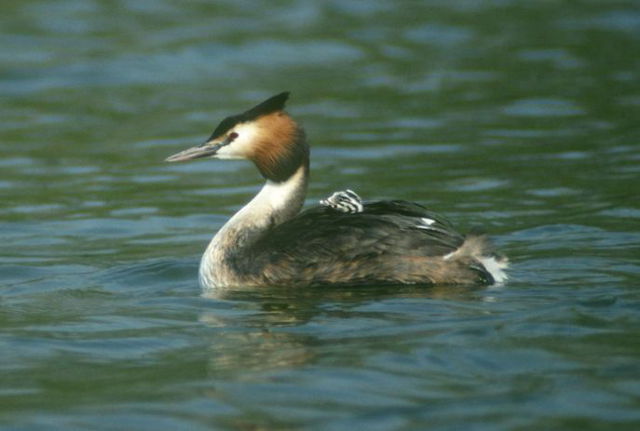
Great crested grebes nest on the Isle of Wight

Water dancing bird pairs up for the first time on RSPB reserve in Brading Marshes.

It is the bird that was almost hunted to extinction and was the inspiration for the founding of the RSPB in 1889. The great crested grebe, which was culled for its feathers to make hats in Victorian times, has started breeding on the Isle of Wight for the first time.

It has been a good year so far for new birds breeding on the Brading Marshes reserve, with Little Egrets and Marsh Harriers also nesting for the first time on the island this year.

Keith Ballard, site manager at Brading Marshes said,

“We recorded great crested grebes a few times this winter, and a couple of weeks ago I noticed there was a pair of them.

“They were doing some courtship and displaying.

“The great crested grebe does an amazing courtship display where they appear to dance on water. It is really spectacular if you can get to see it.

“Last week, one of our volunteers reported that the pair were together and had built a nest.”

Rarely seen on the Isle of Wight

Tuesday, 4 March 2014

STORM CASUALTIES: Storms Cause Dead Birds To Wash Up On Beaches - RSPB

By Matt WhiteTue, 25 February 2014 3:15PM

The recent storms have caused many dead birds to wash up along the Island's coastline, according to the RSPB.

Keith Ballard from the RSPB's Brading Marshes Nature Reserve, said the charity had been conducting its annual beach bird survey, which had led to reports of dead birds on Island beaches.

Most were from the auk family, including guillemots, razorbills and in some cases, puffins.

Keith said:


"This was not unique to the Isle of Wight, dead birds have washed along the entire UK coastline and as far as France.

"The auk family spend most of their time out at sea and they only come inland to breed in the spring.

"Because we've had such a rough period of bad weather, it makes feeding for them very difficult, as they're battling the sea and struggling to find food.

"That can result in quite significant numbers of birds dying, in what's known as a wreck."

Anyone who finds a dead bird should contact the RSPCA.

Saturday, 14 December 2013

Couple forced off farm so it can be flooded for breeding birds, under EU rules

A couple have been told they must leave the 60-acre estate they have farmed for 30 years so it can be flooded to boost rare bird populations, under EU regulations. A couple have been told they must leave the 60-acre estate they have farmed for 30 years so it can be flooded to boost rare bird populations, under EU regulations.
A couple have been forced off the land they have farmed for 30 years and planned to pass on to their sons so it can be flooded for breeding birds under EU laws.

Former Army officer Kenneth Hicks said he and his wife Deidre have been told they must leave the 60-acre estate by Eurocrats who put the “rights of birds above humans”.

Friday, 22 March 2013

Isle of Wight girl Daisy Morris has flying prehistoric beast named after her


A nine-year-old girl has had a prehistoric beast named in her honour after fossilised bones she found turned out to be an undiscovered species.

Daisy Morris from the Isle of Wight stumbled upon the remains on Atherfield beach four years ago.

A scientific paper stated the newly discovered species of pterosaur would be called Vectidraco daisymorrisae.

Fossil expert Martin Simpson said this was an example of how "major discoveries can be made by amateurs".
Vectidraco means 'dragon from the Isle of Wight’, 
and daisymorrisae honours Daisy Morris

Daisy's mum Sian Morris said her daughter had started fossil hunting aged three and came across the blackened "bones sticking out of the sand" in 2009, when she was four years old.

The Morris family, from Whitwell, approached Southampton University's 'Fossil Man' Mr Simpson with Daisy's finds in 2009.

"I knew I was looking at something very special. And I was right," said Mr Simpson.

The fossil turned out to be a new genus and species of small pterosaur; a flying reptile from the Lower Cretaceous period.