As regular CFZ-watchers will know, for some time Corinna has been doing a column for Animals & Men and a regular segment on On The Track... particularly about out-of-place birds and rare vagrants. There seem to be more and more bird stories from all over the world hitting the news these days so, to make room for them all - and to give them all equal and worthy coverage - she has set up this new blog to cover all things feathery and Fortean.
Showing posts with label painted snipe. Show all posts

Friday, 9 January 2015

Endangered bird stands in way of Queensland Premier’s dredge spoil dumping

9:26pm January 9, 2015

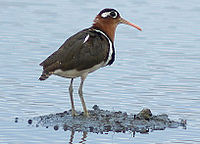
Rostratula benghalensis small.jpgJanuary 09, 2015: Leaked emails reveal that Queensland Premier Campbell Newman’s government has been warned that the giant make-or-break Galillee coal project could harm the endangered painted snipe.

Queensland Premier Campbell Newman is pushing ahead with plans to dump dredge spoil from the Galilee coal mines at Abbot Point in the state’s north, despite the World Wide Fund for Nature warning of the effect it will have on a local endangered bird.

The painted snipe lives on Abbot Point, a bird with fewer than 5000 specimens left.

The World Wide Fund for Nature has said it has warned Federal Environment Minister Greg Hunt that Abbot Point is one of the most important habitats for the species.


Monday, 20 May 2013

Painted Snipe bird declared endangered

By Matthew Crawford 

Tuesday, 14 May 2013 

The Painted Snipe is one of the most threatened birds in Australia. Its numbers are so small, scientists believe there are only 1500 of them left. 


In recognition of this, the Federal Government has officially moved the bird from the vulnerable to the endangered list. 

The bird is nomadic and survives in wetlands. 

BirdLife Australia CEO Paul Sullivan says that wetlands are critical to the species' survival. 

"Over the last fifty years important wetlands have been disappearing from our landscape because of inappropriate water management and development," he said. 

"The population has nose-dived and this crucial listing will help us to protect remaining wetlands and restore important ailing wetlands to their former glory." 

He says there were just eleven Painted Snipe sightings in Australia in a two year period, but 24 sightings of the bird at wetlands near Abbot Point, Bowen, in north east Queensland. The area is the subject of a coal port expansion. 

BirdLife Australia says the proposed expansion of the coal terminal at Abbot Point will cause "significant degradation" of the neighbouring Caley Valley Wetlands. 

The North Queensland Bulk Ports Corporation has prepared an Cumulative Impact Assessment report of Abbot Point. http://www.nqbp.com.au/abbot-point/ 

Chris Purnell, research officer, BirdLife Australia


Saturday, 26 January 2013

Rare birds halt Shell Cove marina project


The appearance of rare birds at the Shell Cove boat harbour construction site has prompted Shellharbour City Council and Australand to delay building a section of a three-metre-high earth noise barrier.

In recent weeks Illawarra bird-watching groups have spotted a number of rare and endangered birds in the Shellharbour Swamp area, including the endangered painted snipe and several migratory birds including Latham's snipe and the pectoral sandpiper.

A council spokeswoman said to accommodate the migratory birds, Shellharbour Council and Australand sought approval from authorities to delay the north-eastern segment of the wall until the threatened species migrated in April, while allowing works to continue some distance away from that section of the bund wall.

This pond area and swamp, once part of the former council rubbish tip site, will eventually be filled in as part of the approved boat harbour development, but will be used as part of the water management process during the early stages of construction.

Michelle Rower, who is a member of the Illawarra Birders and the Illawarra Bird Observers Club, said she was delighted.

The sightings, particularly of the painted snipe, had created a buzz among local bird watchers.

"The Latham's snipe will likely migrate between February and mid-March and the pectoral sandpipers will hang around for another month," Ms Rower said.

"The painted snipe pops up in different places so you don't really know how long it will stay, but hopefully it will be gone by the time they start constructing the wall."