As regular CFZ-watchers will know, for some time Corinna has been doing a column for Animals & Men and a regular segment on On The Track... particularly about out-of-place birds and rare vagrants. There seem to be more and more bird stories from all over the world hitting the news these days so, to make room for them all - and to give them all equal and worthy coverage - she has set up this new blog to cover all things feathery and Fortean.
Showing posts with label Jharkhand. Show all posts

Monday, 14 March 2016

Injured Garuda in Jharkhand reveals threat to the rare bird

 Sanjoy Dey, Hindustan Times, Ranchi
Updated: Mar 08, 2016 15:33 IST
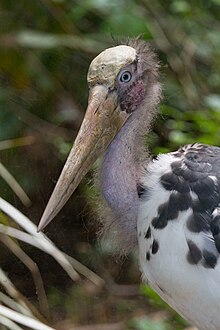
Forest officials have rescued an injured Garuda bird (lesser adjutant stork) from Barkagaon village in Chatra district of Jharkhand, raising fears of poaching of the rare winged species.

“The bird was hit by stones. It’s legs had injuries. We have sent the bird for cure and care to Ranchi zoo,” said Madhukar, divisional forest officer of Chatra South division. Zoo officials received the bird, considered the mount (vahana) of Lord Vishnu in Hindu mythology, on Sunday evening.

The lesser adjutant is placed in the vulnerable category -- the red list for birds -- of the International Union for Conservation of Nature (IUCN). “Weight of the bird is around 10kg and it has a wing span of five feet,” Madhukar said, adding that the bird was rarely sighted in a few water bodies in Jharkhand. “Our team is investigating who injured the bird,” he said.

KK Sharma, in-charge of the Jharkhand-Bihar chapter of the Ornithology Society of India, said the bird became rare in the state because of food shortage and poaching.

“In Jharkhand villages, the bird is poached for two reasons -- meat and superstition. The bird’s beak and bone are kept in houses with a misconception that they bring fortunes,” Sharma said.

“Population of the bird is dwindling rapidly in the world due to habitat loss, anthropogenic pressure, decreasing wetland feeding areas, intensive fishing and increased use of pesticides,” said Satya Prakash, state convener of Bombay Natural History Society (BNHS).


Thursday, 11 February 2016

Birds of 11 rare species found in Jharkhand


Birds of 11 rare species thought to be extinct have been found during a survey of the water bodies in Jharkhand, a state forest department official said.

The water bodies of Jharkhand managed to draw as many as 37,000 migratory birds belonging to 29 species last year, the survey carried out on behalf of the Jharkhand forest department found.

As per the Asian Bird Survey 2015, the bird count around reservoirs and other water bodies, including 25 dams, in the state was 71,134.

“Loud music and other noises near water bodies scare away birds, due to which proper counting can’t take place. The bird survey in the state was completed in February,” the official said.

The survey said most birds visited the Massanjore Dam in Dumka, where the number of winged visitors was put at 9,564, followed by Chandil at 7,896 and Udhav at 7,823 birds. The fourth and fifth spots were claimed by Tilaiya and Patratu dams with 6,460 and 5,821 bird populations respectively.

The bird survey was carried out at the dams of Lotwa, Tilayia, Udhwa, Hatia, Getalsud, Patratu, Kanke, Khandoli, Topchanchi, Maithon, Panchet and Massanjore, apart from Tenughat, Konar, Budha, Gonda, Chandil, Dimna, Sitaram, Kansjore, Tapkara, Malay and dams located inside the Palamu Tiger Reserve.

The survey team also identified a couple of migratory birds from Mongolia, including Bar Headed Geese. The other species of migratory birds included White Necked Stork, Oriental White Ibis and Northern Shoveler.


Monday, 2 February 2015

State’s first bird census busts migration myths

Bokaro: Migration of Siberian birds to dams and water reservoirs in the state during winter has no bearing in reality. The myth was busted in the bird census, being conducted in Jharkhand for the first time ever. The state never served as a home to Siberian birds.

It always hosted migratory birds, which came all the way from central Asian countries like China, Tibet and Mongolia. This apart, some species also came from Kazakhstan and its neighbouring countries. More than six different species of migratory birds are seen hovering over the waterbodies these days.

"The arrival of Siberian cranes in Jharkhand during winter is nothing but a misconception among the people here. It has been found that the migratory birds coming here are largely from central Asian countries," said Satyaprakash, member of the Indian Bird Conservation Network (IBCN). This is the first time since the formation of Jharkhand that a bird census is being conducted to collect data related to migratory and other species of birds found in the state.

This will help take necessary steps related to bird conservation. The survey is named as Asian Water Bird Census (AWBC). Wetland International, a global outfit dedicated to conservation and restoration of wetland, used to conduct the bird survey every year in various countries. - See more at: http://www.nyoooz.com/news/ranchi/states-first-bird-census-busts-migration-myths/47866.html#sthash.Hcg3CQbK.dpuf