As regular CFZ-watchers will know, for some time Corinna has been doing a column for Animals & Men and a regular segment on On The Track... particularly about out-of-place birds and rare vagrants. There seem to be more and more bird stories from all over the world hitting the news these days so, to make room for them all - and to give them all equal and worthy coverage - she has set up this new blog to cover all things feathery and Fortean.
Showing posts with label climate change. Show all posts

Wednesday, 1 July 2020

Warming climate is changing where birds breed


Migratory behavior and winter geography drive differential range shifts of eastern birds in response to recent climate change
Date: May 26, 2020
Source: S.J. & Jessie E. Quinney College of Natural Resources, Utah State University
Spring is in full swing. Trees are leafing out, flowers are blooming, bees are buzzing, and birds are singing. But a recent study published in Proceedings of the National Academy of Sciences found that those birds in your backyard may be changing right along with the climate.
Clark Rushing, Assistant Professor in the Department of Wildland Resources and Ecology Center, Quinney College of Natural Resources at Utah State University, and colleagues at the U.S. Geological Survey wanted to know how climate change has already affected where birds breed. They used data from the Breeding Bird Survey -- one of the oldest and longest citizen-science programs in the world -- to conduct their research. "Thousands of devoted volunteers, cooperators, and a joint U.S.-Canadian wildlife management team have contributed to the success of the surveys for the last 54 years," said Andy Royle, a USGS senior scientists and co-author of the study. "The Breeding Bird Survey is fundamental to our understanding and management of wild bird populations in North America."
The research team combined Breeding Bird Survey data with powerful computer models to discover changes in breeding range for 32 species of birds found in eastern North America. What they found is surprising:
Some birds' ranges are expanding. Birds that both breed and winter in North America are extending their ranges north to take advantage of new, warm places to breed. These birds are also maintaining their southern ranges. These results bring hope that some bird populations, such as Carolina wrens and red-bellied woodpeckers, may be resilient to future climate change.

Thursday, 2 April 2020

American robins now migrate 12 days earlier than in 1994

APRIL 1, 2020


Every spring, American robins migrate north from all over the U.S. and Mexico, flying up to 250 miles a day to reach their breeding grounds in Canada and Alaska. There, they spend the short summer in a mad rush to find a mate, build a nest, raise a family, and fatten up before the long haul back south.

Now climate change is making seasonal rhythms less predictable, and springtime is arriving earlier in many parts of the Arctic. Are robins changing the timing of their migration to keep pace, and if so, how do they know when to migrate? Although many animals are adjusting the timing of their migration, the factors driving these changes in migratory behavior have remained poorly understood.

A new study, published in Environmental Research Letters, concludes that robin migration is kicking off earlier by about five days each decade. The study is also the first to reveal the environmental conditions along the migration route that help the birds keep up with the changing seasons. Lead author Ruth Oliver completed the work while earning her doctorate at Columbia University's Lamont-Doherty Earth Observatory.

At Canada's Slave Lake, a pit stop for migrating birds, researchers have been recording spring migration timing for a quarter century. Their visual surveys and netting censuses revealed that robins have been migrating about five days earlier per decade since 1994.

In order to understand what factors are driving the earlier migration, Oliver and Lamont associate research professor Natalie Boelman, a coauthor on the paper, knew they needed to take a look at the flight paths of individual robins.

Wednesday, 1 April 2020

Nightingales may become increasingly rare as climate change alters their wingspan, study finds

The endangered birds, famous for their whistling crescendos, may struggle to fly from Africa to Europe to breed in the spring

ByPhoebe Southworth31 March 2020 • 5:54pm

Nightingales singing in Berkeley Square could become an increasingly rare sight, as climate change is reducing their wingspan and disrupting their migration patterns, a study has found.

The endangered birds, famous for their whistling crescendos, may struggle to fly from Africa to Europe to breed in the spring because warmer temperatures are making their wings smaller, the research by Spanish zoologists concluded.

A reduced wingspan means the nightingales will need to flap more to stay above ground, tiring them out faster and making their migration route more arduous.

This could potentially lead to fewer attempting the journey or an increased number dying on the way, the study suggests.

The species is already under threat, with their population in the UK falling by 90 per cent in the last 50 years.

Their rare beauty inspired one of John Keats' most famous poems, Ode to a Nightingale, as well as the romantic wartime song A Nightingale Sang in Berkeley Square.

The researchers analysed 20 years worth of data in the study, comparing wing length relative to body size with survival in two populations of nightingales from central Spain.

Friday, 6 March 2020

Prehistoric migration could hint at how birds will handle climate change

New simulations place the seasonal phenomenon around the last ice age.

By Molly GlickFebruary 21, 2020

Avian migration may date back way further than previously predicted. Scientists used to think that birds wouldn’t wing across a perpetually frostbitten Earth, so they set the timeline of the biannual treks at around 20,000 years ago, after the last ice age.

But a new model-based study contradicts that idea and suggests that certain species may have in fact travelled widely amid global glacial conditions. While the findings don’t spell out exactly when birds began their seasonal flights, they could deepen our understanding of the large-scale migration cycles.

Unlike previous migration models, the researchers behind the paper, recently published in Nature Communications, based their simulations on how birds optimize energy on the move. By pairing that info with prehistoric climate and vegetation data, they then simulated travel patterns to and from latitudes with seasonal resource troves over the past 50,000 years. The system even successfully predicted some current species distributions, including the diversity of year-round denizens in the tropics.

Wednesday, 27 November 2019

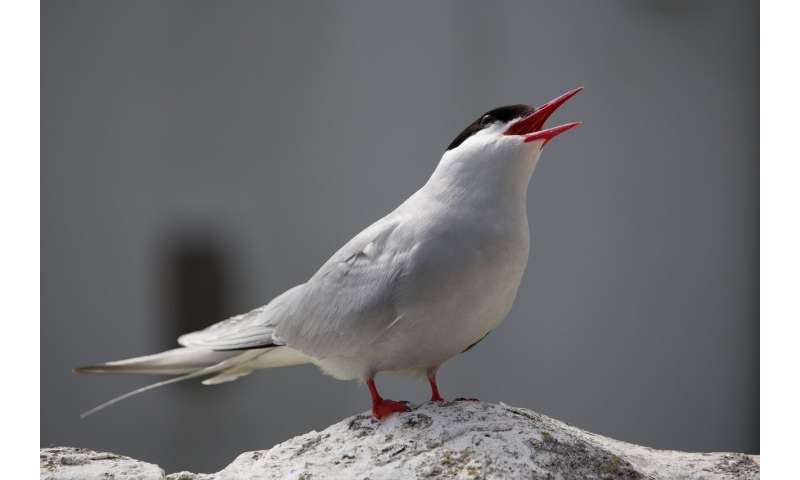
First evidence of the impact of climate change on Arctic Terns

NOVEMBER 19, 2019

Credit: CC0 Public Domain

Data collected from electronic tags retrieved from 47 journeys made by the Farne Island Arctic Terns, has revealed for the first time how climate change might affect their behaviour.

Arctic Terns spend their breeding and non-breeding seasons in polar environments at opposite ends of the world and are our longest-migrating seabird.

Spending their non-breeding season in the Antarctic, the remoteness of this part of the world means that until now we have had a very limited understanding of their behaviour and distribution while they are there.

Analysing the data from 47 migrations over two study years, 2015 and 2017, the team found:
Arctic Terns live on the Antarctic ice for one third of their annual lifecycle.

Analysis of their feathers shows their main food source is krill or similar crustaceans.

There were marked differences in the bird's behaviour and distribution between those tagged in 2015 compared with those tagged in 2017. This coincided with a substantial change in ice conditions, with high ice cover in 2015 followed by unusually warm conditions which led to the break-up of the ice in late 2016 and lower ice cover than normal throughout the following year.

Dr. Chris Redfern, of Newcastle University, UK, who has led the study explained:

"Sea ice is an important habitat for juvenile krill as it provides protection from predators and from the intense light of the Antarctic summer.

"We now know that krill are the main food source for the Terns so it seems likely the warmer weather during 2016/2017 led to reduced krill abundance and so the birds were forced to forage in different areas.

"And in fact, in that second year, the birds converged on the Shackleton Ice Shelf rather than being spread out along the East Antarctica coastline.

Sunday, 13 October 2019

Fairy-wrens change breeding habits to cope with climate change

OCTOBER 11, 2019


Warmer temperatures linked to climate change are having a big impact on the breeding habits of one of Australia's most recognisable bird species, according to researchers at The Australian National University (ANU).

The study looked at the breeding season of superb fairy-wrens living in the Australian National Botanic Gardens in Canberra.

The research was led by Dr. Lei Lv, who is visiting ANU from Sun Yat-sen University in China.

Dr. Lv says warmer temperatures in early spring mean the birds will start breeding earlier than they normally would. If temperatures rise too high in mid-summer, they will also finish breeding earlier.

"Fairy-wrens have a very long breeding season which usually runs from around September through to February," Dr. Lv said.

"The timing varies a lot among individuals and from year-to-year. We wanted to see if this variation was connected to changes in climate.

"It turns out if the minimum night-time temperatures are milder, the birds will start breeding earlier.

Sunday, 6 October 2019

Climate change 'has affected a third of UK bird species'


2 September 2019
Cuckoo numbers are in steep decline across almost half of England because of climate change but buzzards are up, according to a new study.
The British Trust for Ornithology (BTO) has looked at which species are most hit and helped by climate change.
Researchers found weather changes had a long-term effect on about a third of the 68 species studied.
BTO science director James Pearce-Higgins said there were "winners and losers".
Thirteen species have seen a greater than 10% rise in population numbers while three have suffered big drops.
Which birds are suffering and why?
Migratory birds are the biggest losers.
In five of the 11 regions studied, cuckoos, which have seen a population drop of more than 80% in the past 30 years, were the bird with the biggest fall in numbers.
The swift and turtle dove, which are also migratory, had the biggest drops in two areas each.
Cuckoos, which are on the RSPB's red list for conservation, are in the UK between April and June for breeding season.
The birds' journey back to Africa takes them via Italy or Spain, the latter having been hit by droughts brought on by warmer weather, the BTO said.

Thursday, 29 August 2019

Will Climate Change Cause Atlantic Puffins To Starve?


Aug 26, 2019, 10:27am

Priya Shukla Contributor Science

In the 19th century, Atlantic Puffins were nearly hunted to extinction for their meat and eggs. By the early 1900s, less than five breeding pairs were recorded in Maine. But, Steve Kress founded Project Puffin at the Audubon Society in 1973 to help recover the species. After transplanting a few Puffins from a healthy colony in New Foundland onto Eastern Egg Rock Island on the southeastern edge of Maine's Muscongus Bay, Kress' team put Puffin decoys around the island to encourage fledglings to return to the Island after migrating. And, from 1997 - 2011, the number of breeding pairs on Eastern Egg Rock increased from 20 to 123.

Despite these successes, the Puffin colony on Eastern Egg Rock is not yet self-sustaining. Regular human presence is required to maintain the puffin colony and keep predators at bay. Additionally, interns are tasked with recording the fish that the Puffins are catching, as these can be indicators of not only the Puffins' health but also regional climate change.

When record-breaking temperatures of 70°F were reached in 2012 (4°F higher than what was then considered average), the Puffins' preferred prey were in short supply. The herring, haddock and hake ("forage fish") that the Puffins feed their chicks may have perished or found refuge in deeper, cooler water not accessible to the puffins. These species are also sought after by lobster fishers for bait and may have made catching prey especially difficult.

Monday, 26 August 2019

Conflicting consequences of climate change for Arctic nesting geese

AUGUST 22, 2019


Life over the last half-century has been pretty good for populations of Svalbard barnacle geese. A hunting ban implemented in the 1950s in their overwintering area in Scotland has led to explosive population growth, from roughly 2800 birds in 1960 to more than 40,000 birds today.

But what will happen to these birds and others that migrate to Arctic nesting grounds as the climate grows warmer?

A warmer climate in the Arctic might seem beneficial, but shorter winters with earlier springs, as have already been recorded in places like Svalbard, are not necessarily good for birds that migrate there. Birds can arrive too late to match their breeding period with peak availability of their food, just one possible issue raised by climate change. Another problem is that even when the birds can benefit from earlier springs, their predators can benefit from climate change, too.

Now, a team of researchers from Norway and the Netherlands has described just how climate change affected a local Svalbard barnacle geese population. They've found that so far, climate change has been both good and bad for the birds—with a net zero effect.

"When you consider the earlier springs, it's good news, so far," says Kate Layton-Matthews, a Ph.D. candidate at the Norwegian University of Science and Technology's (NTNU) Centre for Biodiversity Dynamics and the first author of the new study. "But the predation part outbalances the benefits from climate change."

Sunday, 21 July 2019

Climate change's 'thermal squeeze' - predators and climate change - hurting our birds


16 Jul, 2019 8:04am
Science Reporter, NZ Herald
Some of New Zealand's most threatened birds are being backed into colder corners of our forests, through a "thermal squeeze" from pest predators and climate change.
Conservation advocates say findings of a just-published study show another reason to ramp up the war on pests, in what is expected to be a horror year for our native biodiversity.
The paper, drawing on bird distribution data captured by the Ornithological Society of New Zealand between 1969 and 1979, and again between 1999 and 2004, explored how a warming climate will heap yet more pressure on threatened species hanging on in our remaining forests.
Researchers had suspected climate change would have been worsening the toll wreaked by predators, regardless of whether it influenced pest-fuelling mast seeding events, like the record one now under way in beech forests across the country.
"We know that two key predators, ship rats and possums, do better in warmer sites," said study lead author, Dr Susan Walker, of Manaaki Whenua – Landcare Research.
"New Zealand's cool forests are mainly beech forests, which support plagues of predators in years following mast seeding, but not otherwise. In contrast, warmer forests at lower elevations support high numbers of predators every year."


Monday, 1 July 2019

Climate change benefits for Giant Petrels


Giant Petrels will be "temporary" winners from the effects of climate change in the Antarctic region, but males and females will benefit in very different ways, a new study shows.
The study, by experts from the University of Exeter and the British Antarctic Survey (BAS), is one the first to analyse how different sexes of the same species could be affected by changing conditions through global warming.
The research shows that Giant Petrels, known colloquially as "stinkers", will benefit from an increased number of warm weather anomalies in the region, while changes to wind patterns across the Antarctic and the southwest Atlantic will also improve their ability to forage at sea.
However, the research reveals that the benefits are different for the male of the species, compared to females.
It shows that the males, as the larger and heavier sex, would benefit more by dominating access to carrion on land and by traveling much less far from the colony when foraging at sea.
Females, on the other hand, are likely to benefit from stronger winds which will help them fly and forage at sea with less effort, and from retreating sea ice increasing the extension of open waters suitable for foraging.
Crucially, however the study also suggests that any increase in longline fishing (and resulting mortality on fishing gear, termed bycatch) could harm their survival.
Few studies have examined how different sexes of a species could be affected by changing conditions, and the researchers say this means the impacts could be underestimated if sex-specific effects are not included.


Sunday, 16 June 2019

Past climate change pushed birds from the northern hemisphere to the tropics


JUNE 10, 2019
Researchers have shown how millions of years of climate change affected the range and habitat of modern birds, suggesting that many groups of tropical birds may be relatively recent arrivals in their equatorial homes.
The researchers, from the Universities of Cambridge and Oxford, applied climateand ecological modelling to illustrate how the distribution of major bird groups is linked to climate change over millions of years. However, while past climate change often occurred slowly enough to allow species to adapt or shift habitats, current rates of climate change may be too fast for many species, putting them at risk of extinction. The results are reported in Proceedings of the National Academy of Sciences.
"Palaeontologists have documented long-term links between climate and the geographic distributions of major bird groups, but the computer models needed to quantify this link had not been applied to this question until now," said Dr. Daniel Field from Cambridge's Department of Earth Sciences, the paper's co-lead author.
For the current study, the researchers looked at ten bird groups currently limited to the tropics, predominantly in areas that were once part of the ancient supercontinent of Gondwana (Africa, South America and Australasia). However, early fossil representatives of each of these groups have been found on northern continents, well outside their current ranges.

Monday, 10 June 2019

CLIMATE CHANGE IS KILLING TUFTED PUFFINS, RESEARCHERS SAY


A new study says thousands of tufted puffins are dying because of climate change.
Posted: May 29, 2019 12:00 PM
Updated: May 29, 2019 3:15 PM
A new study says thousands of tufted puffins are dying because of climate change.
Published at: 2:39 PM, Thu May 30 2019
Tufted puffins, those adorable black and white birds with big orange beaks, experienced an unusual die-off in the Bering Sea in late 2016 through early 2017. Massive mortality events like this seem to be increasing, likely because of climate change, according to a new study running in PLOS ONE.
Researchers found over 350 carcasses on St. Paul Island in the Bering Sea, Alaska, between October 2016 and January 2017. They estimate anywhere from 3,150 to 8,800 birds died in that time period.
There was no oil spill, nor was there any other dramatic catastrophic event. Scientists think the birds died because they were starving. The adult bird bodies scientists found were severely emaciated. While there were some strong winter storms that kept the birds from foraging toward the end of the time period, they think there is a bigger factor that was keeping the birds from eating -- climate change.
That's because the puffins that live in the area typically dine on fish, but climate change has significantly disrupted the food chain. The fish eat zooplankton, but climate change has warmed the water in the area up so much that the zooplankton and the fish have started to disappear. The seasonal ice cover in the area has also started to melt, eliminating other potential food sources for the birds. Many of the dead birds were molting, meaning they were regrowing their feathers. When a bird goes through this process, it takes a lot of energy and often cannot fly as far, or fly at all, making it even harder for them to get to food.
There have been mass die-offs of the birds before, in 1983 and 1997, that were linked to climate-related food issues, but climate change will likely accelerate these die-offs. Scientists who observed these die-offs will continue to monitor this bird population.
The ocean has been warming a lot faster than scientists originally thought, according to previous research. Unless the birds can move or adapt, puffins in the area may be in grave danger. Tufted puffins at a neighboring island did not see the same die off according to the study. But with the further predicted warming of the water, the increasing prevalence of harmful algae blooms and increasing light levels that will continue to shrink sea ice, climate change could significantly stress birds in this area.


Sunday, 9 June 2019

How climate change could affect some of West Africa's iconic bird species


MAY 28, 2019
by Benedictus Freeman, The Conversation
If scientists know how particular species are responding to the realities of global climate change, they can help to recommend better conservation strategies.
But information about climate change response and adaptation is either limited or not available for many tropical bird species. This is a glaring oversight: particularly for range restricted tropical birds—that is, species with narrow ranges that occur only in a particular place or habitat. Scientists have shown that range restricted tropical birds are extremely vulnerable to global climate change, owing to their specialized habitat requirements. These species include a number of West African birds which occupy the region's tropical forests.
Like most regions on the continent, future climate change projections for West Africa suggest there's a high chance of temperature increases. But they're more equivocal with rainfall: different projections indicate significant increases or decreases in future rainfall, with little consensus among models.
My colleagues and I wanted to address the gap in knowledge about what's needed to protect West African species from the effects of changes in climate.


Thursday, 30 May 2019

As the climate changes, migratory birds are losing their way


By ADAM WERNICK • MAY 16, 2019
Every spring and fall, a journey of thousands of miles begins, as migrating birds find their way between breeding and overwintering grounds.
It’s an amazing phenomenon that naturalist Kenn Kaufman brings to life in his new book, "A Season on the Wind: Inside the World of Spring Migration." Kaufman is also the author of the "Kaufman Field Guide" series and is a contributing field editor with the Audubon Society.
Bird migration is largely invisible to most people because it happens primarily at night, Kaufman says. But if you go outside at dawn near a spot where migrating birds congregate — like along the coast of Lake Erie in Northern Ohio, where he lives — you will see something extraordinary.


Sunday, 21 April 2019

Birding: Despite climate change, one habitat critical for breeding birds is mostly intact


Posted April 14
We need to preserve the North American Boreal Forest.
BY HERB WILSON

Earth Day, which is a week from Monday, serves as a reminder to all of us to redouble our efforts at minimizing our impacts on this globe and do what we can to help the millions of species with which we share this Earth.
Climate change represents one of the most dramatic changes our world is experiencing. The timing of various biological and meteorological events attests to our altered climate. Ice-out on our lakes is earlier now, as is the first appearance of leaves on many of our trees, the first flowers of many plants, the first singing of spring peepers, and the spring-time arrival of migratory breeding birds.
We are also seeing the northward expansion of the ranges of many mobile species. Turkey vultures, red-bellied woodpeckers, tufted titmice and Carolina wrens are all well established in Maine now but were rarities 40 years ago.
Climate change, habitat fragmentation and pollution collectively challenge the survival and successful reproduction of many birds. Birdlife International finds that 1,469 of the roughly 10,000 bird species are in danger of extinction. That’s one of every seven species.


Wednesday, 17 April 2019

Climate change threatens endangered sparrows

Date: April 16, 2019
Source: Oxford University Press USA

A new study in The Condor: Ornithological Applications finds that some sparrow species will go extinct within the century due to climate change.

Seaside (Ammospiza maritima) and saltmarsh (A. caudacuta) sparrows are closely related species and among only five bird species that are almost completely restricted to coastal salt marshes for their entire life. These sparrows' nests are predominantly destroyed by predators or flooding.

Salt marshes are globally limited to about 30,000 square miles (45,000 square km), with one-third of the total on North American coasts. Of the 25 species or subspecies limited to tidal wetlands worldwide, 15 are restricted to the US Atlantic and Gulf coasts. Given rapid climate changes and other threats to salt marsh ecosystems, many of these species are in serious danger.

The global breeding range of the saltmarsh sparrow extends from Virginia to Maine, with a population estimate of 60,000 birds. Sea-level rise can negatively impact breeding seaside and saltmarsh sparrows by reducing the amount of available habitat, and by increasing nest flooding rates. Furthermore, the high human population densities of Mid-Atlantic states also make it difficult for sparrows to thrive in the region.

Friday, 29 March 2019

Climate change is hurting migrating waterbirds across the West. It could get worse


MARCH 18, 2019 10:54 AM,
UPDATED MARCH 18, 2019 03:19 PM
A rainbow greets geese on the Pacific Flyway in the Sacramento Valley
A beautiful morning in a Sacramento rice field is complete with a rainbow and an active grind of geese. The big Pacific Flyway migration is underway in the Sacramento Valley, with millions of birds expected in the coming months. 
By Jim Morris
A beautiful morning in a Sacramento rice field is complete with a rainbow and an active grind of geese. The big Pacific Flyway migration is underway in the Sacramento Valley, with millions of birds expected in the coming months. 
By Jim Morris
Every year, millions of waterbirds migrating from Alaska to Patagonia take a break from that epic journey to rest, eat and breed in a stretch of wetlands spanning six Western states called the Great Basin.
A warming climate has made that migration more challenging by altering how mountain snowmelt flows into the network of lakes and rivers stretching from the Sierra Nevada to the Rockies, according to a new study based on 25 years of climate, weather and avian population data.
Researchers found that “climate warming has significantly reduced the amount and shifted seasonality of water flowing into wetlands” throughout the region, altering habitat for migratory birds, according to the study in Scientific Reports.
It suggests the trend will continue with warming weather causing snow to melt earlier and shifting peak flows. That could benefit some birds, but threaten others.


Wednesday, 13 March 2019

Climate change is leading to unpredictable ecosystem disruption for migratory birds


Date:  March 5, 2019
Source:  Cornell University
Using data on 77 North American migratory bird species from the eBird citizen-science program, scientists at the Cornell Lab of Ornithology say that, in as little as four decades, it may be very difficult to predict how climate change will affect migratory bird populations and the ecosystems they inhabit. Their conclusions are presented in a paper published in the journal Ecography.
"Climates have natural variation and we're moving rapidly into territory where the magnitude of climate change will consistently exceed this variation," says lead author and Cornell Lab researcher Frank La Sorte. "There will be no historic precedent for these new climates, and migratory bird populations will increasingly encounter 'novel' climatic conditions. The most likely outcome will be a period of ecological disruption as migratory birds and other species try to respond or adapt to these new conditions."
Cornell Lab scientists generated new climate models incorporating multiple sources of data. This produced a timeline indicating when and where migratory bird populations are likely to be significantly affected by novel climates during each phase of their annual life cycles. It's not that far off:

Friday, 8 March 2019

Recent drought may provide a glimpse of the future for birds in the Sierra Nevada


Many birds respond positively to the warmer climate conditions associated with drought
Date:  February 21, 2019
Source:  Point Blue Conservation Science
How wildlife respond to climate change is likely to be complex. To better understand the effects of climate change on the bird community in the Sierra Nevada region, new research published today from Point Blue Conservation Science examines the impacts to birds from a recent extreme drought (2013-2016). The drought resulted in the widespread death of pine trees due to attacks by bark beetles, potentially impacting wildlife habitat. While the results were varied, researchers found that many bird species responded positively to the climate conditions associated with the drought, potentially offsetting the negative habitat impacts of the dead trees.
Under the assumption that climate conditions and species' responses to those conditions during the drought are similar to those that may occur in the future, researchers assessed the influence of temperature, water deficit, and tree mortality on bird abundance for 45 species. Researchers then used those models to project the effect of climate change on the bird community through the year 2050.
"When we began our research, we were not originally thinking that it would result in a 'climate paper,'" said L. Jay Roberts, Avian Forest Ecologist at Point Blue and lead researcher on the study. "Our hypothesis was that bird populations would decline due to the large-scale tree deaths that resulted from the drought. We were really surprised to see positive bird numbers after the drought and went looking for an explanation. Then, the results started to make sense when we added in the climate data and saw that birds responded more positively to the warmer temperatures than they were negatively impacted by the dead trees and dry conditions."
Overall, the total number of birds in the study area increased during the drought period and the models project similarly high numbers in response to warmer future climate conditions. Nearly half of the species in the study responded positively to temperature increase, while only 20% declined. Roughly one-third of the species declined in response to higher water deficit, while one-third increased. However, many of the species that benefit from increased temperature were also sensitive to high water deficit and tree mortality. Thus, their positive response to increasing temperatures in the future could be offset by drought or habitat change.