As regular CFZ-watchers will know, for some time Corinna has been doing a column for Animals & Men and a regular segment on On The Track... particularly about out-of-place birds and rare vagrants. There seem to be more and more bird stories from all over the world hitting the news these days so, to make room for them all - and to give them all equal and worthy coverage - she has set up this new blog to cover all things feathery and Fortean.
Showing posts with label protected species. Show all posts

Thursday, 9 May 2019

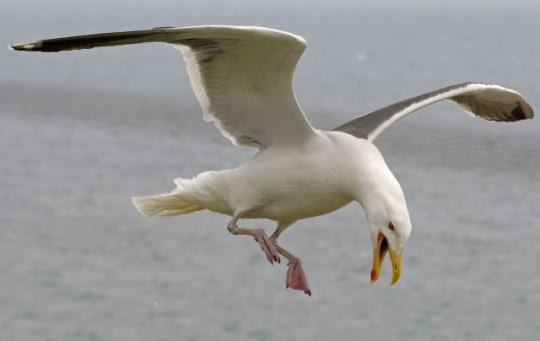
West Sussex group’s plea to keep herring gulls safe and sound


Published: 10:43Tuesday 02 April 2019
A reminder has been sent out by a West Sussex wildlife group that herring gulls are a protected species and that nests should be left alone.
West Sussex Wildlife Protection, which has been rescuing wildlife for more than 15 years, said: “We are asking homeowners to remember that herring gulls are fully protected under the Wildlife and Countryside Act 1984, and are also on a RED endangered list as their numbers have dropped significantly in Europe in the last ten years.
“Therefore their nests should not be disturbed on roof tops and any young ones that fall from the roof need to go back with the parents, where possible, until they take their first complete flight.
“Most people are sympathetic to these birds and see them as a way of life when living near a coastline.

Thursday, 13 September 2018

Swans stolen from RSPB Radipole Lake bird reserve in Weymouth


7th September

By Martin Lea  @DorsetEchoMart

A family of swans are feared dead after being stolen from a Weymouth bird reserve in a shocking theft which has left wardens saddened.
Thieves ‘forcibly removed’ the protected birds – two adults and five cygnets – from their home in Radipole Lake.
Shockingly, some entrails were found along with feathers in a ‘neat pile’ close to where the swans rest up at night in the inner part of the lake. It is accessed by the Buddleia Loop trail towards the northern end of the popular wetlands reserve.
It is thought the thieves parked their vehicle used to transport the birds on the nearby Weymouth Way as a feather trail was discovered leading out of the reserve to a lay-by on the road.
Wardens say the theft of so many swans in one raid is ‘unheard of.’
Swans are protected under the 1981 Wildlife Countryside Act which makes it illegal to keep or kill them.
The theft has been reported to the police and visitors to the reserve are being asked to be vigilant for any suspicious activity in case the thieves strike again.
Swan warden Derek Davey said it was a ‘sad case’.
He said: “Five cygnets and two adult swans have gone missing from the inner part of Radipole Lake. The swans were found to be missing earlier in the week.
“Evidence points to the swans being removed, by whom it is not yet known.”
He added: “I have no idea why anyone would take them but I suspect harm has come to them. They have been removed by force.”
Mr Davey said the swans could not have flown away as one of the adults is in molt and the cygnets were also unable to fly. Also, swans are very territorial so other birds would not have let the family move onto their patch.
He added: “The missing swans have been reported to the police, and I ask people to be vigilant and report any suspicious activity around the Radipole Lake nature reserve, to take note of any vehicles and call the police on 101.”

China zoo still searching for two rare cranes on the loose


Source:Global Times Published: 2018/9/9 17:53:40
Two nationally protected cranes have escaped from a Southwest China zoo, and employees are still trying to lure them back.

A threatened species and among the world's rarest, the red-crowned crane is among the tallest, standing around 1.5 meters with a wingspan of up to 2.5 meters.   

A group of three of the birds first flew the coop on Wednesday during a flight exercise that involved whistled commands from the ground at Guizhou Forest Wildlife Zoo.

Zookeeper Zhang Jing said the birds didn't respond to his whistled signal to return and kept flying for around 30 minutes before disappearing from sight.  

So far only one of the birds was found in a nearby village.

The zoo has since extended its search for the nationally protected birds to cover a 30-kilometer radius. 

Friday, 11 May 2018

Protected rare falcon shot in Rugby town centre


JAMES BRYCE Email Published: 12:35 Monday 30 April 2018

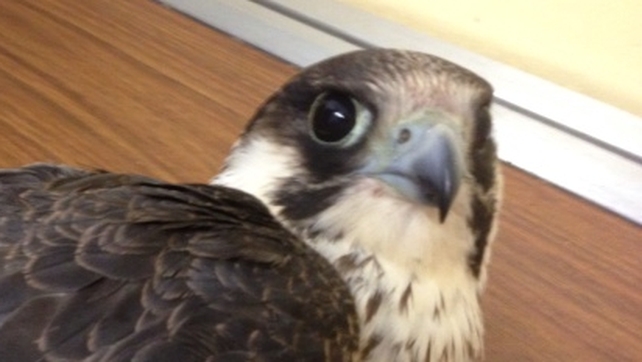
A rare and protected bird has been reported as being shot in rugby town centre. Warwickshire Police said it has received a call about a peregrine falcon being shot in the town centre. Sgt Stuart Baker, who is also a wildlife crime officer in Rugby said: "Warwickshire Police take all types of wildlife crime seriously. 

"Peregrine Falcons are rare species protected in law as Schedule 1 birds and are therefore offered additional protection at all times by the Wildlife and Countryside Act 1981. 

"It is clear from the RSPB investigation into the killing of this bird that at some point in the past, somebody has deliberately shot this bird causing it serious injury. 

"I would encourage anyone with any information to contact us or the RSPB if you have any information in relation to this offence. 

Information can also be passed to Crimestoppers on 0800555111 or online at crimestoppers-uk.org."


Friday, 2 March 2018

Investigation after at least one buzzard found dead in Suffolk woodland


PUBLISHED: 15:11 26 February 2018 | UPDATED: 16:49 26 February 2018

Police are investigating the shooting of at least one common buzzard - a legally protected bird of prey - that was found dead in a Suffolk wood.

Two buzzard corpses were reported to Suffolk Constabulary’s wildlife crime team in an incident described by naturalists as “appalling and abhorrent.” The bodies were found in woodland known as Little Carr, “on the edge of a shooting estate” on the banks of the River Dove, near Hoxne, the team’s Sgt Brian Calver said yesterday.

The discovery was reported by “a person with shooting rights”, but when a police officer visited the site only one corpse could be found. It was believed that the birds died in January, he said.


Sunday, 19 November 2017

Shock as beautiful protected swan cruelly 'blasted from close range'


X-rays confirmed the bird was "covered in pellets" and left on the cliff-tops near Bempton


Daniel Kemp
13:24, 10 NOV 2017
UPDATED13:26, 10 NOV 2017

A swan has been shot dead close to a popular East Riding bird-watching reserve.

X-rays confirmed the bird, which is a protected species, was “covered in pellets” and had been “blasted from fairly close range”. Killing a swan is a criminal offence

The Whooper swan had just made a 1,000-mile trip from Iceland for the winter, but was found covered in blood after a close-range shooting on a cliff-top near Bempton.

It was found on fields between the RSPB site at Bempton Cliffs and the village of Buckton.

RSPCA inspector and national wildlife officer co-ordinator, Geoff Edmond, said: “I feel outraged that this has happened.

 “These birds come down predominantly from Iceland from October onwards to spend the winter months here. In other words this bird is likely to have flown around a thousand miles to suffer this terrible fate.

Sunday, 6 November 2016

Courier nabbed trying to ship stuffed rare birds in Indonesia


Posted 12 Oct 2016 20:53
Updated 12 Oct 2016 21:00

MAKASSAR: Indonesian authorities on Wednesday (Oct 12) seized dozens of stuffed birds of paradise from a hapless courier who did not realise they were a protected species, an official said.

The courier walked into the government conservation agency in South Sulawesi province seeking permission to ship the 64 birds of paradise and more than 80 bundles of cassowary feathers by air freight, said local agency head Dody Wahyu Karyanto.

The cargo company had demanded the courier produce an official letter allowing him to transport the stuffed birds and feathers to Indonesia's easternmost province of Papua.

"Once we checked, it turned out this wildlife was a protected species. We immediately confiscated (the items) and held the courier for questioning," Karyanto said.

Wednesday, 11 November 2015

EU conservation law has positive impact on protected bird species

Bird species which are protected under the EU Birds Directive have fared better since 1980 than unprotected species, research has found. The study also showed that climate change does not undermine the effectiveness of the Bird Directive.

28 October 2015 / Ecology

EU Member States must take special conservation measures to protect certain species under Annex I of the EU Birds Directive. The researchers used bird species data gathered as a result of the reporting requirements of the Birds Directive to compare the population trends of these species to those of non-Annex I species.

The findings are good news for the legislation. Last September, the EC launched a public consultation on the Birds Directive as part of its REFIT ‘fitness check’ on whether it is fit for purpose. The UK-based authors have said their works shows that “multilateral conservation agreements can have significant benefits for wildlife even in the face of unprecedented climate changes.”

The study assessed long-term (1980–2012) and short-term trends (2001–2012) for all breeding bird species occurring naturally in the 27 member states. Using a statistical computation system, they found populations of Annex I species were better maintained than those not listed on the Annex. This effect applied to both time periods, and was more pronounced in countries that had been in the EU for longer.

At the same time, the team examined they evaluated the effect of climate change on the birds. To account for the effects of climate change, the researchers calculated whether the species would expand its range and population as a result of climate change, or whether the range of the species would narrow.

The results indicated that Annex I status has a strong, independent effect on a bird species’ population, despite its response to changing climate.


Thursday, 20 August 2015

Dozens of birds found dead in downtown Tulsa


TULSA, Okla. — 


PHOTO: Birds die in downtown Tulsa photoQuick facts:
Over 200 birds were found dead at 9th and Elgin in downtown Tulsa today.
The purple martins are a rare species protected by state and federal law.
The game warden says that he is looking into whether someone criminally poisoned the birds, because thousands of them nest in trees nearby, but there is also the possibility that last night's rain knocked them out of the trees and was too much for them to bear, causing them to essentially drown on the sidewalk during a downpour.
TU researchers have taken most of the birds away for analysis because it is a rare species.

Dozens of birds were left dead on downtown Tulsa sidewalks due to what is being called a "rare weather phenomenon".
Many of the birds at 9th and Detroit were cleaned up by Wednesday evening. Those who work in the area said they felt like they walked into a horror movie.

Tuesday, 21 July 2015

'Revenge' On Seagulls Following Spate Of Bird Attacks

By Caroline Thain | Yahoo News – 21 hours ago

Angry birds are causing a storm but there’s no need to attack seagulls – even though they can injure people and pets. That’s the message from the police and RSPCA, after one seagull was poisoned in Bridport, Dorset.

It was left dumped outside a police station, along with its chick, in what seems like a backlash against the aggressive birds, which have hit the headlines recently.

Scott McGregor, from the Bridport police service, said: “Whether you love them or loathe them, one of our seagulls is suffering following a suspected poisoning.

“The seagull had vomited considerably and when the RSPCA were sent out, it was their view that the bird was poisoned.

‘Seagulls are protected for a reason and there is no need to poison them, causing them unnecessary cruelty and suffering.”

Tuesday, 28 April 2015

FKNK: BirdLife’s possession of shot cuckoo may have been “breaking the law”


BY GOZO NEWS · APRIL 26, 2015


The hunters’ federation FKNK has said in a statement today that BirdLife “may have been breaking the law” when it was in possession of a protected bird on Thursday.

The FKNK was referring the BirdLife Malta’s statement on Thursday regarding a shot protected cuckoo, that was found by a dog walker at Mizieb.

The Federation’s statement said that it hoped in the future BirdLife would be more correct in its actions, since if it is found that a protected bird has been illegally shot, it increases the chances of the perpetrators being caught and prosecuted.

It is also possible that the injured cuckoo could have been saved and rehabilitated, the FKNK said.

The FKNK also said that is has made a request to the police to keep it informed of the outcome of the investigations.

Friday, 26 December 2014

Pacificorp guilty in bird deaths

US utility Pacificorp must pay a $2.5m fine on charges related to the deaths of protected birds in Wyoming.

Subsidiary Pacificorp Energy pled guilty to two counts of unlawful take of migratory birds under a plea deal with prosecutors. Since 2009 more than 350 dead birds, including 38 golden eagles, were found at two wind farms.

The company must also implement a migratory bird compliance plan to avoid bird deaths at four Wyoming wind farms: Seven Mile Hill, Glenrock/Rolling Hills, Dunlap and High Plains/McFadden Ridge.

“PacifiCorp is concerned about the impacts to wildlife from our renewable energy facilities and we have been diligently working with federal and state agencies to protect migratory birds,” said VP renewable resources Mark Tallman.

“We are committed to enhancing protections to wildlife that minimize and mitigate impacts.”

Saturday, 20 December 2014

Wind Company Convicted in Deaths of Eagles, Other Birds


A Portland-based wind energy company that recently sued the federal government to keep its bird death data secret has been convicted in federal court over deaths of protected birds at two of its wind facilities in Wyoming.

The carcasses of 38 golden eagles were found at PacifiCorp Energy's "Seven Mile Hill" and "Glenrock/Rolling Hills" installations in Carbon and Converse counties between 2009 and this year, along with 336 other birds protected under the Migratory Bird Treaty Act. According to the U.S. Fish and Wildlife Service, PacificCorp disregarded risk to eagles and other birds when it built its turbines at the two facilities.

"PacifiCorp Energy built two of its Wyoming wind projects in a manner it knew would likely result in the deaths of eagles and other protected birds," said Sam Hirsch, the U.S Department of Justice's Acting Assistant Attorney General for Environment and Natural Resources.


Friday, 5 September 2014

Peregrine falcon shot in Co Wexford

Wednesday 13 August 2014 23.00

An investigation is under way after a peregrine falcon was found shot in Co Wexford.

The falcon had to be euthanised due to the extent of its injuries.

Peregrine falcons are native Irish birds of prey and are accorded the highest possible legal protection under Irish and European law.

The deliberate killing of such birds is a criminal offence.

The National Parks and Wildlife Service of the Department of Arts, Heritage and the Gaeltacht, is seeking help from the public after the bird was found shot at Ballynastraw near Enniscorthy, Co Wexford.

An X-ray confirmed that the falcon was shot with shotgun pellets in its wing and leg.

Wednesday, 20 August 2014

'Highly protected' bird poisoned in Penmaenmawr

Published date: 19 August 2014 | 

Published by: Mike Williams 
Read more articles by Mike Williams Email reporter

A BIRD belonging to a “highly protected” species was killed by poison in Penmaenmawr.

The female Peregrine Falcon was found in a quarry in the village in June, and a vet’s examination has since determined the bird was killed by poison.

North Wales Police launched an appeal for the public’s help with its investigation on Monday.

Rural Crime Team manager Sgt Rob Taylor said: “This is the second suspicious death of Peregrine Falcons in just a few months in North Wales.

“Only a couple of years ago we recovered a live pigeon tethered to the ground and covered in poison, as a bait in the same quarry and also a dead Peregrine nearby, so it seems the same person feels they can carry on with this cruel method of removing the birds.”

Poisoning was also suspected when four birds were found dead in a nest in the Nantlle Valley in July.


Tuesday, 15 July 2014

Pair of peregrine falcons set up home at Greenwich clocktower

Updated 12:17pm Monday 7th July 2014 inNews
By Mark Chandler, deputy news editor


A pair of peregrine falcons have set up home at Greenwich's landmark clocktower - but snap-happy birdspotters are being urged to keep away.

The rare birds - which are granted special legal protection - have been spied by several eager onlookers at the Royal Hill site in recent months.

And nest site monitor John Chapman from the London Peregrine Protection Partnership - a voluntary group set up top preserve the capital's creatures - confirmed they had been there since last year.

He told News Shopper: "They were there last year but they were only young birds. But they stayed there right through the winter and they're still there this year."

Thursday, 26 June 2014

Beach bird nests destroyed by motorcycle on Siesta Key

SIESTA KEY, Fla. -- A motorcycle has torn through a protected species habitat on Siesta Key, according to wildlife officials.

It happened in an area of the Siesta Key public beach Monday night. The Audubon Society tells ABC 7 that 13 Least Tern nests were destroyed, and 12 Black Skimmer nests were disturbed, along with a pair of Snowy Plovers.

The colony was clearly marked off with posts and signs, but Florida Fish and Wildlife investigators say a motorcycle drove right through it.

Anyone with information is asked to call the Sarasota County Sheriff's Office.

As for the birds, the Audubon Society says the Least Terns are becoming aggressive and dive-bombing people because of the incident, and the snowy plovers are sticking it out despite their nests being disrupted.

Thursday, 27 March 2014

Penalties to increase tenfold for shooting or trapping protected species

“Criminals caught shooting protected birds will find no refuge amongst law-abiding community,” the Government said.

The Government said in a statement today that it “condemns the hideous act of shooting of protected storks that occurred yesterday and has deployed the necessary resources to investigate the incident and to bring perpetrators to justice.”

“In a drive to stamp out illegal targeting of protected species, last October the Government revamped national legislation and doubled applicable penalties for illegal shooting of protected birds.”

“Whilst, as amply documented in the enforcement report published last Saturday, multiple improvements in enforcement occurred over the past few months, the latest incident shows that some rogue individuals are still undeterred from committing such brazen crimes,” said Parliamentary Secretary Roderick Galdes in reaction to the storks’ shooting incident.

“Therefore Government will do whatever is necessary to not only bring perpetrators to justice, but to also eliminate the very possibility of such acts occurring in the future”, Parliamentary Secretary added.

Friday, 21 March 2014

PROTECTED BIRD SPECIES: Official: 2 bald eagles shot, killed in Wash.

Updated 9:21 pm, Wednesday, March 19, 2014

PORT ANGELES, Wash. (AP) — A Washington Fish and Wildlife Department officer says two male bald eagles found dead east of Forks were fatally shot.

The Peninsula Daily News reports (http://is.gd/3sI80P) the birds found Saturday were an adult and an older juvenile. Wildlife Sgt. Eric Anderson said Wednesday the birds were shot with a rifle, apparently while perched on a branch near the Calawah River.

Anderson says it appears "the person simply shot them to kill them," rather than for feathers or body parts.

Fish and Wildlife is offering a maximum reward of $2,000 for information leading to the arrest of those responsible.

Bald eagles were removed from the list of threatened or endangered species in 2007, but the bird is still protected under Washington state and federal law.

___

Information from: Peninsula Daily News, http://www.peninsuladailynews.com

Friday, 3 January 2014

€1.75m spent to protect rare Hen Harrier

Forget about the millions of euro spent on turkeys this Christmas, Ireland's most expensive bird is the rare and protected Hen Harrier.

New figures show that the Government spend on the bird of prey in the 10 months to the end of October this year amounted to €1.75m -- or an average spend of over €5,000 per recorded adult bird.

The most recent national survey recorded between 128 and 172 breeding pairs across the country, giving an estimated total of 344 adult birds.

In response to a Freedom of Information request, the Department of Arts and Heritage confirmed that €1.75m was spent on conservation measures for the bird between January and October 20.