As regular CFZ-watchers will know, for some time Corinna has been doing a column for Animals & Men and a regular segment on On The Track... particularly about out-of-place birds and rare vagrants. There seem to be more and more bird stories from all over the world hitting the news these days so, to make room for them all - and to give them all equal and worthy coverage - she has set up this new blog to cover all things feathery and Fortean.
Showing posts with label threatened species. Show all posts

Thursday, 19 September 2019

Tiny penguin's clean bill of health after epic NZ-Australia swim

SEPTEMBER 18, 2019


The bird was so underweight it had to be gradually reintroduced to food and the water

A tiny penguin that made the mammoth journey from New Zealand to Australia has been nursed back to health and released into the wild—in the hope it will find its own way home.

The emaciated Fiordland penguin was found struggling on rocks near Lorne, south of Melbourne, about 2,500km (1,500 miles) from its native habitat of New Zealand.

Melbourne Zoo head of veterinary services Michael Lynch said the bird was so underweight it had to be gradually reintroduced to food and the water over several weeks.

"Over time it began to put on weight again," he said.

"We then started to reintroduce it to water when it was strong enough to swim to help build up some muscle."

Fiordland penguins are known to swim large distances to forage for food, sometimes even spending so long in the ocean that they grow barnacles on their tails.

They are classified as a threatened species, with an estimated 5,000 left in the wild.

Thursday, 4 October 2018

Global trade in exotic pets threatens endangered parrots through the spread of a virus


Date:  September 18, 2018
Source:  University of Kent

Beak and feather disease virus (BFDV) in wild parrot populations has been detected in eight new countries, raising concerns for threatened species.

The new countries where BFDV was found are Bangladesh, Pakistan, Japan, Nigeria, Seychelles, Vietnam, Senegal and The Gambia and were identified in a study led by Deborah Fogell in the University of Kent's Durrell Institute of Conservation and Ecology (DICE) in collaboration with The World Parrot Trust, Zoological Society of London, Mauritian Wildlife Foundation, Seychelles Island Foundation and Vinh University.

The study highlights the need for greater awareness of the risks of the spread of infectious disease associated with the international trade in live parrots.

Parrots are among the most threatened bird groups and are susceptible to a number of infectious diseases. They are also among the most frequently traded birds listed by the Convention of International Trade in Endangered Species (CITES) and the illegal trade has already driven the cross-border movement of over 19 million parrots since 1975.

This movement has aided the establishment of numerous parrot populations outside of their native distributions, most notably the highly invasive Rose-ringed parakeet which is now known to have breeding populations in over 35 countries across five continents.

BFDV, believed to have originated in Australasia, is a well-known cause of infectious disease in captive parrots. Affected birds can develop feather abnormalities, claw and beak deformities and the disease may lead to eventual death, particularly in juveniles.


Thursday, 13 September 2018

China zoo still searching for two rare cranes on the loose


Source:Global Times Published: 2018/9/9 17:53:40
Two nationally protected cranes have escaped from a Southwest China zoo, and employees are still trying to lure them back.

A threatened species and among the world's rarest, the red-crowned crane is among the tallest, standing around 1.5 meters with a wingspan of up to 2.5 meters.   

A group of three of the birds first flew the coop on Wednesday during a flight exercise that involved whistled commands from the ground at Guizhou Forest Wildlife Zoo.

Zookeeper Zhang Jing said the birds didn't respond to his whistled signal to return and kept flying for around 30 minutes before disappearing from sight.  

So far only one of the birds was found in a nearby village.

The zoo has since extended its search for the nationally protected birds to cover a 30-kilometer radius. 

Friday, 11 May 2018

South Australian wildlife at highest risk of extinction rated by Threatened Species Recovery Hub


Clare Peddie, Science Reporter, The Advertiser
April 26, 2018 11:34am

WHEN bushfire swept through two conservation parks in the east of the state, a tiny bird with distinctive emu-like tail feathers was wiped out in South Australia.

But there is hope the mallee emu-wren will return, thanks to the national Threatened Mallee Bird Conservation Action Plan and team.

Birdlife Australia has rallied multiple organisations to the cause, working across mallee areas of eastern SA, north-western Victoria and Southwestern New South Wales to reintroduce birds to Ngarkat Conservation Park.

The mallee emu-wren is one of seven SA birds in the top 20 “red hot list” of Aussie birds most at risk of extinction, according to the Threatened Species Recovery Hub of the Federal Government’s National Environmental Science Program. Two of the 20 mammals deemed most at risk are also found here. Research co-ordinator Hayley Geyle from Charles Darwin University garnered, integrated and analysed the knowledge of Australian experts (including Peter Copley from the SA Department of Environment, Water and Natural Resources) to derive a first-ever estimate of the likelihood of extinction over the next 20 years.


Thursday, 14 December 2017

Third female Orange-Bellied Parrot returns as federal Threatened Species Commissioner notes critical stage

DECEMBER 6 2017 - 3:30PM


A third female wild orange-bellied parrot has been reported at Melaleuca in the state’s South, nearing the end of the migration season.

The critically endangered parrot has been the focus of increasing concern as few females returned this season, but eggs are being laid in nestboxes with teams on the ground monitoring the bird’s progress.

Only 16 birds to date have returned from their annual migration to Victoria, including one captive-bred.

A statement posted by the Orange Bellied Parrot Tasmanian Program on social media said the third female, a juvenile born in March this year, had been spotted.

However the female, named RED RED Z for the identification bands on her legs, disappeared for nine months and was not identified on the mainland or in Tasmania. 

The program’s statement said RED RED Z was seen with “unusual” yellow flecked feathers across her back and wings. It’s not known what has caused the unusual colouring, whether disease or genetic issues.

“A member of the Orange-bellied Parrot Tasmanian Program has flown to Melaleuca to examine RED RED Z to assess her body condition, weight and general health,” the statement said.

Federal Threatened Species Commissioner Sebastian Lang said the recovery of the orange-bellied parrot was “a priority” for the federal government. 


Thursday, 21 September 2017

Genome of threatened northern spotted owl assembled


Genome completion will help researchers better measure interbreeding among hybrid owls and guide conservation priorities in the West

Date:  September 5, 2017
Source:  California Academy of Sciences

Summary:
A charismatic owl iconic to Pacific Coast forests is no longer ruling the roost, and scientists now have another tool for understanding its decline. Researchers have assembled the California Academy of Sciences' first-ever animal genome after sequencing the DNA of the northern spotted owl (Strix occidentalis caurina). Academy scientists and collaborators extensively mapped the bird's genetic material to better understand how this threatened forest dweller is interacting with non-native owls invading its habitat.


Thursday, 17 December 2015

Romanian conservationists and hunters unite to save Red-breasted Geese

For the first time in Romania, conservationists and hunters are working together to protect a threatened species: the Red-breasted Goose (Branta ruficollis).

Red-breasted goose arp.jpg
At the request of the Romanian Ornithological Society (SOR, BirdLife Romania), the National Association of Romanian Hunters (AGVPS, the FACE partner in Romania) have agreed to a temporary hunting ban in one of the most important Special Protected Areas (SPAs) for the Red-breasted Geese - Lake Balta Alba in Buzau County.

The Red-breasted Goose is the smallest goose species in the world. It nests in Siberia and when it migrates, it travels 9.000 km to its wintering grounds in Romania and Bulgaria. Hunting, illegal killing, loss of feeding sites and displacement by windfarms in their wintering grounds are major threats that have led to a continuing decline in the species’ population.

“We monitored this area with our partners and we found that the geese began wintering in October. We saw 1.260 birds on 30 October... By the end of November, we had approximately 10.000 individuals, which is 20% of the global population,” said Emil Todorov, project officer of SOR.

To make matters worse, Red-breasted Goose flocks mix with other geese species, such as the Greater White-fronted Goose (Anser albifrons), which are allowed to be hunted. This increases the risk of Red-breasted Geese being accidentally shot, especially in the morning when the whole flock takes off together from their roosting place.


Sunday, 25 October 2015

Uncovered: European roller's route between Africa, Europe

Date:October 20, 2015
Source:Plataforma SINC

Its blue and brown-coloured plumage is undoubtedly the most distinctive feature of the European roller, a threatened migratory bird. Up until now, little was known about this bird's migration patterns and wintering. For the first time, scientists from nine countries reveal the routes between the southern part of Africa and Europe taken by a considerable part of this species which is currently in a fragile state of conservation. Researchers have been able to uncover this information with the help of geolocators and satellite transmissions.

It breeds in Europe, crosses the Mediterranean via different routes, rests in Sub-Saharan Africa and winters in the southern part of Africa. Each year, the European roller (Coracias garrulus) covers close to ten thousand kilometres to breed and to winter over a route that was practically unknown up until now.

A team of scientists from nine countries (Spain, United Kingdom, Portugal, France, Austria, Switzerland, Montenegro, Lithuania and Cyprus) utilised data obtained from geolocators, satellite transmissions and bird ringing to examine the migration and wintering of this bird throughout a large part of the area where it is located. The results are published in the 'Diversity and Distributions' journal.

Thanks to this research, scientists have been able to ''uncover migration routes, resting areas and wintering grounds in addition to the degree of migratory connectivity in different populations of this species,'' explains Deseada Parejo, a researcher for the department of Anatomy, Cellular Biology and Zoology at the University of Extremadura (Spain) and co-author of the study.

Tuesday, 16 June 2015

Nebraska farmers take birds under their wing

Posted: Sunday, June 14, 2015 3:00 am

By David Hendee World-Herald News Service


KIMBALL — They’re nicknamed the prairie ghost.

They’re mountain plovers, but they aren’t birds of the mountains. They prefer the arid, shortgrass prairie.

They’re shorebirds, but they live nowhere near the shore.

A mystery bird few Nebraskans have heard of and fewer have seen, migratory mountain plovers are gaining a foothold in a corner of western Nebraska where dozens of farmers and ranchers have taken them under wing.

The bird has been a threatened species in Nebraska since 1976 and once was considered for a nationally threatened or endangered listing.

This is tillage time in the high Plains, when farmers churn up weeds and other vegetation in fields lying idle this season to preserve precious moisture in the ground for a future crop. This also is nesting season for mountain plovers in those same fallow fields. Across thousands of acres of cropland, farmers steer tons of tractor and implement steel around fragile plover nests scratched into the dirt.

How a ground-nesting bird that almost no local landowner could have named a decade ago can divert a tractor and gain recognition as one of the region’s natural treasures reflects the success of an initiative that is a model of whole-landscape conservation in the Great Plains, said Joel Jorgensen, the Nebraska Game and Parks Commission’s nongame bird program manager in Lincoln.

The challenge for conservation on private land is to find ways to protect habitat without inhibiting farming operations, especially on farmland used in ways not always perfectly compatible with conserving a species, Jorgensen said.

Sunday, 3 May 2015

Tiny bird ends Civil War in Costa Mesa

By Bradley Zint

May 1, 2015 | 7:32 p.m.

One year ago, Union and Confederate armies descended upon Costa Mesa's Fairview Park to exchange harmless volleys of musket fire.

It was the sixth annual Battle of Costa Mesa, a Civil War reenactment event on May 3 and 4 that drew thousands of participants and spectators into the park to witness living history.

But now, in what would have been its seventh year, the Battle of Costa Mesa is no more. As it turned out, neither the North or South brought an end to the faux conflict.

Rather, it was the California gnatcatcher — a tiny songbird — and the environmental regulations surrounding it that primarily swayed the Civil War enthusiasts from using the 208-acre park.

Or, in the words of Scott Peca, Battle of Costa Mesa organizer, that little bird "sideswiped" their event.

"It was just a mess," he said in an interview this week. "We were thrown too many hurdles with the environmentalists [for us to] want to come back."

The California gnatcatcher is considered a threatened species by the U.S. Fish and Wildlife Service. Because gnatcatchers are known to nest in Fairview Park in the springtime, City Hall must comply with various environmental regulations for gnatcatchers and other birds, said Dan Baker, Costa Mesa's public affairs manager.

Those rules include conducting a field study to verify where the birds nest. Baker noted that if a gnatcatcher were found nesting in an area of Fairview that the reenactors wanted to use, they would need to adjust their plans.

Monday, 23 March 2015

Tasmanian government ignored expert advice on logging threat to swift parrots

Liberal government approved logging against advice from its own department that it could threaten the survival of the species, documents reveal


Sunday 22 March 2015 20.12 GMTLast modified on Sunday 22 March 201522.54 GMT

Lathamus discolor Bruny 1.jpgThe Tasmanian government ignored the advice of its own experts to push ahead with logging in the habitat of the endangered swift parrot, internal departmental documents have revealed.
The documents show that experts warned the Tasmanian Department of Primary Industries, Parks, Water and the Environment of the impact of approving logging in five areas of forest in the state’s south-east.

In one area, called a logging coupe, the advice states that the felling of trees will “result in the continued loss of breeding habitat that has been identified as being of very high importance for the species with the further fragmentation of foraging habitat. This cannot contribute to the long-term survival of the species.”

The advice adds that the area earmarked for logging is “within close proximity to known nesting sites for the species.”

It warns that any logging is “likely to interfere with the recovery objectives for the species as outlined above. There is no scientific evidence to support the position that continued harvesting of breeding habitat will support conservation objectives for the species.”

Wednesday, 7 May 2014

Is self-fumigation for the birds? Save threatened species by giving them treated cotton for nests

Date:
May 5, 2014

Source:
University of Utah

Summary:
When biologists set out cotton balls treated with a mild pesticide, wild finches in the Galapagos used the cotton to help build their nests, killing parasitic fly maggots to protect baby birds. The self-fumigation method may help endangered birds and even some mammals.


Sunday, 4 May 2014

Why the Maltese massacre is bad news for UK's threatened bird species

By Western Morning News | Posted: May 02, 2014

By Liam Creedon


A Turtle Dove injured by hunters

Photo of Golden Oriole, who was a victim of illegal hunting.

Photo of Hobby bird, who was a victim of illegal hunting

Cape Turtle Doves

Thousands of migrating birds are being killed at one of Britain’s favourite holiday destinations. We explain why this is not just a disaster for Malta but bad news for some of the UK’s most threatened species

The rocky island of Malta, much-loved tourist destination for British holidaymakers, nestling amid the startling blue Mediterranean Sea, is possibly the worst place in the world to be a bird.

For this small, barren outcrop is a killing ground on an unprecedented scale.

Thousands of birds, some of which may be migrating back to British back gardens, are blasted from the skies each year by the highest concentration of registered hunters in Europe. Even those lucky enough to avoid the guns run the gauntlet of being illegally trapped and harvested in hard-to-see ‘mist nets’ slung between bushes.

Trigger-happy hunters are responsible for this indiscriminate killing spree, during a three-week period in spring, with one of our rarest birds, the Turtle Dove, singled out as a key target. The dove has declined by 95% in the UK since the 1970s and there are real fears it will become extinct as a British breeding bird.

Friday, 25 April 2014

Saving the lesser prairie chicken: What landowners should know


Date:
April 17, 2014

Source:
Kansas State University Research and Extension

Summary:
The recent U.S. Fish and Wildlife Service announcement, listing the lesser prairie chicken as a threatened species, brings to mind how agricultural producers, livestock ranchers and those with land enrolled in CRP could be affected. The listing might pose a challenge for some landowners, particularly in western Kansas, where the lesser prairie chicken lives. Significant habitat changes must occur to meet the 67,000-bird decade goal, and those changes will most likely have to come from livestock ranchers and grazers implementing conservation practices that benefit lesser prairie chickens.


Saturday, 29 March 2014

Feds list lesser prairie-chicken as threatened, ruffling feathers of local lawmaker

Posted: March 27, 2014 - 2:48pm

kevin.welch@amarillo.com

About 3.5 million acres and $21 million pledged to help the lesser prairie-chicken after 16 years of research, planning and negotiation were not enough to keep the bird off the threatened list of the Endangered Species Act.

The Fish and Wildlife Service announced Thursday it will list the native bird that is approaching extinction, endorsing a conservation plan created by the states affected by the listing.

Texas, New Mexico, Colorado, Oklahoma and Kansas wildlife departments with the Western Association of Fish and Wildlife Agencies created the Range-wide Conservation Plan that allows landowners and industries like oil and gas and wind farms to make agreements to restore or improve habitat to help the challenged bird.

Monday, 3 March 2014

Port Authority killed 20,000 animals

The Port Authority killed 20,000 animals over the past two years — including three bird species deemed endangered or threatened, The Post has learned.

The agency shotgunned a northern harrier at New Jersey’s Teterboro Airport — even though the hawk is endangered in the state, according to 2012-13 data obtained through a Freedom of Information request.

Teterboro’s shooters also zapped an American kestrel, a small falcon listed as threatened in New Jersey. And hunters at JFK Airport offed 11 ospreys, which are labeled as at-risk in New York.

Animal conservation groups were outraged.

“We find it upsetting they discontinued [nonlethal controls] . . . and decided it was more cost-effective to just shoot them,” said Glenn Phillips of New York City Audubon Society.

Thursday, 27 February 2014

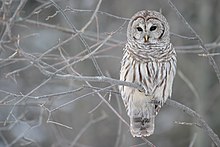
THREATENED SPECIES: Threatened Owls Pushed Out of Home by Foes

By Megan Gannon, News Editor | February 25, 2014 06:03pm ET

northern spotted owl
A threatened species of owl is losing a turf war in the Pacific Northwest.
Northern spotted owls are getting edged out of their already declining habitat by invading barred owls, a new study finds.

barred owl
Researchers pored over 22 years of data from a study site in Oregon covering 386 square miles (1,000 square kilometers) where the habitats of the two species overlap. In this area, both owl species were more likely to abandon a neighborhood when their rival was present, the researchers found.


Friday, 6 December 2013

Eight-year long wait: 30 rare white pelicans pay surprise visit to Sandspit

KARACHI: The arrival of over 30 young pelicans on the backwaters of Karachi in Sandspit on Saturday has been termed a good sign by environmentalists and wildlife experts.

Earlier, pollution and hunting practices had pushed the species out. The dalmatian pelican or white pelicans, one of the three kinds of pelicans, were seen on Sunday evening at the Wetland Centre of the World Wildlife Fund-Pakistan (WWF-P). Their exact number is not known but WWF-P officials believe the count is over 30.

These rare birds are believed to be restricted to a few Central Asian countries. The white pelicans are threatened species but they visit different countries, including Pakistan, during the winter season.

Thursday, 3 October 2013

Long-gone Swainson's hawk returns to Bay Area

By Lisa M. Krieger

A Swainson's hawk chick has hatched under the eye of Santa Clara County bird-watchers for the first time since the 1800s, suggesting that this elegant bird, a threatened species in California, may be on the road to recovery.

The nest location 16 miles south of downtown San Jose in the Coyote Creek Parkway is a well-kept secret among the region's naturalists, thrilled by the sighting and fearful that crowds would prevent its parents from returning.

Its discovery proves the value of conservation in Coyote Valley, which faces major development pressures, according to bird lovers. "Ecstatic. Euphoric!" said De Anza College raptor biologist Ryan Phillips, describing his reaction to the sighting.

"This marks the return of the hawk to its historic range in the Santa Clara Valley and, even more important, shows how critically important and viable Coyote Valley is," said Phillips, who monitored the nest. San Jose plans industrial and residential development in the north Coyote Valley.

Another beloved raptor, the bald eagle, is also making a Bay Area comeback, with a nest sighted this year in San Mateo County's Crystal Springs Reservoir, for the first time in nearly a century, and several were reported in the East Bay.

Sunday, 2 December 2012

Debate begins over rare bird's affect on New Mexico jobs

SANTA FE — The U.S. Fish and Wildlife Service on Friday proposed to list the lesser prairie chicken as a threatened species, igniting a debate about whether protecting a rare bird could cost New Mexico jobs.

This Western grouse, found in five states, has been a candidate for listing since 1998. The recommendation begins a yearlong process of whether the lesser prairie chicken should receive federal protection.

Fish and Wildlife said it made the recommendation based on evidence that the lesser prairie chicken's population and habitat are in decline.

"Listing cannot come soon enough for the lesser prairie chicken," said Taylor Jones of WildEarth Guardians. "Threats are increasing, the species' range is contracting and current conservation efforts are too little, too late."

U.S. Rep. Steve Pearce took the opposite position, sending out a statement headlined, "Here we go again." Pearce, R-Hobbs, successfully led opposition to listing the dunes sagebrush lizard as an endangered species.

"Unfortunately, our jobs and our way of life in southern New Mexico continue to come under assault," Pearce said. "The prairie chicken is yet another example that federal species regulation is not based on science, but rather driven by lawyers for extreme interest groups, like Santa Fe-based WildEarth Guardians, who filed the lawsuit in this case."

The Environmental Defense Fund, based in New York City, entered the debate suggesting the type of compromise that ended the dunes.

Continued:  http://www.daily-times.com/ci_22103356/debate-begins-over-rare-birds-affect-new-mexico