As regular CFZ-watchers will know, for some time Corinna has been doing a column for Animals & Men and a regular segment on On The Track... particularly about out-of-place birds and rare vagrants. There seem to be more and more bird stories from all over the world hitting the news these days so, to make room for them all - and to give them all equal and worthy coverage - she has set up this new blog to cover all things feathery and Fortean.
Showing posts with label lesser adjutant stork. Show all posts

Monday, 29 April 2019

Protected status secured for Cambodia’s Stung Sen wetlands


Thanks to the work of BirdLife International Cambodia Programme, the rich and biologically diverse Stung Sen wetland has been designated as a Wetland of International Importance under the Ramsar Convention, protecting the habitat of important species such as the Lesser Adjutant.

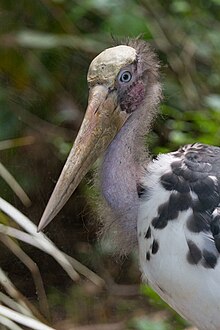
Under the sweltering Cambodian sun, a Lesser Adjutant wades through the freshwater swamps of the Tonle Sap Great Lake. Within Tonle Sap lies Stung Sen, a unique wetland characterised by old-growth forest that undergoes seasonal flooding. Nearby, low-stature shrubland and natural grassland provide crucial foraging grounds for the Lesser Adjutant.

This imposing stork feasts on the abundance of fish and invertebrates that reside in Stung Sen. The rich feeding grounds offered by the wetland also attract number of globally Near Threatened species, such as Spot-billed Pelican and Oriental Darter .

But the site doesn’t just benefit wildlife. It also plays an important role in flood mitigation during the rainy season, holding up water that would otherwise inundate nearby settlements. It recharges the area’s groundwater and purifies it through its aquatic plants and trees. All of this is crucial in providing local communities with water for households and agriculture.

“Stung Sen is significantly important in the region as habitat for a number of globally threatened species, the migratory pathway and feeding ground for water birds, and important habitat for mammals” says Reiko Iitsuka, Senior Regional Advisor for Asia/Oceania of the Ramsar Secretariat.

Unfortunately, this area is under increasing threat from expanding and intensifying agriculture, as well as from overfishing and hunting. Thankfully for the species and people that rely on this abundant habitat, the wetlands of Stung Sen has just been protected as a Ramsar Site.

“Recognition as an internationally important wetland will bring significant benefits to this site including more protection support from international, national and regional communities. We also hope to conserve the wetland through sustainable use, including eco-tourism” says Dr Tsubasa Iwabuchi, Senior Programme Officer, BirdLife International Tokyo, who supported the designation process alongside the Ministry of the Environment, Government of Japan.

Thirty per cent of Cambodia is covered by wetlands, the majority of which have been identified as globally important for the wetland ecosystems and biodiversity. The work that BirdLife International Cambodia has undertaken in order to achieve this recognition is important in securing the future of these vital habitats.


Monday, 14 March 2016

Injured Garuda in Jharkhand reveals threat to the rare bird

 Sanjoy Dey, Hindustan Times, Ranchi
Updated: Mar 08, 2016 15:33 IST

Forest officials have rescued an injured Garuda bird (lesser adjutant stork) from Barkagaon village in Chatra district of Jharkhand, raising fears of poaching of the rare winged species.

“The bird was hit by stones. It’s legs had injuries. We have sent the bird for cure and care to Ranchi zoo,” said Madhukar, divisional forest officer of Chatra South division. Zoo officials received the bird, considered the mount (vahana) of Lord Vishnu in Hindu mythology, on Sunday evening.

The lesser adjutant is placed in the vulnerable category -- the red list for birds -- of the International Union for Conservation of Nature (IUCN). “Weight of the bird is around 10kg and it has a wing span of five feet,” Madhukar said, adding that the bird was rarely sighted in a few water bodies in Jharkhand. “Our team is investigating who injured the bird,” he said.

KK Sharma, in-charge of the Jharkhand-Bihar chapter of the Ornithology Society of India, said the bird became rare in the state because of food shortage and poaching.

“In Jharkhand villages, the bird is poached for two reasons -- meat and superstition. The bird’s beak and bone are kept in houses with a misconception that they bring fortunes,” Sharma said.

“Population of the bird is dwindling rapidly in the world due to habitat loss, anthropogenic pressure, decreasing wetland feeding areas, intensive fishing and increased use of pesticides,” said Satya Prakash, state convener of Bombay Natural History Society (BNHS).


Thursday, 13 March 2014

RARE BIRD SIGHTINGS: Onlookers amazed with sighting of rare bird in Bengal


ANI | Bankura (West Bengal) 
March 10, 2014 Last Updated at 17:27 IST

A rare bird sighted at Sanbandha village on the outskirts of Bankura town in West Bengal amazed curious onlookers and bird lovers.

The bird was huge, typically 110-120 centimetres tall with a 210 centimetre wingspan and a body weight of around 5 kilograms.
Bankura's Sanmilani college Professor Biswaranjan Dhua said that the species of this bird is on the verge of extinction.

"This bird is actually Lesser Adjutant Stork. It is now vulnerable species. In West Bengal it is found only in wetland. It takes ten years to breed. Its population is about 40 in the state," said Dhua.

Approximately 3000 birds of this species are still in world. Only 40 birds of this particular species is on official record in West Bengal.

The region in and around Bankura is regarded as a haven for the Lesser Adjutant Stork, which is a rare species of the stork family. It normally builds its nests on very tall trees.

The main problem faced by these birds is the loss of their feed. There has been a shortage of fish and rodents due to shortage of water bodies in the area.