As regular CFZ-watchers will know, for some time Corinna has been doing a column for Animals & Men and a regular segment on On The Track... particularly about out-of-place birds and rare vagrants. There seem to be more and more bird stories from all over the world hitting the news these days so, to make room for them all - and to give them all equal and worthy coverage - she has set up this new blog to cover all things feathery and Fortean.
Showing posts with label under threat of extinction. Show all posts

Thursday, 7 February 2019

Santa Cruz Ground Doves born in captivity for first time


27/01/2019
Four Santa Cruz Ground Doves have been born in captivity for the first time. The birds – native to the southern Solomon Islands and Vanuatu – hatched at Jurong Bird Park, Singapore, on 31 December. As a result, the park became the first zoological institution in the world to successfully breed this Endangered species.
In August last year, 60 Santa Cruz Ground Doves – thought to be around half the world's entire population – were rescued from poachers in the Solomon Islands. In a terribly unfortunate sequence of events, a volcanic eruption then destroyed about three-quarters of what's generally considered their sole natural habitat on the island of Tinakula.
It's thought the 60 rescued birds, all based at Jurong, are the only assurance colony in the world, with the long-term plan being to repopulate Tinakula. Little historic data in Santa Cruz Ground Dove is available, and Wildlife Reserves Singapore (WRS) commented: "All the information that can be collected from the birds under human care is extremely valuable and may help better understand the species and its needs in the wild."
Jurong Bird Park enjoyed similar success with the Critically Endangered Straw-headed Bulbul. In the past two years, the park has bred four of these birds, with the newest chick arriving in July last year. The first chick hatched in 2017, marking the first time in more than a decade that these songbirds were bred under human care.


Thursday, 13 September 2018

Rare regent honeyeater found in the Burragorang Valley


Ilsa Cunningham
The regent honeyeater, a bird under threat of extinction, has been found in the Burragorang Valley which environmentalists say will be inundated if the proposed raising of the Warragamba Dam for flood mitigation goes ahead.
Researchers from the Australian National University (ANU) discovered 21 birds and seven nests in the area late last year, publishing their findings in a report released last week.
“The Burragorang is a really important piece of the jigsaw for the Blue Mountains population,” said lead researcher Ross Crates.
“The birds are so restricted in where they will breed. They need trees in blossom to breed.”
Being chased away by bigger birds also made breeding problematic.
Australia-wide, only between 200 to 500 regent honeyeaters remain, Mr Crates said.
“If we are to have any chance of saving regent honeyeaters from extinction, we must act now. We must protect all existing breeding habitat, restore lost breeding habitat and protect nests.”
Mr Crates and his colleagues from ANU’s Difficult Bird Research Group surveyed more than 5000 sites between 2015 and 2017 to locate this rare species.
In addition to the new breeding site found in the Burragorang Valley, another new site was found in the Severn River in northern NSW. 

Sunday, 22 October 2017

Extinction worry for Africa’s largest eagle species


NEWS / 9 OCTOBER 2017, 10:04PM / STAFF WRITER

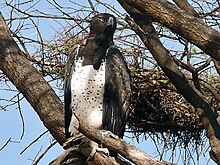
Polemaetus bellicosus -Masai Mara-8.jpgThe population of Africa’s largest eagle species is in freefall in South Africa and may be edging towards extinction, according to a new UCT study.

Martial eagle sightings have dropped by as much as 60% since the late 1980s, in stark contrast to human population growth across their shared natural habitat, the study published this week in the scientific journal Bird Conservation International found.

Although the exact reasons for the decline remains unclear, researchers say their findings point to an urgent need to better understand the threats to the bird.

The study also highlighted a decline in Martial eagle sightings within protected areas, including the Kruger National Park and the Kalahari Gemsbok National Park.

However, declining numbers of the species in protected areas were not as severe as elsewhere, suggesting that these areas could act to limit the factors leading to the sharp decline.

Dr Arjun Amar and PhD student DaniĆ«* Cloete from UCT’s FitzPatrick Institute of African Ornithology conducted the study using two Southern African Bird Atlas Project surveys carried out 20 years apart. 

Their previous research showed that comparing these surveys provided an accurate way of measuring changes in the population size of this species.

Martial eagle total population figures are still relatively inexact, but their conservation status was uplisted in 2013 from Near Threatened to Vulnerable - which means they are recognised to be globally threatened.


Sunday, 8 October 2017

Camera trap records nearly extinct cuckoo bird in Sumatra


by Basten Gokkon on 27 September 2017

A camera trap captured the Sumatran ground cuckoo in a national park.

The discovery of the avian species indicated that the park might be one of its last refuges.

The park agency said it would investigate the finding to make a conservation strategy for the cuckoo.

Park rangers in Indonesia said this week that they had photographed the nearly extinct Sumatran ground cuckoo (Carpococcyx viridis) for the first time in a protected area in North Sumatra, the first time in 10 years that anyone has caught a glimpse of it.

A camera trap in Batang Gadis National Park first captured the cuckoo last November at roughly 8.30 a.m., followed by another picture of the bird snapped about an hour later.

Based on the recorded images, park officials and experts from Conservation International (CI), an NGO, identified the sighted bird as the Sumatran ground cuckoo, which is listed as Critically Endangered by the IUCN.


Monday, 17 October 2016

‘India will lose all Great Indian Bustards by 2020’


Manka Behl | Updated: Oct 2, 2016, 12.34 AM IST
Nagpur: Bikram Grewal spent over five years to come up with a book weighing about four kilograms, presenting some 1300 odd species of birds found in India and neighbouring nations. But the conservationist fears for his avian friends, many of whom are facing extinction in our country.

When it comes to bird conservation, Grewal feels
nothing has changed for the good and that all bird species are endangered. “We are losing everywhere, population of common urban birds, migratory birds and rare birds have only witnessed a decline in India,” says the eminent birdwatcher. Without beating around the bush, he blames complete lack of political will. “We don’t need high-level science to save birds. Just had to keep their habitat sacrosanct but we couldn’t.”

This is exactly what happened with the Great Indian
Bustard (GIB), he says. “There are hardly 50 of them left in the entire country. 90% of the species are in Rajasthan, where its habitat is being drastically destroyed. By 2020, GIBs will be extinct,” adds Grewal. Though the situation is critical now, he adds that a lot can still be done to save the remaining population of the bird. “When villages can be relocated to protect tigers, similar efforts can also be taken for prominent bird habitats,” he says.


Is bird conservation being neglected amid tiger-centric conservation initiatives? “It has always been like this. There are hardly one or two bird sanctuaries in India. Laws exist but afforestation continues to take place on a large scale, taking away bird habitats. Conservation is better in Bhutan and
Sri Lanka. Here, funds are never allotted to birds,” Grewal says.


Bird population in urban areas is becoming homeless for the same reason. The birdwatcher says, “People keep saying we don’t see much of hornbills. But we are rapidly cutting tall and big trees which
home their nests. We are rapidly losing parks, gardens and green cover. There will soon come a time when we will spot birds only near army cantonment areas having some trees.”


Decline in the numbers of migratory birds is again bad news. “Our rivers are choked, some have dried out and some have become toxic. This is why not many migratory birds are seen today, a sign of an unhealthy biodiversity,” he says.


Dismal research on birds and
no follow-ups of whatever little has been done are also enemies of our winged friends. “After discovering that widespread use of diclofenac was linked to death of vultures, it took eight years to ban the deadly drug. We lost 50% vultures in one year. So even if the numbers are going up now, the rise is very slow,” says Grewal. He adds that scientific studies and surveys are needed along with activities like birdwatching to shift the focus on conserving birds. 

Monday, 10 October 2016

The grey parrot and the race against Africa’s wildlife extinction


The number of African greys has plunged to 1% of past levels, conservationists warn. But it is just one of a host of animals and plants on the continent whose future will be debated by more than 180 nations in Johannesburg this week

Saturday 24 September 2016 21.44 BST Last modified on Saturday 24 September 2016 22.00 BST 

Perry, a five-year-old African grey parrot, is for sale on a well-known pet trade website for £750. She looks in good condition with her large black bill, red tail and white mask and her owner says she can whistle the tune of Flower of Scotland, does a passable imitation of R2D2 and is “very clever and funny”.

What Perry’s Scottish owner does not tell prospective buyers is that the African grey is close to extinction in the wild largely because of the international pet trade.

Although there have been restrictions on the export of these small and intelligent birds since 2009, dealers pay a pittance for tens of thousands of them to be trapped every year in the rainforests of west and central Africa and smuggled out.

It’s easy to catch them, say researchers from Birdlife, a global grouping of conservation groups. A team of hunters will use decoys or go to the birds’ water and mineral licks in the forests where flocks gather. They then throw nets over them and take dozens at a time.

Once caught they will be smuggled over borders, stuffed in tiny cages and flown illegally to Europe, South Africa, the Middle East and China, where they may fetch up to £1,000 each. All this makes the African grey probably the most highly traded bird in the world, causing their numbers to plummet from Nigeria to Cameroon, and from Ivory Coast to the Democratic Republic of the Congo. Some conservationists estimate only 1% of their historical numbers remain.

This week moves are afoot that could give hope to the African grey’s future. Nine African states, the European Union and others will ask world governments and EU at the triennial meeting of the Convention on International Trade in Endangered Species of Wild Fauna and Flora (Cites) in Johannesburg to give the highest international protection to the bird. But it is far from the only species whose future hangs in the balance and whose fate could be determined at this year’s meeting. The Cites convention, signed by more than 180 countries and the EU, is the best hope the world has of stemming the growth in the £150bn a year wildlife trade and of reversing catastrophic animal and plant losses.

Sunday, 22 May 2016

Rare Central Florida sparrows hatch in captivity


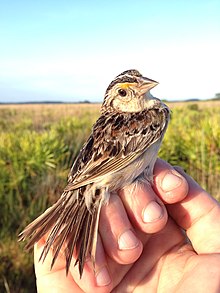
An emergency effort to prevent extinction of Florida grasshopper sparrows, found only in Central Florida, includes attempts to breed them in captivity. The first four birds hatched this week.

Contact Reporter Orlando Sentinel

Adult Florida grasshopper sparrow.jpg
Florida grasshopper sparrow chicks defy long odds
One of the nation's most endangered birds, a rare sparrow found only Central Florida, took a step away from potential extinction this week with the unprecedented hatching of four chicks in captivity.

"It's a historic breakthrough," said Ken Warren of the U.S. Fish and Wildlife Service, referring to the largely unexpected births of Florida grasshopper sparrows.

The parents were among three males and four females taken as chicks last year from treeless prairies south of Orlando, where only about 100 males have been tracked and the number of secretive females remains unknown.

Federal approval to capture the birds came after years of biologists agonizing over how to stop a plunge in the bird's population for reasons still not explained.

The seven were taken to Rare Species Conservatory Foundation in Palm Beach County, which specializes in rearing birds and animals on the edge of extinction.

"This is a very small group to be starting out with, and to be able to find a compatible pair of birds that are unrelated and happen to get along and happen to build a nest and happen to successfully hatch chicks – these are really long odds," said Paul Reillo, foundation director.

Reillo said he had expected many false starts instead of success in the pair's first nesting attempt.

He said the parents began to show signs of "sexual proclivity" early this spring and laid the first egg on April 26.

The first hatching was early Monday morning, with the others later in the morning, that afternoon and Tuesday morning.

Reillo estimated that each chick weighs less than 2 grams, or less than half of the weight of a nickel.