As regular CFZ-watchers will know, for some time Corinna has been doing a column for Animals & Men and a regular segment on On The Track... particularly about out-of-place birds and rare vagrants. There seem to be more and more bird stories from all over the world hitting the news these days so, to make room for them all - and to give them all equal and worthy coverage - she has set up this new blog to cover all things feathery and Fortean.
Showing posts with label kokako. Show all posts

Wednesday, 25 March 2020

West Auckland rats kill native kōkako chicks in Waitākere Ranges


13 Mar, 2020 4:46pm


West Auckland's latest clutch of precious kōkako chicks have fallen prey to rats after rodent numbers soared to record levels in the Waitākere Ranges.

Rat numbers exploded across New Zealand last year as residents in the Auckland suburb of Titirangi complained of huge "cat sized" rats brazenly scurrying through the centre of town.

Pest catchers also reported booming business as the rats ran riot across the city after feasting on food generated by a so-called mega-mast in which native trees fruited heavily.

Now conservationists say endangered kōkako chicks have paid the price with rats and other rodents reportedly destroying all the chicks and eggs in nests under observation at Forest & Bird's Ark in the Park conservation site in the Waitākere Ranges.

Thursday, 21 June 2018

Hope for ‘extinct’ bird


Sunday 17 Jun, 2018 | By Danielle Butler newsdesk@thewanakasun.co.nz

More than 100 reported sightings of the elusive South Island Kokako have given the Trust working to prove its existence hope that it is coming close.

The South Island Kokako Charitable Trust launched a search for the bird, once thought to be extinct, in January 2017, offering $10,000 to anyone who could provide credible evidence of the bird’s existence.

Potential sightings have been recorded from as nearby as Lake Hawea, although the Trust said that it was focusing its interest to the South of Reefton on the West Coast and the Granville Forest.

Trustee Ron Nilsson said, “We still need definitive evidence, a photo or video, but we really feel that we are getting closer with the help of so many people who are out walking, tramping or hunting and know what to look and listen for.

“We are very optimistic that proof will be found soon.”


Wednesday, 25 April 2018

Taranaki's kōkako population continues to grow


Taranaki's kōkako population is slowing climbing, with four more of the endangered birds making the region home over the past week.

Released into the Parininihi Forest, near Urenui, the new residents are a part of a catch and release operation in which 20 kōkako will be taken from the Rangitoto Ranges, on the northern edge of Pureora Forest Park, King Country, and relocated to the area this month.

Leading the efforts, Tiaki te Mauri o Parininihi Trust, responsible for bringing the rare bird back to rural Taranaki after a near 20-year absence, hopes to one day have 500 kōkako living at Parininihi.

And according to trust chair Davis McClutchie, they are well on their way.

Eighteen years after the last kokako, named Tamanui, was moved from Parininihi to a captive breeding programme run by the Department of Conservation (DOC), 12 of his descendants were brought to the national forest in May last year.

Davis said the additional 20 kōkako marked an important milestone for the Ngāti Tama-led trust and are critical in building a genetically healthy and robust kōkako population.

But he said the programme was bigger than just Parininihi.

 "As we strengthen and expand our pest control work and increase native populations, biodiversity corridors can be created connecting our work to other projects", Davis said.
Volunteer Phil Andrews, of Shell Taranaki, will be on the ground helping with the catching this week. 

Continued 

Sunday, 27 November 2016

Kōkako crowned Bird of the Year Monday, 31 October 2016, 9:37 am

Press Release: Forest And Bird
 
31 October 2016

The Kōkako has been crowned New Zealand's Bird of the Year after two weeks of close competition and heated campaigning.

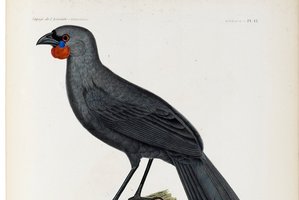
Best known for its deep organ-like call, the Kōkako is a large slate-grey bird with blue wattles.

Once threatened with extinction there were just 660 Kōkako left in 1999. But today, their numbers have passed 3000 individuals, and populations are recovering thanks to predator control and translocation programmes.

Like many of New Zealand’s native birds, the Kōkako is vulnerable to predation by introduced mammalian predators such as stoats, cats, possums and rats that kill eggs, young birds and adults.

The Kōkako’s successful campaign to win Bird of the Year was led by 16-year-old Oscar Thomas from Auckland, with help from the Rotoehu Ecological Trust in the Bay of Plenty.

“I first got interested in birds after my class visited Tiritiri Matangi Island when I was 10 years old. I didn’t see the Kōkako that day, but it was worth the return trip. It’s haunting call and ghostly appearance has fascinated me ever since” he said.

“It has the most beautiful call of all New Zealand’s birds and it’s the loudest in the forest. It sings with a deep, five-note call that makes the Tūī sound like an elaborate train wreck.”

While most teenagers have their eyes fixed on screens, Oscar can be found looking for birds. He is one of the youngest guides on Tiritiri Matangi, helps run a club for young birders, and has even volunteered to count rare birds on the Chatham Islands.
 

Wednesday, 29 June 2016

Push to bring kokako song back to Otanewainuku forest

By Ruth Keber


12:00 PM Sunday Jun 19, 2016


A rare New Zealand bird once close to extinction now has the opportunity to flourish in one of the Bay's most protected forests.

The kokako, known for its beautiful song, once thrived across the country but numbers slowly declined over the years until the population fell to 1000 to 1200 birds in the 1980s. The dark blue-greyish bird, which has bright blue wattles on either side of its beak, is slightly bigger than the tui. Nineteen of the species were first introduced to the Otanewainuku forest in 2010. By 2014, numbers had grown to 24.

The Otanewainuku Kiwi Trust has an opportunity to boost the population by 10 more birds in August, transferring them from the Kaharoa forest in Rotorua.

Otanewainuku Kiwi Trust chairman Hans Pendergrast said the kokako were not only special for their beautiful song, but the species' survival meant the survival of New Zealand's bush.

"We nearly lost them, we got down to such low numbers, they are far more endangered than kiwi.

Friday, 3 April 2015

Bird-spotters using technology to find Kokako


Friday 3 Apr 2015 6:33 p.m.

Bird-spotters hoping to prove the elusive South Island Kokako is not extinct believe modern technology could be the key to solving a 40-year mystery.

The species was thought to be extinct, but after reported sightings near Reefton it was reclassified as 'data deficient'.

The call of the South Island Kokako is something Rhys Buckingham hopes to one day hear for himself and despite hunting for 40 years, he's not ready to give up just yet.

"We've prepared a strategic plan and what we think now, to make any headway, we've got to use state-of-the-art hi-tech technology to try and get our bird," he says.

Mr Buckingham is wasting no time, setting up near Nelson where pest trapper Don Sullivan believes he spotted a South Island Kokako.

"I saw this bird and I said 'oh' and I looked at it and it was in a nest and it didn't do anything and it just stayed there and then I said 'oh, what a lovely little bird.'"

But identifying the bird isn't easy. In the past, feathers thought to be those of the Kokako have been DNA profiled but have either been lost or identified as coming from another species.


Thursday, 28 November 2013

'Extinct' South Island kokako could still be alive

A claimed sighting of the South Island kokako, a bird declared extinct six years ago, has fuelled hopes the species could still be alive.

Is the South Island kokako extinct? Maybe not. Painting by Jean Gabriel PretreAdvocacy group Forest and Bird said a sighting of the bird by two people near Reefton in 2007 had recently been accepted by the Ornithological Society's Records Appraisal Committee, which monitors the status of rare and endangered birds.
Before the Reefton sighting, the last accepted sighting of a South Island kokako was in 1967.

Te Ara Encyclopaedia of New Zealand says the kokako's haunting, evocative call is unlike any other bird's.

Tuesday, 26 February 2013

Rare birds get back on track


Sunday, 24 February 2013, 11:40 am
Press Release: New Zealand Government

Hon Dr Nick Smith

Minister of Conservation

24 February  2013       
Media Statement       
Rare birds get back on track

Whio (Wikipedia)
Kokako (Wikipedia)
The $1 million partnership between DOC and Air New Zealand to bring some of our most threatened birds back to our acclaimed Great Walks track network is a fantastic example of what can be achieved when business gets involved in conservation, says Minister of Conservation Dr Nick Smith.

“This is an inspiring partnership that benefits both conservation and tourism. It will create predator free zones for some of our most threatened birds while adding to the visitor experience on our most famous Great Walks,” says Dr Smith.

“This Bluegreen approach of finding environmentally responsible business partners to help fund conservation helps us do more in tight financial times. The benefits for conservation are more than just the $1 million, as Air New Zealand’s marketing muscles also helps us raise the profile of these threatened iconic birds.

“This is not just about international tourists. This is about New Zealanders being able to see birds like kiwi, whio, takahe and kokako in their natural habitat.

“Air New Zealand is showing real leadership and innovation with this initiative and I am encouraging DOC to continue exploring other partnerships that will help the conservation cause.”

http://www.scoop.co.nz/stories/PA1302/S00355/rare-birds-get-back-on-track.htm

Thursday, 11 October 2012

Karearea wins 2012 bird of the year


A bird known for its romantic yet blood-thirsty nature has won the title of 2012 Bird of the Year in a Forest & Bird poll.

The karearea, or New Zealand falcon, won 1261 votes in the conservation organisation’s eighth annual poll, followed by the kokako in second place with 965 votes and the ruru with 663 votes.

Forest & Bird advocacy manager Kevin Hackwell says the karearea is a great romantic, with birds going to great lengths to woo each other.

“During courtship, couples will perform an aerial ballet, swapping food mid-flight, performing mock attack dives or spiralling gracefully landward.”

But the bird also is a skilled hunter, able to kill prey larger than itself with a lethal bite to the neck.


Read more: