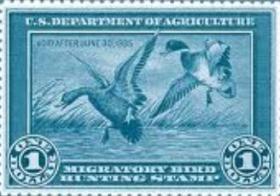
As regular CFZ-watchers will know, for some time Corinna has been doing a column for Animals & Men and a regular segment on On The Track... particularly about out-of-place birds and rare vagrants. There seem to be more and more bird stories from all over the world hitting the news these days so, to make room for them all - and to give them all equal and worthy coverage - she has set up this new blog to cover all things feathery and Fortean.
Showing posts with label bird habitat. Show all posts

Monday, 8 April 2019

Birds bug out over coffee


Research on coffee farm habitats can help both fowl and farmers
Date:  March 27, 2019
Source:  University of Delaware
Coffee grown under a tree canopy is promoted as good habitat for birds, but recent University of Delaware research shows that some of these coffee farms may not be as friendly to our feathered friends as advertised.
Working with geographer Robert Rice of the Smithsonian Migratory Bird Center (SMBC), University of Delaware Professor of Entomology Doug Tallamy and former UD graduate student Desirée Narango studied canopy tree preference of birds in shade-coffee farms with a particular focus on the implications for migratory birds that spend the winter in neotropical coffee farms. The research was published in the journal Biotropica.
Americans drink a lot of coffee -- 64 percent of those aged 18 or over had at least one cup per day. That's more than 150 million people in the U.S. and we all know one cup is a light day for many of our friends and family. This incredible demand for coffee means a lot of land in tropical zones is used to grow coffee beans in neotropical countries like Colombia and Nicaragua (where the UD study took place). Across central and South America, land converted to coffee agriculture occupies more than five million hectares of what was once prime overwintering natural habitat for migratory birds.
"Coffee grows right at the altitude that most of our neo-tropical migratory birds are spending the winter, particularly species that are losing one to two percent of their population every year like the cerulean warbler, Canada warbler and wood thrush," said Tallamy. "A lot of this land has been leveled for coffee farms."

Sunday, 1 January 2017

‘We have destroyed bird habitat... no intentions to protect avians’

| | Updated: Dec 25, 2016, 12.05 PM IST

NAGPUR: Over 35 years back, a young overworked dentist was facing high stress. His friends suggested him to find a hobby for de-stressing. Since he always had an interest in nature, he chose birdwatching.

What started as a leisure pursuit for Dr Anil Pimplapure eventually turned him into one of the finest ornithologist of the region. He has spent years covering every district of Vidarbha in search of the Great Indian Bustard (GIB), its nests, eggs or any other evidence suggesting the almost-extinct bird's presence.

Ahead of receiving the prestigious late Laxmikant Harkare Smruti Vanyajeev Samvardhan Puraskar 2016 at a programme to be held on Tuesday, Pimplapure talks about the declining population of migratory and urban birds, failure in conservation of the Great Indian Bustard (GIB) and the psychological impacts of birdwatching.

Continued

Thursday, 10 April 2014

State getting millions for bird habitat

By ASSOCIATED PRESS


LANSING, MI (AP)-- Michigan is getting a share of $61 million in funding to protect, restore and enhance wetlands and other areas that are migratory bird habitats. 

The Michigan Upper Peninsula Coastal Wetland Project III is getting $1 million to target habitat gaps and habitat management limitations. And a Michigan project involving the U.P.'s Garden Peninsula is also getting $1 million to help protect land.


The Migratory Bird Conservation Commission recently approved $54.7 million to protect, restore, and enhance more than 200,000 acres of habitat in the United States, Mexico and Canada. It also approved nearly $6.6 million related to land acquisitions. 

Saturday, 8 March 2014

CONSERVATION: Groups Join Forces To Focus On Bird Habitats


THE Bahamas National Trust and the National Audubon Society are joining forces to focus on improving bird habitats.

#The trust recently hosted a reception, at which both groups signed a memorandum of understanding to foramlise the collaboration.

#The goal is to improved the conservation of bird habitats and key species within the national park system and across The Bahamas.

#Audubon is a non-profit organisation dedicated to environmental conservation with a special focus on birds.


#“Audubon has been dedicated to conservation effort in the Bahamas for more than a century,” said David Yarnold, president and CEO of Audubon.


#“Audubon has helped to establish the Wild Bird Protection Act, protected the dwindling flamingo population in the 1950s - which saved flamingos from near extinction, provided scientific guidance for the establishment of the first ever land and sea park in the Exumas and provided the science for white-crowned pigeons that established hunting bag limits.”

Wednesday, 10 April 2013

Parkgate marsh fire destroys birds' habitat


A fire that broke out on marshland in Cheshire has destroyed the the habitat of many nesting birds and local wildlife, the RSPB has said.

The blaze began near The Anchorage in Parkgate, near Neston, on Sunday afternoon and spread across a large area towards The Parade.

Cheshire Fire and Rescue Service said crews used beaters and hosereel jets to put the fire out by about 17:50 BST.

Police said the fire was believed to have been started deliberately.

A spokeswoman said: "Cheshire Police are keen to speak to anyone in the local area who may have witnessed anything that may assist the investigation, to contact Ellesmere Port and Neston Neighbourhood Policing Team."

Colin Wells, RSPB site manager on the Dee Estuary Reserve, said conditions on the marsh were very brittle and dry, meaning the fire spread quickly.

"Part of the reed bed had been burnt and there were substantial areas of rushbeds and saltmarsh vegetation," he said.

"It's always a problem at this time of year if we have a dry spell, and the cold easterly winds had dried the vegetation out."

He added: "The area is important for nesting birds like reed warblers, reed buntings and water rail. They have lost their nesting areas.

"We have also got harvest mice, so they have lost their habitat and probably a lot of them have been burnt or killed."

http://www.bbc.co.uk/news/uk-england-merseyside-22062958

Saturday, 5 January 2013

Report finds $50M in post-Sandy bird habitat projects needed

The human devastation from Hurricane Sandy was so severe that not much attention was paid to other things -- such as the destruction of habitats that are important to birds.

But earlier today, the Manomet Center for Conservation Sciences and the National Fish and Wildlife Foundation released a report detailing nearly $50 million in restoration projects that are needed to help birds and bird habitats that were affected by Sandy.

"Hurricane Sandy moved massive amounts of coastal sediments with the extreme power of storm-driven water, changing barrier landscapes, eroding important bird nesting islands and blowing out dikes of impoundments managed specifically for breeding, migrating and wintering shorebirds, seabirds, wading birds and waterfowl," the report noted.

Among the protects is $10 million needed to repair the Delaware Bay beaches in New Jersey, from Reeds Beach to Pierce's Point. This is prime spawning habitat for horseshoe crabs. Every spring -- notably on the highest tides in May -- the crabs swarm ashore to lay their eggs. That just happens to be when red knots and other shorebirds are arriving partway through their migrations from wintering grounds in South America to breeding grounds in the Arctic. They depend on the crab eggs to refuel and regain much-needed weight so they can continue their journey.

But the report said that "the cascading impact of storm surge and sand displacement" decreased the horseshoe crab spawning habitat "significantly." 

"With almost no sand for horseshoe crabs to spawn, the 'lifeblood' of many migrating shorebirds in the the Atlantic, horseshoe crab eggs will be virtually nonexistent," the report said.