Posted on December 27, 2016. Tags: alala
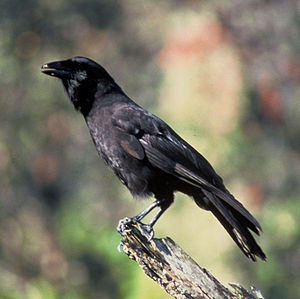
(Hilo, HI) – Two young ‘Alalā were moved back into an aviary at the State of Hawai‘i’s Pu‘u Maka‘ala Natural Area Reserve last week, as conservationists work to overcome challenges faced by the birds during their reintroduction. A group of five birds were released into the protected reserve on December 14, 2016. Although the birds had been observed doing well and eating from feeders placed in the area, three birds were found dead over the last week. The confirmed cause of the deaths is currently unknown but conservationists hope to gather information about what happened to the birds through necropsy examinations.
John Vetter, a wildlife biologist with the Dept. of Land and Natural Resources-Division of Forestry and Wildlife said, “Some level of mortality is to be expected when reintroducing a species back into the wild and we were prepared for that possibility. The initial days of release are always the most difficult stage of any release program, and the level of uncertainty is also highest with the first release cohort. We decided to recapture the remaining birds to ensure their safety while we await the results of the necropsies, so that we can learn, respond, and continue to strive for the long-term success of the Alala.”
continued
(Hilo, HI) – Two young ‘Alalā were moved back into an aviary at the State of Hawai‘i’s Pu‘u Maka‘ala Natural Area Reserve last week, as conservationists work to overcome challenges faced by the birds during their reintroduction. A group of five birds were released into the protected reserve on December 14, 2016. Although the birds had been observed doing well and eating from feeders placed in the area, three birds were found dead over the last week. The confirmed cause of the deaths is currently unknown but conservationists hope to gather information about what happened to the birds through necropsy examinations.
John Vetter, a wildlife biologist with the Dept. of Land and Natural Resources-Division of Forestry and Wildlife said, “Some level of mortality is to be expected when reintroducing a species back into the wild and we were prepared for that possibility. The initial days of release are always the most difficult stage of any release program, and the level of uncertainty is also highest with the first release cohort. We decided to recapture the remaining birds to ensure their safety while we await the results of the necropsies, so that we can learn, respond, and continue to strive for the long-term success of the Alala.”
continued