As regular CFZ-watchers will know, for some time Corinna has been doing a column for Animals & Men and a regular segment on On The Track... particularly about out-of-place birds and rare vagrants. There seem to be more and more bird stories from all over the world hitting the news these days so, to make room for them all - and to give them all equal and worthy coverage - she has set up this new blog to cover all things feathery and Fortean.
Showing posts with label Derbyshire. Show all posts

Friday, 28 December 2018

Gull dies after becoming tangled in balloon


06/12/2018

The severe danger that balloons pose to wildlife has once again been highlighted following the death of a European Herring Gull in Derbyshire.
After a member of the public spotted the struggling and distressed bird hanging from a telephone wire on Thornbrook Road in Chapel-en-le-Frith, the RSPCA were swiftly on the scene. However, despite an officer managing to free the gull, which was thought to have been hanging there for several hours, it sustained very serious injuries and had to be put down.
Adam Grogan, Head of Wildlife at the RSPCA, said: "It's very sad to see that this poor bird suffered like this because of a single balloon and, although balloons released into the sky make an impressive sight, this case really highlights why they are a problem.
"Deflated or fragments of balloons can be eaten by accident or mistaken for food. Ingesting balloons can cause a slow death to wild birds and mammals as well as farm animals, horses and marine life, by blocking the digestive or respiratory tracts, and the attached strings can strangle or cause animals to get tangled, as happened in this case."
Lee Stewart, manager at Stapeley Grange, added: "Our vets tried everything they could for the gull but sadly its injuries were too severe. Frustratingly, as with all cases we see involving litter, this could have easily been avoided."

Wednesday, 28 December 2016

Beeley struggles to cope as thousands flock to see rare dusky thrush


By jilldcfc  |  Posted: December 12, 2016

The village of Beeley has been struggling to cope with a huge influx of birdwatchers who have flocked to Derbyshire in their thousands to see a rare dusky thrush.

The arrival of the bird – more usually seen in China or Japan in winter - has sparked huge excitement in the birdwatching community across the UK and abroad.

More than 2,000 people have visited the village in the past week – around 1,000 last weekend - bringing business to the area's pubs, cafes and B&Bs, but the volume of people has caused parking problems.

Monday, 1 August 2016

'Extremely rare' bird spotted at Derbyshire nature reserve


By Martin_Naylor  |  Posted: July 23, 2016

An "extremely rare" bird, which has only been seen in Derbyshire eight times before, has arrived at a nature reserve in the county.

The Caspian tern was spotted at visited Derbyshire Wildlife Trust's Carr Vale Nature Reserve on Friday.

Nick Brown, of the trust, said, "We think there are only around 290 records of Caspian terns in the UK and most of these sightings have been coastal.

"It is extremely rare to see one in Derbyshire, this is only the ninth record. I was lucky enough to see one at Willington Gravel Pits in 1993.


Tuesday, 19 January 2016

Upland birds on the up on the moors

The Eastern Moors in Derbyshire's Peak District is bucking the national trend with an increase in the numbers of threatened bird species.

A survey of breeding birds at Eastern Moors has revealed the Peak District site is a surprising haven for upland species that are vanishing elsewhere in Britain.

Since the National Trust and the RSPB took over the management of the moors on the edge of Sheffield five years ago, Whinchat numbers have more than doubled, increasing from 25 pairs in 2010 to 60 in 2015. Whinchat arrives every summer from Africa to breed in the British uplands, and was recently added to the Red List of high conservation concern following a 50 per cent decline in Britain since the 1990s.


Monday, 16 November 2015

Is it a bird? Is it a plane? Just what are these men braving the rain to see?

 12:33 Tuesday 10 November 2015 11:00 Monday 09 November 2015

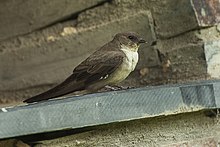
Well actually it is a bird. They’ve all been gathering in Chesterfield hoping to catch a glimpse of an extremely rare bird never spotted in Derbyshire before, which is calling the Crooked Spire home.

Eurasian Crag-Martin - Estremadurai 1779 (16772419967).jpgThe feathered visitor is the rarest bird the county has seen since an albatross in the fifties.

Bird watcher Roy Frost spotted the rare Crag Martin, which usually lives in Southern Europe, around the Chesterfield landmark yesterday (Sunday).

Roy, joint county bird recorder for Derbyshire, said the Crag Martin has never been spotted in Derbyshire before.

He said the bird has only been seen in the UK 13 times ever.

Roy, who has recently written a book called The Birds of Derbyshire, said: “You would normally see this bird in France, Spain, Italy and other places in Southern Europe.

“For it to be in Chesterfield is really exciting. It’s never been seen in Derbyshire before so a lot of people are going up to the Crooked Spire to see it for themselves.”

He added: “It’s difficult to say why this bird has come to Chesterfield. I can only guess that it’s been blown off course with the strong winds recently.

Thursday, 5 March 2015

Peregrine falcon found shot dead at Derbyshire Wildlife Trust's headquarters

Police launch investigation into illegal killing of male bird of prey that was nesting in a mill tower at the Trust’s offices in Belper


Tuesday 3 March 2015 13.32 GMTLast modified on Tuesday 3 March 201514.51 GMT

A peregrine falcon which was nesting on Derbyshire Wildlife Trust’s office roof has been discovered shot dead outside the building in Belper.

Police have launched an investigation into the illegal killing after the corpse of the male bird was found by a local photographer and x-rays revealed it had been recently killed by a shot lodged in its shoulder.

“Everybody is devastated,” said Kaite Helps of Derbyshire Wildlife Trust. “The nest is in one of the towers of the old mill and it was well-known in Belper. Photographers would come daily to take pictures of the birds.”

It is not known if the killing was a provocation by someone opposed to raptor conservation but Derbyshire Wildlife Trust said it was a deliberate act and there was a “possibility” that the peregrine had been shot on their grounds.

The male was part of a pair which produced four chicks last year and three in 2013 after discovering one of the Victorian mill’s towers was a suitable nesting site the previous year.

Thursday, 16 October 2014

Noisy cockerel gets 'bird ASBO' because his early morning calls wound up owners' neighbours


Husband and wife Philip and Caroline Sutcliffe received orders to silence their cockerel after neighbours in Eyam, Derbyshire, complainted about his morning wake up calls
Yahoo News – Wed, Oct 15, 2014

Noisy: Willy, Britain's first 'ASBO cockerel'. (SWNS)

Willy the noisy cockerel has been given a ‘bird ASBO’ - after his early morning crowing drew complaints from his owners’ neighbors.

Husband and wife Philip and Caroline Sutcliffe received orders to silence their cockerel after neighbours in Eyam, Derbyshire, complained about his morning wake up calls.

The noisy bird lives on the couple's idyllic village farm with his chicken friends, but left his owners served with a noise abatement notice when one neighbour took action against his unmissable call.

The couple have been told they either stop the bird crowing before 8am, or get rid of him by October 19.

Mr and Mrs Sutcliffe claim they have tried everything to pinch the crow's cries in the early hours, including keeping him in the dark and in a small space, but to no avail.


Sunday, 11 May 2014

Goshawk found dead in the Peak District

Published on the 09 May 2014 
16:35

Derbyshire police and the RSPB are appealing for information following the discovery of a dead female goshawk with two broken legs.

The bird of prey was discovered at Chatsworth estate by a member of the public who alerted the RSPB on April 2.

The charity’s investigations team recovered the bird and sent it for a post-mortem examination by an expert avian pathologist working for the Animal Health Veterinary Laboratory Agency (AHVLA) in Scotland.

Post-mortem analysis revealed that both of the goshawk’s legs had been broken in the same place – injuries that are consistent with being caught in a spring trap. With the evidence suggesting an unnatural death, the RSPB passed the matter on to Derbyshire police.

Spring traps are only lawful if placed in accordance with guidance for their use; for example in tunnels to catch stoats and weasels or in situations where they cannot trap non target species.

Historically birds of prey have been deliberately targeted by the placing of spring traps on poles or stumps. This practice has been illegal since 1904 and carries a maximum penalty of a £5,000 fine and or six-months imprisonment.

Tuesday, 8 April 2014

RARE BIRD SPECIES: Hotline to report Derbyshire sightings of rare hen harriers

By Derby Telegraph | Posted: April 03, 2014
A HOTLINE has been opened so walkers, cyclists and bird watchers in Derbyshire can report sightings of one of the country's rarest species.

The RSPB has relaunched the number in a bid to find out more about the hen harrier in central and northern England.

The charity says the birds are among the most enigmatic in the UK, with males performing aerobatic "sky dances" in spring.

A spokesman for the RSPB said: "I hope that anyone lucky enough to spot one of these birds in Derbyshire will take the time to call us.

"Reports of hen harriers via the hotline in previous years have contributed vital information to help monitor and protect these rare birds."

The harrier hotline is 0845 4600 121 and sightings can also be reported by e-mail at hen harriers@rspb.org.uk, including the date and location of the sighting with a six-figure grid reference if possible.


Thursday, 2 May 2013

TURNDITCH: Dead buzzard had its beak bound

Published on 01/05/2013 11:24

Police in Derbyshire are investigating after a dead buzzard was found on land near Turnditch with its beak apparently bound.

Wildlife crime officers are working with the RSPB to investigate the circumstances surrounding the bird’s death.

It was found by a member of the public on Thursday, April 11 and appeared to have had a hole forced through its beak which had then been bound closed with twine.

Wildlife Crime Officer PC Emerson Buckingham said: “This bird was most probably alive when it was attacked and may have starved to death as it would have been unable to drink or eat with its beak bound.

“We continue to work with the RSPB to investigate the cause of the buzzard’s death.

“Any member of the public who finds dead birds of prey should contact police and are advised not to touch them.”

A number of poisoned buzzards were found nearby in Kirk Ireton in 2010.

Buzzards are a protected species and anyone caught harming or killing them could face a £5,000 fine or up to six months in prison.

Anyone with information about the incident is asked to call PC Buckingham on 101 or the RSPB on 0845 466 3636.

Monday, 24 December 2012

Leucistic robin has 'Santa beard'


‘Santa Robin' is timely leucistic bird
December 2012. This remarkable bird has been reported to the British Trust for Ornithology's (BTO) Abnormal Plumage Survey.

The timely ‘Santa Robin', which was seen by Ian Wilson in Derbyshire, is a leucistic bird. This inherited disorder causes parts of a bird's plumage not to have their normal colour and to appear white, often affecting areas around the face and on the wings.

Most common in blackbirds
It's not just Robins that are being spotted through the BTO Abnormal Plumage Survey. In total, over 1,500 birds across more than 35 species - ranging from Blue Tit and Chaffinch to Buzzard and Coot - have already been recorded in the UK's gardens. Blackbirds with unusual white feathers have been logged most often, with members of the crow family, including Jackdaw, Carrion Crow and Rook, also featuring highly.


Tuesday, 9 October 2012

Call for tough new laws to protect birds of prey

A NEW survey has revealed that 20 incidents of the poisoning, shooting and trapping of wild birds have been reported in Staffordshire and Derbyshire.

The RSPB has disclosed that its investigation unit had to deal with seven incidents in Staffordshire and 13 in Derbyshire during 2011 involving red kites, barn owls, peregrine falcons, goshawks and other persecuted species.

Fen Gerry, speaking for the RSPB in the Midlands, said: “Among the wildlife crime figures in the Midlands, there were reported incidents of birds of prey persecution, egg collecting incidents, the taking and sale of wild birds and reports of poison and pesticide incidents.


Continued: http://www.burtonmail.co.uk/News/Call-for-tough-new-laws-to-protect-birds-of-prey-05102012.htm