As regular CFZ-watchers will know, for some time Corinna has been doing a column for Animals & Men and a regular segment on On The Track... particularly about out-of-place birds and rare vagrants. There seem to be more and more bird stories from all over the world hitting the news these days so, to make room for them all - and to give them all equal and worthy coverage - she has set up this new blog to cover all things feathery and Fortean.
Showing posts with label birds under threat. Show all posts

Sunday, 26 January 2020

Conservation group says Mandalay birds need help

PHYO WAI KYAW 21 JAN 2020

A local conservation group will present to the Mandalay Region Forest Department a list of birds that need to be protected.

Daw Thiri Dae We Aung, managing director of the Biodiversity and Nature Conservation Association, said the survey, which was conducted in Rakhine, Mon, Bago and Yangon regions and states, will be submitted by the end of the month.

“We will propose bird species to conserve, and detail where bird hunters are active and selling,” she said.

The survey is aimed at supporting the government’s environmental protection campaign and the 2018 Biodiversity and Conservation of Protected Area Law.

Under the law, anyone guilty of unlicensed hunting or violating hunting rules faces a maximum three years in prison, a maximum fine of K500,000 (US$340), or both.

Wildlife, including birds, is essential for a healthy ecosystem, and water birds are a useful indicator of wetland health.

The association conducted a survey of birds in Paleik, Pyu, Sakar, Manaw, Sont Ye and Taungthaman lakes in Mandalay on January 12 and 13, Daw Thiri Dae We Aung said.

“We found rare species of water birds like Baer’s pochard in Paleik and Manaw,” she said. “The birds migrate in April and May, so we have to wait to count them. Paleik and Sont Ye lakes and the wetlands are essential for water birds.” – Translated

Monday, 9 July 2018

In the shadow of Canada’s biggest city, the piping plover struggles to survive


IVAN SEMENIUKSCIENCE REPORTER
PUBLISHED JULY 3, 2018UPDATED 2 DAYS AGO

Endangered they may be, but, this summer, two piping plovers are raising a family of tiny chicks on a Toronto beach where the species has not successfully nested in more than 80 years – all within sight of downtown skyscrapers, hungry predators and airplanes taking off overhead.

Starting on June 20, a total of four eggs hatched in the couple’s nest on the sand at Hanlan’s Point on Toronto Island. Looking no bigger than fuzzy golf balls on toothpicks, the hatchlings have been scurrying around under their parents’ watchful gaze ever since.

“Everybody’s loving them,” said Andrea Gress, who co-ordinates the monitoring of piping plover nests across Ontario for Bird Studies Canada, and who has been working with volunteer monitors at the site.


Thursday, 24 August 2017

Asia’s Harry Potter obsession poses threat to owls

From Indonesia to India, wild birds are being sold as pets to families who want their own Hedwig. Ecologists call for protection to help species survive

Saturday 12 August 2017 21.44 BSTLast modified on Sunday 13 August 2017 06.43 BST

The Harry Potter phenomenon has broken publishing and cinema box-office records and spawned a series of lucrative theme parks. But wildlife experts are sounding the alarm over a sad downside to JK Rowling’s tales of the troubled young wizard. The illegal trade in owls has jumped in the far east over the past decade and researchers fear it could endanger the survival of these distinctive predators in Asia.

Conservationists say the snowy owl Hedwig – who remains the young wizard’s loyal companion for most of the Harry Potter series – is fuelling global demand for wild-caught birds for use as pets. In 2001, the year in which the first film was released, only a few hundred were sold at Indonesia’s many bird markets. By 2016, the figure had soared to more than 13,000, according to researchers Vincent Nijman and Anna Nekaris of Oxford Brookes University in a paper in Global Ecology and Conservation. At around $10 to $30, the price tag is affordable to most middle-class families.

The issue is of critical concern because the owls being offered for sale are nearly all taken from the wild. “The overall popularity of owls as pets in Indonesia has risen to such an extent that it may imperil the conservation of some of the less abundant species,” Nijman and Nekaris say.


Wednesday, 25 May 2016

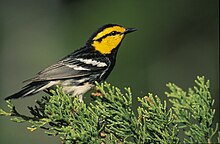
One Small Bird Faces Off With the Lone Star State to Keep Its Protection

The Endangered Species Act is all that stands between the Golden-cheeked Warbler and extinction.
    
May 23, 2016

Dendroica chrysoparia1.jpg
A well-funded group of anti-conservation interests wants to strip the warbler of its endangered status.
And it may be the first of many victims.

In the four decades since the Endangered Species Act (ESA) became law, it hasn't just protected the hundreds of species that have found themselves on the Endangered Species List; it has also inspired proactive collaboration to protect species before a listing becomes necessary. Last year, when the Greater Sage-Grouse was able to remain off the list thanks to a groundbreaking joint effort by different interest groups to develop a plan to protect its habitat, it was a major victory for birds, landowners, and conservationists alike.

But the Greater Sage-Grouse success doesn't mean the ESA is obsolete—not by a long shot. The protections of the ESA are crucial to the survival of species like the endangered Golden-Cheeked Warbler, a small pin-striped bird that breeds and rears its young exclusively in Texas, which has found itself at the center of a delisting effort by groups that have an interest in developing its habitat.

In 
an article for The Huffington Post, Audubon CEO David Yarnold outlines the challenges facing the Golden-cheeked Warbler:

"The U.S. Fish and Wildlife Service put the warbler on the endangered species list in 1990 because its habitat in Hill Country was being sliced up and sold off to developers at such an alarming rate.

Even with the protection of the act, an estimated 1.5 million acres (nearly a third of the Golden-cheeked Warbler’s home range) disappeared between 1999 and 2011.
And now a coalition of groups and individuals would like to strip the warbler of its safety net altogether so developers have an easier time paving over more Hill Country habitat. 

The little songbird is up against some Goliaths that include former Texas Comptroller, Susan Combs and current Texas Land Commissioner George P. Bush—grandson of former President George H. W. Bush—along with a foundation supported by billionaire David Koch."