As regular CFZ-watchers will know, for some time Corinna has been doing a column for Animals & Men and a regular segment on On The Track... particularly about out-of-place birds and rare vagrants. There seem to be more and more bird stories from all over the world hitting the news these days so, to make room for them all - and to give them all equal and worthy coverage - she has set up this new blog to cover all things feathery and Fortean.
Showing posts with label Hampshire. Show all posts

Thursday, 25 July 2019

Western Cattle Egret nests in three new counties


16/07/2019

Western Cattle Egret has bred in three counties for the first time this year, as the species' seemingly inevitable – yet somewhat drawn out – colonisation continues. Nesting birds have been confirmed in Essex, Hampshire and Northamptonshire for the first time, with the species only previously breeding in Cheshire and Somerset.
The species has increased significantly during the past decade. In winter 2007/8, an influx numbering some 200 individuals resulted in at least two pairs breeding on the Somerset Levels in summer 2008. Another large influx occured in winter 2015/6 and, the following summer, at least one pair nested in Cheshire.
Despite this, no nests were publicised last year (though it's thought some birds bred), perhaps symptomatic of a somewhat staccato colonisation that has stopped and started over the past decade, rather unlike that of Little Egret in the late 1990s. However, following another influx during the winter of 2018/19, Western Cattle Egret has spread into at least three new counties, suggesting the most successful breeding season ever for the species in the UK.
At Chigborough Lakes in Essex, a pair has raised four chicks that, on 8 July, looked set to fledge. In Hampshire, the anticipation of as many as seven nests at Langstone Mill Pond in Chichester/Langstone Harbour (a site of significance during the early days of Little Egret colonisation) was confirmed on 5 July.
It's likely that more breeding success will be confirmed in the coming weeks and months, and it seems plausible that, after an up-and-down decade since the first ever breeding in 2008, Western Cattle Egret may now be here to stay.


Thursday, 21 February 2019

Rare sighting of Britain's largest bird of prey in New Forest


30th January
Rare sighting of White-Tailed Eagle in the New Forest
By Bradley Halcrow Junior Reporter
BRITAIN' largest bird of prey has been spotted in the Hampshire countryside.
Birdwatchers have seen  a young white-tailed eagle, a species which has made an appearance only twice in the area in the past decade, in the New Forest.
According to the Hampshire & Isle of Wight Wildlife Trust, the UK’s largest bird of prey was last seen in the county in 2011 and 2008 - and before that there was a 60-year gap.
Also known as a sea eagle it was sighted at the trust’s reserve at Blashford Lakes last month, and again by the Shell Station on the A31 at Picket Post, which overlooks Roe Inclosure.
A Hampshire & Isle of Wight Wildlife Trust spokesperson said: “White-tailed eagles are a rare sighting in Hampshire, with only two previous sightings in the past 11 years.
“They’re an impressive sight to see, being the UK’s largest bird of prey with a wingspan of up to 2.2m (over 7 feet) – but are usually only found in Scotland where 40 pairs breed.

Monday, 7 January 2019

Winter birds thrill Norfolk wildlife photographers


A gathering of winter visitors has attracted crowds of birdwatchers and photographers to a Norfolk police station.

The waxwings were spotted eating berries from a rowan tree outside the building in Long Stratton.

The birds, recognisable by their distinctive red and yellow feathers, are not native to the UK but tend to visit during the winter months.

"They are a scarce winter visitor but do on occasions appear in larger numbers," said Peter Hayman, from Rare Bird Alerts.

"It just depends on the availability of food and/or weather within their winter range.

"We haven't seen many in Norfolk this winter so it's no wonder these have caught people's attention."

05 Jan 2019

Source  


2nd January
Twitchers treated to rare bird sighting at Asda Totton

By Chris Yandell dailyecho_New Forest Chief Reporter


TWITCHERS descended on a Hampshire supermarket after reports that exotic birds had been seen in the area.

Birdwatchers anxious to catch a glimpse of waxwings converged on the car park at the Asda store in Maynard Road, Totton.

One of the first to see and photograph the birds was Cllr David Harrison, who represents part of Totton on the county and district councils.

He said: “I’m absolutely thrilled to have seen these rare visitors - they’re truly one of the most attractive birds to be seen in Britain.

“I don’t expect them to stay around for long as there aren’t a great many trees with berries on them.

“Normally waxwings only come this far south during a really cold snap so it’s a wonderful surprise and a great way to start the birdwatching year.”

Twitchers also rushed to investigate sightings of waxwings in nearby Beaumont Road and Jennings Road.

Wednesday, 24 October 2018

Hampshire Mediterranean Gulls experience population boom


16/10/2018
Mediterranean Gull is experiencing a remarkably rapid population increase in Britain, with a record 1,736 pairs nesting at Langstone Harbour this year. The Hampshire reserve has enjoyed an incredible 108 per cent increase on last year's breeding population, and a truly eye-catching rise in numbers since the first pair bred on the reserve just 20 years ago.
The species first attempted to nest in Britain only 50 years ago, in 1968, when a pair raised two young on an island off Needs Ore Point, Hampshire, also in The Solent. Indeed, until 1962 Mediterranean Gull was still a British Birdsdescription species, but numbers gradually increased – solidly rather than spectacularly – until the turn of the millennium. In 2000, the year of the last breeding seabird census in Britain, the number of pairs was found to be 108, but by 2010 this had increased to over 600-700 nesting pairs nationwide, mostly on the south and south-east coasts of England.
However, during the past seven years, a phenomenal increase has taken place at Langstone Harbour, as the number of occupied nests shot up from 498 in 2012 to 1,736 in 2018. Other exceptional counts have been recorded away from breeding colonies during the past few months, with 1,374 individuals past Hemsby, Norfolk, on 15 August, 1,230 (including 420 juveniles) at Ferrybridge, Dorset, on 31 July and over 1,000 at nearby Chesil Cove, Dorset, on 28 July.
At Langstone Harbour, Mediterranraean Gulls nest among Black-headed Gull colonies, forming denser sub-colonies within them at regular points, with Sandwich Tern sub-colonies often adjacent to them. Over the past two breeding seasons, approximately 200 young have been fitted with yellow colour rings in an attempt to better understand this rapid expansion in numbers. The success of Mediterranean Gull is a dramatic one – around 60 years ago, a westward expansion began in Hungary (where it was breeding regularly by 1953), then into Germany and Belgium during the 1960s, and The Netherlands by 1970. The first recorded breeding attempt in Northern Ireland was in Antrim in 1995, and non-breeding Mediterranean Gulls are becoming increasingly frequent in the far north of Britain. 

Friday, 1 September 2017

Rare birds of prey breed at Titchfield reserve for the first time in 45 years


ONE of the UK’s rarest birds of prey has returned to a Hampshire nature reserve for the first time in 45 years.

A pair of marsh harriers have bred at Titchfield Haven nature reserve having raised two chicks in reed beds there for the first time since it was established in 1972.

The pair have gradually been spending more time at the reserve near Fareham and were first spotted in early April when they were seen performing sky-dancing manoeuvres as they courted, before beginning to collect sticks for their nest.

Finally on an early, misty morning in late June, two newly fledged young were seen leaving the nest and taking to the skies before becoming fully independent several weeks later.

Rangers have said that the parents have now left, but the young can still be seen and are likely to stay for a few more weeks before migrating to Europe or North Africa for the winter and then returning to Titchfield early next spring.

Marsh Harriers were once widespread, but by the end of the 19th century, habitat loss and persecution had wiped them out.


Friday, 4 August 2017

Great white egret bird returns to New Forest wildlife reserve ready for winter


Aaron Shaw  Trainee Reporter

ONE of the UK's rarest birds has returned to a Hampshire wildlife reserve.

Known as Walter, the great white egret is a familiar sight to the thousands of visitors that visit the Blashford Lakes Nature reserve near Ringwood every year.

Great white egrets are one of the rarer feathered visitors to the UK, and the bird usually arrives in the UK in August ready for winter, which Walter has done since 2003.

He spends six months at the reserve which is managed by the Hampshire and Isle of Wight Wildlife Trust.

Bob Chapman, reserves officer said: "Walter has become a much loved winter fixture on the reserve and although not the rarity he was when he first turned up, he is still a great sight.
"Especially good views can be had when he is fishing close to the Ivy North hide, where sometimes he can be seen alongside kingfisher and bittern in the water."

A similar size to a heron, the great white egret was close to extinction in Europe a few decades ago, with around 35 spending their winter in the UK.


Wednesday, 26 April 2017

RSPB survey shows unusual visitors flock to Hampshire gardens

Unusual visitors flock to Hampshire gardens

A NATIONAL charity has issued the Hampshire results for its Big Garden Birdwatch survey.

The RSPB survey results show that common garden visitors such as robins, starlings and blackbirds have been joined by more unusual visitors.

UK gardens have seen a boom in the number of visits from unusual migrants such as waxwings and it’s good news for Britain’s favourite bird, the robin, as the numbers seen visiting gardens are at their highest level for more than 20 years.

In the UK as a whole, nearly half a million people took part in the world’s largest garden wildlife survey counting more than eight million birds during the 38th RSPB Big Garden Birdwatch.

Hampshire residents rallied to the call for participants with 13 per cent more people taking part this year compared with 2007.

The event – held over the last weekend in January – revealed an explosion in the number of recorded sightings of waxwings. These attractive birds flock to UK gardens in winter once every seven or eight years when the berry crop fails in their native Scandinavia. Known as an “irruption”, results showed that waxwings were seen in around 19 times more gardens in the south east in 2017 compared with previous years.

Weather conditions leading up to the Birdwatch meant that this year UK gardens were treated to a range of different visitors.

There was also a large jump in the numbers of other migrants, such as redwing and fieldfare, as the sub-zero temperatures on the continent forced them to go in search of milder conditions. The south east saw numbers of redwing triple while our gardens saw a five-fold increase in fieldfare sightings.

Dr Daniel Hayhow, RSPB conservation scientist, said: “In the lead up to the Birdwatch there was some speculation as to whether we could see a ‘waxwing winter’ and the results prove that to be the case. Flocks of these striking looking birds arrived in the UK along the North Sea coast and will have moved across the country in search of food, favouring gardens where they can feast on berries.” 


Continued 

Thursday, 29 December 2016

Red squirrel-hunting hawk sought on Isle of Wight


9 December 2016


An escaped bird of prey which is believed to have killed red squirrels on the Isle of Wight is frustrating efforts to capture it.

The red tailed hawk escaped from a private owner and is known to have killed at least two of the island's protected population of red squirrels.

Falconer Steven Hain said "everything possible" had been tried in an effort to catch it.

He said traps had been tried but shooting it would be a "last resort".

The hawk, native to the US where it is also known as a chicken hawk, was first spotted in the Seaview area in the late spring.

"We've been going for several months, we've tried all sorts. Bait, traps, literally running after it through the countryside to try and tire it out. We've tried everything possible.

"It doesn't belong here. Our nature isn't designed to cope with the red tailed hawk.

"I don't want to see any bird of prey shot, that would be a last resort."

He appealed for help from local residents in reporting sightings.

Hampshire Constabulary dismissed press reports that armed police were on stand-by to shoot the bird.

A spokesman said officers had helped trace the owner but would not be involved in any operation to shoot it.

The island is a rare stronghold of the red squirrel as the Solent has acted as barrier preventing grey squirrels overrunning them.


Wednesday, 11 November 2015

Rare bird spotted at Portsmouth marshes

Tuesday 27 October 2015

White-rumped sandpiper (Calidris fuscicollis).jpgA RARE bird has been spotted at Farlington Marshes – only the sixth time it has been spotted there in decades.

According to Hampshire Wildlife Trust, birders at the marshes were lucky enough to see a white-rumped sandpiper, an American wading bird that breeds in Arctic Canada and winters in South America.

The species is an annual visitor to the British Isles, but since the 1908s it has usually only seen in Hampshire every five or six years. The weekend sighting marks the sixth at Farlington in recent decades.


Tuesday, 6 October 2015

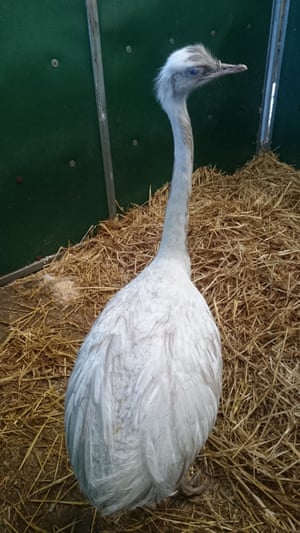
South American bird rhea found in front garden in Hampshire

Police, fire crews and a specialist animal management team rescue the bird but are clueless as to how it ended up in North Boarhunt

Press Association

Friday 2 October 2015 17.28 BSTLast modified on Friday 2 October 201517.51 BST

A rhea has been rescued by police, fire crews and a specialist animal management team after a householder in Hampshire found the large bird in his garden.

Police were called at 12.30pm on Thursday when the man found the rhea in the front garden of his home in North Boarhunt.

It is not known how the bird, nicknamed Snowflake, came to be in the garden, and it has not yet been claimed.

The rhea is a large bird, native to South America, which is a smaller cousin of the ostrich. It is believed that the white female found in the garden might have escaped from a private collection.

Hampshire police and firefighters were helped by the animal management team from Sparsholt college in capturing the bird.

Monday, 20 October 2014

The real-life road runner: Huge rhea bird has been on the loose on British streets for TWO YEARS foiling all attempts to catch it


Common Rhea, native to South America, spotted in the English countryside
Giant bird was photographed near the RAF Odiham base, in Hampshire
Flightless birds can go up to six feet tall and weigh up to four stone
The Rhea, nicknamed Ron, has been on the loose for two years 


PUBLISHED: 10:09, 20 October 2014 | UPDATED: 11:38, 20 October 2014

An ostrich-sized bird that is capable of disembowelling a human with its claws has been seen roaming around the English countryside.

The South American rhea, which stands six feet tall and can run at 40mph, has been on the run for two years foiling all attempts to catch it.

The giant flightless bird, which has six-inch claws and could kill with a single blow, was photographed by Steve Lynes near the RAF Odiham base in Hampshire.


Tuesday, 24 June 2014

Hope for little terns' revival at Langstone Harbour

Conservationists working to return one of the country's rarest seabirds to a Hampshire beach, say they have seen the first signs of a revival.

Little tern chickNo little tern chicks have been raised at Langstone Harbour since 2011, when nests were swept away in storms.

The RSPB said there were now about 30 nests, although the chicks were still vulnerable to predators.

About 500 tonnes of aggregate were added to South Binness Island in 2013 to protect nesting areas.

It was hoped that raising the height of the beach would help prevent nests from being washed out by higher tides.

Wez Smith, RSPB Langstone Harbour site manager, said lower fish stocks in the harbour also meant the parent birds "will have to work very hard to find enough food".

"Hopefully they'll be able to raise their families within sight of Portsmouth's skyline again.

"The Solent's little terns have been in a worrying decline for some time now and these new broods of young represent real hope for the future," he added.

Tuesday, 15 April 2014

Cockerel owner is taken to court as bird wakes village

Published on the14April 
2014 
07:45

ACTION is being taken by a council against a woman over her noisy cockerel, which they say is keeping a village awake.

Helen Rogers says she is a breeder of rare cockerels, chickens and ducks and cannot understand why people have complained about the noise considering they live in the countryside.

But other residents of Hambledon say their lives have been made a misery by the crowing from the birds on land off Church Lane, Hambledon – previously known as St Peter’s Farm.

Last year a noise abatement order was served on Mrs Rogers, whose family own the land, by Winchester City Council.

But neighbours say the crowing continued through the night and now Mrs Rogers, who lives in Chichester, must appear before Fareham Magistrates on Thursday to answer three breaches of the noise abatement notice.

Mrs Rogers, 57, said: ‘I breed rare chickens and ducks and sell them.

‘I was asked to put the cockerel in closed quarters in a darkened room and not to let him out until 9am.


Wednesday, 24 April 2013

Falcon Family Shuts Down UK Cell Phone Tower


By Ian Chant 
Good news? A family of endangered peregrine falcons has taken up residence in a U.K. cell tower. Bad news? Since U.K. endangered species laws prevent people from messing with the nests of endangered birds and potentially disturbing their rare offspring, technicians are unable to conduct maintenance on the tower and have been forced to shut it down, leaving customers in the area lacking a cell signal until July, when officials — and customers — hope the baby birds will have grown old enough to leave the nest.

While the birds usually make their homes in rocky cliff tops, where they have a minimal effect on cell phone coverage, this family seems to have more of an affinity for human society, making them kind of a hassle for customers of Vodafone, the company that owns and operates the tower. Vodafone is reviewing its options and trying to get a backup plan in place according to a statement, but until they do, customers are out of luck and out of touch.

The affected tower is near the town of Southampton, though it’s exact location is being kept a secret to prevent it from becoming a destination for well-meaning gawkers who could disturb the flying family. The peregrine falcon was almost wiped out in the 1960s after pesticides crippled its ability to breed effectively, and there are just 1,400 breeding pairs of peregrines left in the U.K. today. That being the case, messing around with a nest of the birds is taken pretty seriously, and can be punishable by jail time.