As regular CFZ-watchers will know, for some time Corinna has been doing a column for Animals & Men and a regular segment on On The Track... particularly about out-of-place birds and rare vagrants. There seem to be more and more bird stories from all over the world hitting the news these days so, to make room for them all - and to give them all equal and worthy coverage - she has set up this new blog to cover all things feathery and Fortean.
Showing posts with label Spain. Show all posts

Thursday, 20 February 2020

Rüppell's Vulture breeding with Griffon Vulture at two Spanish sites


New evidence suggests two cases of a Rüppell's Vulture breeding with a Griffon Vulture in Spain. In two different Griffon Vulture breeding colonies in Spain, one pair was observed copulating, and in the other, an adult Rüppell's Vulture was collecting nesting material.

Rüppell's Vulture
The Rüppell's Vulture (Gyps rueppelli) is an African species whose distribution range is located in the equatorial and eastern areas of the continent. It resembles our Griffon Vulture (Gyps fulvus), especially the juveniles and immature birds, being slightly smaller in size. The IUCN's Red List of Threatened Species considers it Critically Endangered, which is the last category before global extinction, due to the rapid declines of several populations across Africa.

its declining state is mostly due to the successive and frequent mass poisonings in Africa, which are driving several species of African vultures to extinction. The Vulture Multi-species Action Plan (Vulture MsAP), co-developed by us here at the Vulture Conservation Foundation, and endorsed by the Convention for Migratory Species (CMS), concludes that poison is the biggest threat to vultures worldwide, and a significant part of this global action plan for vultures focuses on the actions needed to fight this threat. Unfortunately, experts foresee a rather bleak future in the short term if poisoning events keep occurring at this rate.

Rüppell's Vulture in Europe
In consequence, Rüppell's Vultures are becoming alarmingly scarce in Africa but, surprisingly, they are increasingly seen in Europe. This is probably due to increased mixings of individuals of this species with wintering juvenile Griffon Vultures in West Africa. A percentage of Europe's growing population of Griffon Vultures winters in the Sahel zone of West Africa, where it will encounter some Rüppell's Vultures. When European Griffons start their migration north, they probably drag some African vultures with them, and with plenty of food in Europe, they are beginning to call our continent home. The species was recently added to Andalucía's list of vultures, making it Europe's 5th vulture species and one of the most threatened bird species in Spain.

Monday, 10 February 2020

Common Quail elected as Iberia's bird of 2020

07/02/2020


In the first cross-national vote of its kind, Portugal and Spain have elected Common Quail as Bird of the Year 2020.

The online poll was organised by the Portuguese Society for the Study of Birds (SPEA) and the Spanish Society of Ornithology (SEO/BirdLife), with Common Quail (7,390 votes) fighting off stiff competition from Montagu's Harrier (6,130) and Iberian Grey Shrike (5,156).

Although Common Quail remains a numerous species in Portugal, it has declined by an alarming 30% over the last decade alone, largely due to changes in agricultural practice.

The story is a familiar one: the overall intensification of farming, including expansion of monocultures, disappearance of fallow land and the removal of hedges and field margins leave less and less available habitat for this and other typical farmland birds. Quails feed on seeds, cereal grains and small invertebrates, so the species has also suffered from the increased use of herbicides and insecticides.

Thursday, 10 October 2019

Madrid to begin 'humane slaughter' of parakeets

Spanish capital to reduce number of brightly coloured birds over public health risk fears

Sam Jones in Madrid

Tue 8 Oct 2019 09.25 BSTLast modified on Tue 8 Oct 2019 19.50 BST


Madrid’s city council has grown sick of its parrots.

Or, more precisely, of the thousands of shrill, bright green monk parakeets that screech through the capital’s skies and build vast nests in its trees.

The council has announced plans to reduce the number of parakeets after a recent survey showed the population had grown from 9,000 birds three years ago to 12,000 today. In 2005, there were only 1,700 of them in Madrid.

Although the birds are native to Argentina, many were imported as pets before ownership was outlawed eight years ago.

The city council says the swelling population needs to be brought down as the parakeets are competing with other species for food and damaging the environment by stripping vegetation to build their huge stick nests.

It also says they pose a public health risk as they can pass illnesses such as psittacosis (parrot fever), avian flu and salmonella on to humans.

And then there is the size of their nests.

“As time goes on and they get bigger, these nests can become dangerous and weigh up to 200kg,” the council said in a statement.

Friday, 31 May 2019

Millions of birds ‘sucked out of trees and killed’ during vacuum olive harvests


May 16th 2019 8:08AM
Millions of birds are being vacuumed up and killed during nocturnal suction olive harvesting in Spain and Portugal.
In Spain, 2.6 million birds die every year from being vacuumed, and in Portugal, 96,000 birds die per year.
Birds from northern Europe winter in these countries, and are at risk while roosting at night, according to BirdGuides.
The noise and light of the machines dazzle the birds, which are then sucked into suction olive harvesting machines and killed.
Olives are vacuumed at night when it's cool, to preserve their flavour.
Some local governments have already stopped the practice, but countries such as Italy and Portugal have not taken action
Domingos Leitão of the Portuguese Society for the Study of Birds (SPEA), said: "They should not be subject to disturbance in the rest period.
"If the birds in one row of olive trees are frightened, they fly to another; the Birds Directive says that they should not be disturbed during the rest period."
Nuno Sequeira added: "When negative impacts like these are detected, the authorities must act swiftly and accordingly. We are talking about hundreds of thousands of dead birds.
"The lack of regulation allows birds to die as well as other environmental impacts, such as soil erosion and contamination and pollution of aquifers with synthetic chemicals used in intensive and super-intensive agriculture."


Friday, 12 April 2019

Ancient birds out of the egg running

MARCH 22, 2019


The ~125 million-year-old Early Cretaceous fossil beds of Los Hoyas, Spain, have long been known for producing thousands of petrified fish and reptiles (Fig. 1). However, researchers have uncovered an extremely rare, nearly complete skeleton of a hatchling bird. Using their own laser imaging technology, Dr. Michael Pittman from the Department of Earth Sciences at the University of Hong Kong and Thomas G Kaye from the Foundation for Scientific Advancement in the U.S. have determined the lifestyle of this ~3cm long hatchling bird by determining the previously unknown feathering preserved in the fossil specimen (Fig. 2).

Chickens and ducks are "precocial," walking and foraging within hours of hatching (Fig. 3). Pigeons and eagles are "altricial," remaining in the nest and attended by their parents. Scientists have one method to determine the type for a given fossil specimen: examining the feathers. When precocial birds hatch, they have developed down feathers and partly developed large feathers, and can keep warm and move around unassisted by parents. "Previous studies searched for but failed to find any hints of feathers on the Los Hoyas hatchling. This meant that its original lifestyle was a mystery," says Dr. Pittman.

Wednesday, 29 August 2018

Spain’s mission to save the White-headed Duck


The beautiful White-headed Duck is a compelling species. Keen birdwatchers are always eager to catch a glimpse of its distinctive blue bill or stiff tail. Its larger, eastern population in Asia is shrouded in mystery: the precise breeding and wintering grounds of tens of thousands of birds counted in Kazakhstan remains unknown. This population is also migratory, travelling long distances from Siberia to the Middle East, whereas the smaller western Mediterranean population resident in Spain, Algeria and Tunisia is more sedentary and far more closely studied. Sadly, what unites these populations is their IUCN listing as globally ‘Endangered’.
Back in the 1970s, the Spanish population of White-headed Duck was brought to the verge of extinction following the severe destruction of its wetland habitats and unsustainable hunting. A count in 1977 recorded just 22 individuals, confined to a single lagoon in Córdoba, Andalucía. Conservationists sprang into action: hunting at the lagoon site was made illegal and habitat restoration measures were implemented, including vegetation regeneration and the removal of harmful non-native species. Slowly but surely, the species began to recover, progressively spreading first to the neighbouring provinces of Sevilla and Cádiz and then on to Almería and Toledo. By 1988, more than 400 birds could be counted and today that number has rocketed up to 2,500 individuals across 13 Spanish provinces.
The spectacular recovery of the White-headed Duck in Spain is an inspiring example of what can be achieved by a well-coordinated Species Action Plan (SAP), grounded in science and supported by local authorities and community groups. But success in one country usually isn’t enough to turn things around for a whole species worldwide. That is why BirdLife has been leading the LIFE EuroSAP project with the goal of elaborating SAPs for sixteen iconic species on an international scale, spanning 65 countries and three continents. The White-headed Duck, still Endangered globally, was selected to be one of the target species, with SEO/BirdLife Spain coordinating efforts to identify threats and conservation measures to feed into an updated international SAP.
Read on  

Wednesday, 6 June 2018

The Invasive Rose-ringed Parakeet – a Threat from Hawai’i to Spain


The island of Kauai and a park in Seville, Spain are facing similar concerns over one invasive bird – the Rose-ringed Parakeet.

What do Kauai, Hawai’i and Seville, Spain have in common? Answer: the invasive Rose-ringed Parakeet.

The brightly colored bird is native in parts of Asia and Africa but the bright coloration has also led this species into  the pet trade industry. As an unfortunate by-product of their popularity as pets, the birds have been accidentally and intentionally released into non-native habitats around the world. The Kauai population was first established in the 1960s and grew to 200 individuals by the 1990s. Today experts estimate over 5,000 parakeets live on Kauai. Seville has a similar story of introduction that took place in the 1990s when 10 individuals were released after being confiscated from a pet shop. Now the populations are out of control and conservationists are concerned.


Thursday, 31 May 2018

Parakeets oust bats from nest holes


15/05/2018

Previously thought to be relatively ecologically harmless, invasive Ring-necked Parakeets have been seen attacking bats in a Spanish park and ejecting them from tree-hole roosts.

At the turn of the century, the largest colony of Greater Noctule bats in Europe occupied a park in Seville, Spain. However, between 2003 and 2017, the number of trees used by bats in the park fell by 81 per cent, according to a study at the Doñana Biological Station in the city. Conversely, the number of nests of Ring-necked Parakeets, an introduced species native to the Indian subcontinent and East Africa, increased by a factor of 20 over the same period.

The research team documented parakeets nesting in tree cavities previously occupied by bats. The researchers also observed the 120-g parakeets chasing the 50-g bats out of their nests. Parakeets largely attacked the bats at the entrances to tree holes in the few hours before dusk, obliging the bats to flee during daylight hours (though some bats were able to fend them off). The researchers also found 20 dead and two injured noctules under nest sites, and some were fresh enough to show beak cuts on their muscle and bones. 

In parallel, parakeet numbers increased during the study period, being very scarce until 2013, but showing a 96 per cent increase in the four years thereafter. Greater Noctule bat showed a decline of 70 per cent in the same period (and an 81 per cent fall since 2003), almost a mirror reflection of the parakeet increase. By 2017, the number of tree holes occupied by noctules had eroded down to 14 from 47 in 2013, while those occupied by parakeets had increased from 159 to 311 in the same period.


Wednesday, 2 May 2018

Basque Red-backed Shrike population in free fall

06/04/2018

Red-backed Shrike is undergoing a severe decline in Spain’s Basque Country, with numbers having dropped by 95 per cent over the last 40 years.

This is the conclusion reached by researcher José Luis Tellería of the Universidad Complutense de Madrid, after analysing the status of two populations of the species over four decades. 

The article, published in the scientific journal of SEO/BirdLife, Ardeola: International Journal of Ornithology, also examines a series of possible causes that could be behind the plummeting numbers in these localities, as well as in the Euskadi region, where the bird has traditionally been abundant in rural areas. In fact, in the Bilbao area it is part of a group of 20 species of insectivorous birds, colloquially known as 'txinbos', hunted by the locals in former times but all protected today.

Friday, 25 August 2017

26,000€ fine for electricity company for electrocution of vultures

A Spanish court in Albacete has confirmed recently, in a landmark case, that an electricity utility (Iberdrola) should pay a penalty of 26,000€ for the electrocution of 4 griffon vultures in Ossa de Montiel (Albacete) last year. In October 2016 the Spanish Ministry of Agriculture, Environment and Rural Development had fined the company 26,000€ because the line "had no mechanism to prevent electrocution".

The company then appealed to the court, which now confirmed the penalty. This is important because it confirms, in the eyes of the Spanish courts, civil liability for electrocution of wildlife.

Electrocution is one of the major threats affecting vultures worldwide, as it was clearly demonstrated in the Vulture multi-Species Action Plan (MsAP), an international action plan covering 15 old world-vultures in more than 120 range states. This umbrella new strategy for vultures - nature’s primary scavengers, providing indispensable ecological services as carrion feeders and disposers of disease-carrying carcasses, was developed by VCF, BirdLife International, and the IUCN Vulture Specialist Group under a contract from the Coordinating Unit of the Raptors MoU under the Convention on the Conservation of Migratory Species of Wild Animals (CMS), and will be hopefully adopted in the CMS conference of parties this fall. The Vulture MsAP provides several solutions to minimize deaths by electrocution, including legal advocacy towards the type of civil liability now enforced in Spain.

There are relatively cheap and effective solutions readily available to insulate dangerous pylons, so this threat could easily be solved if electricity utilities, governments, and NGOs all work together.

7th August 2017

Friday, 29 April 2016

Cattle drug threatens thousands of vultures

Modelling study paints bleak picture for Europe’s bird populations.

29 April 2016

Eurasian griffon vultures, like these in Huesca, Spain, are threatened by veterinary use of diclofenac, researchers say.

A veterinary drug blamed for driving vultures to the brink of extinction on the Indian subcontinent could cause thousands of bird deaths now that it is being used in Spain.

Researchers have expressed concern over use of the anti-inflammatory drug diclofenac in cattle since it was approved for veterinary use in Spain in 2013, as the drug is toxic to vultures who may consume it via dead cows. Now, modelling by Rhys Green, a conservation scientist at the University of Cambridge, UK, and his colleagues suggests that the drug could cause populations of that country’s Eurasian griffon vultures (Gyps fulvus) to decline by between 1–8% each year. Their work was published on 25 April in the Journal of Applied Ecology1.

“You can almost liken it to the rather macabre game of Russian roulette,” he says. “Vultures eat about every three days on average, so that’s 120 days a year — and so that’s like 120 pulls of the trigger.”

Widespread use of diclofenac in south Asian cattle was linked to the deaths of millions of vultures that ate carcasses containing the drug, causing some populations to decline by more than 99% since the 1990s. Although diclofenac does not yet seem to have caused population declines for Europe’s vultures, scientists suspect that it might only be a matter of time.

Because vultures congregate to feed, Green says that even a few carcasses containing the drug could seriously damage a population. Along with Antoni Margalida from the University of Lleida in Spain, and other colleagues, he is calling for a ban of the veterinary drug in favour of an alternative called meloxicam that is less toxic to vultures.
Toxic roulette

Diclofenac is toxic to vultures even in small doses, causing kidney failure. That results in uric acid accumulating in the birds' blood and crystallizing around their internal organs—a condition called visceral gout2.

Countries on the Indian subcontinent began banning diclofenac in 2006 and since then, vulture populations in the region seem to have halted their precipitous declines3.

In Europe, diclofenac has been approved for veterinary use since 1993. In 2014, the European Medicines Agency acknowledged that vultures are at risk of consuming residues of the drug in dead livestock, but did not recommend banning it. In 2015 the European Commission decided to follow the EMA’s recommendation, leaving it up to EU member states to prevent diclofenac-laced carcasses from entering the food chain.

Wednesday, 30 March 2016

Botulism in waterbirds: Mortality rates and new insights into how it spreads

Date:March 25, 2016
Source:American Society for Microbiology

Outbreaks of botulism killed large percentages of waterbirds inhabiting a wetland in Spain. During one season, more than 80 percent of gadwalls and black-winged stilts died. The botulinum toxin's spread may have been abetted by an invasive species of water snail which frequently carries the toxin-producing bacterium, Clostridium botulinum, and which is well adapted to wetlands polluted by sewage. Global warming will likely increase outbreaks, said corresponding author Rafael Mateo, PhD. The research was published March 25th in Applied and Environmental Microbiology, a journal of the American Society for Microbiology.

Botulism is a major killer of waterbirds, including some endangered species. In earlier studies, some also published inApplied and Environmental Microbiology, these investigators had found that eutrophication of some of these wetlands, due to effluent from waste water treatment plants, was encouraging growth of C. botulinum and other bacterial pathogens of birds.

In the current study, the investigators surveyed mortality among the resident waterbirds, and investigated how the bacterium is spread. During two outbreaks, the investigators collected 43 dead white-headed ducks, representing seven percent and 17 percent of their maximum population on Navaseca lake during 2011 and 2012, respectively, said Mateo, who is Head of the Group of Wildlife Toxicology, at the Spanish Institute of Game and Wildlife Research, Cuidad Real, Spain. White-headed ducks are highly endangered, with only about ten thousand surviving individuals worldwide.

Thursday, 10 March 2016

Spanish town bans bizarre duck-chasing seaside festival

Society changes course as time moves on, says local mayor, as the resort bans the century-old tradition

By James Badcock, Madrid4:37PM GMT 02 Mar 2016

The Costa Brava resort of Roses has decided to ban a century-old tradition in which locals chased ducks in the sea as part of the town’s summer festivities.

The bizarre “hunt the duck” festival has been taking pace in Roses for 97 years, but last August’s celebration drew negative publicity when a participant used one of the unfortunate birds to strike an animal rights protester who was filming the event.

The video, in which an angry woman in a swimsuit swings a duck at the camera, has since been seen 360,000 times on YouTube. Animal rights organisations such as Spain’s national Pacma party called for a ban on the event in which white ducks are thrown from a boat into the sea for bathers to catch in return for prizes.


Sunday, 6 December 2015

Bird poaching continues to result in victims


Date: November 23, 2015
Source: Plataforma SINC

Illegal hunting continues to be a challenge for biodiversity conservation in addition to posing a serious threat to some migratory species. The province of Gipuzkoa in northern Spain, a transit area for birds migrating between Africa and Europe, is an example of just how this illegal activity can severely affect these animals.

Over the course of the year, dozens of birds will arrive to the Wildlife Rehabilitation Centre in Gipuzkoa with firearm-inflicted wounds, evidence that there are still illegal activities taking place which threaten biodiversity conservation. The information provided by the Centre has allowed for identification of the most affected species as well as the relationship between hunting ground locations and the areas where the birds were found harmed.

Researchers from the Aranzadi Society of Sciences (Gipuzkoa) analysed data from 2006 to 2013 in order to pinpoint what species arrived to the Rehabilitation Centre, where they had been found and their reason for being admitted to the centre.

Juan Arizaga, co-author of the study, explains that a statistical method was used to determine whether the distances between the birds shot at and the nearest fixed hunting stands measured less than the distances between those birds admitted to the centre for other reasons, such as collisions.


Wednesday, 7 October 2015

Tiny ancient fossil from Spain shows birds flew over the heads of dinosaurs

Exceptional 125-million-year-old bird discovered

Date:October 6, 2015

Source:Natural History Museum of Los Angeles County

Birds have an enormously long evolutionary history: The earliest of them, the famed Archaeopteryx, lived 150 million years ago in what is today southern Germany. However, whether these early birds were capable of flying -- and if so, how well -- has remained shrouded in scientific controversy. A new discovery published in the journal Scientific Reports documents the intricate arrangement of the muscles and ligaments that controlled the main feathers of the wing of an ancient bird, supporting the notion that at least some of the most ancient birds performed aerodynamic feats in a fashion similar to those of many living birds.

An international team of Spanish paleontologists and NHM's Director of the Dinosaur Institute, Dr. Luis M. Chiappe, studied the exceptionally preserved wing of a 125-million-year-old bird from central Spain. Beyond the bones preserved in the fossil, the tiny wing of this ancient bird reveals details of a complex network of muscles that in modern birds controls the fine adjustments of the wing's main feathers, allowing birds to master the sky.

"The anatomical match between the muscle network preserved in the fossil and those that characterize the wings of living birds strongly indicates that some of the earliest birds were capable of aerodynamic prowess like many present-day birds," said Chiappe, the investigation's senior scientist.

"It is very surprising that despite being skeletally quite different from their modern counterparts, these primitive birds show striking similarities in their soft anatomy," said Guillermo Navalón, a doctorate candidate at the University of Bristol in the United Kingdom and lead author of the report.

Sunday, 19 July 2015

Spanish town puts its pigeons on the pill in bid to reduce numbers

Officials estimate the population will fall by up to 80 per cent within five years

MADRID 
Tuesday 14 July 2015

Don’t feed the pigeons! It’s a common demand designed to stem the population of the flying vermin that occupy almost every major European city.


But now, a town in Spain is going one step further by putting the birds on a course of contraceptives that it hopes will lead to a dramatic fall in numbers.

Badia del Valles in Catalonia has installed dispensers to scatter the pigeon Pill, Ovistop, along with grain each morning. The dispensers will operate from now until the end of the year, the time when ornithologists say most pigeons breed. “Every morning, three automatic dispensers will scatter the required dosage to the pigeon population,” said a statement on the town’s website.

Monday, 20 April 2015

Carrion Crows in Spain thrive when they have a cuckoo in the nest

Carrion Crow chicks derive benefits from having to share their nest, researchers have found

A study in Spain has uncovered an interesting relationship between Carrion Crows and Great Spotted Cuckoos, reports Springer’s journal Behavioral Ecology and Sociobiology.

When the cuckoos lay up to three eggs in the nests of the larger crows, the chicks of both species are often raised together successfully, with the young crows ultimately growing bigger than the cuckoos.

So it’s not so bad for crow chicks as it can be for other species of birds who find their nests taken over by a cuckoo youngster.

When our Common Cuckoos utilise the nests of Reed Warblers, the growing cuckoo chick will push other eggs and chicks out of the nest.

When Great Spotted Cuckoos parasitise and take over Magpie nests, they do not evict the host’s young from the nest. They do, however, succeed in out-competing the magpie chicks for food, which often leads to the latter’s death.

Friday, 25 July 2014

Good news for Spanish seabirds

The Spanish government has announced the establishment of 39 new marine protection areas which closely mirror the Marine Important Bird and Biodiversity Areas identified by BirdLife International’s Spanish partner SEO/BirdLife after a decade of scientific research tracking seabirds and understanding their behaviour at sea.


The Balearic shearwater is one of the birds 
that will benefit from the new protection areas
The new sites are Special Protection Areas for Birds (SPAs), designated under the European Birds Directive. The SPAs will offer protection to seabirds whilst they are at sea, complementing the existing network of sites on land.

Spain, with its Atlantic and Mediterranean coastlines and islands, is extremely important for European seabirds, including Europe’s most threatened seabird, the Balearic Shearwater, and other species endemic to the Mediterranean, such as the Yelkouan Shearwater and Audouin’s Gull.

Tuesday, 10 June 2014

Spanish dry spell sends nesting Black-winged Stilts to England

Posted on: 29 May 2014


A small influx of Black-winged Stilts has resulted in two – and possibly even three – pairs attempting to nest at RSPB reserves in West Sussex and Kent.

It is thought that a dry spell in southern Spain has displaced these wetland birds to southern Britain, and it seems likely that a changing climate may bring them to Britain more regularly in future. The charity has set up a 24-hour watch on the nests with the help of local volunteers, to protect them from egg collectors who target the nests of the rarest species in Britain.

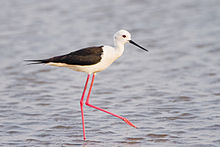
Himantopus himantopus - Pak Thale.jpgA flock of 10 was seen in Kent and the Isle of Wight earlier this spring, and pairs were seen mating in Essex and Kent (see this month's Birdwatch, page 12). The only previous successful breeding records in Britain are from Norfolk in 1987 and Nottinghamshire in 1945.

One pair is nesting at Medmerry RSPB, West Sussex, while the other pair are at Cliffe Pools RSPB on the north Kent marshes, where another pair also appear to be making a nesting attempt. The stilts’ presence is a tribute to the conditions at both reserves – Medmerry is the largest open-coast managed realignment scheme in Europe and the RSPB’s newest reserve. It was created between 2011 and 2013 by the Environment Agency and consists of mudflats, tidal lagoons, saltmarsh, wildlife-friendly farmland and dragonfly-rich ditches. 

Wednesday, 4 June 2014

Nature Studies: The drug that killed India’s birds of prey is coming to Europe – and we must stop it

There are 300 pairs of Spanish imperial eagle left. We can’t afford to lose any

Not all Britons now planning their summer holidays in Spain will be heading for the beaches. Wilder regions deep inland, such as Extremadura, will draw a surprisingly large contingent of British birdwatchers, in search of some of western Europe’s most spectacular birding, featuring in particular big raptors such as vultures and eagles. The chance to see Egyptian, black and griffon vultures, and great rarities such as the Spanish imperial eagle, attracts many a British twitcher; a birding friend of mine would never miss his annual Extremadura trip, based in the small ancient city of Trujillo (he tells me the weather, medieval architecture, food and wine are all magnificent bonuses).

So here’s a piece of worrying news for anyone concerned with wildlife conservation: these very birds of prey now face a poisoning threat from a veterinary drug which has already wiped out millions of vultures in India.