As regular CFZ-watchers will know, for some time Corinna has been doing a column for Animals & Men and a regular segment on On The Track... particularly about out-of-place birds and rare vagrants. There seem to be more and more bird stories from all over the world hitting the news these days so, to make room for them all - and to give them all equal and worthy coverage - she has set up this new blog to cover all things feathery and Fortean.
Showing posts with label parrots. Show all posts

Wednesday, 5 June 2019

Escaped pet parrots are now naturalized in 23 US states, study finds


Date:  May 14, 2019
Source:  University of Chicago Medical Center
When Stephen Pruett-Jones, PhD, an ecologist at the University of Chicago, first came to Chicago in 1988, he stumbled on a unique piece of the city's history: the monk parakeets of Hyde Park.
The squat, bright-green birds aren't native to Illinois, or the United States at all. The U.S. originally had two native parrot species: the Carolina parakeet and the thick-billed parrot. The Carolina parakeet is now extinct; the thick-billed parrot, a Mexican species that ranged into the southwestern states, was driven out of the U.S.
In the 1950s and 60s, tens of thousands of monk parakeets were imported from South America as pets. Inevitably, many of them escaped or were released. By 1968, they were found breeding in the wild across 10 states, including a colony in the Hyde Park neighborhood of Chicago, home of the University of Chicago campus.
Pruett-Jones, who usually studies wrens and other wild birds in Australia, noticed a large group of the parakeets on his daily commute. He started sending students out to study the birds and eventually organized an annual lab project to count them.
"I have never actually held a wild parrot in the United States," he said. "But indirectly I've become the spokesperson for parrot research here because when I saw the monk parakeets in Chicago, I realized nobody else was working on them."


Friday, 26 April 2019

How the wild parrots of San Diego arrived in America's Finest City


Posted: 5:46 PM, Mar 27, 2019
Updated: 10:02 PM, Apr 04, 2019
By: Mark Saunders
SAN DIEGO (KGTV) - Residents in many San Diego neighborhoods get a daily reminder of the odd inhabitants that are not native to the area.
As the sun rises over the region, the squawks can be heard. The wild parrots are awake.
While the sight of emerald, red-headed birds has long been gold for local photographers, what has remained a mystery to many is how they arrived in San Diego.
Parrot origins
All of the wild parrots in San Diego are birds or descendants of birds brought to the area by people, according to Sarah Mansfield with SoCal Parrot, though some have speculated they migrated from Mexico.
Mansfield added the birds weren't released in the area just once.
"Whether they were released intentionally or accidentally, several 'micro-releases' happened over many years," Mansfield said. "There are five established species of wild parrots in San Diego, and 13 species in Southern California, so it definitely wasn't just a pair or two that got out long ago."
It wasn't illegal to buy wild-caught parrots until 1992, when the Wild Bird Conservation Act was signed into law in order to ensure exotic bird species were not harmed by international trade.
"The birds that were released came from the wild and have remained wild since," she adds.
University of San Diego professor Janel Ortiz, who started the San Diego Parrot Project to research the parrots' eating habits and natural behaviors, says parrots may have been here longer than we think.
"No parrots are native to California; there has been evidence of the parrots being here in the 1940s and weren't well documented until the 1960s," Ortiz says.

Friday, 8 March 2019

Polly wants crack! Parrots 'addicted to OPIUM' wreak havoc on Indian farms as they ravage crops


Parrots in India’s Madhya Pradesh state are tearing apart plants to feed the habit
Local farmers say they are on near constant alert to stop the birds getting high 
The opium addicted parrots are stealing the farmers' most lucrative crop
PUBLISHED: 16:26, 25 February 2019 | UPDATED: 08:16, 26 February 2019
Flocks of parrots believed to be addicted to opium have been ravaging crops on Indian farms in order to feed their bizarre habit.  
Footage recorded in central India’s Madhya Pradesh state shows the birds indulging in the unusual activity of tearing apart poppy seed pods to get to the opium inside - much to the chagrin of the local farmers. 
The wild parrots have apparently learned to wait until the morphine-rich latex is exposed after the farmers slit the poppy pods to help them ripen. 
They then silently swoop into the opium fields - having also learned not to squawk - and frantically nibble off the stalks below the pod.  
The parrots have become so addicted that the farmers say they must be on near-constant alert to stop the birds eating the seeds and getting high.  
Not only have the wild flock become a menace that is wreaking havoc across the state, but they are also stealing farmers' most lucrative crop. 


Monday, 18 February 2019

Rare shelter devoted to rescuing parrots


‘ALL THESE BIRDS ARE GOING TO OUTLIVE ME,’ SAYS FOUNDER, WHO SEEKS CONTINUING SUPPORT
By Isel Longoria
Contributing Writer
Shelters for dogs and cats are common, but bird shelters are harder to find. The Santa Barbara Bird Sanctuary (SBBS) in Summerland is the only parrot shelter in the county.
The nonprofit’s mission is to “rescue and rehabilitate unwanted, abused, and orphaned companion parrots.”
Sanctuary director Jamie McLeod founded SBBS in 2004. Before starting the nonprofit, she was a bird breeder and owned The Menagerie, a parrot store, and she realized there was a need for parrot shelters in the Santa Barbara area.
“After about a decade it became apparent that there was actually more of a need to be re-homing unwanted birds rather than bringing new ones into the world,” McLeod said.
Now the sanctuary carries more than 60 large parrots with some of them available for adoption. The staff and volunteers help clean, care and cook for the birds.
“We don’t just feed them bird seeds. We actually cook for them and they get lots of fruits and vegetables,” McLeod said.
These intelligent, exotic birds are also avian ambassadors for the sanctuary’s Skylar Learning Center. It was named after Skylar Runswick, a little girl from Idaho who fell in love with the sanctuary’s birds and its purpose. Skylar’s family foundation provided grant funding for the learning center.
“The first program that we encourage (kids) to take is World of Wing (W.O.W) and that’s where I bring out each different (bird) and we talk about where they come from,” McLeod said. Other learning programs such as Conservations Adaptations Rescue Environment (C.A.R.E) and Parrots in Art, Literature and Science (P.A.L.S) also educate children.


Thursday, 10 January 2019

Conservation success story for Brazilian parrot


19/12/2018
Following nearly 24 years of targeted conservation across its range in Brazil, Red-tailed Amazon is no longer considered a threatened species.
Over this period, the species has been downgraded on the International Union for the Conservation of Nature (IUCN) Red List from Endangered to Vulnerable and latterly, at the end of 2017, Near Threatened.
This positive change in status has not happened overnight. Loro Parque Fundación (LPF) began supporting the conservation of this species in 1995, and only after almost 24 years and US$561,400 of support from LPF have conservationists been rewarded with the official recognition that the species is no longer threatened.
LDF's Brazilian counterparts can justly claim to have achieved success in averting Red-tailed Amazon’s extinction. In Paraná State, LPF established its first collaboration with Pedro Scherer-Neto of the Museum of Natural History in Curitiba, and then between 1999 and 2006 with the Institute for Ecological Research (IPÊ) working especially on the island of Superagüi. The LPF also did some work in São Paulo State with the Institute of Conservation Biology of the state university, but from 2005 until now the main partner in Paraná and São Paulo has been the Society for Wildlife Research and Environmental Education (SPVS).

Wednesday, 12 December 2018

'A legitimate zoo?’ How an obscure German group cornered global trade in endangered parrots - continued

Exclusive: A secretive organisation based in a German village has amassed one of the world’s largest collections of rare parrots. How did Martin Guth, a former nightclub manager, persuade governments to authorise the export of so many endangered species?

by Lisa Cox in Melbourne and Philip Oltermannin Berlin

Mon 10 Dec 2018 19.00 GMTLast modified on Tue 11 Dec 2018 00.55 GMT

It’s an unlikely spot for a zoo – down an unmade, dusty road, amid a wood to the east of the German capital Berlin.

But here in the village of Tasdorf, hundreds of the world’s most endangered and rare parrot species are said to be housed at the headquarters of the Association for the Conservation of Threatened Parrots (ACTP).

The site is not easily accessible by public transport, and there is no car park. No signs offer information about opening hours or admission prices. The main entrance is through a roller-door. Next to its main building, on an adjacent house, a small sign gives a mobile number to call if no one is home.

From these obscure premises, a former nightclub manager and unofficial debt collector, Martin Guth, has been able to acquire one of the largest private collections of threatened birds in the world. The collection includes imperial and red-necked parrots from the Caribbean island of Dominica, endangered Australian cockatoos and about 90% of the global population of Brazil’s Spix’s macaw, a species that is now extinct in the wild.

Guth’s organisation, ACTP, has gained the cooperation of governments in several countries, including Australia, which has granted permits for the export of more than 200 native parrots since 2015, on condition that they were for exhibition only.

An Australian MP, Warren Entsch, says he warned his own government about its relationship with ACTP.

Monday, 10 December 2018

Australia gave endangered birds to secretive German ‘zoo’, ignoring warnings

Exclusive: government issued export permits for more than 200 rare and endangered parrots, despite concerns they were being offered for sale rather than exhibited

Lisa Cox in Melbourne and Philip Oltermann in Berlin

Mon 10 Dec 2018 19.00 GMT Last modified on Mon 10 Dec 2018 19.28 GMT

The Australian government has permitted the export of hundreds of rare and endangered parrots to a German organisation headed by a convicted kidnapper, fraudster and extortionist, despite concerns the birds could be sold at a huge profit.

An investigation by Guardian Australia has revealed that the Berlin-based Association for the Conservation of Threatened Parrots received permission to export 232 birds between 2015 and November 2018 – more than 80% of all the live native birds legally exported from Australia in the same period.

The exports include threatened species such as Carnaby’s and Baudin’s black cockatoos, worth tens of thousands of dollars each.

The head of the ACTP, Martin Guth, has multiple criminal convictions, including a five-year jail sentence for hostage-taking, extortion and attempted fraud in 1996. In 2009 Guth was sentenced to one year and eight months in prison for seven cases of fraud. In one incident Guth kidnapped two men and threatened to cut their fingers off unless they paid a large sum of money.

A six-month Guardian investigation has found:

Export permits for Australian birds specified they were for exhibition purposes only, but ACTP has no facility that is freely open to the public.

Export permits prohibited the sale of the birds or their offspring, but private messages on social media reveal native Australian birds apparently from ACTP have been offered for sale for hundreds of thousands of dollars. The German federal agency for nature conservation has said it was aware of those offers.

The Australian government was repeatedly warned of concerns about ACTP by international wildlife authorities, private breeders and the government MP Warren Entsch.

International conservation bodies and scientists have raised questions about the organisation’s activities in other countries, including Dominica, Saint Vincent and the Grenadines and Brazil.

ACTP does not publish its financial records and is not registered with any major international zoological association.

Concerns about ACTP in Australia were raised with the former environment minister and now treasurer, Josh Frydenberg, and the office of the former prime minister Malcolm Turnbull, as well as the environment department. But the government has continued to allow the exports. The latest shipment of 64 birds to ACTP was approved on 12 November.

In December 2017 the government brokered a deal with ACTP that involved the organisation giving $200,000 to the Western Australian government for projects to protect the endangered western ground parrot.

In response to questions from Guardian Australia, the office of the threatened species commissioner, Sally Box, said no such deal would have been reached had it known of Guth’s record.

“The commissioner, nor any other officer in the Department of the Environment and Energy, would not seek to broker a conservation partnership with a known criminal,” a spokesperson said.

Friday, 7 December 2018

Parrot genome analysis reveals insights into longevity, cognition

December 6, 2018, Carnegie Mellon University

Parrots are famously talkative, and a blue-fronted Amazon parrot named Moises—or at least its genome—is telling scientists volumes about the longevity and highly developed cognitive abilities that give parrots so much in common with humans. Perhaps someday, it will also provide clues about how parrots learn to vocalize so well.

Morgan Wirthlin, a BrainHub post-doctoral fellow in Carnegie Mellon University's Computational Biology Department and first author of a report to appear in the Dec. 17 issue of the journal Current Biology, said she and her colleagues sequenced the genome of the blue-fronted Amazon and used it to perform the first comparative study of parrot genomes.

By comparing the blue-fronted Amazon with 30 other long- and short-lived birds—including four additional parrot species—she and colleagues at Oregon Health and Science University (OHSU), the Federal University of Rio de Janeiro and other entities identified a suite of genes previously not known to play a role in longevity that deserve further study. They also identified genes associated with longevity in fruit flies and worms.

"In many cases, this is the first time we've connected those genes to longevity in vertebrates," she said.

Wirthlin, who began the study while a Ph.D. student in behavioral neuroscience at OHSU, said parrots are known to live up to 90 years in captivity—a lifespan that would be equivalent to hundreds of years for humans. The genes associated with longevity include telomerase, responsible for DNA repair of telomeres (the ends of chromosomes), which are known to shorten with age. Changes in these DNA repair genes can potentially turn cells malignant. The researchers have found evidence that changes in the DNA repair genes of long-lived birds appear to be balanced with changes in genes that control cell proliferation and cancer.


Thursday, 4 October 2018

Global trade in exotic pets threatens endangered parrots through the spread of a virus


Date:  September 18, 2018
Source:  University of Kent

Beak and feather disease virus (BFDV) in wild parrot populations has been detected in eight new countries, raising concerns for threatened species.

The new countries where BFDV was found are Bangladesh, Pakistan, Japan, Nigeria, Seychelles, Vietnam, Senegal and The Gambia and were identified in a study led by Deborah Fogell in the University of Kent's Durrell Institute of Conservation and Ecology (DICE) in collaboration with The World Parrot Trust, Zoological Society of London, Mauritian Wildlife Foundation, Seychelles Island Foundation and Vinh University.

The study highlights the need for greater awareness of the risks of the spread of infectious disease associated with the international trade in live parrots.

Parrots are among the most threatened bird groups and are susceptible to a number of infectious diseases. They are also among the most frequently traded birds listed by the Convention of International Trade in Endangered Species (CITES) and the illegal trade has already driven the cross-border movement of over 19 million parrots since 1975.

This movement has aided the establishment of numerous parrot populations outside of their native distributions, most notably the highly invasive Rose-ringed parakeet which is now known to have breeding populations in over 35 countries across five continents.

BFDV, believed to have originated in Australasia, is a well-known cause of infectious disease in captive parrots. Affected birds can develop feather abnormalities, claw and beak deformities and the disease may lead to eventual death, particularly in juveniles.


Thursday, 19 July 2018

Neuroscientists uncover secret to intelligence in parrots


Study shows evidence of convergence in bird and primate evolution

Date:  July 3, 2018
Source:  University of Alberta

Summary:
University of Alberta neuroscientists have identified the neural circuit that may underlay intelligence in birds, according to a new study. The discovery is an example of convergent evolution between the brains of birds and primates, with the potential to provide insight into the neural basis of human intelligence.

"An area of the brain that plays a major role in primate intelligence is called the pontine nuclei," explained Cristian Gutierrez-Ibanez, postdoctoral fellow in the Department of Psychology. "This structure transfers information between the two largest areas of the brain, the cortex and cerebellum, which allows for higher-order processing and more sophisticated behaviour. In humans and primates, the pontine nuclei are large compared to other mammals. This makes sense given our cognitive abilities."

Birds have very small pontine nuclei. Instead, they have a similar structure called the medial spiriform nucleus (SpM) that has similar connectivity. Located in a different part of the brain, the SpM does the same thing as the pontine nuclei, circulating information between the cortex and the cerebellum. "This loop between the cortex and the cerebellum is important for the planning and execution of sophisticated behaviours," said Doug Wylie, professor of psychology and co-author on the new study.


Thursday, 2 November 2017

How yellow and blue make green in parrots


Date:  October 5, 2017
Source:  Cell Press

Summary:
Many brightly colored birds get their pigments from the foods that they eat, but that's not true of parrots. Now, researchers reporting a study of familiar pet store parakeets -- also known as budgies -- have new evidence to explain how the birds produce their characteristic yellow, blue, and green feathers.


Sunday, 8 October 2017

More than a 38 percent of the Neotropical parrot population in the American continent is threatened by human activity


September 27, 2017

More than 38 percent of the neotropical parrot population of the American continent is endangered due the impact of human activity, according to a scientific study published in the journal Biological Conservation.

Hunting for local and international trade and the loss of natural habitat are the main threats for these tropical birds, according to the article led by the experts Igor Berkunsky (National University of Central Buenos Aires) and Juan Masello (Justus Liebig University, Germany). The study involved the collaboration of 101 experts from 76 institutions and non-governmental organizations to determine the main threats affecting 192 populations of 96 neotropical parrots in 21 countries.

From hunting pets to extinction
Capture for the pet trade is one of the main threats to the preservation of wild parrots. From 1980 to 1990, millions of individuals were captured in the neotropic and taken to the United States and Asia. This huge removal of parrots could be the cause of the decline and local extinction of many species, such as the Spix's macaw. In the African continent, the trade of the grey parrot played a main role in its removal in Ghana and other areas of Africa. Currently, some of the most threatened species in Brazil are the Spix's macaw (Cyanopsitta spixii) and the red-tailed amazon (Amazona brasiliensis). Species such as the sun parakeet (Aratinga solstitialis) and brown-backed parrotlet (Touit melanonotus) are quite vulnerable due the small size of their populations.

Tuesday, 8 March 2016

No bird brains - crows as clever as chimpanzees

 By Colin Fernandez
6:12 PM Saturday Mar 5, 2016

Crows and parrots have sophisticated thinking skills on a par with those of apes such as chimpanzees, researchers claim.

The birds' brains are about a tenth the size of the mammals' and their structures are completely different, but scientists believe they developed equal cognitive abilities through facing the same challenges in the wild over 300million years of evolution.

The new assessment of research results gathered in recent decades says bird cognition includes abilities such as delaying gratification - for example in hoarding food - and reasoning.

Corvids - the bird family that includes crows - are also known to use tools and think logically. Previous research, for example, has confirmed that a crow will drop stones into a beaker of water to raise its surface level so it can drink - a form of behaviour central to the Aesop's Fable The Crow and the Pitcher.

'The mental abilities of corvids and parrots are as sophisticated and diverse as those of apes,' the latest study says.

'Among other things, they are capable of thinking logically, of recognising themselves in the mirror and of empathy.'

The study highlights the fact that birds and apes use different brain structures to think.
Mammals' cognitive skills are controlled by a part of the brain called the neocortex, while crows and parrots manage complex mental tasks with a structure called the pallium.


Friday, 26 June 2015

Why parrots are great vocal imitators Regions of bird's brain likely duplicated at least 29 million years ago


Date:  June 24, 2015

Source: Duke University

Summary: Scientists have uncovered key structural differences in parrot brains that may help explain why this group of bird species can mimic speech and songs so well. These brain structures went unrecognized in studies published in the past 34 years. The results may lend insight into the neural mechanisms of human speech.


Thursday, 19 February 2015

Study confirms the feasibility of tracking parrots with GPS telemetry

CENTRAL ORNITHOLOGY PUBLICATION OFFICE

Yes, it is possible to study parrots with GPS trackers--you just have to make them beak-proof. For a new paper in The Auk: Ornithological Advances, Erin Kennedy, George Perry, and Todd Dennis of the University of Auckland and Joshua Kemp and Corey Mosen of New Zealand's Department of Conservation tested the feasibility of tracking parrots with GPS dataloggers in Arthur's Pass National Park in New Zealand. Their parrot of choice was the Kea (Nestor notabilis), a large, intelligent, mountain-dwelling bird perhaps best known for its fearless interactions with tourists and their cars.

While GPS telemetry is one of the best methods for tracking the movements of wild birds, researches have hesitated to apply it to parrots, concerned that the dataloggers may not stand up to their large crushing beaks, high manual dexterity, and curiosity. To make their tracking devices as parrot-proof as possible, Kennedy and her colleagues encased them in tough polymer and attached them to backpack harnesses before placing them on captured Keas. After a week, the researchers recaptured the study birds to remove the harnesses and assess how they were affected by wearing the devices and how well the devices performed.

Wednesday, 28 January 2015

Parrot Pecking Order Hints at Humans' Social Lives

by Catherine Crawley, NIMBioS | January 28, 2015 01:25am ET

This ScienceLives article was provided to Live Science's Expert Voices: Op-Ed & Insights in partnership with the National Science Foundation.

Elizabeth Hobson's research has taken her to the remote fields of Argentina to study monk parakeets and also to the jungles of suburbia in the United States to study invasive populations in their feral ranges and in captivity. 

Today, as a postdoctoral fellow at the National Institute for Mathematical and Biological Synthesis, Hobson mines the data she has collected to investigate the social complexity of the parrots, as well as other species. She wants to know how animals think about their social worlds and what motivates their social interactions. 


Wednesday, 17 December 2014

Show us how you play and it may tell us who you are

Date:
December 15, 2014

Source:
University of Vienna

Summary:
The way in which toys are handled and combined with one another during object play can tell use a lot about the cognitive underpinnings of the actors. An international team of scientists studied parrot species, as well as crow species, with the same set of toys and found out that the birds willingly brought objects into complex spatial relationships: behaviors that occur in only a few species of primates.


Wednesday, 24 September 2014

RARE AND EXOTIC BIRDS STOLEN FROM PARK

Visayan tarictic hornbills17th September 2014
On Monday night, thieves stole more than 30 very rare birds from the Avifauna bird park in Alphen aan den Rijn. According to the animal park, the thieves knew what they wanted and specifically took the valuable and rare breeding pairs. 

Thieves took several toucans, mynas and some parrot species as well as diverse hornbills. These hornbills seemed especially important to the robbers, as they took a total of 16 of the tropical bird species.

Among these hornbills, there were some very rare endangered species such as the white-crowned hornbill, Tickell’s brown hornbill and the very close to extinction Visayan tarictic hornbill. Avifauna writes on their website that these last birds need specialized care, and are only found in a select number of zoos in the world.

Monday, 2 December 2013

Indonesians warned over alleged wildlife smuggling

Five galahs among birds found hidden in bags on an Australian military jet

Two Indonesian military personnel have been let off with a warning after Australian authorities uncovered an alleged bird-smuggling operation aboard a gifted Hercules military aircraft.
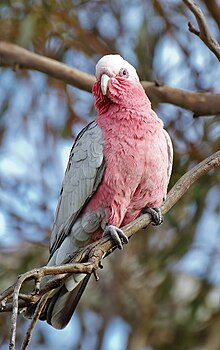
The men were part of a team taking delivery of a Hercules military aircraft on Thursday at Richmond air force base near Sydney and were allegedly found loading birds – five galahs and two other parrots – hidden in bags.

When the aircraft landed in Darwin for refuelling, authorities allegedly found two more parrots, Macquarie radio reported on Friday.

The Australian Customs and Border Protection Service questioned the men and, after consulting with the Commonwealth Director of Public Prosecutions, issued them with a warning, immigration minister Scott Morrison said.

Friday, 11 October 2013

How crows keep their cool

Bird species with larger-than-average brains have lower levels of a key stress hormone, an analysis of nearly 200 avian studies has concluded. Such birds keep their stress down by anticipating or learning to avoid problems more effectively than smaller-brained counterparts, researchers suggest.

Birds in the wild lead a stressful life. Constantly spotting predators lurking in the trees or sensing dramatic changes in temperature is essential for survival, but can leave a bird on the edge of a nervous breakdown. Reading these cues triggers changes in the birds’ metabolism, particularly increases in the stress hormone corticosterone. A sharp release of the hormone within one to two minutes after a cue triggers an emergency response and prepares birds to react quickly to the threat. However, regular exposure to the dangers of the wild and, hence, to high levels of this hormone has serious health consequences and shortens life expectancy.

Not all birds respond to stress in the same way, however, notes Daniel Sol, an ornithologist at the Centre for Ecological Research and Forestry Applications in Cerdanyola del Vallès, Spain. He and colleagues for years have looked at the differences between big-brained birds, such as crows and parrots, and those with smaller brains, such as chickens and quails. The former survive better in nature and also are more successful at establishing communities in new environments.