As regular CFZ-watchers will know, for some time Corinna has been doing a column for Animals & Men and a regular segment on On The Track... particularly about out-of-place birds and rare vagrants. There seem to be more and more bird stories from all over the world hitting the news these days so, to make room for them all - and to give them all equal and worthy coverage - she has set up this new blog to cover all things feathery and Fortean.
Showing posts with label Chile. Show all posts

Thursday, 26 September 2019

Chile announces vital new regulations to protect seabirds


25 Sep 2019

At the end of last month, the Chilean Government took a vital and welcome step towards saving thousands of seabirds from being needlessly killed in their trawl fisheries by introducing new regulations making the use of mitigation measures mandatory.
New regulations introduced by the Chilean Government at the end of August will require a number of important trawl fleets to implement measures that reduce the bycatch of seabirds. This includes not only the use bird-scaring lines, which keep birds away from the trawl cables that can break their wings and kill them, but also other measures, including ‘snatch blocks’ to reduce the risk of albatrosses colliding with the net monitoring cable, and limits to the discarding of offal, which attracts birds to fishing vessels in the first place.
These regulations are the culmination of over a decade of work from our Albatross Task Force (ATF) team in Chile, who have worked alongside fishers, researchers and the national observer programmes of the Chilean Fisheries Development Institute (IFOP) and the Undersecretariat of Fisheries (SUBPESCA) to draw attention to the issue of seabird bycatch by testing and demonstrating the simple ways that these unnecessary deaths can be avoided.
“The announcement of these new regulations is wonderful news for the many albatrosses and petrels that use the seas around Chile to find food for themselves and their chicks,” Cristián Suazo, leader of ATF-Chile says. “This includes birds that breed both in our remote southern colonies and on the other side of the Pacific in New Zealand.”

Thursday, 24 August 2017

Chile rejects iron mine to protect penguins


22 August 2017

The Chilean government has rejected plans for a billion-dollar mining project because it would disrupt sea life, including endangered penguins.

A Chilean company, Andes Iron, had wanted to extract millions of tonnes of iron in the northern Coquimbo region as well as building a new port.

Ministers said the project did not provide sufficient environmental guarantees.

Coquimbo is close to the islands which form Chile's Humboldt Penguin Reserve.

The area is home to 80% of the world's Humboldt penguins as well as other endangered species, including blue whales, fin whales and sea otters.

Environment Minister Marcelo Mena said: "I firmly believe in development, but it cannot be at the cost of our environmental heritage or cause risk to health, or to unique ecological areas in the world."

Mr Mena said the decision of the ministerial committee had been based on technical aspects and the evidence of fourteen agencies and was taken without "political considerations."


Sunday, 27 April 2014

In Chile’s high Andes, a search for a rare bird among the spectacular wildlife


By Charles Lane, Published: April 25 


For three days, we had roamed Chile’s Lauca National Park searching for wildlife, and our efforts had been abundantly rewarded with sightings of soaring condors, graceful vicuñas and cute chinchillas. 

Even so, I felt disappointed as I stood at the foot of Guallatiri Volcano, just outside the park boundaries, and watched puffs of cottony smoke rise from its snow-covered peak.

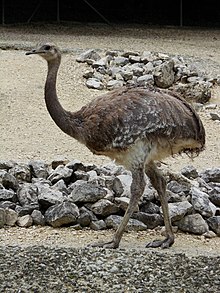
Our South American safari was almost over, and I hadn’t glimpsed the creature at the top of my must-see list: a rare flightless bird known in the indigenous Aymara tongue as the suri, and in modern ornithological parlance as Darwin’s rhea.

The latter appellation memorializes the great naturalist who identified — and ate — one of the ostrichlike beasts during his second voyage aboard the HMS Beagle. Only a few hundred remain in the wilds of northern Chile, although that’s not Charles Darwin’s fault. Subsequent generations of hunters reduced the suri’s numbers; farmers and miners encroached on its habitat.

Sunday, 23 February 2014

Chile: Owls drafted in to fight deadly hantavirus

Officials in Chile are turning to an unlikely ally - wild owls - as they try to fight a contagious disease that has already caused about 15 deaths, it seems.

Owls are the natural predators of the rats carrying the deadly hantavirus, the Santiago Times newspaper reports. Long-tailed pygmy rice rats transmit the virus to humans as they come into contact with campers in the forest, while foraging for bamboo.

But forest fires during Chile's summer months have forced the rats into urban areas, making more people sick. The disease does not affect the rats themselves.

Saturday, 24 August 2013

Andean Condors released into wild after poisoning scare

Endangered Condors have been released back into the wild high up in Chile's Andes.


It comes after a poisoning scare in the area which saw more than a dozen of the large birds mysteriously crash to the ground earlier this month.

Denise Hammick reports.