As regular CFZ-watchers will know, for some time Corinna has been doing a column for Animals & Men and a regular segment on On The Track... particularly about out-of-place birds and rare vagrants. There seem to be more and more bird stories from all over the world hitting the news these days so, to make room for them all - and to give them all equal and worthy coverage - she has set up this new blog to cover all things feathery and Fortean.
Showing posts with label British Columbia. Show all posts

Friday, 11 January 2019

Wrong turn leaves Caribbean-bound bird in Abbotsford


Cape May warbler spotted at Mill Lake Park, attracting interest of Fraser Valley birders
Jan. 7, 2019 12:00 p.m.
Imagine preparing for a winter full of sun in the West Indies, but instead ending up in Abbotsford’s Mill Lake Park.
That’s the situation that a Cape May warbler – a bird never before seen in the Lower Mainland – is now facing this winter.
The small bird has been attracting the interest of birders since it was spotted in the park on Jan. 1.
It’s seemingly found a home just north of the park’s boardwalk, and has been feeding on nectar and insects in a patch of flowers and brush.
(Video by: Bert Sharp)
Gord Gadsden, the founder of the Fraser Valley Birding group and the Fraser Valley regional editor for eBird, said the new visitor to Abbotsford has been creating a buzz in the local birding community.
“It’s caused mass excitement,” he said, noting that it all began when a local snapped a picture of a bird in the park that looked different. “The next morning there was a group of people cruising around to get a glimpse of it. It’s quite a show.”
Gadsden explained that it’s the first-ever recorded sighting of the bird in this area of the province.
“To ever see this bird in B.C. you would have to drive up to Fort St. John in the summer,” he said. “It’s really never been seen in the Lower Mainland and much of B.C. before.”

Friday, 16 November 2018

Bird watchers expecting bald eagle population to soar


Each year, eagles descend upon the Fraser Valley and this year is anticipated to bring in more than normal.

Emad Agahi, CTV Vancouver
Published Saturday, November 10, 2018 7:25PM PST 
It’s one of nature's most spectacular sights, and one unique to where we live.
Tens of thousands of bald eagles will soar into the Fraser Valley to feed this winter and according to biologist David Hancock, it could be their best turnout yet.
“Here in southern B.C., we're the snowbird capital of the world for eagles," said Hancock.
Hancock, who has been studying the ferocious birds for more than 60 years, is preparing for their annual arrival.
As northern rivers freeze over in the winter, the province’s eagle population flies south.
Each year close to 35,000 hungry bald eagles travel from as far as Alaska down to the Fraser Valley to feed on spawned salmon.  Most find their way down the Harrison River near Agassiz.
“It’s quite spectacular there,” said Christian Sasse.
Sasse is a professional photographer who’s been capturing B.C. eagles  for almost a decade.
“Early in the morning the whole plains, the Chehalis Flats, would be flooded with eagles. It's quite an incredible sight," he said.
Sasse believes the amount of rain this fall has the makings for a record turnout, adding “as long as it doesn't rain too much and it doesn't rain too little.”
Eagles can also be spotted across Metro Vancouver, most commonly in Delta, a Kitsilano and Stanley Park.

Monday, 8 October 2018

Dead and dying birds rain down in unexplained occurrence in Delta


The remains of 42 European starlings have been collected and sent to a lab in nearby Abbotsford in hopes of determining why they died.
THE CANADIAN PRESS
Updated: September 21, 2018
A B.C. man who witnessed dozens of birds falling from the sky in Delta says he was horrified by the sight.
“I called it birdageddon. It was really, really creepy,” Kevin Beech said Friday.
The self-described animal lover was driving with a friend just off a busy highway in the community of Tsawwassen on Sept. 14 when the birds started hitting the ground around his vehicle.
“They literally dove face-first into the pavement, it was brutal,” said Beech.
Environment Canada wildlife biologist Laurie Wilson confirmed the remains of 42 European starlings have been collected.
“It’s unusual to have this many birds found dead at the same time in the same place,” she said.
The remains of the birds have been sent to the B.C. Ministry of Agriculture’s animal health lab in nearby Abbotsford. Wilson said preliminary results could be available by the middle of next week, if additional tests are not required.
A network of organizations including the Canadian Wildlife Service and officials with the provincial ministries of Environment and Forests are investigating.
The sight of birds plummeting to earth is not unknown, said Wilson.
“You’d be surprised at how often people call and say they’ve seen birds falling dead out of the sky. It does happen. People report it. I haven’t seen it, but people report it.”
Beech, however, is still rattled by what he saw, comparing it to a scene from an Alfred Hitchcock film.
“It was horrible,” he said.
“Like Alfred Hitchcock creepy.”
Source  

UPDATE
Mystery solved for dozens of birds plummeting to death from the sky in B.C.

THE CANADIAN PRESS
Updated: September 26, 2018

VANCOUVER — A natural occurrence is behind the unusual deaths of about 40 starlings that plummeted to the ground in Delta, B.C., earlier this month.

When Vancouver resident Kevin Beech witnessed the birds falling from the sky, he called it “birdageddon,” saying it was really creepy.

But a statement from Environment and Climate Change Canada’s Wildlife Service says the flock of birds was being chased by a much larger bird just before the starlings hit the ground.

The service says the cloud of birds swooped toward the ground and then pulled back up but the tail end of the swarm didn’t and about 200 birds hit the ground, killing 42 starlings on impact.

A veterinarian pathologist with the B.C. Ministry of Agriculture conducted a necropsy and found the cause of death was a chest injury and there was no evidence of underlying infectious disease or intoxication.

The service says European starlings can form very large flocks and they execute amazing swooping and whirling patterns, called a murmuration, to avoid a predatory bird.


Source  

Monday, 16 April 2018

Hotel forgives guest whose room was trashed by hungry seagulls


3 April 2018

A Canadian man has been "pardoned" by a luxury hotel after his room was ransacked by a flock of pepperoni-loving seagulls nearly two decades ago.

Nick Burchill was banned by the Fairmont Empress in Victoria, British Columbia, after "a string of unfortunate events" in 2001.

In a Facebook post, the Nova Scotia man described bringing some pepperoni to naval buddies on the west coast.

The problems began when he decided to cool the meat on the hotel windowsill.

The "Brother's Pepperoni" - a Halifax delicacy - had been kept at room temperature for a short time, Mr Burchill wrote in a widely shared social media post.

He thought it would be best to make sure it was refrigerated.

But the fourth-floor room had no fridge.

Still, it was April, the air was chilly, and his front-facing room had a window.

"I lifted one of the sashes and spread the packages of pepperoni out on the table and windowsill. Then, I went for a walk…for about 4 or 5 hours," said Mr Burchill.

On his return, he found about 40 seagulls - "an entire flock" - in his room. They had been eating the pepperoni, which "does NASTY things to a seagull's digestive system".

The startled birds "immediately started flying around and crashing into things as they desperately tried to leave the room through the small opening by which they had entered," Mr Burchill said.

"The result was a tornado of seagull excrement, feathers, pepperoni chunks and fairly large birds whipping around the room. The lamps were falling. The curtains were trashed."

Friday, 23 March 2018

Mass bird death investigated in south Okanagan


By Shelby Thom and Klaudia Van Emmerik Global News

NEWS: DOZENS OF DEAD BIRDS DISCOVERED ON NARAMATA ROAD IN SOUTH OKANAGAN.X
Mary Simonin was travelling down Naramata Road on Sunday afternoon when she made a startling discovery.

She snapped photographs showing at least 40 deceased birds littering the street.

“I thought something had fallen out of a truck on the way to the landfill and I expected whatever birds to just fly away and a couple did then nothing else moved,” she said. “I slowed down and when I looked it was all these dead birds.”

She thought the birds were European Starlings – an invasive species in the Okanagan.

“It was certainly unusual. Yes it was strange. I tried to imagine what might have happened. I knew they couldn’t have been electrocuted on the lines because birds are on there all of the time. I counted at least 40 of them,” Simonin said.

The birds have now been cleared from the road but how they died remains a mystery.

Wildlife officials say it’s not the usual season for accidental poisoning from fermented fruit.

The Ministry of Forests, Lands and Natural Resources said it has sent one of the birds to the animal health lab for testing.

Results are expected in a few weeks.

Wednesday, 17 January 2018

Wayward Alaskan eagle monitored by researchers found in Kamloops


The Canadian Press
JANUARY 6, 2018 10:49 AM

VANCOUVER — Staff at a bird rehabilitation centre in Kamloops, B.C., typically don't know where their rescued animals originally came from, but a recently discovered golden eagle was able to reveal just that.

The young golden eagle was found weak and starving just before the new year on the shore of the Thompson River.


Sunday, 12 November 2017

Are elevated levels of mercury in the river birds due to run-of-river dams?


Date:  November 1, 2017
Source:  Society of Environmental Toxicology and Chemistry

Summary:
A new study used American dippers to determine if run-of-river dams altered food webs and mercury levels at 13 stream sites in British Columbia.

Run-of-river dams are deemed "green energy" because they produce lower greenhouse gas emissions, have lower water storage, barrier size, extent of flooding and water level fluctuations than conventional hydropower facilities. They divert part of a stream through turbines before returning it to the stream downriver. The impact this process has on the ecosystem is unknown, particularly with regards to the production of methylmercury as a result of the dam and the disruption of natural flows. RoR dams can cause a spike in methylmercury in two ways -- they can form small reservoirs, called headponds, which flood soil and create slow-flowing, low-oxygen environments; or they can create higher temperatures in the stream as a result of the reduced flow conditions when portions of the stream are diverted to the turbines.


Sunday, 3 September 2017

Rare ferruginous hawk spotted


Good Birding
TONY GREENFIELD / COMMUNITY COLUMNIST
AUGUST 17, 2017 12:11 PM

A rare ferruginous hawk was spotted several times in August near Wilson Creek estuary.

The birding community operates on many levels, from those who like to feed and observe backyard birds to those who travel to far-flung continents just to see rare birds. Along this continuum many people keep lists of the birds they have seen, whether it be from their own backyard, on the Sunshine Coast, within British Columbia, North America or the world. Keeping a list really adds an extra dimension of interest to the hobby, as you know which species you have seen and those you would like to see. There are lots of analogies, for example, a golfer keeping a scorecard. It’s hard to imagine anyone playing golf and not keeping a scorecard. 

Maintaining a list also leads to the phenomenon of the rare bird. Everyone is familiar with the concept where an unlikely event captures the public interest. It can be any unlikely event, like a hole in one on the golf course, or a lottery win when the odds are millions to one. In the birding world, it refers specifically to a bird species appearing in an area where it is completely unexpected. 

All this is by way of alluding to the fact that a rare bird has been making waves on the Sunshine Coast. The ferruginous hawk is normally a grassland species that completely avoids forested regions. In the winter it inhabits grassland regions of the southern U.S. and northern Mexico and migrates north to the northern plains and a narrow strip of the southern Prairies in Canada, especially southern Alberta. It is rarely recorded in B.C. with only sporadic appearances in the grassland areas of the province. I don’t believe it has ever been recorded on the coast of B.C. before. 

Thursday, 22 June 2017

Researchers untangle mystery of tiny bird's trans-Pacific flight


Date: June 1, 2017
Source: University of Faculty of Science British Columbia

Zoologists have documented the first record of a House Swift in the Americas -- and begun to unravel the mystery of how the tiny bird got from its south-east Asia breeding grounds to Ladner, BC.

The bird's well preserved but near-emaciated carcass was discovered in May 2012 near the Deltaport container terminal, just 40 metres from the Pacific Ocean.

"Like some marathon runners, I think this fellow finally saw land and just crashed, exhausted, at the finish line," says Ildiko Szabo, a curator at the Beaty Biodiversity Museum and forensic ornithologist at the University of British Columbia (UBC) who led the identification of the specimen.

"These birds are amazing fliers and can stay airborne for months at a time, but there wouldn't have been enough insect prey to sustain him properly over the mid-Pacific. The mystery is what sent him so far off course."

In a paper published in The Wilson Journal of Ornithology, Szabo and co-authors, including UBC researcher Darren Irwin, propose that either a storm set the bird off course, or even more likely, his internal navigation 'compass' malfunctioned.

"Our initial reaction was skepticism that this would be such an unusual species," says Irwin, who studies how new bird species arise. "But by combining a review of the bird's characteristics with DNA testing, we were able to confirm that this was indeed a House Swift from Asia, making this an exceptional case of vagrancy."

Tuesday, 19 July 2016

Starving seabirds washing up dead on Washington beaches


By JOHN RYAN • JUL 16, 2016

Seabirds have been washing up dead on beaches in Washington and British Columbia this summer, and scientists can't say why.

Rhinoceros auklets are one of the most common birds in the network of inland waterways shared by Washington and British Columbia. Since May, volunteer "citizen scientists" on the north side of the Olympic Peninsula and across the water in Victoria, British Columbia, have found dozens of the puffin-like birds washed ashore.

It's a tiny toll compared to the dieoffs of other species of seabirds in 2014 and 2015. Common murres and Cassin's auklets washed up by the hundreds of thousands up and down North America's west coast.

But scientists are concerned nonetheless.

"There's something larger going on here," University of Washington biologist Julia Parrish said. “If we ignore it and only pay attention when it’s really dire, then it’s often too late to do anything about it.”

Parrish runs the Coastal Observation and Seabird Survey Team, whose volunteer beachwalkers help scientists keep tabs on seabirds and garbage floating ashore in five western states.  


Tuesday, 9 February 2016

Two birds subject of B.C. conservation plan


By Michael Mui, 24 Hours Vancouver
Monday, February 1, 2016 5:16:27 PST PM

B.C. government is proposing conservation plans for two different threatened feathered species with significant populations in the Lower Mainland — a bird of prey and a small seabird.

The plan was shared with Metro Vancouver recently by the provincial Ministry of Forests, describing a need to increase protected habitat.

The first is the Northern Goshawk, raven-sized raptors believed to make up up to 780 “home ranges” across the province — the term describes a breeding area with a surrounding suitable foraging area where the birds can raise their young.

These birds are listed as threatened under the federal Species at Risk Act registry, mainly because they have a small population and have lost traditional habitats.

Locally, in the south coast region, it’s believed another 83 home ranges need to be protected to meet current conservation goals. Government’s current plan is to protect 30 of those areas by 2020 as part of a B.C.-wide strategy.

Marbled Murrolet live in coastal areas and rely on old-growth forest.

“Their at-risk status is due mainly to the loss and fragmentation of their old growth nesting habitat and due to threats in the marine habitats where they feed,” the ministry said in its plan, pointing to things like oil spills and fisheries by-catch as some threats.

“It is estimated that an additional 210,000 hectares of (murrelet) habitat would have to be protected in order to achieve the federal minimum habitat thresholds applied to provincial Crown land only.”

The current strategy proposes the creation of reserves in the Great Bear Rainforest, and through managing old growth forests and “priority” habitats along the coast.
By 2017, government is expected to specify the amounts of land needed to be protected in each B.C. conservation region.


Saturday, 2 January 2016

Fossil find: B.C. family stumbles upon new species of penguin-like bird

Published Tuesday, December 15, 2015 2:03PM PST 

A Sooke, B.C. family’s walk on the beach turned into a paleontology expedition when they stumbled upon a rare find: a 25-million-year-old bird fossil embedded in a slab of rock.

The daughter spotted a bone buried in a rock slab that had broken off from a nearby cliff and her brother helped carry the fossil off the beach, with their father bringing it straight to the Royal BC Museum in Victoria for identification.

The fossil has since been verified by researchers as a previously unknown species of plotopterid, a long-extinct family of flightless diving birds whose wings functioned as flippers – just like penguins.

“It was basically the first useful bird fossil that had been found in more than 100 years in that area,” said museum bird expert Gary Kaiser. “Bird fossils are very, very rare because bird bones are light and fragile.”

He said most plopterid fossils that have been found in Japan and the U.S. have measured more than two metres long – but the fossil found in Sooke is from a much smaller bird, about as big as a duck.

Monday, 29 June 2015

Bad news and good news for birds nesting at reservoirs


Date:June 25, 2015

Source:Central Ornithology Publication Office

Summary: In a six-year study at Arrow Lakes Reservoir in British Columbia, researchers found that while some nests failed due to flooding as the reservoir filled up in the spring, the higher water levels actually provided benefits for the nests that survived. Their results show that overall, nesting in the reservoir's riparian areas did not reduce nest success.More than half of the world's major river systems are regulated by dams and reservoirs. Many bird species rely on riparian habitat, building their nests in the vegetation that lines rivers and streams. However, whether they can find success nesting on the shores of reservoirs that are drained and flooded according to the needs of water storage rather than the needs of wildlife has been largely an open question.

Sunday, 4 May 2014

Long-legged bird makes first landing in city

DAILY NEWS 
APRIL 30, 2014 12:00 AM

Bird watchers in Prince George are in a flap over the latest unique sighting in that north central B.C. city.
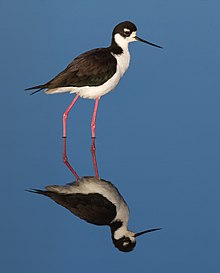
For the first time ever recorded, a blacknecked stilt has been spotted in the area.

Avid birder and Prince George Naturalist Club key leader Clive Keen photographed the small interloper Monday morning east of the city, just hours after it was spotted on Sunday evening.

"This is really very exciting for local birders," he said.

While the bird is not uncommon on the east side of the Canadian Rockies, it is very unusual on the B.C. side, "and almost unheard of in the north of the province," said Keen.

Sunday, 23 March 2014

BIRD RESCUE: Game over: Lucy the fugitive emu captured in Nanaimo

CTV Vancouver 
Published Friday, March 21, 2014 6:42PM PDT 
Last Updated Friday, March 21, 2014 7:08PM PDT


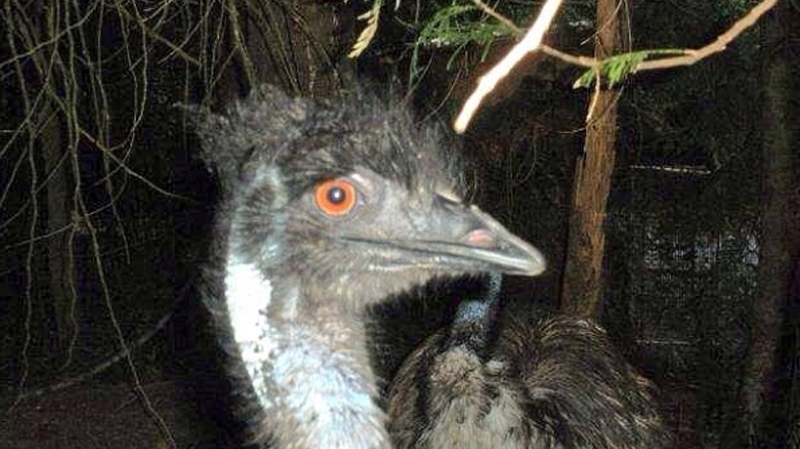
Authorities have finally apprehended the 150-pound emu who’s been running wild in Nanaimo, B.C. since last weekend.

Animal control officers cooked Lucy the emu’s goose Friday evening after he was spotted in a thicket behind Vancouver Island University.

CTV’s Chopper 9 got a bird’s-eye view as the 15-year-old animal was loaded into a truck to be returned to his relieved owner.

Animal control officers load Lucy the emu into a truck behind Vancouver Island University. March 21, 2014. (CTV/Chopper 9)

A photo of Lucy, a 150-pound emu, who recently went missing after escaping his enclosure at a Nanaimo farm. March 19, 2014. (Courtesy Tim Genner)

Lucy flew the coop on Sunday and has been spotted numerous times since, most memorably when it was filmed chasing a dog across a Nanaimo lawn.

The length of the capture is no surprise given that emus can zip around at about 70 kilometres per hour.

Lucy’s story became a social media sensation, inspiring hundreds of tweets and even a map tracking every sighting of the flightless bird.