As regular CFZ-watchers will know, for some time Corinna has been doing a column for Animals & Men and a regular segment on On The Track... particularly about out-of-place birds and rare vagrants. There seem to be more and more bird stories from all over the world hitting the news these days so, to make room for them all - and to give them all equal and worthy coverage - she has set up this new blog to cover all things feathery and Fortean.
Showing posts with label Natural England. Show all posts

Thursday, 25 July 2019

Natural England grants the killing of thousands of Brent Geese


16/07/2019

At least 6,000 Brent Geese were shot while they overwintered in England between 2014 and 2019 after Natural England issued hundreds of licences to kill the Amber-listed species.
However, it is thought the exact death toll could in fact be as high as 8,000, with official data unclear. The number of geese to be killed on some of the applications isn't listed, hence the confusion over the precise figures involved.
Brent Goose is somewhat localised in Britain in winter, with an estimated 100,000 migrating to our isles during the colder months, meaning that perhaps some 8 per cent of the population has been killed since 2014. Natural England claimed the species causes 'serious damage to crops, vegetable or fruit', despite the geese having a varied diet, particularly eel-grass, but also seaweed and grass.
During winter, Brent Goose is almost exclusively coastal, with particularly large concentrations of Dark-bellied Brent across the estuarine habitats of Lincolnshire, North Norfolk, Suffolk, Essex, North Kent and Hampshire. Pale-bellied Brent has a more northerly range, with Strangford Lough and Lough Foyle, both in Northern Ireland, and Holy Island, Northumberland, holding significant numbers. The shootings involved Dark-bellied Brent and took place in Essex, Kent and Lincolnshire.


Thursday, 13 June 2019

Wild Justice launches new legal challenge


10/06/2019
On Friday 7 June, Wild Justice launched a legal challenge against Natural England's (NE) licence GL26, which allows the killing of Carrion Crows that cause damage to livestock, including reared gamebirds. The non-profit company, set up by Chris Packham CBE, Dr Ruth Tingay and Dr Mark Avery, is launching the challenge citing a lack of clarity as to how the licences are awarded and questioning how Common Pheasants qualify as livestock.
This latest objection relates to two aspects of the licence, chiefly NE's approach to 'alternatives' and 'kept' in relation to the killing of Carrion Crows to protect Common Pheasants. In short, Wild Justice is questioning the fact that NE has not specified the circumstances in which there is no alternative to killing, while also inventing a new and unlawful definition of 'kept' which greatly expands the conditions under which Common Pheasants could be regarded as livestock.
News of this challenge comes following a recent victory for Wild Justice in which Natural England was forced to revoke general licences to kill certain bird species without reason. The justifications for this new challenge are similar, with Wild Justice feeling that England's statutory nature conservation adviser and regulator is failing to get the law right and protect wildlife from unlawful killing.


Wednesday, 22 May 2019

Wild Justice wins legal challenge to Natural England’s General Licenses


Wild Justice was set up by Chris Packham, Ruth Tingay and Mark Avery and was launched on 13 February this year. Their first legal challenge was against the General Licences issued by Natural England on 1 January this year, in their own words it was to challenge the "casual killing of some birds"..
Late yesterday afternoon Wild Justice heard that they had won their first legal challenge
Announcing the news Natural England released the follow press release
Natural England is revoking three general licences for controlling certain wild birds as of Thursday 25 April 2019.
These licences (GL 04/05/06) cover 16 species of birds including several members of the crow family, Canada goose, some gulls and pigeons.
The change follows a legal challenge to the way the licences have been issued, which could mean users who rely on them are not acting lawfully.
Natural England is working at pace to put in place over the next few weeks alternative measures to allow lawful control of these bird species to continue where necessary. In the meantime, once the licences have been revoked and until new licences are issued, anyone needing to control one of these 16 bird species where there is no reasonable non-lethal alternative will need to apply for an individual licence.
The action is the first stage of a planned review of general and class licences, which will be completed this year.
Natural England’s interim chief executive Marian Spain said: We recognise this change will cause disruption for some people, but we are working hard to ensure it is kept to a minimum.
We will bring forward interim measures as quickly as possible as the first stage of our planned review of the licences. We want to make sure our licensing system is robust and proportionate, taking into account the needs of wildlife and people.
What to do if you use a general licence
It is expected that, over time, many situations currently covered by the three general licences will be covered by new licences.

Sunday, 24 March 2019

Legal challenge to Hen Harrier 'brood management' plan fails


15/03/2019
A judicial review into Natural England's controversial 'brood management' plan, which involves issuing licences for Hen Harriers to be taken from their broods, raised in captivity and then released back into the wild at specific locations, has failed.
The review, which was brought about by leading conservationist and Birdwatch columnist Dr Mark Avery, along with the RSPB, took place on 15 March, with Mrs Justice Laing ruling Natural England's plans to be lawful on the grounds that the licenses were being issues for research purposes, and not yet for conservation purposes, thus they could go ahead.
Brood management involves removing Hen Harrier broods from driven grouse moors once breeding numbers have reached a certain level, due to concerns that they have a significant impact on the number of Red Grouse available for shooting. However, the RSPB believes the first step in Hen Harrier recovery should be the cessation of illegal persecution, which is widely acknowledged as the main reason driving the decline of the iconic bird of prey.
Dr Avery commented on his blog: "It's disappointing to lose but I'd like to thank all my supporters and my legal team for mounting this challenge and the RSPB for taking their challenge alongside mine. It needed to be done, it certainly wasn't frivolous (otherwise we would not have been given permission to proceed with the judicial review) and it may not be over yet."
Martin Harper of the RSPB added: "This is obviously a huge blow but we will continue to fight for the future of Hen Harriers. The plight of this threatened species is a stark reminder of so much that is wrong with the way we manage our uplands. It is only through standing up for what is right that we can help recover the wildlife that we all cherish."


Thursday, 4 August 2016

Gamekeepers and RSPB clash over licence to cull buzzards on shooting estate


By WMNPBowern  |  Posted: August 02, 2016
   
The RSPB stands accused of hypocrisy over its opposition to the granting of a licence by Natural England to control buzzards that threaten pheasant poults on a commercial shoot.

The accusation, in a blog written by the gamekeepers’ political advisor, Charles Nodder, is that the RSPB is itself happy to use lethal control in the name of conservation of certain species and it is hypercritical of the organisation and its conservation director, Martin Harper, to complain when someone uses the same rules to protect their own interests.

In his blog on the RSPB website, Mr Harper wrote: “The thorny issue of licenses for buzzard control reappeared when Natural England issued a licence permitting the control of up to 10 buzzards to “prevent serious damage to young pheasants”.

He goes on: “The killing of a recovering British bird of prey to protect an introduced gamebird for the benefit of commercial interest is wrong. The decision sets a worrying precedent. What will be next? Red kites, peregrines, hen harriers?”

But Mr Nodder, political adviser for the National Gamekeepers’ Organisation, says buzzards are thriving and asks, if it is okay for the RSPB to be granted licences to kill even rarer birds in the name of conservation, why it is wrong for shooting estates to also apply for licences to control buzzards?

He writes: “I was particularly interested in Martin’s reaction, because there is no risk to buzzard conservation arising from Natural England’s (NE) decision whatsoever.

In law, NE cannot issue a licence if, as a result of its being carried out, the conservation status of the licensed bird would be adversely effected.

Friday, 29 July 2016

Licence for buzzard control

29 July 2016

Natural England issued a licence last night permitting the control of up to 10 buzzards to prevent serious damage to young pheasants.

The licence is time-limited with stringent conditions and is based on the law, policy and best available evidence. It follows rigorous assessment after other methods had been tried unsuccessfully over a 5-year period.

It is stipulated that the licence must be used in combination with non-lethal measures and only on buzzards in and immediately around the animal pens – not on passing birds. These conditions are designed to make the licensed activity both proportionate and effective and we will continue to work with the applicant to assess this.

Killing wild birds without a licence from Natural England is illegal.

Thursday, 25 September 2014

Proposal to force farmers to 'shoo before they shoot' pest birds rejected

By WMNPBowern | Posted: September 16, 2014

A proposal by Natural England that farmers and others who control pest bird species should have try to shoo them away before they could legally shoot them has been rejected.

The measure was widely opposed by shooting groups and farmers who registered their concerns during the consultation period earlier this year.

They warned it would have made the shooting of woodpigeons, a major threat to arable crops in the UK and other species that are controlled because of the risks they pose, much more restricted than is currently the case.

There were also proposals to take some species of the crow family off the list of birds that can currently be legally shot to protect crops and health.


Wednesday, 4 June 2014

Licence application to shoot 10 buzzards received by Natural England

Up to 10 buzzards could be trapped and shot to protect young pheasant if Natural England (the UK Government’s nature conservation agency) approves a licence application, the RSPB has learnt.

During 2013 Natural England granted two licences to control buzzards; one at a chicken farm, and one a pheasant shoot. Four other applications to control buzzards to protect pheasant shoots were rejected by Natural England.


Martin Harper, RSPB’s Conservation Director, said: “The buzzard is a fully-protected bird of prey which is only now recovering its numbers from sustained historic persecution, which saw the bird lose much of its UK population and range. Any relaxation of their current protection, coupled with ongoing persecution, could threaten local populations. Their vulnerability is a key reason why we are fighting for their protection.”

Monday, 31 March 2014

Farmland birds flock to Isle, says RSPB


Isle residents know that the area they live in is the best in Britain - and now so do the nation’s farmland birds.

A report from the RSPB has says the Isle of Axholme stands out as one of the best places to spot arable birds such as corn bunting, grey partridge, lapwing, tree sparrow, turtle dove and yellow wagtail.

RSPB farmland conservation advisor Kirsty Brannan said: “The reason why this area stands out as one of the best places in England for farmland birds is because it still has good numbers of bird species that are particularly dependent on arable farming and that are no longer widespread throughout most of the countryside.

“A separate project which the RSPB worked with the BTO (British Trust for Ornithology), Natural England and local bird clubs brought together all records of these particular birds, and highlighted parts of the country where most of these species could still be found.

“While many farmland birds are still a common site almost wherever you go, such as skylark and yellowhammer, these six have become more scarce, so it’s especially exciting to find an area where all of them may be doing well.

“The bird monitoring work started last year. Clearly something about the Isle of Axholme is helping these birds, and we’re keen to work with local farmers to understand why.”

RSPB says to stop burning heather


By Lucy King

Wednesday, 19 March 2014

Charity claims practice harms habitats

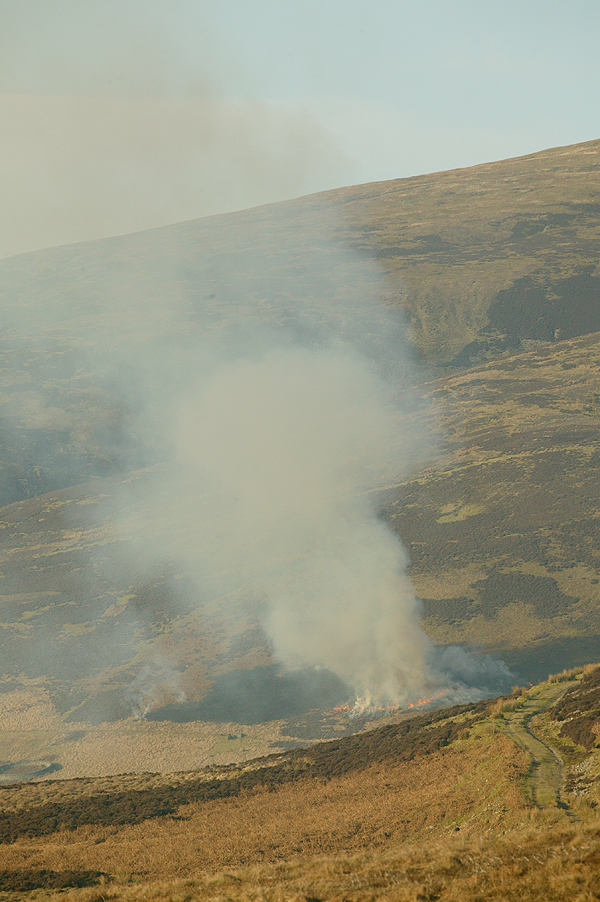
The Moorland Association has defended controlled heather burning after the RSPB called on Natural England to bring an end to the practice on protected uplands. The society claims that, along with draining to improve grazing for sheep, rotational burning, employed on many grouse moors, has led to a decline in the condition of much of Britain’s peatland. It suggests the practice damages the delicate habitats of rare plants and birds, prevents the re-growth of vegetation, releases stored carbon and contributes to increased flooding. The organisation’s chief executive, Dr. Mike Clarke, said: “For the benefit of wildlife, the environment and wider society, there is an urgent need to restore these landscapes by blocking drains, revegetating bare peat and bringing an end to burning.”

Tuesday, 28 May 2013

Unacceptable': Buzzard nests and eggs destroyed to increase pheasant shoots

THE destruction of nests and eggs of protected birds buzzards that was licensed by a Government agency has been criticised as 'unacceptable' by the RSPB today.


Published: Thu, May 23, 2013

Government agency Natural England issue the first ever license to destroy four buzzard nests to prevent the protected birds preying on young pheasants at shoot.

The shoot owners, who said buzzards were damaging their business , were given permission to destroy the eggs and nests between April 23 and May 8.

The license was uncovered through the Environmental Information Regulations, which is equivalent to a a Freedom of Information (FOI) request.

Martin Harper, conservation director at the RSPB, criticed the lethal control of buzzards claiming it was 'unjustified' and 'unacceptable'.

He said: "Most of us celebrate the fact that buzzards are now regularly seen soaring in our skies. They are a conservation success story but we cannot take their return for granted.

The shoot owners said buzzards were damaging their business

I think that it is wrong for Natural England to issue buzzard control licences to protect commercial interests

Martin Harper from the RSPB: "I think that it is wrong for Natural England to issue buzzard control licences to protect commercial interests.

"It is wrong that there has been no public scrutiny of these decisions and it is wrong that we only heard of these decisions after the nests may have been destroyed."

The RSPB said buzzards, who are recovering from declines caused by persecution, accounted for one to two per cent of pheasant losses from shoots.

They added that there were other non-lethal ways to protect shoots from birds of prey.

Natural England claim that species could cause problems in isolated cases.

In a statement the government agency said: "The buzzard population in the locality remains particularly high and concentrated and we are confident that the local conservation status will not be adversely impacted by the destruction of this small number of nests."

Sunday, 26 May 2013

Conservation agency approved cull of endangered birds, documents show

Natural England licensed cull of tens of thousands of lesser black-backed gulls on one of England's largest shooting estates

Tens of thousands of endangered birds have been shot, trapped and poisoned on one of England's largest shooting estates with the approval of the government agency responsible for protecting the species, a Guardian investigation has found.

The government has licensed an annual cull of lesser black-backed gullson the Abbeystead estate on the Bowland Fells in Lancashire for decades, officially to stop water pollution. However, some experts believe the culling was also partly to protect grouse shooting interests.

The regulator Natural England now admits that, since a government-led bird conservation review occurred in 2001, "confusion" over the legal protection status of the species has allowed the culling to continue, despite its population crashing in recent years.

Chris Packham, the BBC Springwatch presenter and naturalist, has described the situation as a "travesty" and the RSPB is now calling for an urgent review.

The 23,500-acre Abbeystead estate was bought in 1980 by a trust "on behalf" of the Duke of Westminster, one of the UK's richest landowners. The duke's Grosvenor Estate manages the Abbeystead estate, which hosts pheasant and grouse shoots.

The estate was first allowed to cull the gulls in the 1970s on the grounds that droppings were polluting the watercourse. The licence to cull was last renewed by NE in 1999. But a former Abbeystead gull surveyor has admitted that the culling has been conducted, in part, to protect the "economy of the shooting estates". The species is known to eat grouse eggs.


Sunday, 16 September 2012

Amateur wildlife watchers help with search for one of the UK’s most threatened birds


Conservationists trying to save the UK’s most threatened farmland bird have been given a helping hand by members of the public who’ve been calling a special hotline to report sightings.
Photo: Wikipedia
Since Operation Turtle Dove was launched by the RSPB, Conservation Grade, Pensthorpe Conservation Trust and Natural England in May, the hotline has had 429 calls reporting the elusive bird.

Highlights include two unusual sightings on the Welsh coast, an area not usually associated with turtle doves; a B&B, frequented by visitors to the RSPB’s Snettisham nature reserve, where a pair of turtle doves nested in the conifers outside; and various calls from people who thought the ‘purring’ sound turtle doves make was coming from a group of frogs.

Norfolk came top as the county with the most reported turtle dove sightings (112), second was Suffolk (69), closely followed by Cambridgeshire (61), with Essex (32), Kent (29), and Lincolnshire (20) coming fourth, fifth and sixth.

Alison Gardner from Operation Turtle Dove, said: ‘It’s great that we’ve already had so many people supporting Operation Turtle Dove and looking out for these birds.

Continued:
  http://www.surfbirds.com/community-blogs/blog/2012/09/13/amateur-wildlife-watchers-help-with-search-for-one-of-the-uks-most-threatened-birds/

More turtle dove information: