As regular CFZ-watchers will know, for some time Corinna has been doing a column for Animals & Men and a regular segment on On The Track... particularly about out-of-place birds and rare vagrants. There seem to be more and more bird stories from all over the world hitting the news these days so, to make room for them all - and to give them all equal and worthy coverage - she has set up this new blog to cover all things feathery and Fortean.
Showing posts with label successful hatching. Show all posts

Wednesday, 26 June 2019

Delight at chick success for endangered Pied Flycatchers at Lydford Gorge


They are further thrilled to have discovered that one pair of the birds, who were born in different parts of Devon, have paired up and are now busy raising their
13:17, 20 JUN 2019
Two pairs of rare Pied Flycatchers, which are on the ‘Birds of Conservation Concern’ red list, are successfully breeding at Lydford Gorge in Devon, thanks to work done by rangers at National Trust.
They are further thrilled to have discovered that one pair of the birds, who were born in different parts of Devon, have paired up and are now busy raising their young at Lydford Gorge on Dartmoor.
The Devon pair of birds were ringed in 2014, and the National Trust has been able to discover that the male was born near Widecombe-on-the-Moor and the female hails from South Molton.  As Pied Flycatchers migrate thousands of miles during the winter before returning to the UK to mate in the spring, it’s not known how or when they paired up, however, the Trust is delighted to see these endangered birds doing well after careful work to attract them to the area has worked.
The baby birds will start to be seen taking their first forays outside the nest in June; however keen bird spotters can come and look out for the birds at Lydford Gorge, who are expected to stay there until late August when they fly south again to the African continent.

Sunday, 9 June 2019

Endangered condor may have hatched in Zion National Park


JUNE 1, 2019
There's likely a new baby condor at Zion National Park in southwest Utah.
Park rangers said Thursday that they suspect a pair of endangered California condors has hatched their first egg because of behavior changes between the birds.
They estimate the chick to be about 3 weeks old.
If the chick survives, it would be Utah's first successful hatchling. Zion spokeswoman Aly Baltrus says three chicks have been born at the park but have died before they were old enough to fly.
National Park Service records show the condors were the only breeding pair in Zion as of last year. Park rangers estimate they've been together for two years.
California condors are making a comeback in the wild three decades after nearing the brink of extinction.

Sunday, 2 June 2019

Toledo Zoo announces recent hatching of brown kiwi chick


THE BLADE
 MAY 16, 2019
 The Toledo Zoo announced Thursday that a female North Island brown kiwi chick recently hatched at the zoo’s Avian Breeding Center.
The egg was laid Jan. 9 at the Smithsonian Conservation Biology Institute, which is affiliated with the National Zoo in Washington, D.C. Staff there determined the developing embryo inside was a female through sophisticated blood-draw techniques.
They drove the egg to the Toledo Zoo several weeks before its expected hatch date to finish incubating here. The yet-to-be-named chick hatched March 21, appears healthy, and is currently being raised off-exhibit.
North Island brown kiwi are one of five existing kiwi species endemic to New Zealand. Only about half of all kiwi eggs hatch successfully and nearly 90 percent of chicks die within six months.


Friday, 11 January 2019

Two 'extinct' birds have hatched at Chester Zoo


The Socorro birds completely vanished from their native land 47 years ago
By   Jessica Sansome
12:04, 7 JAN 2019
UPDATED12:10, 7 JAN 2019
Chester Zoo have welcomed two new additions - and there are just 23 of them existing in the UK.
A couple of rare Socorro doves hatched on November 7 and were raised by 'foster parents, a pair of barbary doves.
The birds, which originate from Socorro Island located 400 miles off the west coast of Mexico, are listed as extinct in the wild with fewer than 200 existing in human care in zoos around the world.
The Socorro birds completely vanished from their native land 47 years ago and declared extinct in the wild in 1972.
It is thought that the introduction of sheep that ate the plants the doves depended on to survive as well as invasive species such as cats that preyed upon the bird, are behind their demise.

Wednesday, 29 August 2018

Two Indigo Buntings Hatch at Smithsonian’s National Zoo


Aug. 15, 2018
Bird House keepers at the Smithsonian’s National Zoo are celebrating the hatching of two indigo bunting chicks—a first for the Zoo and the North American population in human care. The female indigo bunting laid four eggs in an off-exhibit area between July 15 and July 20. The first chick hatched July 27, but it died later that day. The second and third chicks hatched July 29 and July 31, respectively, and are thriving. A fourth chick did not hatch. The surviving chicks fledged Aug. 8 and will remain off exhibit while the Bird House is undergoing renovations; the building is expected to reopen in 2021.  
“Cracking the code of breeding North American migratory songbirds in human care while they are still common is vital for future conservation efforts,” said Sara Hallager, curator of the Bird House. “I am extremely proud of our team and this success. Breeding these native birds will provide a deeper understanding of their biology, reproduction and behavior and will greatly contribute to in situ conservation efforts.” 
The chicks’ parents are wild-caught and arrived at the Zoo in May 2016. By looking at the color of the birds’ plumage, keepers estimated that they are at least 2 years old. Animal care staff have been closely monitoring the chicks via a closed-circuit cam to allow the parents to bond with and care for their chicks. Keepers continue to provide the birds with a nutritious diet of pellets, fruit, hardboiled eggs, insects and greens. Indigo buntings often have multiple clutches during a season, and animal care staff report that the female is already preparing for a second clutch of eggs.
Native to North America, indigo buntings are considered “least concern” by the International Union for Conservation of Nature. Their range is expansive; during breeding season, these migratory birds can be found across the United States—from Texas to Florida, and in all states north toward Canada. In winter, they migrate south and reside in the Caribbean, Central America and the northern tip of South America. In recent years, wild indigo bunting populations have been decreasing due to habitat loss and fragmentation.

Monday, 11 June 2018

UPDATE: Godwit eggs hatch after spring flood rescue

31 May 2018


Conservationists have hatched 15 chicks of an endangered species on the RSPB's UK "red list" after rescuing eggs from muddy farmland during spring floods.

The black-tailed godwits, of which there are fewer than 50 breeding pairs, are being hand-reared at the Wildfowl & Wetlands Trust in Norfolk.

The trust's Rebecca Lee said: "A number of the eggs were in such bad condition that they resembled muddy potatoes."

The ground-nesting birds' eggs "had no chance of survival in the wild".

Conservationists teamed up with farmers to rescue 32 eggs after the godwits were forced by flooding away from the safety of the Nene Washes in The Fens in Cambridgeshire.

Ms Lee, who is the trust's principal species conservation officer, said: "Conditions were so bad we were concerned that they might not survive."

They used a technique called "head-starting", which involves collecting the eggs from the wild under a Natural England licence and hand-rearing them.

It is the second time they have successfully reared godwit chicks at the trust's reserve at Welney, in Norfolk, as part of Project Godwit, a five-year partnership with the RSPB.

Friday, 18 May 2018

China's giant panda base helps breed rare bird


China's giant panda research base said on Sunday that it has hatched one Chinese monal (Lophophorus lhuysii) egg, a bird as rare as the giant panda, and covering a similar range.

The rare bird, native to alpine shrubs of over 3,000 meters above sea level, is one of the largest pheasants in the world. It is listed on China's first-grade state protection as there are fewer than 3,000 left in the wild.

There are only 11 captive birds in Fengtongzhai National Nature Reserve in Sichuan.

The Chengdu Research Base of Giant Panda Breeding said the center and the reserve as well as the China West Normal University set up a lab in March to pass on experience in panda breeding to the protection of birds.

More eggs are expected to hatch soon.

The panda base has engaged with experts from the World Pheasant Association.


Sunday, 13 May 2018

Rare and endangered duckling hatches in Sussex


Louis the ducking, hatched in Sussex this weekend, belongs to one of the most endangeed species of duck in the worlds

SUS-180429-111246001 Published: 11:18 Sunday 29 April 2018 Updated: 15:03 Monday 30 April 2018

A duckling belonging to one of the rarest and most endangered species of birds in the world has hatched in Sussex this weekend. Louis, a baby white-headed duck, was hatched at the Wildfowl and Wetlands Trust (WWT) centre in Arundel yesterday (April 28) - but is already being treated as a VIP by the dedicated WWT staff.

After hatching, Louis was sent on his way to the main trust’s main duckery at WWT Slimbridge Wetland Centre in Gloucestershire , escorted in style by the WWT Arundel Centre Manager Tim McGregor. Eventually Louis may return to live at WWT Arundel but he will be sporting a big blue bill like his dad who lives in the Reed Swamp exhibit at Arundel Wetland Centre with other ducks from Kazakhstan, Turkey, Iran and Afghanistan.

Read more at: 

Mull eagles beat the royals with new arrival


It isn’t just the royal family who are celebrating the arrival of a new baby – as a pair of Mull’s famous white-tailed eagles just beat them to it.

The eagles at the North West Mull Community Eagle Watch are believed to have hatched one egg sometime in the 24 hours before the royal birth was announced but rangers monitoring the nest from a distance were only able to confirm a feed this week.

All eyes are now on the public nest in the community-owned forest at West Ardhu to see if it is, in fact, twins for the eagle pair, who are known as Hope and Star.

The 12-year-old female Hope had become increasingly reluctant to leave the nest near Dervaig when her nine-year-old mate Star landed to take over incubation duties – a sure sign that she was hearing the chicks calling from inside the egg and did not want to leave them.

Sea eagle eggs hatch a day or two apart, so hopes were still high that there would be another arrival.


Friday, 2 March 2018

Wisdom, the World’s Oldest Known Wild Bird, Successfully Hatches Another Chick!


Wisdom, known the world around as the oldest wild bird sill producing offspring, returned to Midway Atoll in early 2018 and has now successful hatched another chick.

At 67, Wisdom, the world’s oldest known breeding bird in the wild, is a mother once more! On February 6th, approximately two months after Wisdom began incubating her egg, Wisdom and her mate Akeakamai welcomed their newest chick to Midway Atoll.

Midway Atoll National Wildlife Refuge and Battle of Midway National Memorialwithin Papahānaumokuākea Marine National Monument is a special place for over three million seabirds – they return to Midway Atoll each year to rest, mate, lay eggs, and raise their chicks.


Thursday, 28 December 2017

Rare fairy tern chick hatches in New Zealand


‘Critically endangered’ bird has been on the brink of extinction since the 1970s

PUBLISHED : Thursday, 07 December, 2017, 2:22pm
UPDATED : Thursday, 07 December, 2017, 2:24pm

Conservationists are celebrating the birth of one of New Zealand’s rarest birds at Mangawhai.

The number of one of the country’s rarest birds, the New Zealand fairy tern/tara-iti, has been boosted by a chick successfully hatching at Mangawhai, in late November.

With a total population of around just 40 birds, the NZ fairy tern is critically endangered, and has teetered on the brink of extinction since the 1970s.

Department of Conservation Mangawhai Fairy Tern Ranger Keven Drew hopes the new chick will help boost fairy tern numbers.

“Although it is early days for the chick and the risks are high, we are hopeful he or she will continue to do well and fledge later in summer,” Mr Drew said.

Fairy terns nest on shell and sand banks just above high tide, which makes them vulnerable to rats, stoats and other predators, disturbance by people, 4WD vehicles and dogs. They are also at risk from stormy weather and very high tides.

“The birds cannot be transported to predator-free offshore islands because they are very particular about where they nest, and the chicks are not raised in captivity as they have to be looked after by their parents while they learn how to fish successfully” he said.

Wednesday, 30 August 2017

Critically Endangered macaws are learning to trust artifical nest boxes


This year, nine Blue-throated Macaw chicks have successfully hatched from nest boxes erected by Armonía (BirdLife in Bolivia) - including the first-ever second-generation nest box fledging.

Found only in the Llanos de Moxos - a tropical savanna in northern Bolivia - the striking Blue-throated Macaw Ara glaucogularis was nearly trapped to extinction as a result of demand for the cage bird trade, until 1984, when live export of the species from Bolivia was banned.

But while that threat has been reduced (if not entirely eliminated), the remaining Blue-throated Macaw population, estimated to be in the low hundreds, faces a significant hurdle in its attempts to rebound. The entirety of its known breeding range is situated on what is now private cattle ranches, and the resultant tree-felling and burning has left the Blue-throated Macaws - picky nesters by necessity - short on viable options.

Blue-throated Macaws prefer trees with spacious cavities to nest in, but 150 years of cattle-ranching has resulted in the clearing of most of the larger trees in the region. The beleaguered species has been recorded to suffer a high rate of nesting failures in recent years, with predation from species such as Southern Caracara Caracara plancus and Toco Toucan Ramphastos toco cited as one of the main factors.

However, since 2006, Asociacion Armonía (BirdLife in Bolivia), the Blue-throated Macaw Species Champion, have been working to boost the species' nesting options. With support from the Loro Parque Fundación, Bird Endowement – Nido Adopito – El Beni-Factors ™ and the Mohammed bin Zayed Conservation Fund, Armonía has erected numerous next boxes across the southern part of the Blue-throated Macaw's breeding range, to great effect. In the eleven years since the programme has been running, 71 chicks have successfully hatched - a significant number for a species with such a tiny (50-249) estimated adult population.


Monday, 28 August 2017

Delight as three curlews hatch at Co Antrim farm


By Staff Reporter
August 18 2017


Curlew chicks have fledged at a Co Antrim farm for the first time in 20 years.

Last year a pair of curlews attempted to breed at Greenmount Hill Farm in Glenwherry for the first time since 2005 - only to fail to hatch any young.

But this summer RSPB NI's conservation adviser Neal Warnock was delighted to see that two pairs arrived back at the farm and he can confirm that one of the pairs has successfully fledged three young.

It is believed these are the first curlews to fledge from the site since the 1990s.

The happy news is a real boost considering that over the past two decades curlew numbers across the UK have almost halved.

In Northern Ireland more than 80% of the curlew population has been lost since 1987.

Mr Warnock said: "When news broke that one of the pairs had hatched three young, their progress became the talk of the community. It was a very long six-week wait watching them grow until they finally stretched their wings and departed.

"Curlews only rarely fledge three young, so this was terrific news for all involved in the project and should help see them become established on the farm."


Friday, 8 July 2016

Unlikely brood of four chicks gives boost to Osprey conservation

Wednesday, July 6, 2016, 07:00 by 
Emily Beament, Press Association


An "awesome foursome" of osprey chicks have been reared in a single nest, in what conservationists say is a rare event for the bird of prey.

The chances of four chicks hatching in the nest at KielderWater and Forest Park, Northumberland, were put at 100 to one - but their arrival was part of a successful year for theKielder Osprey Project, experts said.

The Forestry Commission's wildlife team is ringing at least 10 five- to six-week-old osprey chicks, which already have a wingspan of around a metre, before they fledge, as well as making health and other checks.

The four youngsters sharing a single nest - a new site which uses a platform set up by the Forestry Commission team for the birds of prey to breed on - were the first to be ringed and are in very good health for such a large brood.

One chick is being fitted with a tiny satellite tracker to help wildlife experts monitor the birds more effectively.

The fish-eating bird of prey migrates from Africa to breed in the UK each summer and has an "amber" conservation listing because of historical declines due to persecution and low breeding numbers.

It vanished as breeding bird in England in 1847 and in Scotland by 1916. But, in the 1950s, it recolonised Scotland where there are now about 200 pairs.

Birds have also recolonised or been reintroduced to parts of England, such as the Lake District and Rutland Water in the East Midlands.

The species only returned to Kielder, England's largest working forest and the biggest man-made lake in northern Europe, in 2009 after an absence of more than 200 years, the Forestry Commission said.

Sunday, 5 June 2016

A kiwi is born! Rare flightless New Zealand bird hatched at National Zoo’s Virginia research facility

It’s taken nearly six years, but two endangered flightless birds have a chick that hatched in May at the National Zoo’s research facility, a spokeswoman said.

The brown kiwi, which is native to New Zealand, made its debut May 10 at the Smithsonian Conservation Biology Institute in Front Royal, Va.

Devin Murphy, a zoo spokeswoman, said this is the first time a chick has hatched at the biology institute. And the little one is special: It’s the first offspring of two kiwis — Ngati Hine Rua and Ngati Hine Tahi — that were given as a gift from the government of New Zealand in 2010.

The birds — which are similar in size to chickens — mate for life, Murphy said. And when the chick’s parents arrived in Virginia six years ago, they were the first kiwis to leave New Zealand in 20 years.

After the chick’s mother, Ngati Hine Rua, laid the egg, she did not incubate it. Female kiwis do not incubate eggs, which typically weigh about 20 percent of the mama’s body weight, Murphy said. Instead, male kiwis do most of the work, and in this particular case, officials said, a kiwi named Iwi incubated the egg for 30 days before keepers placed it in an incubator.

Sunday, 22 May 2016

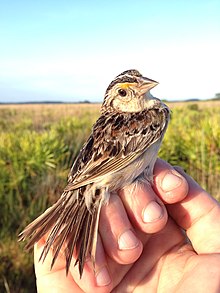
Rare Central Florida sparrows hatch in captivity


An emergency effort to prevent extinction of Florida grasshopper sparrows, found only in Central Florida, includes attempts to breed them in captivity. The first four birds hatched this week.

Contact Reporter Orlando Sentinel

Adult Florida grasshopper sparrow.jpg
Florida grasshopper sparrow chicks defy long odds
One of the nation's most endangered birds, a rare sparrow found only Central Florida, took a step away from potential extinction this week with the unprecedented hatching of four chicks in captivity.

"It's a historic breakthrough," said Ken Warren of the U.S. Fish and Wildlife Service, referring to the largely unexpected births of Florida grasshopper sparrows.

The parents were among three males and four females taken as chicks last year from treeless prairies south of Orlando, where only about 100 males have been tracked and the number of secretive females remains unknown.

Federal approval to capture the birds came after years of biologists agonizing over how to stop a plunge in the bird's population for reasons still not explained.

The seven were taken to Rare Species Conservatory Foundation in Palm Beach County, which specializes in rearing birds and animals on the edge of extinction.

"This is a very small group to be starting out with, and to be able to find a compatible pair of birds that are unrelated and happen to get along and happen to build a nest and happen to successfully hatch chicks – these are really long odds," said Paul Reillo, foundation director.

Reillo said he had expected many false starts instead of success in the pair's first nesting attempt.

He said the parents began to show signs of "sexual proclivity" early this spring and laid the first egg on April 26.

The first hatching was early Monday morning, with the others later in the morning, that afternoon and Tuesday morning.

Reillo estimated that each chick weighs less than 2 grams, or less than half of the weight of a nickel.


Sunday, 21 February 2016

Bumper season for nearly extinct bird


With only about 150 taiko left, a flock of 22 hatchlings has given a huge boost to the birds' chances of survival.

16 February 2016 

They were once thought extinct, and only about 150 are still left - so those trying to save the Chatham Island taiko have reason to celebrate a bumper breeding season.

This season, 22 of the highly endangered native birds were hatched - smashing the previous record of 13.

Chatham Island Taiko Trust co-ordinator Mike Bell said he was thrilled with the result, which was a massive boost given the population numbers.

"There are only 26 pairs of these birds in the whole world - the rest are too young to breed - so every chick counts in protecting and building the population," he said.

But the season wasn't all smooth sailing, with one of the eggs being left by its parents.

"It looks like the female literally dumped the egg and left, then the male just stood around outside their burrow and didn't sit on the egg for about 10 days before going off out to sea," Mr Bell said.


Thursday, 19 June 2014

Rare black-winged stilt chicks have hatched at the RSPB Cliffe Pools nature reserve

16 June 2014
by Clare Freeman

It’s been 30 years since the last chicks were hatched in the UK, but last week, rare birds became proud parents right here in Medway.

The black-winged stilt chicks came out of their eggs at RSPB Cliffe Pools, Hoo Peninsula on Friday (June 13).

The last successful breeding attempt by the species was in Norfolk in 1987.

The birds visited the reserve seven years ago but didn't produce any young

The pairs were discovered on the nature reserve last month and volunteers have been keeping a close eye on them.

Warden Andy Daw said: “It is very exciting that the chicks have successfully hatched.

“We managed to protect the eggs, but there are still challenges ahead because the chicks will become more vulnerable to predators.”

The birds are usually found in the Mediterranean, but it is thought a dry spell in southern Spain has led them to move here.

The wading birds are normally found in the Mediterranean but a changing climate means they could visit the UK more often

Wednesday, 16 October 2013

Critically Endangered parakeets hatched at UK zoo

As few as 250 grey-breasted parakeets, which are native northeast Brazil, are believed to remain in the wild.

Three of the rarest parrots in the world have hatched at Chester Zoo.
October 2013. It's only the second time grey-breasted parakeets have ever been bred in a UK zoo - with both breeding successes being at Chester. 

Just 250 birds left alive
As few as 250 grey-breasted parakeets, which are native to Ceará in northeast Brazil, are believed to remain in the wild. Habitat loss and the illegal pet trade are blamed for their devastating decline. However the new arrivals have given conservationists fresh hope in the fight to haul the species back from the brink.

"These little additions are very significant indeed," said Andy Woolham, Chester Zoo's team manager of parrots and penguins. "Chester is the only zoo that works with grey-breasted parakeets in the UK and we're absolutely thrilled that we've been able to breed them, not least because there is real concern about the long-term future of the species in the wild.

Wednesday, 31 July 2013

Rare kingfisher hatched at Albuquerque zoo

ALBUQUERQUE, N.M.—Zookeepers at the Albuquerque BioPark are celebrating the recent birth of a rare Micronesian kingfisher.

The male chick is being hand-raised on crickets and soft pieces of meat. At six weeks old, it's fully feathered and ready to move to a larger enclosure where it will develop flight and landing skills.

Micronesian kingfishers are extinct in the wild. There are only 151 of the birds in captivity.

Officials say this marks the third successful offspring of Micronesian kingfisher at the zoo.

Zookeepers are also monitoring the development of another egg and are cautiously optimistic that kingfisher No. 152 will hatch Friday or Saturday.

The zoo's curator of birds, Peter Shannon, says the success the BioPark has had with breeding and raising the birds for the past two years is extremely important for conservation of the species.