As regular CFZ-watchers will know, for some time Corinna has been doing a column for Animals & Men and a regular segment on On The Track... particularly about out-of-place birds and rare vagrants. There seem to be more and more bird stories from all over the world hitting the news these days so, to make room for them all - and to give them all equal and worthy coverage - she has set up this new blog to cover all things feathery and Fortean.
Showing posts with label food supply. Show all posts

Wednesday, 1 June 2016

Birds sense if partners are unfaithful and retaliate by providing less food

Henry Bodkin 1 JUNE 2016 • 12:01AM

Knowing what to do when you suspect your partner is having an affair is an age-old dilemma.

But new research suggests that sparrows have a simple, if brutal, solution: provide less food.

A new study by Imperial College London suggests male sparrows can sense when their female partners are being unfaithful and that they retaliate by gathering less food for the nest.

Although the species is supposed to be monogamous, sparrows have long been known for their lecherous tendencies.

Both Shakespeare and Chaucer linked the bird with promiscuous conduct, and even the ancient Greeks associated sparrows with Aphrodite, the goddess of love.

Published in the journal American Naturalist, the new study found that both male and female sparrows are prone to cheat, but for different reasons.

Males are unfaithful because they want to make sure they father as many chicks as they can, while females elope to mate with males of better genetic quality so they can produce stronger offspring.

A 12-year study of the sparrows on Lundy Island, in the Bristol Channel, found that male sparrows had no direct method of establishing whether all the chicks in a nest were theirs.

Thursday, 11 September 2014

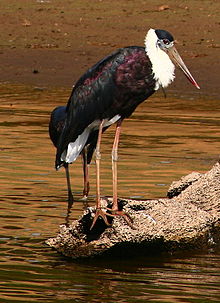
Large birds wing their way out of Adilabad

Reduction in area under paddy cultivation is said to have had a telling effect on their food supply

White necked stork (Ciconia episcopus) 21-Mar-2007 7-37-51 AM 21-Mar-2007 7-37-52.JPG
Bishop stork
Birds which had hitherto made areas under paddy cultivation as their home in the district seem to have abandoned the place following a drastic decrease in the area under that crop. Birds that are not to be seen are storks, painted storks, open bill storks, bishop storks and ibises, which had food aplenty in the paddy fields in the recent years.

About 45,000 hectares of land as against the normal paddy cultivation area of 56,000 hectares has been left fallow owing to long dry spell this monsoon. Almost all the minor tanks in the district have gone dry which evidently has a telling effect on the food supply for larger birds.
Different varieties of storks started arriving at Adilabad after paddy cultivation picked up in the mandals along the Godavari river and in the interior mandals of Koutala, Bejjur, Dahegaon, Vemanpalli and Nennel in the last few years. The larger birds shared the habitat with other local species like cormorants, egrets and ibises of all types.

These birds, except for the painted storks, can now be seen, albeit less in numbers, in Bejjur mandal which continued to be an excellent bird habitat even during the harsh summer and monsoon months. According to the Bejjur Forest Range Officer, M. Ram Mohan, the number of black ibises seems to have increased during the period in question. “The open bills are present in good numbers as also the large, medium, lesser and the ubiquitous cattle egrets,” he pointed out.