As regular CFZ-watchers will know, for some time Corinna has been doing a column for Animals & Men and a regular segment on On The Track... particularly about out-of-place birds and rare vagrants. There seem to be more and more bird stories from all over the world hitting the news these days so, to make room for them all - and to give them all equal and worthy coverage - she has set up this new blog to cover all things feathery and Fortean.
Showing posts with label Wildfowl and Wetlands Trust. Show all posts

Thursday, 15 June 2017

‘Project Godwit’ sees 25 rare birds released into the Cambridgeshire Fens by the RSPB and the Wildfowl and Wetlands Trust at Welney


PUBLISHED: 10:27 13 June 2017 | UPDATED: 10:27 13 June 2017

Project Godwit has seen 25 rare black-tailed Godwits hand reared and then released into the Cambridgeshire Fens. The human carers watch as the birds take their first flights to freedom.

Twenty-five rare black-tailed godwits were released into their new home in the Cambridgeshire Fens on Monday by conservationists from RSPB and the Wildfowl & Wetlands Trust (WWT) as part of ‘Project Godwit’.

After the eggs were removed from nests and hatched in incubators, staff at WWT Welney Wetland Centre hand-reared the young birds until they were old enough to look after themselves.

It’s the first time the conservation technique, known as ‘headstarting’, has been used in the UK. 

The surrogate human ‘parents’ have been able to safely raise far more chicks than the godwits themselves, away from the dangers of predators and flooding. 

And, crucially, by removing the eggs from their nests early, they have prompted each pair of godwits to lay a second clutch, giving the parent birds a chance to raise a brood of their own.
Now the hand-reared birds have been released, they are expected to meet up with other black-tailed godwits hatched in the area this summer, and spend several weeks feeding on the rich wetlands before starting their migration to Spain, Portugal and West Africa. 

Sunday, 7 December 2014

Wildfowl and Wetlands Trust launches a 10-point manifesto for protecting our remaining wetlands

The Wildfowl and Wetlands Trust recently launched its Wetland Manifesto at a reception at the Houses of Parliament.

MPs, peers and business leaders heard how protecting our remaining wetlands can help our health, the economy and the public purse.

Wetlands provide around £7.5bn to our economy each year, according to a Government report from 2011.

That’s the combined value of benefits including protection from floods and pollution, or simply being somewhere relaxing to be which is good for our health and well-being. All of us rely on wetlands for drinking water, food and shelter is the message of the Trust.

The Manifesto is a 10 point plan to look after the UK’s remaining wetlands. It outlines steps we need to take including tackling invasive species, supporting landowners to install reed beds to filter pollution, and making outdoor education available for all children.

The Manifesto was given to all parliamentary candidates in the 2015 general election, so that everyone standing can really appreciate how important the natural environment is for families, homes and jobs.

Tuesday, 26 August 2014

Madagascar pochard ducklings dying before they can fledge

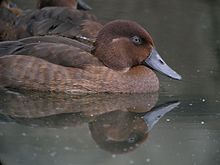
A study of the world’s rarest bird – the Madagascar pochard – has revealed that 96 per cent of the chicks die before fledging.

Madagascar Pochard, Captive Breeding Program, Madagascar 4.jpg
The conclusion reached by researchers from the Wildfowl and Wetlands Trust (WWT) is that the last remaining population will never expand without outside help.

Just 25 pochards remain in the wild, restricted to one wetland in northeast Madagascar – a complex of lakes near Bemanevika.

The study, published in Bird Conservation International, found that the level of mortality actually increases as the chicks get older, peaking when they are between two and three weeks old.

The researchers conclude that most chicks slowly starve to death once they’re old enough to dive for food, because the water in the lakes is too deep for them.

Historically, it is unlikely that the pochards bred at Bemanevika, but they have been forced from their favoured habitats as wetlands across Madagascar have been turned over to rice and fish farming. The lake’s remoteness has allowed them to survive undisturbed.

The volcanic lakes that are the last refuge of the few remaining wild Madagascar pochards

The wetlands that had formed in volcanic craters are deep with steep sides and surveys showed that, even in the sediment, little food is available to the ducks. Researchers found that ducklings fed at the surface until they were two weeks old, which is typically when related species switch to diving for food. The elevated levels of mortality were observed after this point.