As regular CFZ-watchers will know, for some time Corinna has been doing a column for Animals & Men and a regular segment on On The Track... particularly about out-of-place birds and rare vagrants. There seem to be more and more bird stories from all over the world hitting the news these days so, to make room for them all - and to give them all equal and worthy coverage - she has set up this new blog to cover all things feathery and Fortean.
Showing posts with label Philippines. Show all posts

Wednesday, 5 June 2019

The deadly odds of pigeon racing in the Philippines


MAY 17, 2019
by Cecil Morella
It is a brutal 600-kilometre gauntlet during which competitors face searing heat, wild seas, vicious predators, and the threat of kidnapping.
Only one in ten will finish.
This is the MacArthur competition—the Philippines' longest homing pigeon race. It's a tough challenge for the birds and a tense affair for the owners.
"Compared to Europe and the United States, we have lots of predators here and a lot of people who shoot these birds," said Jaime Lim, one of the Philippines' best-known pigeon fanciers—as the pursuit's devotees are known.
"Fishing nets are set up in the mountains to capture these birds. That's a major problem nowadays," the 68-year-old construction magnate added.
Racing pigeons can be worth thousands of dollars but some that are kidnapped are sold off to unscrupulous fanciers for as little as $14, Lim explained.


Monday, 27 May 2019

Conservationists welcome birth of endangered bird chick in Negros Occidental


12:42 PM May 03, 2019
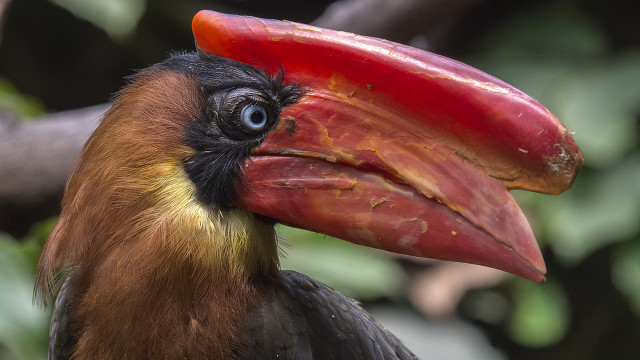
BACOLOD CITY — Wildlife conservationists in Negros Occidental hailed the recent birth of a critically endangered Walden’s Hornbill (Rhabdotorrhinus waldeni), locally known as Talarak, at the Negros Forest Park, South Road Capitol Road in this city.
The Walden’s Hornbill chick has been named “Valentin” because it was first heard making a sound from within a tree where it was sealed with its mother on Valentine’s Day, said Paul Lizares, vice president of Talarak Foundation Inc. (TFI), which manages Negros Forest Park, formerly known as the Negros Forest and Ecological Foundation Inc. Biodiversity Conservation Center.
Valentin’s parents, Ligaya and Kalantiaw, were born in the wild, he added.
When the female Walden’s Hornbill lays her eggs, she is sealed in the trunk of a tree for about 105 days to incubate the eggs and later take off the chicks. She can only leave when her chicks are ready to fledge.
In the meantime, she relies on the male Walden’s Hornbill to bring her food every single day. If the male is poached or hunted, the whole family dies.
The Walden’s Hornbill, also known as the Visayan Wrinkled Hornbill, Rufous-headed Hornbill or the Writhed-Billed Hornbill, is now near extinct.
“They are functionally extinct in Negros, and there have only been a few sightings and calls heard, but no photographic proof, so far,” said Fernando Gutierrez, TFI president.
The Walden’s Hornbill was used to be seen in the forests of Negros and Panay islands.

Thursday, 14 February 2019

Conservation group spots new bird species in Cagayan wetlands


INQUIRER.net / 03:29 PM January 25, 2019
MANILA, Philippines — While the number of water birds seen in Cagayan wetlands decreased, conservationists have noted the presence of new bird species in the area.
Haribon Foundation on Friday said their recent bird monitoring activity revealed lower population of water birds in Palaui Island and Buguey wetlands.
According to the group, one plausible reason for the decrease in population “is the habitat change of birds in Buguey wetlands due to the recent monocropping of mangroves in the area.”
However, the number of bird species that recently appeared in Cagayan wetlands has increased compared to that of 2018, Haribon said.
The conservation group said among the new species was the vulnerable (Vu) Chinese Egret, which they spotted in Buguey; and the near threatened (NT) Northern Lapwing, which they saw in Palaui Island.

Thursday, 24 January 2019

Rare migratory birds sighted flying over Pampanga islet


Philippine Daily Inquirer / 07:24 AM January 15, 2019

SURPRISE VISITORS Three black-faced spoonbills fly over Bangkung Malapad islet in Sasmuan town, Pampanga province, on Sunday, a once-in-a-century sighting that has become a cause for celebration among local bird watchers. —PHOTO COURTESY OF DON GEOFF TABARANZA/WILD BIRD PHOTOGRAPHERS OF THE PHILIPPINES
Three globally endangered black-faced spoonbills (Platalea minor) were seen flying over Bangkung Malapad islet in Sasmuan town, Pampanga province, on Jan. 12, more than 100 years after its last recorded sighting in Manila Bay.
The bird species is a rare migrant in the Philippines, which is within its confirmed wintering range along with coastal areas in China (including Hong Kong and Macau), Japan, South Korea, Taiwan, Vietnam, Cambodia and Thailand.
 “Philippine sightings of the black-faced spoonbill in the past decade have relied on citizen science,” said Arne Jensen, an associate expert of Wetlands International and records committee chair of the Wild Bird Club of the Philippines (WBCP).
These are limited from one to three reports from Puerto Princesa City in Palawan province; Candaba in Pampanga; Bicol River Estuary; Olango Island in Cebu province; and Batan Island in Batanes province, according to the WBCP and the International Black-faced Spoonbill Working Group of the East Asian-Australasian Flyway Partnership.

Monday, 13 August 2018

Rare bird sighted after 111 years

07:06 AM August 09, 2018


An unexpected appearance of a dazzling visitor at a man-made forest in Negros Oriental province set hearts aflutter in the small but tightly knit birding community in the Philippines.

On March 19, naturalist and conservationist Rene Vendiola spotted an unusual bird foraging on the leaf litter at a native tree plantation and wildlife sanctuary, called Liptong Woodland, in Bacong town, Negros Oriental.

Vendiola, who started and continues to maintain Liptong Woodland, took a set of blurry pictures of the colorful visitor and uploaded these on Facebook in July.

Despite the poor quality of the photos, it was clear that Vendiola’s feathered guest was a pitta, a ground-dwelling family of birds characterized by their brilliant plumage.

Pittas are also known as “jewels of the forest” for their brilliant, jewel-like colors.

Vendiola’s special guest has an ultramarine blue rump and shoulders and scarlet undertail coverts and belly center.

The initial comments on Facebook identified the bird as the hooded pitta (Pitta sordida), a widespread and common species in the Philippines.

Sunday, 25 September 2016

'Lost' Aussie pelican a hit in the Philippines


14 Sep 2016 at 15:45
WRITER: AFP 

GENERAL SANTOS, PHILIPPINES - An Australian pelican that strayed hundreds of kilometres from its nearest known habitat to end up in the Philippines is the first such bird to be seen in the Asian archipelago, wildlife enthusiasts said.

This Australian pelican, which strayed hundreds of kilometres from its nearest known habitat to end up in the Philippines, is the first such bird to be seen in the Asian archipelago.
The waterbird flew into a fish breeding farm on the outskirts of the southern port of General Santos in early September, resident Levy Discamento told AFP.

"We saw a small flock of swallows chasing this big strange bird. There was an air battle until the big bird gave up and ran toward the mangroves," Discamento said, recounting his first sighting.

The mostly white pelican -- a species which boasts the longest bill of any bird, measuring up to 47 centimetres -- has since attracted a flood of Filipino and foreign birdwatchers.

They rent dugouts to watch and photograph the bird while it gorges on fish in nearby Sarangani Bay, Discamento said.

"We feel (it) is a blessing, bringing good vibes to people," Jimmy Poja, a local fisherman, told AFP.

Willem van de Ven, a Manila-based biologist and president of the Wild Bird Club of the Philippines, said the species is found all over Australia and occasionally as far as New Zealand, some Polynesian islands, New Guinea, and parts of Indonesia.


Sunday, 24 January 2016

Various rare birds spotted in Candaba


Published January 20, 2016 4:23pm
By AMADO BAJARIAS JR.


On the early morning of January 9 in Bahay Pare, Candaba, Pampanga, Robert Hutchinson, an experienced birder and a co-author of "A Naturalist's Guide to the Birds of the Philippines," was peering through his spotting scope at the thousands of waterfowl paddling and feeding in a plant-overgrown pond when he caught sight of something special.

The bold facial pattern of creamy yellow and bottle-green swirls and black and white curves gave Hutchinson no doubt as to the identity of the creature he was looking at amid the thick mats of aquatic plants that morning: A male Baikal Teal (Anas formosa) still sporting its breeding colors.

Tuesday, 15 December 2015

Rare monkey-eating eagle chick hatched in the Philippines


Photo: AFP/PHILIPPINE EAGLE FOUNDATION
New hatchling raises hopes for survival of ‘critically endangered’ eagle that is a fearsome predator but faces extinction


By Philip Sherwell, Bangkok

2:20PM GMT 10 Dec 2015

It is a fearsome predator with a wingspan of up to six feet that hunts a diet of monkeys, flying lemurs, squirrels, lizards and piglets.

But such is the imminent danger of extinction of the monkey-eating eagle that is the national bird of the Philippines, conservationists are celebrating the hatching of a rare chick in captivity.

The raptor, which is found only in the rapidly vanishing tropical rainforests of the Philippines, reaches a height of more than three feet when fully-grown and is one of the world’s largest eagles.

The bird is famed for the distinctive shaggy crest formed by its elongated nape feathers.

The chick, hatched at a conservation centre, was the first to be born in two years and just the 26th in 23 years of the project. Conservationists hailed its arrival as a major boost in the giant bird’s struggle against extinction.

There are only about 600 monkey-eating eagles in the wild as their numbers have been slashed by hunting and loss of their natural habitat to development.

Tuesday, 2 September 2014

Phl allows live bird imports from Thailand

By Czeriza Valencia (The Philippine Star) | Updated August 30, 2014 - 12:00am


MANILA, Philippines - The Department of Agriculture (DA) has cleared the Bangkok Bird Park Breeding and Research Center (BBPBRC) as a source of live captive birds, having been confirmed free from avian influenza.

In a circular, the DA said the Bangkok-based breeding center has passed the inspection conducted by the Bureau of Animal Industry (BAI) for biosecurity.

The DA said the BBPBRC has also complied with the Terrestrial Animal Health Code of the World Organization for Animal Health.

“Based on the inspection/ evaluation conducted to BBPBRC aviary in Thailand, accreditation to export live captive bred bird into the Philippines has been found to be acceptable,” the DA circular said.

The government lifted in 2012 the temporary ban imposed ton the importation of poultry, poultry and live birds from Thailand. 

After the accreditation, the bird breeding facility would be allowed to export captive live birds to the Philippine subject to the usual quarantine rules and regulations.

Wednesday, 25 June 2014

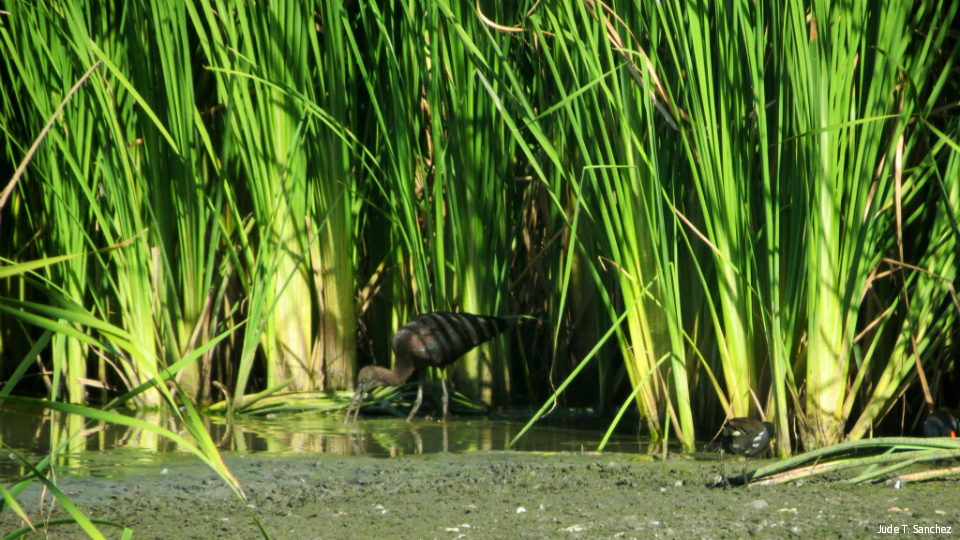
First photo evidence of Glossy Ibis snapped in Luzon

A team of researchers from the Wild Bird Club of the Philippines taking part in a bird-migration study in Pagudpud, Ilocos Norte, snapped the first ever photographs of a wild Glossy Ibis (Plegadis falcinellus) in mainland Luzon on June 2.

The Glossy Ibis has a global range and is the most widespread of all ibis species, but it is very rarely observed in the Philippines, where its status is unclear. 

Suspected breeding grounds
Scientists have long suspected that it breeds in Mindanao but it was only this year that at least one nest was documented in Tacurong, Sultan Kudarat. This species is believed to undergo post-breeding dispersal, with individuals sighted in Luzon but never photographed, until now. To date, the Glossy Ibis has not been reported in the Visayas.


Sunday, 25 May 2014

Haul of endangered birds seized in Bicol

The suspects and their illegal bounty are intercepted on a bus allegedly bound for Manila port, from where the animals would be sent off to different parts of the country and the world

Pia Ranada
Published 3:18 PM, May 22, 2014
Updated 3:18 PM, May 22, 2014


MANILA, Philippines – Environment officials confirmed that 7 rare birds were seized from a group of Filipinos allegedly en route to the Port of Manila on Tuesday, May 20.

The bird species seized were two Philippine hornbills, one Philippine hawk eagle, 3 raptors and one adult owl, said Department of Environment and Natural Resources Biodiversity Management Bureau chief Theresa Mundita Lim on Thursday, May 22.

The Philippine hornbill, also known as Rufous hornbill, is a critically endangered species under the International Union for Conservation of Nature (IUCN). The Philippine hawk eagle, meanwhile, is a vulnerable species.

The suspects and their illegal bounty were intercepted by the Highway Patrol Group Region 5 at Barangay Tabugon in the town of Santa Elena in Camarines Norte.

They were aboard a bus owned by bus franchise Twin Hearts which was allegedly on its way to Manila port from where the animals would be sent off to different parts of the country and the world.

All 7 birds were alive when they were discovered by cops in boxes inside the bus. The Philippine hornbills and raptors were found to be juvenile or very young birds.

Tuesday, 24 December 2013

Rare, Black-faced Spoonbills spotted in Candaba swamp

The birds were supposed to be in Hong Kong or the Chinese mainland. But here they were in Candaba, Pampanga, their long black spoon-shaped bills unmistakaeable, as well as their faces covered in black skin instead of avian feathers: the Black-faced Spoonbills. Two of them. 

Wild Bird Club of the Philippines (WBCP) members Linda Gocon and Brian Ellis spotted the two Black-faced Spoonbills in Candaba on December 19, as they were showing around a group of expatriate missionaries the birds of Candaba. They noticed two larger birds that were mixed among a faraway flock of smaller Black-winged Stilts. Here, unmistakeably, were the Spoonbills.


Sunday, 15 September 2013

New PHL bird species found in Northern Luzon

Just five days after the discovery of a new species of water beetle in the mega-city of Manila, a new species of bird was found living up in the Sierra Madre Mountain Range—proving once again that the Philippines lives up to its status as a biodiversity hotspot.

The extremely elusive Sierra Madre Ground-Warbler was discovered by an international research team hailing from the University of Kansas (KU) and the Philippine National Museum (PNM), after two years of expeditions on the mountain from 2009-2011.

The bird is characterized by white wing spots on a brown body, and differs from other species similar in appearance by the coloration patterns found on its head, throat, and breast.

Sunday, 4 August 2013

Ilocos Norte to impose conservation plan on rare bird

LAOAG CITY, July 30 (PIA) -- Ilocos Norte officials are set to enforce a conservation plan for a rare bird which was spotted in two coastal villages recently. 

The rare birds, identified as spotted imperial pigeons (Ducula carola), were sighted in the villages of Davila and Dilavo in Pasuquin town by local birders. 

Governor Imee Marcos, who was alerted of the sighting, said the presence of the rare birds will help boost the province’s tourism industry. 

The provincial government has started working on a conservation plan which includes securing the birds’ congregation sites and producing instruction manuals for the public’s use. 

The plan encourages residents to avoid trapping birds and help authorities protect the birds’ natural habitat. 

Meanwhile, Dr. Petrus Calope, a bird enthusiast and conservation advocate in Ilocos Norte, said that the bird is endemic to the country but is categorized as ‘vulnerable’ in the International Union for Conservation of Nature’s Red List of Threatened Species. 


Tuesday, 16 April 2013

Bird sanctuary and eco-tourism spot in Corregidor Island planned


By Ellalyn B. De Vera
Published: April 7, 2013

The Department of Environment and Natural Resources (DENR) will establish a bird sanctuary and eco-tourism spot in Corregidor Island. 

DENR-Region 4A Executive Director Reynulfo Juan said the island will no longer be remembered just as a “battlefield” because it will soon be an eco-tourism destination for bird-watching.

Juan pursued the idea after a visit to Corregidor last year with Forestry experts to assess the forest situation and plan out forest rehabilitation efforts on the island as part of the Aquino administration’s National Greening Program (NGP).

An assessment by forester Manuel Escasura, then chief of the Forest Resources Development Division and concurrent Regional Coordinator of the NGP, showed that 200 hectares of originally forested area will be replanted with the forest and fruit bearing trees, which are endemic to the island, with a mix of other forest tree species and fruit bearing trees.

“We will plant fruit bearing trees which will serve as food for the birds. RED (regional executive director) Juan during his previous visit to the island last year, saw the need of introducing fruit and forest tree species that are more attractive to bird,” Escasura said, who has been designated early this year as OIC Regional Technical Director for Ecosystems Research and Development Service.

Juan said the team of forestry experts from the DENR-Region 4A will be conducting a more comprehensive surveying, mapping and planning for the forest rehabilitation and tree growing activity in the island.

He said initial discussions have been done with concerned agencies including the tourism business establishments in the area.

He noted that an agreement was forged Sunday (April 7) among the representatives of Corregidor Foundation, Inc. (CFI), Department of Agriculture (DA), and city government of Cavite for such an undertaking. Corregidor is part of the jurisdiction of Cavite City in the Cavite province.

“Initially, 50 trees will be planted in the selected area. The plantation area is preselected in consideration of its proximity to the tourism establishments and which will be tasked to take care and nurture the planted trees,” said forester William Palaypayon, DENR-Region 4A Regional Technical Director for Forest Management Service.

The forest and fruit tree seedlings, such as bignay (Antidesma bunius),  lipote  (Syzigium curanii), kalumpit (Terminalia edulis), aratiles (Muntingia calabura) and duhat (Syzigium cumini) were initially planted in the area.

“It is not yet the time to plant, not within the searing hot summer time. We are still in the stage of ‘production and hardening’ of seedlings and ‘plantation site preparation.’ Actual planting will commence at the onset of rain in June and July,” Palaypayon explained. 

Continued: http://www.niagarafallsreporter.com/Stories/2013/Apr09/State%20Moves.html

Thursday, 11 April 2013

INFOGRAPHIC: PHL is home to the world's two most endangered hornbill species


April 5, 2013 3:00pm
Of the 600 species of birds found in the Philippines, two hornbill species are in the critically endangered category of the International Union for Conservation of Nature's red list for wild species, which means they are at the highest risk of extinction.

The Sulu Hornbill (Anthracoceros montani) is the rarer of the two, with an estimated population of only 40 individuals scattered in the forests of Tawi-Tawi and other islands in the Sulu archipelago, according to the global conservation partnership Bird Life International.
sulu hornbill
rufous-headed hornbill

The Rufous-headed Hornbill (Aceros waldeni) has higher numbers, between 1,500 to 3,749 individuals found in the mountains of Negros and Panay in Western Visayas, the group said.

According to the Wild Bird Club of the Philippines (WBCP), the destruction of forests for agriculture and logging are the biggest threats to the country's 10 species of hornbills, which are all endemic to the archipelago.

Efforts to raise public awareness and discuss the plight of the bird species are the main agenda when ornithologists, conservationists, bird watchers, environmentalists and students come together in Makati from April 24 to 26 for the 6th International Hornbill Conference.

The meeting will open with an exhibit at the Ayala Museum, and a soft launch of the book "Hornbills of the World." The keynote speakers include Hornbill Research Foundation founder Dr. Pilai Poonswad, and Dr. Juan Carlos Gonzalez of the University of the Philippines.

According to the organizers, the conference is a crucial one for the Philippines, which recorded the first known hornbill extinction--the Ticao Tarictic, a subspecies of the Visayan Hornbill found in Ticao Island in Masbate -- among the world's 57 hornbill species.

“It was abundant in the early 1900s but recent surveys have found no evidence of its persistence, and little suitable habitat,” according to Bird Life International.

Three other hornbill species are on the IUCN red list: the Mindoro Hornbill and Visayan Hornbill are listed as endangered, while the Palawan Hornbill is listed as vulnerable.

"Hornbills need primary or well-developed secondary forests to thrive, and like most endemic wildlife, cannot survive in deforested areas or man-made plantations," WBCP said.

The birds are also threatened by hunting, trapping, and nest poaching for food, as well as the illegal pet trade and sport. The group noted that the weak enforcement of environmental conservation measures also contributes to the decline in the local hornbill population. – Amanda Lago/YA, GMA News


Monday, 17 September 2012

Rare birds spotted at La Mesa Ecopark


MANILA, Philippines – Several new bird species found a new haven in Metro Manila’s La Mesa Ecopark.


Bird watchers from the Wild Bird Club of the Philippines recently spotted rare bird species called Ashy Thrush Zoothera cinerea at the vicinity of the La Mesa Ecopark (LME), a 33-hectare public park within the La Mesa Watershed in Quezon City.

Red-bellied pitta
Photo: Wikipedia
Ashy Thrush’s discovery at the La Mesa Ecopark was accidental. The group of bird watchers was actually looking for a Red-bellied Pitta Pitta erythrogaster that was also reported to be in the park when they spotted the small, elusive, ground dwelling thrush whose natural habitats are on subtropical or tropical moist lowland and mountain forests.


More information on ashy thrush:

More information on red-bellied pitta: