As regular CFZ-watchers will know, for some time Corinna has been doing a column for Animals & Men and a regular segment on On The Track... particularly about out-of-place birds and rare vagrants. There seem to be more and more bird stories from all over the world hitting the news these days so, to make room for them all - and to give them all equal and worthy coverage - she has set up this new blog to cover all things feathery and Fortean.

Friday, 20 March 2015

The search for skydancers sparks into life

Published by surfbirds on March 20, 2015 courtesy of RSPB


A round-the-clock nest protection operation is once again ready to swing into action with the RSPB asking people who spend time in the uplands of northern England to keep their eyes peeled for hen harriers – England’s most threatened bird of prey.

Now in its eighth year, the Hen Harrier Hotline has been relaunched by the conservation charity with the aim of discovering where these rare birds of prey may be nesting.

Research has shown that the English uplands have enough suitable habitats to give a home to at least 320 pairs of breeding hen harriers, but last year there were only four successful nests in the whole country. Hen harriers breed in remote upland locations so the RSPB relies on walkers and cyclists to inform them of their location. The conservation charity can then put measures in place to protect the nest from harm.

Martin Harper, RSPB’s Director of Conservation, said: “Sadly hen harriers are a much rarer sight in the northern uplands than they should be, one reason being illegal persecution. But if you are lucky enough to see one, it’s an experience that will live with you forever. The male’s courting ritual is a particular stunning spectacle; a series of breathtaking swoops and somersaults that earns it the name skydancer.”

The bird that nurtured its mortal enemy


Presented by
Ben Aviss

Raising young is a stressful, disorientating time for any parent but one bird appears to have been so confused it was seen attempting to brood the chicks in a nearby nest of a hobby falcon – one of its known predators.

Filmmakers for BBC Two series Autumnwatch recorded a female woodpigeon repeatedly trying to brood hobby hatchlings but being pushed off the nest by the chicks’ parent.

The incredible sequence was filmed using a remote camera set up in a farm in Gloucestershire.

“I suspect the bird just became a bit confused,” said Dave Leech, senior research ecologist at the British Trust for Ornithology (BTO).

“It may have lost a brood of its own nearby and, still full of hormones associated with that stage of the nesting cycle, decided to brood the nearest available alternative.”

Thursday, 19 March 2015

Mercury pollution poses threat to Arctic birds

By Tim Sandle 16 hours ago in Environment
Research indicates that mercury pollution has risen around 50-fold in the feathers of a rare Arctic bird over the past 130 years. Conservationists are concerned for the bird’s future.

The bird at risk is the ivory gull. The ivory gull (Pagophila eburnea) is a small gull (17 inches tall) which breeds in the high Arctic. In non-breeding seasons the bird can be found in Greenland, Canada, and Eurasia. Unusually for a gull, the bird has a totally white plumage.

There are around 20,000 birds in existence. The species is said, by the International Union for Conservation of Nature, to be in rapid decline and the status is “threatened.”

As well as habitat loss and risk from predators, the ivory gull has a new threat: mercury poisoning. New research, based on a review of museum specimens, indicates high mercury levels in the gulls. The analysis spanned the time period from 1877 to 2007. Here the increase in mercury levels was over fifty times, with the greatest rises occurring over the past thirty years.

The finding with the gulls is consistent with rising mercury levels in other Arctic birds, fish and mammals. The source of the mercury probably relates to atmospheric pollution. The gull is a good indicator of mercury levels due to the absorption of the toxin into its feathers. The direct concern with the gulls is that, in time, this will affect the bird’s reproduction.

Taupō golf course becomes luxury retirement home for takahe

Thursday, 19 March 2015, 9:59 am

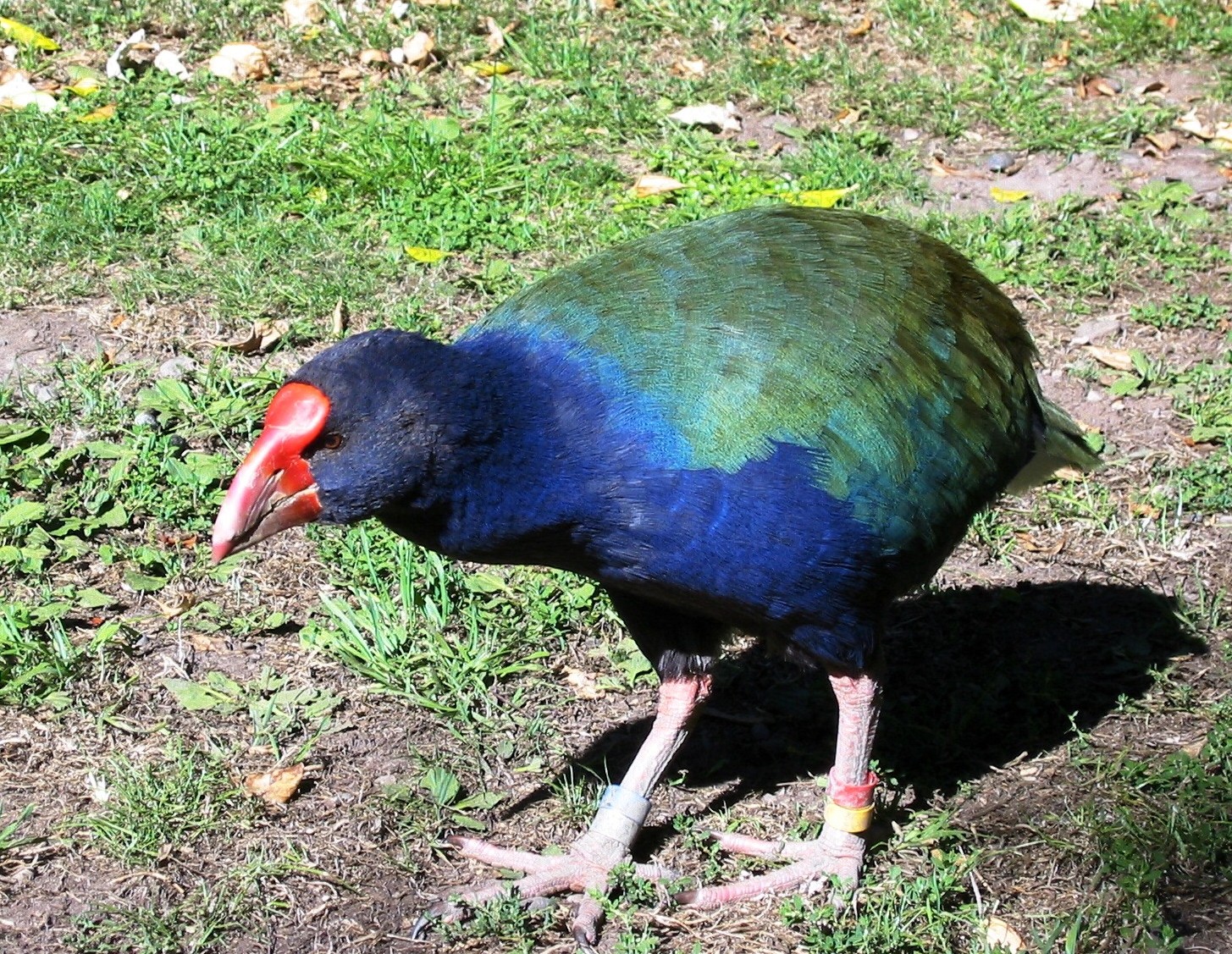
Taupō golf course becomes luxury retirement home for rare takahē

Critically endangered takahē have a new retirement home in Wairakei Golf + Sanctuary thanks to work undertaken by its bird-loving owner, Gary Lane, to secure the site from predators. The Department of Conservation (DOC) will deliver takahē pair, Grant and Flotsom, to the sanctuary near Taupō just after midday today(19 March 2015).

Through its 10-year partnership with Mitre 10 DOC has made significant progress in its Takahē Recovery Programme. With 40 chicks produced this year, the department has seen its best captive breeding season by far.

“This year’s incredibly successful breeding season has meant that we are under more pressure than ever to find safe homes for takahē away from the jaws of introduced predators, particularly stoats,” says DOC Takahē Ranger Phil Marsh.

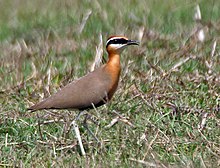
Rare Indian Courser spotted on city outskirts

Indian Courser (Cursorius coromandelicus) at Bharatpur I IMG 5437.jpgVADODARA: Indian Courser, a rare species of ground bird, was sighted and recorded for the first time on the outskirts of the city recently. The bird that finds mention in the Red List of threatened species of the International Union for Conservation of Nature (IUCN) was photographed near Ajwa.

The courser was very common in short grass covered open and uncultivated lands of Gujarat, but has today vanished in many areas. Bird experts say that there is no official record for the sighting of this species in the city.

Commonly known as 'Rann Godhalo' in Gujarat, the bird breeds mainly from March to August. The bird is known to camouflage itself according to its habitat.


Wednesday, 18 March 2015

Feed ducks frozen peas instead of stale bread, charity asks

People in England and Wales feed ducks an estimated of six million loaves of bread a year

Monday 16 March 2015

It may be a favourite family pastime, but apparently going to your local park to throw stale bread at ducks is completely wrong.
The Canal and River Trust is launching a campaign this week which urges people to feed ducks with frozen peas and sweetcorn instead. Ducks are also reportedly partial to grapes, which should be cut into quarters to make them easier to eat.

People in England and Wales feed an estimated of six million loaves of bread a year to ducks, which can cause damage to birds’ health and pollute waterways.

Ducklings that are fed on bread end up being malnourished, while birds that get used to hand-outs can lose their natural fear of humans and may become “aggressive”.

The charity warns families that bread is essentially “junk food” for ducks, and the remnants left behind encourage rats, disease and algae. Oats, barley, rice and vegetable trimmings are also acceptable replacements for leftover crusts, it advises.

Thousands of geese fall from Idaho sky in likely avian cholera outbreak

Not known whether snow geese contracted the disease during migration
Humans face small risk of contracting avian cholera
Reuters in Salmon, Idaho

Tuesday 17 March 2015 14.34 GMTLast modified on Tuesday 17 March 201515.27 GMT

Avian cholera is suspected in the deaths of at least 2,000 snow geese that fell dead from the sky in Idaho while migrating to nesting grounds on the northern coast of Alaska, wildlife managers said on Monday.

Dozens of Idaho department of fish and game workers and volunteers at the weekend retrieved and incinerated carcasses of snow geese found near bodies of water and a wildlife management area in the eastern part of the state, said agency spokesman Gregg Losinski.

Avian cholera is believed to be the culprit in the deaths mostly because of the way the birds died, he said.

“Basically, they just fell out of the sky,” said Losinski.

He said biologists were awaiting results from a state wildlife lab to confirm the birds died of the highly contagious disease, which is caused by bacteria that can survive in soil and water for up to four months.

Humans face a small risk of contracting the disease, but the more immediate threat is to wildlife in the vicinity of contaminated carcasses, Losinski said.

About 20 bald eagles were seen near areas where snow geese carcasses littered the ground, but a lengthy incubation period makes it unclear if the eagles were infected and would carry the ailment elsewhere, said Losinski.