As regular CFZ-watchers will know, for some time Corinna has been doing a column for Animals & Men and a regular segment on On The Track... particularly about out-of-place birds and rare vagrants. There seem to be more and more bird stories from all over the world hitting the news these days so, to make room for them all - and to give them all equal and worthy coverage - she has set up this new blog to cover all things feathery and Fortean.

Monday, 6 March 2017

How migratory birds respond to balmier autumns?


Study of songbird migrants demonstrates the importance of temperature in the decision to begin migration

Date: February 22, 2017
Source: De Gruyter Open

Around the world, no matter where we are, we can usually expect the weather to change from one season to the next. In North America, the warm days of summer eventually turn into the cooler days of autumn, and these changes are vital to a lot of the animals that inhabit the region as they trigger the urge of animals to prepare for winter. Migratory animals, like songbirds, use these predictable weather changes as environmental cues to tell them when it's time to migrate south. But with the earth now getting hotter and hotter each year, birds can no longer rely on the once predictable climate. As autumns are becoming milder, ornithologists keep pondering on how it could be affecting birds' migratory decisions. Now, a new paper published this week in an online journal Animal Migration, has experimentally investigated how birds use temperature as a signal to migrate.

The study led by Adrienne Berchtold from the Advanced Facility for Avian Research at the University of Western Ontario, focused on one songbird species that is known to rely on weather for its migratory journey: the white-throated sparrow. The bird migrates from Canada to the southern United States each autumn, and it tends to migrate later than other migrants, basing its journeys on when the weather provides opportunities for flight.

To figure out the underlying pressures that drive the birds to migrate, the researchers captured white-throated sparrows during one autumn migration and placed them in specially-designed bird cages equipped with high-tech monitoring gear that kept track of how active the birds were by day and night. The scientists then changed the room temperatures throughout the experiment to see how the birds would react. When the temperature dropped to chilly 4ºC, in an attempt to mimic the typical fall conditions in the northern part of the flyway, the birds all became restless at night, signifying they were in a migratory state. When, in turn, the temperature was raised to a warm 24ºC, none of the birds showed signs of migratory restlessness, indicating they were under no pressure to depart in these balmy conditions.

The oldest fossilized giant penguin


Penguins diversified earlier than previously assumed
 
Date: February 23, 2017
Source: Senckenberg Research Institute and Natural History Museum

Together with colleagues from New Zealand, Senckenberg scientist Dr. Gerald Mayr described a recently discovered fossil of a giant penguin with a body length of around 150 centimeters. The new find dates back to the Paleocene era and, with an age of approx. 61 million years, counts among the oldest penguin fossils in the world. The bones differ significantly from those of other discoveries of the same age and indicate that the diversity of Paleocene penguins was higher than previously assumed. In their study, published in the Springer scientific journal The Science of Nature, the team of scientists therefore postulates that the evolution of penguins started much earlier than previously thought, probably already during the age of dinosaurs.

The fossil sites along the Waipara River in New Zealand's Canterbury region are well known for their avian fossils, which were embedded in marine sand a mere 4 million years after the dinosaurs became extinct. "Among the finds from these sites, the skeletons of Waimanu, the oldest known penguin to date, are of particular importance," explains Dr. Gerald Mayr of the Senckenberg Research Institute in Frankfurt.

Read on  

Sunday, 5 March 2017

Scientists use fire to save endangered birds on the fringes of Adelaide

By Tom Fedorowytsch
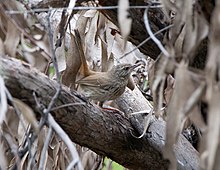
Chestnut- Rumped Heathwren small fx.jpg
Updated 9 Feb 2017, 9:38pm

Planned burn-offs, which play an important role in protecting lives and properties from summer bushfires, are becoming increasingly critical to the survival of a rare bird species in South Australia.

The chestnut rumped heathwren has a subspecies which is found only in the Mt Lofty Ranges around Adelaide, and is considered endangered.

Fire ecologist Kirstin Abley said her team had only recently discovered fire was a vital part of maintaining the tiny bird's habitat.

"Initially we didn't realise they had a preference for recently-burnt habitat, and we thought they preferred longer unburnt habitat," she said.

"We're very good at putting out bushfires, so a lot of the habitat the heathwren has been occupying is long unburnt."

Ms Abley said her team at Natural Resources Adelaide and Mt Lofty Ranges were now using prescribed burns to ensure sections of the landscape developed new, thick undergrowth the birds adored.

"We're burning small patches of that habitat and hopefully generating some that is optimal for them, so their numbers can increase because the food and shelter is better," she said.

But it's a tricky balancing act for the ecologists, who need to protect both lives and properties, as well as other species with different preferences.
 
Lives and homes a priority over threatened species

Ms Abley said while the ultimate responsibility of fire ecologists was safeguarding lives and property, it was nice when the work dovetailed with helping wildlife.


Continued

More than half of world's godwits and curlews face extinction


Posted on: 02 Mar 2017


A ground-breaking study has revealed that habitat loss could lead to the extinction of some of the world's curlew and godwit species.
Godwits and curlews – which make up the subfamily Numeniini of the sandpiper family Scolopacidae – occur on all continents except Antarctica, but breed only in the Northern Hemisphere. Over half are of global conservation concern, with two of these – Eskimo Curlew and Slender-billed Curlew – currently treated as Critically Endangered though both are likely to be extinct.

Far Eastern Curlew, a charismatic species of the East Asian Flyway, is considered Endangered, while Bristle-thighed Curlew, breeding in Alaska and wintering on tropical Pacific islands, is listed as Vulnerable. Three further species – Eurasian Curlew and Bar-tailed and Black-tailed Godwits, all of which occur in the UK – are globally Near Threatened.

The just-published study canvassed the views of over 100 experts and reviewed the scientific literature to help highlight the many threats they face, and top of the list is the loss of non-breeding habitat.

Most species rely on coastal estuaries and wetlands outside of the breeding season, many of which face increasing development and disturbance. This pressure is greatest in the Yellow Sea of China and Korea, perhaps the most important staging area in the world for migratory birds in terms of numbers, diversity and proportion of threatened species. Part of the East Asian Australasian Flyway, the Yellow Sea provides a vital rung in the migratory ladder between northern breeding areas in Asia and Alaska and southern non-breeding areas as far south as New Zealand and as far west as India.

A quarter of the Yellow Sea's mudflat feeding areas have been lost since the 1980s and much of the remainder is heavily degraded, causing declines in many wader species that depend on it. Increasing pressure for coastal development elsewhere in Asia and across the Americas may similarly affect other species.

Friday, 3 March 2017

Numbers of endangered bulbuls show slight rebound on Pulau Ubin


Neo Chai Chin


Published: 9:50 PM, February 23, 2017

SINGAPORE — While their counterparts in the region have been hunted relentlessly for the caged-bird trade, at least 202 Straw-headed bulbuls have found a safe home in Singapore and have grown in numbers on Pulau Ubin.

The population of the endangered songbird species on the island grew at nearly 4 per cent per year over the past 15 years to at least 110, while numbers on the mainland have held steady.

These findings by six Singaporean birdwatchers were published recently in the journal Bird Conservation International.

The bird’s conservation status was raised last December from “vulnerable” to “endangered” on the International Union for Conservation of Nature (IUCN) Red List, which classifies species at high risk of global extinction.

With the global population of the bird estimated at 600 to 1,700 individuals, the group in Singapore may easily comprise up to one-third of the world’s remaining wild Straw-headed bulbuls.

continued

New immigrants in Nepal


In the mountainous region of Nepal, a new species of birds has been discovered, making the overall number of avian species in the Himalayan country to 866.

A Rufous-tailed Rock Thrush (Monticola saxitilis), seen as an autumn channel migrant bird species in Pakistan and India, photographed nearby Shey monastery within the Shey Phoksundo National Park at voyage last year. Investigators from an NGO Friends of Nature (FoN) Nepal covered the bird while reviewing Himalayan wolf, wild yak and snow leopard. The proper identification of the bird informed by the squad was completed by Carol Inskipp and Hem Sagar Baral, who are the bird experts.

The Branch of National Parks and Wildlife Conservation (DNPWC) and Bird Conservation Nepal sanctioned the presence of a new bird species in the nation, said Naresh Kusi, from FoN.

Rufous-tailed Rock Thrush is considered an autumn passage migrant bird species in Pakistan and India, ‘The Kathmandu Post’ reported.

“The detection of the sight was very isolated and rarely visited by ornithologists. More research is needed to establish the position of Rufous-tailed Rock Thrush in Nepal,” said Yadav Ghimirey, director, Wildlife Research at FoN.


Source

Thursday, 2 March 2017

Birdwatch: Big flocks of yellow birds are all too rare a treat


The yellowhammer population fell 54 per cent between 1970-98 and is now red listed as a bird of conservation concern. 

The yellowhammer population fell 54 per cent between 1970-98 and is now red listed as a bird of conservation concern.

A flock of yellowhammers along with other buntings and finches feeding around a winter stubble field is a welcome sight for birdwatchers, especially when the flock contains a male pine bunting still present this week at Dunnington near York. But such a big flock; more than 250 at one stage, is a rare sight in the English countryside. 

The yellowhammer population fell by 54 per cent between 1970-98 and, along with a number of other farmland birds, it is now red listed as a bird of conservation concern. The main problem is probably a lack of available grass and weed seeds to sustain them during winter because of intensive farming. As a result fewer yellowhammers and other farmland birds survive until spring. 

They will seek out areas where they can find food including any remaining winter stubble fields, root crops with weeds among them and field margins where grain has been spilt while being fed to livestock. Yellowhammers continue to do well where seed is provided on nature reserves or on farmland where seed rich wildlife strips are in place through Higher Level Stewardship. 

Farmers have also been encouraged to help them by planting perennial ryegrass. This is cut in late May and turned into silage to feed cattle, then grown again until a second cut is taken. Cattle graze what is left. But if at least some of this second crop at field edges is left uncut huge amounts of seed are produced which will last birds through the winter well into March and the RSPB asks farmers to consider doing this. It is unclear what the impact on farming and the environment will be after Brexit. 

There have been assurances that Entry and Higher Level Stewardship schemes already in place will continue to be honoured but the long term situation is unknown. Conservation body BirdLife International blames the EU’s Common Agricultural Policy for the huge loss of farmland birds across Europe and perhaps, given greater flexibility, our farmers will be allowed to manage their land in a more environmentally friendly way again.

Read more at: