As regular CFZ-watchers will know, for some time Corinna has been doing a column for Animals & Men and a regular segment on On The Track... particularly about out-of-place birds and rare vagrants. There seem to be more and more bird stories from all over the world hitting the news these days so, to make room for them all - and to give them all equal and worthy coverage - she has set up this new blog to cover all things feathery and Fortean.
Showing posts with label Antarctica. Show all posts

Sunday, 19 May 2019

Influential excrement: How life in Antarctica thrives on penguin poop


MAY 9, 2019

For more than half a century, biologists studying Antarctica focused their research on understanding how organisms cope with the continent's severe drought and the coldest conditions on the planet.
One thing they didn't really factor in, however, was the role played by the nitrogen-rich droppings from colonies of cute penguins and seals—until now.
A new study published Thursday in the journal Current Biology found the influential excrement supported thriving communities of mosses and lichens, which in turn sustained vast numbers of microscopic animals like springtails and mites for more than 1,000 meters (yards) beyond the colony.
"What we see is that the poo produced by seals and penguins partly evaporates as ammonia," said co-author Stef Bokhorst from the Department of Ecological Sciences at Vrije Universiteit Amsterdam.
"Then, the ammonia gets picked up by the wind and is blown inland, and this makes its way into the soil and provides the nitrogen that primary producers need in order to survive in this landscape."
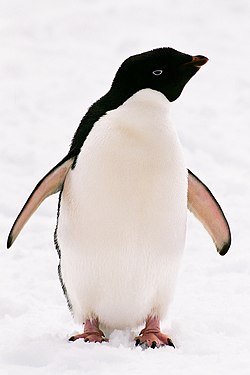
Braving bitter temperatures, the researchers waded through fields of animal waste—not to mention hordes of clamoring elephant seals and gentoo, chinstrap, and Adelie penguins—to examine the surrounding soils and plants using infrared gas analyzers that measured their respiration.


Thursday, 20 September 2018

Here's Why There Are Hundreds of Ancient, Mummified Penguins in Antarctica


By Laura Geggel, Senior Writer | September 10, 2018 03:21pm ET
The bodies of hundreds of mummified penguins in Antarctica aren't a sign of an ancient illness that swept through the icy continent, nor are they the remains of a penguin massacre by a ravenous predator.
Rather, these penguins, who were mummified by the cold, dry Antarctica environment, likely died from weather on the opposite end of the spectrum: two extremely rainy and snowy events that happened over the past 1,000 years, a new study finds.
"It is quite likely that global climate warming caused enhanced precipitation, which led to the tragedy," said study lead researcher Liguang Sun, a professor of Earth science at the Institute of Polar Environment at the University of Science and Technology of China. [Charming Chick Photos: Antarctica's Baby Penguins]
The research team stumbled across the remains of the "preserved, dehydrated mummies," many of them chicks, in East Antarctica's Long Peninsula in 2016.
It's actually common to find the remains of dead Adélie penguins(Pygoscelis adeliae), including their feathers and bones, in Antarctica, Sun said. "But it is very rare to find so many mummified penguins, especially mummified chicks," Sun told Live Science in an email.


Friday, 3 November 2017

Antarctic Adélie penguin colony in jeopardy as Marine Protection Area is rejected


Sarah Knapton, science editor 
27 OCTOBER 2017 • 3:49PM

A huge colony of Adélie penguins in Antarctica is at risk after an international commission founded to preserve wildlife at the South Pole refused to establish a Marine Protection Area, despite pleas from conservationists. 

The 18,000 pairs of penguins in Terre Adélie suffered a catastrophic breeding failure at the start of 2017 with only two chicks surviving.

It was hoped that The Commission for the Conservation of Antarctic Marine Living Resources (CCAMLR) - which is meeting in Australia - would impose greater maritime restrictions on fisheries.

Australia and the EU have been calling for a Marine Protected Area (MPA) in East Antarctic waters since 2010 but when put to a vote on Friday the proposal did not gain the necessary consensus to pass.

Wednesday, 19 July 2017

Emperor penguins may disappear by the end of this century


By Lakshmi SupriyaJul. 7, 2017 , 10:30 AM

Emperor penguins are known for braving the harsh Antarctic winters, but they might not be able to brave the harsh realities of climate change. That’s the finding of a new study, which suggests that by the end of this century, the world’s largest penguins may be no more. Previous research suggested that rapidly warming air and sea temperatures—which melt sea ice—might cause their numbers to plummet by as much as 19% by 2100. But a new model looks at other factors, including how individual penguins deal with climate change by migrating to places with optimal sea ice coverage. In their model of potential penguin migrations, researchers looked at how far penguins typically go and what factors figure in their decisions. They used data previously collected from Pointe Géologie in Antarctica along with satellite images of penguin colonies that revealed information about their traveling and foraging behavior. The model projects that for the next 2 decades, populations will remain stable, and may even increase slightly as the penguins move to locations that are more habitable. After 2050, it all goes downhill. Although the rate of population decline may vary, by the year 2100 almost all emperor penguins may be gone, the researchers write in an upcoming issue of Biological Conservation. That’s because climate change will have rendered all their habitats inhospitable by then. Gaining endangered status under the U.S. Endangered Species Act, the scientists say, may be one way of arresting what might otherwise be their final march.


Sunday, 28 May 2017

Time-lapse cameras provide a unique peek at penguins' winter behavior


Date: April 19, 2017
Source: American Ornithological Society Publications Office

Not even the most intrepid researcher wants to spend winter in Antarctica, so how can you learn what penguins are doing during those cold, dark months? Simple: Leave behind some cameras. Year-round studies across the full extent of a species' range are especially important in polar areas, where individuals within a single species may adopt a variety of different migration strategies to get by, and a new study from The Auk: Ornithological Advances uses this unique approach to get new insights into Gentoo Penguin behavior.

Gentoo Penguins are of interest to scientists because they're increasing at the southern end of their range in the Western Antarctic Peninsula, a region where other penguin species are declining. Little is known about their behavior during the nonbreeding season, so Caitlin Black and Tom Hart of the University of Oxford and Andrea Raya Rey of Argentina's Consejo Nacional de Investigaciones Cientificas y Técnicas used time-lapse cameras to examine patterns in Gentoo Penguins' presence at breeding sites across their range during the off season. They found both temporal and spatial factors driving winter attendance -- for example, more Gentoo Penguins were present at breeding sites when there was open water or free-floating pack ice than when the shoreline was iced in, and more Gentoo Penguins were at breeding sites earlier in nonbreeding season than later.

Friday, 10 June 2016

Tiny sea bird makes longest-ever known annual migration from Antarctica to Northumberland


00:00, 7 JUN 2016
BY TOM WHITE

The Arctic tern weighs less than an iPhone yet covered a massive 96,000km on its journey to its winter home before returning to the UK

A tiny sea bird has made the longest ever known annual migration, which saw it fly from Northumberland to Antarctica and back.

The record breaking Arctic tern, which weighs less than an iPhone, covered a mammoth 96,000km in its journey down to its winter home in the Weddell Sea before returning to the Farne Islands.

It was part of a study carried out by scientists at Newcastle University for BBC’s Springwatch, which mapped for the first time the annual migration of the terns.

Last year, 29 birds were fitted with geolocators by the researchers and have now returned to the islands to breed.

The previous record had been held by an Arctic tern that covered 91,000km on its flight from the Netherlands.

Dr Richard Bevan, from Newcastle University’s School of Biology, said: “It’s really quite humbling to see these tiny birds return when you consider the huge distances they’ve had to travel and how they’ve battled to survive.

“So far we’ve managed to catch 16 of our tagged birds from last year and we’ve seen at least another four birds with our geolocators attached.


Sunday, 22 May 2016

Fossil pelagornithid bird with 6m wingspan found in Antarctica

The fossil remains of a 50-million-year-old bird with a six-metre wingspan have been found in Antarctica. Paleontologists at a natural history museum in Argentina said they had identified the pelagornithid, or bony-toothed bird, nearly three years after its fossilised bones were first found at an Argentine research base on the Antarctic island of Marambio.

"Almost three years ago, remains began to appear of what we believed could be this bird.

Then we found a bone that confirmed that it was a pelagornithid," an extinct family of enormous seabirds, said Carolina Acosta Hospitaleche, a researcher on the project.

The bird's wings, fully extended, spanned more than 6.4 metres.

This is twice as big as the albatross, the largest flying bird alive today, which has a wingspan of 3.3 metres.

Ms Acosta Hospitaleche's colleague Marcos Cenizo, the director of the Natural Sciences Museum of La Pampa, said the bird was the largest pelagornithid specimen ever found.


Friday, 19 February 2016

Let's All Chill: Antarctica's Adélie Penguins Are Probably Fine


By Becky Oskin, Contributing Writer   |   February 16, 2016 07:05am ET

Let's give the penguins a little credit.
The news reported around the world was startling — that some 150,000 Adélie penguins have died in Antarctica because a colossal iceberg cut off their sea access.

But there's no proof yet that the birds are dead. No one has actually found 150,000 frozen penguins. In fact, experts think there's a less horrific explanation for the missing birds: When the fishing gets tough, penguins simply pick up and move. It wouldn't be the first time Adélie penguins marched to new digs. When an iceberg grounded in the southern Ross Sea in 2001, penguins on Ross Island relocated to nearby colonies until the ice broke up.

"Just because there are a lot fewer birds observed doesn't automatically mean the ones that were there before have perished," said Michelle LaRue, a penguin population researcher at the University of Minnesota in Minneapolis, who was not involved in the study. "They easily could have moved elsewhere, which would make sense if nearby colonies are thriving," LaRue told Live Science in an email interview.

Where did they go?
The misplaced penguins lived at a colony on Cape Denison in Commonwealth Bay, in East Antarctica. In mid-February 2010, the Rhode Island-sized iceberg B09B crashed into the bay's Mertz Glacier. The stranded iceberg forced the penguins to walk more than 37 miles (60 kilometers) for food, researchers report in a new study. The greater the distance to dinner, the harder it is for baby chicks to get enough calories from their penguin parents. 


Tuesday, 3 March 2015

Secret Hideout Helped Penguins Survive the Ice Age

by Laura Geggel, Staff Writer | March 03, 2015 07:29am ET

Earth's last ice age was so cold that even Antarctica's emperor penguins had trouble with the chill, a new study finds.

Just three populations of emperor penguins (Aptenodytes forsteri) likely survived the last ice age, which occurred from about 19,500 to 16,000 years ago, with one such population likely setting up a refuge in the Ross Sea, an Antarctic body of water southeast of New Zealand, the researchers said.

In the study, the researchers examined how climate change affected emperor penguins during the past 30,000 years. They looked at the genetic diversity of modern and ancient populations of emperor penguins in Antarctica, and estimated how it had changed over time. (To determine the penguins' ancient genetics, the researchers looked at radiocarbon-dated subfossils — the remains of emperor penguins that were not fully fossilized.)

Wednesday, 25 June 2014

Poop Stains Reveal Penguins Migrate With Climate

By Kelly Dickerson, Staff Writer | June 23, 2014 04:29pm ET

In the face of rising temperatures, emperor penguins in Antarctica may be forced to find new breeding grounds instead of returning to the same spot to mate year after year, new research finds.

Scientists are tracking this climate-driven march by studying the penguins' poop stains; in satellite images, the birds' dark droppings against a gleaming white backdrop of ice reveal their every move.

Emperor penguins are a philopatric species, meaning they return to the same spot each year to breed. When confronted with rising temperatures and receding ice sheets, however, the penguins may forgo their philopatric nature.


Wednesday, 7 May 2014

Unusual new penguin flu found in Antarctica

May 06, 2014 07:27 AM

WASHINGTON: A new kind of bird flu has been detected for the first time in Adelie penguins in Antarctica, though the virus does not seem to make them sick, researchers said Tuesday.

The virus is unlike any other avian flu known to science, said the report in mBio, a journal of the American Society for Microbiology.

"It raises a lot of unanswered questions," said study author Aeron Hurt, senior research scientist at the World Health Organization Collaborating Centre for Reference and Research on Influenza in Melbourne, Australia.

The findings show that "avian influenza viruses can get down to Antarctica and be maintained in penguin populations," he said.

The study is the first to report on live avian influenza virus in penguins, though previous research has found evidence of influenza antibodies in penguin blood.
But it remains unclear how often various strains of bird flu are introduced into Antarctica, whether the deadliest types could make it there, and which animals or ecosystems allow the virus to survive.

Hurt and colleagues collected samples from some 300 Adelie penguins at Admiralty Bay and Rada Covadonga during January and February 2013.

They found live, infectious avian influenza virus in eight samples, or nearly three percent of the birds. The penguins did not appear to be sick.

All the samples were found to be H11N2 influenza viruses that were highly similar to each other.

Sunday, 2 February 2014

High-risk life for the adelie penguin


By ONE News reporter Will Hine in Antarctica

Published: 9:21AM Monday January 27, 2014 Source: ONE News

From a distance, the adelie penguin colony at Cape Bird is a sight to behold. Tens of thousands of charismatic little birds waddle about the slopes that lead down to a vast blue sea. Sometimes they slide on their belly on the snow. At the end of the beach is a glacier which descends majestically into the ocean. And offshore, there's an island, and icebergs floating past. The vista is nothing short of gorgeous.

It's not a place for the squeamish though. Firstly there's the stench of centuries of bird poo. The guano lies in mounds on the gravelly beach, the layer rising incrementally each year.

Friday, 10 January 2014

Penguins' Climate-Change Solution? Cliff-Climbing

By Becky Oskin, Staff Writer | January 08, 2014 05:05pm ET

An emperor penguin colony in Antarctica.
Credit: British Antarctic Survey
Emperor penguins may be one of the most awkward birds on land, but it turns out they can clamber up Antarctica's steep ice cliffs and start new breeding colonies if their sea ice homes disappear, a new study of the birds' behaviors finds.

"This is a new breeding behavior we're witnessing here," said Peter Fretwell, a geographer with the British Antarctic Survey and lead study author. "This has totally taken us by surprise. We didn't know they could go and breed up on the ice shelves," Fretwell told LiveScience.

Sunday, 25 August 2013

Penguins Thrived in Antarctica During Little Ice Age

Penguin populations in the Ross Sea of Antarctica spiked during the short cold period called the Little Ice Age, which occurred between A.D.1500 and 1800, new research shows.

The results run contrary to previous studies that found increases in Antarctic penguin populations during warmer climates and decreases during colder climates, suggesting penguin populations living at different latitudes in the Antarctic may respond to climate change differently, scientists said.

"How ecological systems adapt to climate change is a very important and hot topic," said study researchers Liguang Sun and Zhouqing Xie, who are both environmental scientists at the University of Science and Technology of China in Hefei, China. "Our study suggests that it is not simple to answer this question," they told LiveScience in an email.

Saturday, 23 February 2013

Lost Antarctic Royal penguin found in New Zealand


The penguin is being treated for malnutrition and kidney failure

A royal penguin is being cared for at a New Zealand zoo after being found stranded on a beach 2,000km (1,240 miles) from its Antarctic home.

The young male bird, which was dehydrated and starving, is thought to be only the fourth royal penguin to wash up there in more than a century.

He is believed to have come from a breeding colony in the sub-Antarctic Macquarie Island.
Vets said the bird, dubbed Happy Feet Jr, may have been drifting for a year.

Lisa Argilla, a vet at Wellington Zoo, said the penguin had possibly struggled to find enough food or had had problems hunting and had come ashore as he needed to go through his seasonal moulting.

He was found on Tora beach, on the coast to the south of Wellington, on Sunday.

"It's very weak, doesn't want to stand. It's making very small progress every day but it's still in critical condition," Ms Argilla told the TVNZ channel.

She told AFP his kidneys were not functioning properly, adding: "Hopefully we can reverse that, feed him up and bring him back to good health but it's touch and go at the moment."

If he recovered, she said, he would be released to make his way home.

"They're amazing at navigation so that shouldn't be a problem for him," she said.

Last year, an emperor penguin, the original Happy Feet, made headlines when he appeared on New Zealand's shores.

He had surgery to remove 3kg (6.6lb) of sand from his stomach, which he is thought to have eaten thinking it was snow, before being released with a tracking device.

But he disappeared soon after and was believed to have been eaten.


UPDATE:  No Happy ending for lost penguin
Posted 22 February 2013, 12:30 AEST

A lost penguin dubbed Happy Feet junior has died, despite intensive efforts by New Zealand vets to save him.

A penguin dubbed Happy Feet junior that washed up in New Zealand 2000 kilometres from his home has died despite intensive efforts to save him, Wellington Zoo said on Friday.

A veterinary team spent five days caring for the bird, a juvenile royal penguin which had drifted far from a breeding colony in sub-Antarctic Macquarie Island after spending an estimated 12 months at sea.

But the zoo's chief vet, Lisa Argilla, said the penguin died overnight as malnutrition and kidney failure took their toll.

"As the penguin arrived nearly three kilograms underweight, it had absolutely no reserves and subsequently we suspect that this led to multiple organ failure, following the kidney failure diagnosed on its arrival," she said.

"Wildlife medicine is a very challenging field and though we did the best we could, sadly the penguin didn't survive."

The bird's discovery revived memories of the original Happy Feet, an emperor penguin that was found stranded near Wellington in June 2011, attracting worldwide interest during an eight-week recuperation at the zoo.

A New Zealand research ship eventually released the penguin into the Southern Ocean after it received visits from celebrities such as Stephen Fry and best wishes from New Zealand Prime Minister John Key.

However, a tracking device attached to the bird stopped transmitting after a few days, sparking fears it had been eaten by a shark.


Monday, 19 November 2012

Math Reveals Perfectly Cozy Penguin Huddles

Greed is good for penguins that huddle together to avoid Antarctica's icy weather.

According to a new study, penguin groups can maximize everyone's heat when individual birds act selfishly, huddling in ways that keep them toastiest.

"Even if penguins are only selfish, only trying to find the best spot for themselves and not thinking about their community, there is still equality in the amount of time that each penguin spends exposed to the wind," study researcher Francois Blanchette, a mathematician at the University of California, Merced, who normally studies fluid dynamics, said in a statement.


Continued: http://www.livescience.com/24860-penguin-huddles-selfish-warmth.html

Sunday, 11 November 2012

Two New Emperor Penguin Colonies in Antarctica


ScienceDaily (Nov. 8, 2012) — While about 2500 chicks of emperor penguins are raised this year at the colony close to the French Dumont d'Urville Station, two new colonies totalling 6000 chicks have just been observed about 250 km away, near Mertz Glacier by the scientists Dr André Ancel and Dr Yvon Ancel, from the Institut Pluridisciplinaire Hubert Curien in Strasbourg (CNRS and Université de Strasbourg). Since a pair of emperor penguins may only successfully raise one chick a year, the population of breeding emperor penguins in this area of the Antarctic can therefore be estimated to more than about 8500 pairs, about three fold that previously thought.

The two new colonies have been revealed on 1st and 2nd November, during the late winter season trip of the MSS Astrolabe1 towards Dumont d'Urville. They are located on the winter sea ice. This ice surrounds the remains of the Mertz Glacier, from which a large ice wall, 80 km long, 40 km wide and 300-400 m thick has separated. These may be two sub-populations originating from the initial Mertz colony which, following the Mertz Glacier break, are attempting to settle again on favorable surroundings. One accounts for about 2000 chicks and the second for about 4000 chicks.

Dr André Ancel had suspected the existence of an emperor penguin colony near the Mertz Glacier since 1999, when with Dr Barbara Wienecke (Australian Antarctic Division), they observed thousands of emperor penguins going back and forth in the Mertz glacier area. Dr Peter Fretwell and Dr Phil Trathan of the British Antarctic Survey localised this colony in 2009 based on the images from space of emperor penguin nitrogen dejections on the sea ice. However, the break of the Mertz glacier in 2010 questioned the fate of this colony. New satellite images obtained since then suggested that the birds might attempt breeding on different sites. Over the last 13 years all French attempts to find the birds had failed, due to the harsh winter conditions and the summer disappearance of the sea ice where the Emperors breed.