As regular CFZ-watchers will know, for some time Corinna has been doing a column for Animals & Men and a regular segment on On The Track... particularly about out-of-place birds and rare vagrants. There seem to be more and more bird stories from all over the world hitting the news these days so, to make room for them all - and to give them all equal and worthy coverage - she has set up this new blog to cover all things feathery and Fortean.
Showing posts with label New York. Show all posts

Sunday, 7 July 2019

Bird-singing contests in New York fuel illegal smuggling of finches


06/25/2019
The male chestnut-bellied seed finches are judged on how fast, and how long, they sing when held beside each other in cages, stimulating their instinct to establish dominance.
Bird-singing contests in New York fuel illegal smuggling of finches
NEW YORK — Some bet as much as $200. Others wager as little as breakfast or a beer. The real prize — bragging rights and status — goes to the owner of the bird that sings the most vigorously during the competitions that kick off at dawn on Sundays in parks in Brooklyn and Queens.
The male chestnut-bellied seed finches are judged on how fast, and how long, they sing when held beside each other in cages, stimulating their instinct to establish dominance.
But this avian twist on “America’s Got Talent” has also fueled an illegal cottage industry: the smuggling of finches into the United States from South America.
Last week, a 39-year-old Connecticut man was charged in federal court in Brooklyn with smuggling nearly three dozen finches from Guyana into the country through Kennedy Airport. The 34 birds were nestled into plastic hair curlers and placed in carry-on luggage, which was selected for a spot inspection, according to court records.
He’s the fourth man arrested in New York on similar charges since April 2018, in what officials said is indicative of the persistent illegal smuggling of the tiny songbirds that can sell for $3,000 in New York City. The value of a champion finch can increase to as much as $5,000, prosecutors said. The man charged last Monday, Francis Gurahoo, of East Hartford, Connecticut, expected to earn about $100,000 from the sale of the birds, prosecutors said.


Thursday, 27 December 2018

Customs find 70 birds smuggled in hair rollers at airport


10:09am Dec 14, 2018
Customs officials at New York's John F. Kennedy International Airport say they found 70 live finches hidden inside hair rollers.
Authorities say a passenger arriving from Guyana on Saturday had the songbirds in a duffel bag.

Monday, 5 November 2018

Stunning, rare Mandarin duck mysteriously appears in Central Park

Ashley May USA TODAY
Published 9:33 AM EDT Nov 1, 2018


A duck native to East Asia is making a splash in New York City's Central Park, partly because of the bird's stunning colors and also because no one knows how the bird got there.

The Mandarin duck was spotted as early as Oct. 10, according to a Twitter account that documents bird sightings at the park. Then, the exotic bird flew away and no one knew where it went for almost two weeks, David Barrett, the creator and manager of Manhattan Bird Alert, told The New York Times. To photographers' delight, it was spotted back on Oct. 25.

Since then, the duck has attracted a large fan base and a small band of paparazzi. 

The new pond celebrity is easy to spot with a green and purple mohawk, sail-like feathers and purple chest.

Citing what appears to be a band around the bird's leg, Paul Sweet, collection manager in the Department of Ornithology at the American Museum of Natural History, told Gothamist it likely escaped from a private collection or zoo. But, no local zoos have reported an escape. It's also illegal for anyone to keep a duck as a domestic pet in New York City.


Why social media is obsessed with this 'rock star' duck
By George PierpointBBC News


Celebrity spotters in New York City, have a new star in their sights: A multi-coloured duck.

The male mandarin duck - Aix galericulata - has found fame in the Big Apple after he appeared in Central Park.

His colourful plumage quickly earned him a keen following on social media.

It all started on 10 October, when a video of the colourful bird was shared on Twitter by Manhattan Bird Alert.

The city's bird-watching community rushed to catch a glimpse of the mysterious visitor.

The species is native to east Asia, and many speculated it has escaped from a "private owner".

The account suggested the arrival had dethroned the wood duck as the "prettiest duck in the park".


Wednesday, 6 December 2017

New York lights strongly affect migrant birds

19/11/2017

A new study has presented convincing evidence that night lights cause serious altered behaviour among night-migrating birds.

Scientists from the University of Oxford, the Cornell Lab of Ornithology, and New York City Audubon examined migrating bird behaviour over seven years at a special location, the ‘Tribute in Light’ in New York City. The tribute is held to commemorate the 11 September 2001 terrorist attack on the World Trade Center.

During the tribute, two strong beams of light, each with 44 xenon bulbs of 7,000 watts, pierce the night sky, replicating a light-image of the ‘twin towers’ of the World Trade Center, where nearly 3,000 lives were lost.

"We found that migrating birds gather in large numbers because they're attracted to the light," says Benjamin Van Doren of Oxford University, a lead author of the study. "They slow down, start circling, and call more frequently. They end up burning energy without making any progress and risk colliding with nearby buildings or being caught by predators."

The New York City study has been a rare opportunity to witness the impact of powerful ground-based lights on nocturnally migrating birds, according to co-lead author Kyle Horton, now with the Cornell Lab but working at the University of Oklahoma during the study. "This analysis would not have been possible without the help of tribute organisers."


Monday, 27 February 2017

Rare gull draws hundreds of birders to Tupper Lake


Feb 3, 2017
Justin A. Levine

TUPPER LAKE — An extremely rare bird has been here for the last week, and it’s drawn hundreds of birders from around the country.

The Ross’ gull makes its home in the Arctic and is rarely seen this far south. Larry Master, a Lake Placid resident who organizes the annual Christmas bird count for the Audubon Society, said this was a once-in-a-lifetime chance for local birders.

Jorie Favreau, a professor at Paul Smith’s College, was in Tupper Lake Wednesday with a group of students and said there were cars from around the Northeast.

“Rare bird sightings usually result in a group of people who are strangers but share a camaraderie (especially when standing in a windy 16 degrees),” Favreau wrote in an email. “The mood was elated.”

“A beautiful small gull of the far north, named after the great Arctic explorer James Clark Ross. Breeds mainly in remote stretches of northern Siberia, spending other seasons among the ice pack of the Arctic Ocean,” the Audubon Society says of the bird. “Was considered almost mythical by most North American birders until 1980, when it began nesting for several years near a paved road at Churchill, Manitoba. Currently regular only at a few points in Alaska, but rare winter strays turn up farther south.”

Master said Jack Delahanty spotted the bird on Tuesday, Jan. 24. When Delahanty couldn’t identify it, he sent photos to Master, who identified it. Master posted the find online, and word spread quickly.

“I was in Washington at a board meeting last week, so I could not go to see the bird on Thursday, when many arrived to see it, but I did see it on Friday and took over 600 photos and videos over the course of a day,” Master said in an email. “This morning (Wednesday), there was a couple there who had driven from Traverse City, Michigan, to see the bird. On the weekend, there were birders in cars with license plates from Georgia, Maryland, Indiana and our bordering states.”

Sunday, 27 December 2015

Twitchers' excitement over rare multicoloured bird spotted in New York


Thursday 3 December 2015

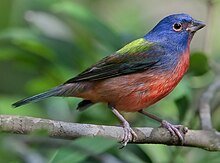
Passerina ciris-20090208.jpgA beautiful rare multi-coloured bird has rapturous nature lovers descending on a New York park in their hundreds.

The unusual specimen, called a painted bunting, has a dark blue head, a bright orange and red breast and a green and yellow back.

He was spotted in Prospect Park, Brooklyn, and is thought to be one of only 10 seen in New York since 1927.

The New York Post reported “at least 100” bird enthusiasts were visiting the park every day to see the bird. 

“A lot of people are losing their s*** over this bird,” birding tour leader Doug Gochfeld told the paper.

Other birdwatchers were described as “ecstatic” and “shaking” when they clapped eyes on the brightly-coloured male.


Monday, 22 June 2015

Nation's oldest bald eagle - a Minnesotan - dead at 38 - via Doug Shoop


If you’re the dean of American bald eagles, your life should conclude more gloriously than by getting hit by a car in the middle of nowhere while you’re dining on a freshly-killed rabbit.

A name wouldn’t be a bad idea either. But that’s the fate that struck 0629-03142, officials have determined. He was the oldest living bald eagle — 38 years old — when he died in upstate New York a week and a half ago, struck by a car in Henrietta, N.Y.

The leg band on the oldest documented bald eagle.
 N.Y. Department of Environmental Conservation
He was one of us — a Minnesotan who, like a lot of Minnesotans, moved away at a young age after an initial upbringing in northern Minnesota in the mid-’70s.

“We hired a tree climber, who climbed up white pines, 80 to 90 feet, to eagle’s nests, put a chick in cloth bag and lowered it by rope to the ground,” Carrol Henderson, former head of the Minnesota Department of Natural Resources nongame wildlife program, tells the Star Tribune. “We always took just one chick from a nest, and left a healthy chick.”

Tuesday, 28 April 2015

New York state to dim lights to save migrating birds

28 April 2015 

The state of New York is to turn off non-essential lights in state-run buildings to help birds navigate their migratory routes in spring and autumn.

Migrating birds are believed to use stars to navigate but they can be disorientated by electric lights, causing them to crash into buildings.

The phenomenon, known as "fatal light attraction", is estimated to kill up to one billion birds a year in the US.

Millions of birds migrate through New York along the Atlantic Flyway route.

Now those passing over the city by night will stand a better chance of making it further north.

New York Governor Andrew Cuomo said on Monday that bright outdoor lights will be turned off between 23:00 and dawn during peak migration seasons in spring and autumn.

The state will join several well-known New York landmarks that have already signed up to the National Audubon Society's Lights Out programme, including the Rockefeller Centre, Chrysler Building and Time Warner Centre.

Tuesday, 30 December 2014

Couch’s Kingbird spotted for first time in New York


December 29, 2014 | 3:17am

New York City bird enthusiasts spotted this feathered flier — a Couch’s Kingbird — in Manhattan over the weekend, in what’s being hailed as the Big Apple’s first-ever sighting of the species.
Photo: Splash News
Eagle-eyed avian enthusiasts spotted the yellow-feathered tourist perched atop a tree branch in Abingdon Square the West Village over the weekend.

And there’s a chance it might stick around for awhile.

“This bird may stay around for a few days (or more) since it has been in that area for several weeks,” crowed one enthusiast on the New York Birders Facebook page.

Couch’s Kingbirds are more common “around woodland edges and near ponds and rivers in southern Texas during the summer, and a few remain all winter there,” according to the National Audubon Society.

Sunday, 2 March 2014

New York Will Consider Nonlethal Ways to Reduce Swan Population

Score one for swan fans.

A proposal to eradicate mute swans in New York State by killing them met such a backlash that New York Department of Environmental Conservation announced on Friday that it would consider nonlethal means to control the invasive birds.

Swans were introduced to the United States from Europe in the 19th century, but wildlife officials say the beautiful birds destroy habitat for native waterfowl and can attack ducks, geese and even people.

A draft management plan to wipe out the state’s entire population of swans was met with a fierce outcry when it was made public in January. The environmental conservation department received 16,000 form letters in protest, and 30,000 signatures on various petitions.

Saturday, 1 March 2014

TRACKING: Researchers track Golden Eagles in New York


Wikipedia Commons
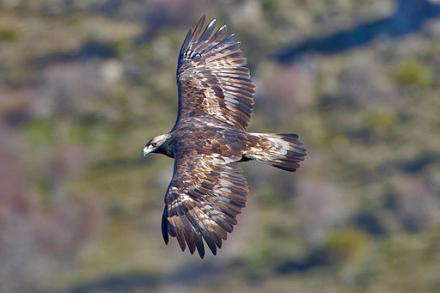
There’s a celebratory mood in the air on this cold Saturday in February, in the Catskills town of Andes. Members of the Delaware Otsego Audubon Society, with help from the Department of Environmental Conservation, had for the first time trapped a golden eagle on its winter migration from Canada.
A veterinarian and a DEC biologist measure the surprisingly calm eagle, draw blood and attach a small tracking device to its back. This female is small for a golden eagle, with a 6-foot wingspan, weighting ten pounds, and with talons that are long and black and a bit terrifying.

Tom Salo is the research coordinator for the Audubon Society. Salo says there have been many challenges trapping one - they don’t always go for the bait.

“We’ve actually, at one of our sites, had golden eagles stop eating the venison bait we put out and start killing ravens and eating live ravens, which makes it a little harder for us to trap them,” says Salo. 

Saturday, 22 February 2014

Speaking Up for the Mute Swan

By HUGH RAFFLESFEB. 17, 2014


THE Department of Environmental Conservation is proposing to kill New York State’s entire population of free-ranging mute swans, those graceful white water birds long treasured as symbols of romance and fidelity. New Yorkers have until Feb. 21 to submit responses to a plan that calls for the removal by 2025 of the estimated 2,200 birds by methods that could include shooting, gassing, decapitation and egg addling.

Mute swans — so called because they’re not generally vocal, their most arresting sound being the beating of their wings — arrived in New York from Europe in the late 19th century, imported as aristocratic decoration for country estates. They adapted with ease and soon spread to public lands, where they were embraced for their beauty and as evidence of environmental health. Only in recent decades, as conservationists’ preoccupation with the geographical origins of species has intensified, have these immigrants with established communities on Long Island, in the Hudson Valley and on Lake Ontario become perceived as a problem.


Thursday, 20 February 2014

State senator calls for a hold on DEC’s swan plan


17 February 2014, 11:55 am by Mike Risinit 


State Sen. Tony Avella wants to establish a two-year moratorium on New York’s plan to eliminate all mute swans in the wild by 2025 and limit a few to captive situations like parks and zoos.

The state Department of Environmental Conservation proposed such a plan last month, explaining the long-necked white birds are an invasive species that are destroying natural habitats and harming native waterfowl. The measure has garnered petitions and public opposition, although it is supported by the National Audubon Society and other conservation organizations.

About 2,200 mute swans live in New York, according to the state, up from fewer than 700 in the 1970s. They are descended from birds brought from Europe in the 1800s to grace estates, wildlife experts say.


Sunday, 9 February 2014

Residents act after man’s mass bird feedings leave town covered in feces

By Will Lerner14 hours ago


Michael Victor owns a boatyard in Hempstead, New York. His neighbors, Jeremy and Lara Sessler claim that every day Victor would take out wheelbarrows ofcornmeal and feed hundreds of birds. WCBS New Yorkreports that because of this, the multitude of pigeons, geese, and swans would leave behind quite the mess. To counteract becoming known as the bird crap capital (crapital for short) of New York, the Hempstead Town Board unanimously passed a new law that will go after property owners who, “attract many bids with large amounts of food.”

“Extreme bird feeding,” (which is also the least popular X Games event), was becoming an issue worth the attention of local government, according to Supervisor Kate Murray. Newsday reports that before the vote was held, she told those assembled, “Overfeeding in residential neighborhoods and near waterways results in attracting huge numbers of 'nuisance birds' to areas where neighbors live, work and raise their families.”

Friday, 27 December 2013

Killing of snowy owls at New York's Kennedy Airport prompts suit against federal agencies by Friends of Animals advocacy group

An animal-advocacy group is suing federal agencies to make sure that the killing of snowy owls at Kennedy Airport — a practice that was stopped after being exposed by the Daily News — never resumes.

Friends of Animals has filed suit against the Agriculture Department, the Animal and Plant Health Inspection Service and the Fish and Wildlife Service, the Connecticut Post reported.

The lawyer representing the group said he wants to make sure the Port Authority can’t just start shooting the majestic white birds again.

“The fact that they stopped the shooting doesn’t make this a moot point,” he said.

Read more:

Tuesday, 10 December 2013

Snowy Owls, Listed as Threat to Planes, Shot Down at JFK Airport: Source

The agency that oversees New York’s airports has added snowy owls to its no-fly list, shooting down at least two at Kennedy Airport and issuing an alert to kill any more that are spotted there, an airport source told NBC 4 New York. 

The Port Authority of New York & New Jersey issued the shoot-to-kill order for the birds after one flew into a jet's engine while the plane was on a tarmac at Kennedy last week, the source said.

Port Authority workers shot two snowy owls with a shotgun on Saturday amid concerns that they would also fly into planes. A wildlife specialist who works for the Port Authority spent 45 minutes chasing one of them down, the source said.

Wednesday, 30 January 2013

Bird hazard study planned at Riverton airport


RIVERTON — The city of Riverton has agreed to pay $73,000 to assess bird hazards at its regional airport.

The city budgeted $133,000 for the review, but all four bids came in under that amount. Loomacres Wildlife Management Inc. of Warnerville, N.Y., submitted the lowest bid. The company, which has an office in Worland, will study migratory patterns year-round to determine if birds pose a danger to aircraft.

Wednesday, 16 January 2013

JetBlue Flights Suffer Bird Strikes in 2 Consecutive Days


By Dan Hart - Jan 13, 2013 10:09 PM GMT
Two JetBlue Airways Corp. (JBLU) flights suffered bird strikes during takeoff and had to return to New York’s John F. Kennedy International Airport in consecutive days, the company said.

Flight 721 bound for Nassau in the Bahamas took off at 9:59 a.m. today and returned to the airport after striking a bird, said spokeswoman Tamara Bentham. The plane was scheduled to arrive in the Bahamas this afternoon, according to the JetBlue website. Flight 831 bound for Santiago in the Dominican Republic returned to JFK after striking a bird as it took off yesterday afternoon.

“In my experience, this is not a common occurrence for us,” Bentham said. There was no significant damage to either of the planes, she said.

Four years ago this month, Captain Chesley Sullenberger III safely landed a US Airways Group Inc. plane on the water in an incident that became known as the “Miracle on the Hudson.” A flock of geese struck the plane about 90 seconds after takeoff, forcing an emergency landing on the Hudson River. All on board survived.

The New York Post first reported the JetBlue bird strikes.

http://www.bloomberg.com/news/2013-01-13/jetblue-flights-suffer-bird-strikes-in-2-consecutive-days.html

Friday, 28 December 2012

State, county seek assistance with bird-nesting program


By Joe MahoneyThe Daily Star
Property owners in northern Otsego County and migratory birds alike could benefit from a grassland protection program being promoted by state officials and the Otsego County Soil and Water Conservation District.

The State Department of Environmental Conservation is willing to pay landowners in some areas of New York for maintaining grasslands in areas that are known nesting spots for certain species of endangered or protected migratory birds, said Scott Fickbohm, manager of the local Soil and Conservation District.

“Due to changing land-use patterns, natural vegetative succession, and development, grasslands are fragmenting and disappearing,” DEC officials said in announcing the program.
To be eligible for the state funding, tracts must have grassland parcels that are at least 25 acres. Officials said research has shown grassland birds need large, uninterrupted habitat patches to thrive. Parcels over 30 acres in size will receive priority points in DEC’s project evaluation and scoring process.

Grant amounts, officials said, hinge on the acreage of habitat that is accepted by the program. The minimum grant amount corresponds to 25 acres, at a rate of $110 per acre, paid over five years, or $13,750. Large unbroken parcels of high quality habitat are most desirable for species conservation, said.

Friday, 2 November 2012

Update on out-of-town birds: They're taking the next bus home


New York, displacing them far from home. At Cayuga Lake, a species from a remote North Atlantic island and one from the high arctic were spotted earlier this week. 

But what happens to these accidental visitors after the storm has passed?

Stranded seabirds, such as the Leach’s Storm-Petrel and Ross’s Gull seen in Central New York, need to return to the ocean to survive. So they will leave land once the weather clears up, said Andrew Farnsworth, a New York City-based research scientist at the Cornell Lab of Ornithology. Farnsworth also leads BirdCast, a migratory bird tracking program.

The Ross’s Gull spotted on Cayuga Lake breeds in the high arctic of North America and northeast Siberia. To fly back to the North American arctic, it would have to travel an estimated 2,600 miles. “The best chance to see rare birds will be right after the storm has passed – there will definitely be some out-of-range and unusual birds found,” Farnsworth said. “We could be seeing birds that have been traveling with Sandy for hundreds of miles and are just looking for a break from the weather.”

The storm also interrupted the southward migration of many other bird species. With clearer skies expected at week’s end, large numbers of birds are likely to resume their flights.