As regular CFZ-watchers will know, for some time Corinna has been doing a column for Animals & Men and a regular segment on On The Track... particularly about out-of-place birds and rare vagrants. There seem to be more and more bird stories from all over the world hitting the news these days so, to make room for them all - and to give them all equal and worthy coverage - she has set up this new blog to cover all things feathery and Fortean.
Showing posts with label Seychelles warbler. Show all posts

Thursday, 6 February 2020

Tiny Seychelles island coaxes bird back from brink

Cousin Island (Seychelles) (AFP) – Giant tortoises amble across Cousin Island as rare birds flit above.

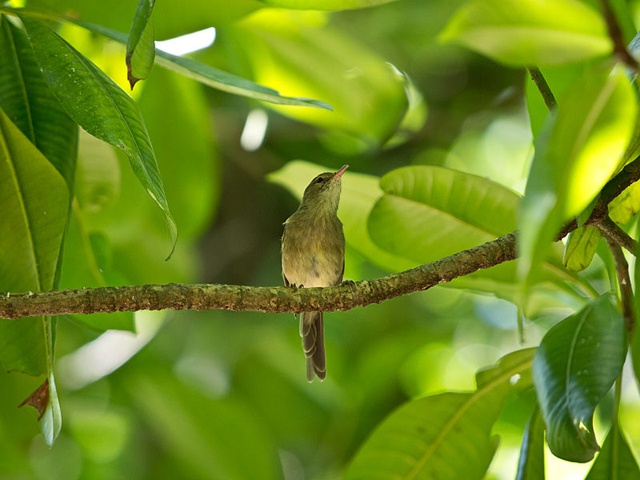
The scene attests to a stunning success for BirdLife International, a conservation group that bought the tiny Seychelles isle in 1968 to save a songbird from extinction.

Thick vegetation smothers ruins that are the only reminder of the coconut and cinnamon plantations that covered the island when the group stepped in to protect the Seychelles Warbler.

Now teeming with flora and fauna and boasting white beaches, Cousin Island is firmly on the tourist map, with managers scrambling to contain visitor numbers and soften their negative environmental impact. 

More than 16,000 people visited the island in 2018, compared with 12,000 a decade earlier.

“Tourism is important for Cousin. That’s what allows us to finance the conservation projects we run here. 

“But 16,000 tourists… that was too much,” said Nirmal Shah, director of Nature Seychelles, which is charged with running the special reserve.

Before the island was in private hands, the population of Seychelles Warblers was thought to have shrunk to just 26, barely hanging on in a mangrove swamp after much of their native habitat had been destroyed. 

Thursday, 4 April 2019

Getting help with the kids slows down ageing in female birds


Date:  March 21, 2019
Source:  University of Groningen
Seychelles warblers live and breed in family groups on the tiny island of Cousin. In each group, a dominant female and male reproduce. When helpers assist the with incubation and feeding of chicks, the dominant female breeders age more slowly and live longer, a study by biologists from the University of Groningen and colleagues from the Universities of East Anglia, Leeds, Sheffield, and Wageningen shows. The results, which are published in the journal Nature Communications on 21 March, indicate how cooperative breeding -- which also occurs in other species, including humans -- can increase life span.
The Seychelles warbler lives on Cousin Island in the Indian Ocean, measuring just 500 by 700 meters. Some fifty years ago, only a handful of birds survived. However, conservation efforts have led to a spectacular increase in the population, and new populations have been established by translocating birds to four other islands nearby. 'There are about one hundred breeding territories on Cousin, each with a dominant male and female and a number of subordinates, which are often the offspring of the dominant pair', explains University of Groningen biologist Martijn Hammers, lead author of the study.

Friday, 2 February 2018

Seychelles’ Cousin Island celebrates 50th anniversary success: bringing warbler back from extinction


Victoria, Seychelles | January 29, 2018, Monday @ 14:10 in Environment » CONSERVATION | By: Sharon Ernesta |Views: 1021

 (Seychelles News Agency) - Cousin Island is this year celebrating 50 years since its designation as a nature reserve and its conservation and research work.

The island’s major achievement is its work with the Seychelles warbler. This endemic bird has been downgraded from critically endangered to near threatened on IUCN’s Red List of endangered species - a first in bird conservation. 

The island special reserve is managed by Nature Seychelles, a not-for-profit organisation for environmental conservation, which is also celebrating 20 years of existence. Nature Seychelles is the island nation’s partner of BirdLife International.

BirdLife International is a global partnership of conservation organisations that strives to conserve birds, their habitats and global biodiversity, working with people towards sustainability in the use of natural resources.

At one time there were only 26 individuals of this bird left in the world found only on Cousin.

Read on  

Monday, 30 May 2016

Bird research in Seychelles links inbreeding with shorter lifespans for entire animal kingdom

Victoria, Seychelles | May 27, 2016, Friday @ 14:31

(Seychelles News Agency) - Birds of a feather may flock together, but if birds mate with family members, it's likely to lead to a shorter lifespan for the offspring.

That's the conclusion scientists reached after carrying out a genetic study of birds in Seychelles.

The Seychelles warbler was found to be the perfect candidate by evolutionary biologists seeking to pin down the effect of inbreeding on the entire animal kingdom, including on humans themselves. This is in spite of the fact that the tiny brown bird is found on only a handful of Seychelles' islands.

According to Kat Bebbington, a British PhD student at the University of East Anglia, the risk of inbreeding is particularly high in any population of animals which are small in numbers and geographically isolated.

“Lots of research is being done to try and understand how small populations avoid inbreeding, either by evolving some way of recognising relatives or making sure that offspring disperse far enough away that they will never encounter family members of the opposite sex,” Bebbington told SNA.

Bebbington is the lead author on the research paper published earlier in an online journal, Molecular Ecology, earlier in May.

Sunday, 10 August 2014

Back from the brink – threatened Seychelles warbler is successfully translocated to Fregate Island

Fregate Island, Seychelles | August 10, 2014, Sunday @ 11:29 - See more at:

Back from the brink – threatened Seychelles warbler is successfully translocated to Fregate Island(Seychelles News Agency) - It’s the first conservation success story of its kind in the world: the Seychelles warbler (Acrocephalus sechellensis) was one of the most threatened bird species in the world in the 1960s – down to a total population of only 26 birds, conservation experts had to move fast to avert the birds from becoming entirely extinct.
After decades of ongoing habitat rehabilitation on the last remaining island where the birds were found in the wild, the warbler’s future looks a lot brighter, thanks to efforts by local NGO Nature Seychelles, a Birdlife International partner. With the total population now in the thousands, the organisation captured 59 birds from Cousin Island and transferred them by helicopter to the private resort island of Frégate in the Seychelles in December 2011, which is now the fifth island where these birds live.

According to a new study published in Conservation Evidence this month, the birds have increased to over 80 individuals, including 42 birds hatched on Frégate, after a census was carried out on the island in June last year.

The project was funded by an $18,000 Disney Worldwide Conservation Fund grant to Nature Seychelles through the Royal Society for the Protection of Birds (BirdLife International’s UK arm), the Seychelles Warbler Research Group (a collaboration between the Universities of East Anglia and Sheffield in the UK, and the University of Groningen, Netherlands) and Frégate Island Private.