As regular CFZ-watchers will know, for some time Corinna has been doing a column for Animals & Men and a regular segment on On The Track... particularly about out-of-place birds and rare vagrants. There seem to be more and more bird stories from all over the world hitting the news these days so, to make room for them all - and to give them all equal and worthy coverage - she has set up this new blog to cover all things feathery and Fortean.
Showing posts with label successful breeding. Show all posts

Friday, 26 July 2019

Record breeding season for Cornish Choughs

20/07/2019

Conservation group Cornish Choughs has announced a record-breaking year for nesting Choughs in Cornwall. A total of 12 pairs bred successfully this year, two more than in 2018. On top of this, 10 more young birds fledged this year, with a total of 38 youngsters leaving their nests.

The species has enjoyed a successful last few years of breeding in Cornwall, after the species reappeared in the county in 2001, at The Lizard, following a 54-year absence since the previous last breeding record, near Newquay in 1947. The 2001 birds were proven via DNA testing to have come from Ireland.

Chough has a deep-rooted history within Cornish tradition, featuring on the county's coat of arms. Nowadays, following the reappearance at the turn of the millennium and subsequent increase, the species can be found at other sites in the county, including Porthgwarra. There have been records in Devon, too.

Find out more at www.cornishchoughs.org.

Monday, 18 March 2019

Bumper hihi breeding season on pest-free Tiritiri Matangi


Monday, 11 March 2019, 10:46 pm
Press Release: Joint Press Release
HCCT / DOC Media Release

Monday March 11, 2019
A record number of hihi or stitchbird have fledged on pest-free Tiritiri Matangi Island in the Hauraki Gulf Marine Park during the latest breeding season.
Hihi breeding on Tiritiri Matangi starts in late September and runs until February.
This breeding season 252 new birds were added to the hihi population on Tiritiri Matangi.
That beats the previous record of 241 hihi fledged on the island during the 2010 / 2011 breeding season.
“Conditions have been ideal for hihi on Tiritiri Matangi this summer and breeding pairs on the island have produced a record number of new birds,” says Hihi Conservation Charitable Trust (HCCT) Conservation Officer Mhairi McCready.
“Around 150 fledgling hihi are produced in an average breeding season on Tiritiri Matangi so this is a fantastic result for this nationally vulnerable native bird.”
“It’s also a reward for the volunteers, research students and others involved in supporting the hihi during the breeding season,” says Mhairi McCready.


Friday, 28 December 2018

Bittern breeds on Isle of Wight for the first time


08/12/2018

For the first time, Eurasian Bittern has bred successfully on the Isle of Wight. The species has never been recorded breeding on the island before but this year – which has been the best ever for Eurasian Bittern in Britain – wardens at RSPB Brading Marsh observed regular feeding flight during summer and photos of a possibly fledgling were obtained.
Staff at the reserve heard booming bird during spring for the first time, and the observations noted during summer have led the RSPB to reveal they are confident that birds successfully bred at the newly restored wetland. Keith Ballard, warden of RSPB Brading Marshes said: "Hearing a booming bittern on a wetland reserve is like receiving a Michelin star as a restaurant; it’s one of the highest marks of success we could hope for.
"Eurasian Bitterns have very selective habitat needs, and to attract them you need a truly thriving ecosystem. The work we have done to manage the reserve for insects, fish, reptiles and mammals, as well as birds, now means we have one of the most UK’s most sensitive species choosing to raise its young on the Isle of Wight."

Wednesday, 29 August 2018

Record-breaking numbers of UK's rarest seabird return to island after near extinction


118 pairs of roseate terns successfully raise chicks off coast of Northumberland after nearly being wiped out in 1970s
Josh Gabbatiss Science Correspondent 

Record numbers of roseate terns have nested off the coast of Northumberland, raising hopes for this once critically endangered bird.
Populations of these terns crashed as low as 16 breeding pairs in the 1970s due to demand for their beautiful plumage, which was used to make hats.
Though still considered the country’s rarest seabird, roseate tern numbers have bounced back thanks to a concerted effort by conservationists, and this year saw 118 pairs raising chicks on Coquet Island.
The small island, just a kilometre from the mainland, is host to the last sizeable breeding population of the tern – which was once widespread across the whole of the UK.
Their success there has been largely the result of a scheme to create rows of “terrace houses” for the birds to live in, which recreate the crevices that the terns like to lay their eggs in.
The RSPB constructed these special nest boxes on the island in 2000 when the population still only numbered 34 pairs, and since then numbers have consistently climbed.
“For the past three years we’ve been consistently attracting more than 100 pairs of roseate terns to the island, who have fledged more than a 100 chicks each year,” said Paul Morrison, warden at RSPB Coquet Island.


Breeding Roseate Terns return to Wales
RSPB Cymru have announced that two Roseate Tern chicks were born at The Skerries this summer – with one chick having successfully flown the nest for the first time since 2006.
Funding provided by the EU Roseate Tern Recovery Project allowed for a two-week extension on the islands’ wardening season, along with newly designed nest boxes being placed strategically around the islands. The wardens also placed lures playing Roseate Tern calls and hand-made decoys with the aim of attracting passing Roseate Terns to the colony.
Once widespread across Wales, Roseate Terns nearly became extinct in the 19th century because their plumage was prized for fashionable hats. Sadly, Roseate Terns continue to face many challenges, including food shortages, eroding nesting habitat and predation. To address this challenge, 2015 saw the launch of an ambitious five year EU-funded Roseate Tern LIFE Recovery Project bringing together conservationists from the RSPB, BirdWatch Ireland and North Wales Wildlife Trust on the three breeding colonies (two in Ireland and one in the UK). The project is also focused on creating further Roseate Tern-friendly sites across the UK and Ireland in the hopes of re-establishing thriving colonies.
Currently in 2018, there are only 116 breeding pairs of Roseate Terns in the UK, restricted to just Coquet Island in England. With their incredibly pale plumage with slight rosy flush and long tail streamers, they are considered the most elegant of the five breeding terns to visit our shores. These endangered birds migrate each spring from western Africa to breed at only a handful of colonies in the UK and Ireland.

Wednesday, 11 July 2018

Hen Harriers breeding again in the Peak District


Hen Harrier, has bred on the National Trust’s High Peak Moors in the Peak District National Park, for the first time in four years.

The four chicks are said to be in a ‘healthy condition’ after hatching just a few days ago on land managed by the conservation charity.

The Hen Harrier is one of the most special birds of the British uplands and is famed for the adult’s mesmerising and dramatic ‘sky dance’, which the male performs as it seeks to attract a female.

“We’re delighted to learn of this nest” said Jon Stewart, the National Trust’s General Manager for the Peak District.

“The Hen Harrier has been one of the most illegally persecuted birds of prey in Britain for many years and we have set out on a mission to work with others to create the conditions for the harrier and other birds of prey to thrive once again in the uplands.

“We hope this will be a positive model for improving the fate of our birds of prey and providing the healthy natural environment that so many people care about and want to see”.

In 2013 the Trust published its High Peak Moors Vision, which put at its heart restoring wildlife, including birds of prey, and involving people in the care of the moors.

The conservation charity leases much of its High Peak moorland for grouse shooting and all shooting tenants have signed up to actively supporting the Vision. As well as the Hen Harrier, initial signs are promising this year for other species such as the peregrine falcon, merlin and short eared owl.

Sunday, 24 June 2018

Hen Harriers breed in Bowland


07/06/2018

Hen Harrier has bred in Forest of Bowland, Lancashire, for the first time since 2015.

RSPB wardens discovered two Hen Harrier nests on the United Utilities Bowland Estate in early spring and have been monitoring them closely ever since. The nests were visited recently by the wardens under licence, who were delighted to find four healthy chicks in each of them. A single male harrier has fathered young at both nests and is now regularly taking food to each.

The good news makes a welcome change to the procession of reports of satellite-tagged Hen Harriers either killed or disappearing in unexplained circumstances.

Hen Harrier remains on the verge of extinction as a breeding bird in England owing to the continuous illegal persecution of the species associated with driven grouse shooting. Although experts estimate there is sufficient habitat for at least 300 pairs across northern England, last year there were only three successful nests in the whole country. Bowland used to be known as England's last remaining stronghold for breeding Hen Harriers, but both 2016 and 2017 proved blank years after just a single chick fledged in 2015.

Monday, 26 February 2018

Love is in the air: Critically endangered Helmeted Honeyeaters have bumper breeding season


By Melissa Cunningham & AAP
14 February 2018 — 10:57pm

A critically-endangered bird species, native only to Victoria, has recorded a bumper breeding season, bringing it one step closer to staving off extinction.

Thirty-six Helmeted Honeyeater couples in Melbourne's east have raised 61 fledglings so far, with hope for more before the end of the breeding season in March.

Of the 36 couples, 24 birds are first-time parents.

"This is fantastic news for the recovery program, as it means the birds that are reaching breeding age are replacing lost birds or, in some cases, finding their own breeding sites," Department of Environment, Land, Water and Planning ornithologist Bruce Quin told AAP.

"It's also a big positive for the conservation program as it shows there is enough quality habitat to support a population increase."

The small, yellow-tufted species have been steadily making a comeback from near-extinction due to a more than three decade-long conservation program.

The Helmeted Honeyeater is Victoria's bird emblem, but it's survival rate on release from captivity sits at less than 40 per cent.

Last year, numbers of the yellow-breasted bird dwindled to 190.

But, increasing numbers of the species is only half the battle.

When a Helmeted Honeyeater enters the wild, it not only fails to evade its main predators, but often flies directly towards them, resulting in its untimely death.

The reason for this, is that Helmeted Honeyeaters have little understanding of what to fear.

Thursday, 31 August 2017

Eagle successfully raises chicks from two nests

18/08/2017
   

An eight-year-old male White-tailed Eagle known as Turquoise Z has been travelling between Angus and Fife visiting two nests, more than 28 miles apart, and raising chicks with two different females, RSPB Scotland has announced.

This unusual behaviour, known as polygamy, is rarely recorded in sea eagles. It has been seen on the west coast of Scotland on a handful of occasions, but these nests were just a few miles apart and the demands of providing enough food for both nests always resulted in failure.

Despite the vast distance between these two nests, however, there has been a successful outcome. In Fife, Turquoise Z raised a female chick tagged Blue X with his usual partner; he raised a second female tagged Blue V at the nest in Angus with a new partner.

Turquoise Z was released in 2009 as part of the east Scotland reintroduction. It has been breeding in a Forest Enterprise Scotland Woodland in Fife since 2013 with a female released in the same year, known as Turquoise 1.

Sunday, 13 August 2017

Great White Egrets breed at Holkham Nature Reserve

PUBLISHED: 17:33 07 August 2017 | UPDATED: 17:33 07 August 2017


Holkham Nature Reserve has welcomed another rare bird to its list of species, after three young Great white Egrets hatched at the reserve this year.

Throughout the 19th century, these birds were killed across Europe for their ornate feathers, used in the hat trade, and for much of the 20th century the species was under threat, and restricted to wetland areas in Eastern Europe.

Thursday, 10 August 2017

Sandwich Terns breed at Minsmere for first time in four decades

One of Suffolk’s rarest breeding birds, the Sandwich Tern, may be making a comeback after breeding successfully this year at the RSPB’s Minsmere nature reserve for the first time in almost 40 years.

The Sandwich Tern is a very white ‘sea tern’ with a black cap and bill with a yellow tip, which distinguish it from other terns. It feeds mainly on sandeels and small fish, and many of its surviving UK breeding colonies are on nature reserves.

Before the 1970s, a large colony of Sandwich Terns nested on Minsmere’s famous ‘Scrape’ – a shallow manmade lagoon dotted with islands – but since the last successful nesting attempt in 1978 they have only tried to nest occasionally and without success, until now.
This year, seven pairs of Sandwich Terns settled to breed on the East Scrape, successfully rearing four chicks so far. They are thought to be the only Sandwich Terns to breed in Suffolk this year.

21st July


Friday, 7 July 2017

Spoonbills hatch three chicks at RSPB Fairburn Ings


4th July 2017

Rare protected birds have hatched three chicks at a bird reserve near Leeds, the Royal Society for the Protection of Birds (RSPB) has confirmed.

The presence of breeding spoonbills at the RSPB's Fairburn Ings reserve in West Yorkshire had been kept secret.

Spoonbills have not nested regularly in the UK since the 1700s but are now returning.

There are about 20 birds wintering in the country and this is the first hatching in the north, the RSPB said.

There are fewer than five pairs of the tall, white, heron-like birds breeding annually in the UK, according to the charity.

The four adult birds at Fairburn Ings, near Castleford, have black legs and an enormous spoon-shaped bill used to sweep through the water from side to side when scouring for food.

Continued

Thursday, 5 May 2016

Short-eared owls breed successfully in Malta bird sanctuary, first time in 100 years

Monday, 2 May 2016, 13:27
Last update: about 1 day ago

Asio flammeus -Fazenda Campo de Ouro, Piraju, Sao Paulo, Brasil-8.jpgThe first successful breeding of the Short-eared Owl (Kokka tax-Xaghri, Asioflammeus) in more than 100 years has been recorded in Malta, BirdLife said. Birdwatchers and field ornithologists Ray Galea, Alvin Farrugia, Daniel Bonnici, Steve ZammitLupi and Nick Galea of BirdLife Malta have observed the pair of adults displaying territorial behaviour which normally indicates a breeding attempt.

While monitoring these birds from a distance to make sure there is the least possible disturbance, the birdwatchers recorded enough evidence to confirm this record. A few weeks ago a young fledged chick was also photographed (1). The location is temporarily not being disclosed for the safety of these birds although it would be safe to state that the bird has bred in a bird sanctuary, a protected area where no hunting is allowed.

Naturalist Giuseppe Despott had noted two breeding records in the vicinity of Siggiewi and WiedZnuber on May 1906 and May 1909 respectively. Seventy four years later, in 1983, a nest with five eggs was recorded on Comino but it failed to hatch since the nest was abandoned. Short Eared Owls are bird of prey that feed on rodents mainly rats and mice and normally hunt during dusk and dawn. These birds are normally seen migrating in spring and in autumn, with a few attempting to winter on the Maltese Islands.


Sunday, 7 September 2014

Rare little terns site at Gronant sees 77 chicks fledge

5 September 2014 Last updated at 11:36

A rare seabird colony on a north Wales beach has seen its highest number of chicks for four years.

A little tern feeding its chickThe sand and shingle dunes at the Gronant on the Dee Estuary host Wales' only breeding colony of little terns.
The site, near Prestatyn, produced 77 fledglings from 128 pairs this year, the most since 2010.

Denbighshire council said increased volunteer warden patrols had helped keep down human disturbance and predators such as foxes and kestrels.

The birds, which feed on sand eels, make the 4,000-mile (6,500 km) trip from west Africa in order to nest on the shingle ridge, amongst the sand dunes in Gronant.

A five-year EU partnership aims to make sure the bird has a long-term recovery in Wales.

Two years ago Denbighshire council put up a one-and-a-half mile (2.5 km) fence which is electrified at night to protect the birds from foxes.

In addition to natural predators, the birds also face loss of habitat through development as well as winter storms.

Friday, 22 August 2014

Rare birds boom into life at Doncaster nature reserve

One of the most threatened birds in the UK has bred successfully for the first time at a Doncaster nature reserve.
A bittern

Staff at Potteric Carr are celebrating for after many years of work, patience and careful observation, bitterns have successfully bred on the site for the very first time.
The birds are having a rocky road to recovery following their UK-wide extinction around 1885 – a result of habitat loss and persecution at the time.

Yorkshire Wildlife Trust reserves officer Jim Horsfall said: “We are thrilled!

“Over the last three years male bitterns at Potteric Carr during spring have been making their characteristic booming sound, a call they use to attract mates.

“This of course gave us hope that one day we may see some young bitterns.

Thursday, 14 August 2014

`Alalā Breeding Season a Success

Created on Friday, 08 August 2014 18:07
Written by San Diego Zoo Global

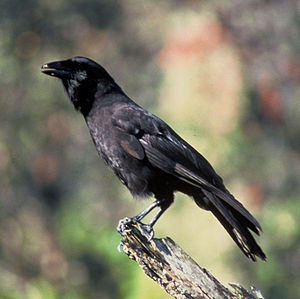
Corvus hawaiiensis FWS.jpgSan Diego, California - Partially feathered and squawking for meals, `alalā chicks at San Diego Zoo Global's Keauhou Bird Conservation Center keep animal care staff busy. With nine new chicks being hand-reared this year, the rare bird's population now numbers 115 at the Center. 

`Alalā (also known as Hawaiian crows) are extinct in the wild, the remaining population is managed through a collaborative effort by the Hawai`i Endangered Bird Conservation Program (HEBCP) on the big island of Hawaii. The chicks are fed and cared for by animal care staff they never see to ensure they do not imprint on humans.

"`Alalā are very intelligent birds and very susceptible to imprinting," said Byce Masuda, program manager for San Diego Zoo Global. "We use puppets to hand-rear and feed the birds when they are young to keep them from imprinting onto us so they will act naturally as adults."

The last `alalā were recorded in their Hawaiian forest natural habitat in 2002 where they were threatened by habitat destruction, introduced predators and avian disease. The HEBCP has been working with the species in managed care since 1993, bringing the population from a low of only 20 individuals to 115. 

Wednesday, 30 July 2014

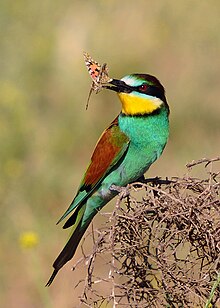
Rare bee-eaters nest on the Isle of Wight for first time on record

A pair of colourful and rare bee-eaters, normally to be found in southern continental Europe, has set up home on National Trust land on the Isle of Wight.
Şahlûr.jpg
It is only the third record of the bird breeding successfully in the UK in the last century, the last being in 2002 in a quarry in County Durham. Two young successfully fledged. Before that, two pairs were recorded raising seven young in a Sussex sand-pit in 1955.

The latest bee-eaters, were discovered on the Isle of Wight in mid-July, having set up home in the sandy hills of the Wydcombe Estate in the south of the island.

They chose a small valley where the soft ground, rolling landscape and access to a stream provides ideal conditions for their nest burrow.

Ian Ridett, a National Trust Isle of Wight Ranger, said: “We have set up a 24-hour surveillance operation around the site to protect these rare visitors, as any unhatched eggs could be a potential target for egg thieves.

Monday, 7 October 2013

Eggcellent news! ‘Pitta’ patter of tiny chick feet at manor is a first for UK

Staff at Waddesdon Manor are celebrating after a rare bird in their avaries successfully produced a baby chick for the first time in the UK.

The Javan banded pitta, generally found in Indonesia, is a brightly coloured bird often referred to as ‘a jewel of the forest’.

The pittas first came to the aviaries in 2007, the same year that they were bred in a zoo in Germany.

The pair have been producing fertile eggs at the aviary for four years, however this is the first time a chick has managed to survive its most vulnerable period – the first week after birth.

Gavin Harrison, a senior aviculturist at Waddesdon Manor aviaries, said: “We have undertaken a process of removing, hatching and incubating the pitta’s eggs and this is the first time we have achieved success.

“Each year we have changed something to improve our chances.

“This time we have changed the bird’s diet and increased the time between feeds so we think that is what made the difference.

“It is quite a thrill for us to know that we have a new addition to the pitta family.”

The banded pitta is a species that is increasingly at risk of becoming endangered, particularly after the species was split into three different groups: Javan, Malayan and Bornean.

Gavin said: “There are two reasons why the Javan banded pitta is at risk.

“Firstly in Indonesia they are often caught and used as part of the illegal bird trade.

Thursday, 19 September 2013

Hope for Northern bald ibis as Moroccan population has best ever breeding year

Record season for Morocco's Northern bald ibises
September 2013. The largest fully wild population of Critically Endangered Northern Bald Ibis has had its second most successful breeding season on record, with the number of breeding pairs at its highest since surveys began in the 1980s. The colonies at Souss-Massa National Park and nearby Tamri, in south-west Morocco, fledged 148 young, bringing the total population at the end of the breeding season to 443 birds.

Two, tiny populations separated by more than 1000 miles
Once widespread in North Africa and Europe, the Northern Bald Ibis survives in two disjunct populations. Well to the east of the Moroccan birds is the semi-captive population at Birecik in Turkey, and south of that a tiny remnant population at Palmyra, Syria. There is also a newly formed population of Northen bald ibis in southern Spain recently created from captive bred birds released into Andalucia.

Wardens
Management and conservation of the Moroccan population is supervised by SEO/BirdLife (BirdLife in Spain) in conjunction with High Commission for Water and Forest and Fight against desertification and GREPOM (BirdLife in Morocco). SEO/BirdLife has hired seven wardens to protect and monitor the colonies, with funding from HSH Prince Albert II of Morocco, the Species Champion, through the BirdLife Preventing Extinctions Programme. The wardens provide daily fresh water for the birds, and prevent disturbance. This year they succeeded in persuading a persistent group of anglers to move away from one sub-colony in the National Park, allowing the ibises to begin nesting.

Monday, 2 September 2013

Dubai scientists successfully breed rare birds in chicken eggs

Scientists in Dubai have hatched an endangered desert bird with the help of a common chicken egg, in what they hope will be a major boost for conservation.

The Central Veterinary Research Laboratory team has been successful in breeding houbara bustard chicks, a rare falconry prey that is in decline in the UAE.

They believe the new implant system will “provide a tool to hatch damaged eggs, as well as soft-shelled eggs of endangered wild birds”, according to their research paper released this week. With funding from UAE Vice President and Prime Minister and Ruler of Dubai HH Sheikh Mohammed bin Rashid Al Maktoum, the researchers placed fertilised houbara yolks in the whites of chicken eggs and other surrogate houbara eggs to see if they would develop.

The found that after four days, 76 per cent of the yolks surrounded by chicken egg whites and 61 per cent surrounded by houbara egg whites were still alive.

The yolks, and the whites surrounding them, were then moved to bigger chicken eggs to give them a better chance to grow. In the end, two houbara chicks hatched from the chicken egg whites and one hatched from the houbara egg white, comprising seven per cent and five per cent of the samples in the experiment.

While the technique needs to be refined further, it shows that rare bird yolks can hatch in other eggs. This could help the chicks survive if the shell of their own egg is damaged. The findings are significant for the houbara, which is a favourite meal for falcons and therefore a major target for falconers.

However, their numbers have plunged throughout the Gulf because of over-hunting and loss of habitat. The team was particularly keen on trying this technique after watching British scientists clone a sheep known as Dolly. International teams of scientists soon discovered that it is extremely difficult to clone birds because of the complications in extracting genetic material. The Dubai research team hopes this new technique will advance science while also conserving rare species of birds around the world.

Friday, 2 November 2012

University campus bursting with wildlife - study


A UNIVERSITY campus is bursting with wildlife, a year-long study has found.

The results of a year of monitoring the biodiversity of Durham University’s campus around Durham City have delighted conservationists, with rare birds thriving.

This summer saw the first successful breeding on university land by barn owls, a pair of which fledged three young this year.

At least eight Red-listed bird species, those with the UK’s highest conservation priority, have been spotted on the grounds, along with 14 Amber-listed species.

The University’s full bird list runs to 100 species, including five birds of prey and three owl species.

There are also more than 200 species of flowering plants including four species of wild orchid and woodlands full of bluebells.

Roe deer, badgers and foxes have been regularly sighted and eight species of bat have been reported, although red squirrels were replaced by their grey counterparts over a decade ago.