As regular CFZ-watchers will know, for some time Corinna has been doing a column for Animals & Men and a regular segment on On The Track... particularly about out-of-place birds and rare vagrants. There seem to be more and more bird stories from all over the world hitting the news these days so, to make room for them all - and to give them all equal and worthy coverage - she has set up this new blog to cover all things feathery and Fortean.
Showing posts with label Chicago. Show all posts

Friday, 24 May 2019

Rare Copy of World’s Most Famous Bird Book on Display in Chicago


Alex Ruppenthal | April 29, 2019 4:54 pm
The groundbreaking book “Birds of America” is now on display at the Field Museum.
The book was published between 1827 and 1838 by John James Audubon, a painter and ornithologist who in 1826 set out to illustrate every bird in North America. Audubon discovered more than 100 bird species during his 12-year mission and even drew some species that have since gone extinct, such as whooping cranes and passenger pigeons.
Audubon’s book features intricate and detailed life-size watercolor paintings of nearly every bird on the continent, and is recognized for its permanent influence on the art of wildlife illustration.
“At a time when photography was still at its infancy and not accessible for most, scientific journals heavily relied on paintings and drawings to illustrate animals,” said Diana Duncan, the Field Museum’s technical services librarian, in a statement. “Birds were not seen as art subjects, so Audubon’s unique and beautiful, life-size renderings were impactful not only in the scientific community for capturing the birds at their most natural but also in the art world.”

Sunday, 7 April 2019

Chicago tops list of most dangerous cities for migrating birds


Date:  April 1, 2019
Source:  Cornell University
An estimated 600 million birds die from building collisions every year in the U.S., and research from the Cornell Lab of Ornithology offers one explanation for it.
A team led by Kyle Horton, a Rose postdoctoral fellow at the lab, ranked metropolitan areas where, due to a combination of light pollution and geography, birds are at the greatest risk of becoming attracted to and disoriented by lights and crashing into buildings.
Among their findings: While migration routes vary depending on the season, the same three large cities in the central U.S. -- Chicago, Houston and Dallas -- top both the spring and autumn lists of most dangerous for migrating birds.
"Those three cities are uniquely positioned in the heart of North America's most trafficked aerial corridors. This, in combination with being some of the largest cities in the U.S., makes them a serious threat to the passage of migrants, regardless of season," Horton said.
Research associate Andrew Farnsworth is senior author of "Bright Lights in the Big Cities: Migratory Birds' Exposure to Artificial Light," published April 1 in the journal Frontiers in Ecology and the Environment. The work combines satellite data showing light pollution levels with weather radar data measuring bird migration density.

Wednesday, 13 February 2019

How Will Chicago’s Birds Weather the Polar Vortex?

Here’s how the region’s avian residents will survive the cold snap.
JANUARY 30, 2019
How Will Chicago's Birds Weather the Polar Vortex?
CHICAGO IS SHUDDERING. With temperatures dropping down to -20 degrees Fahrenheit (colder, with the windchill), school is canceled, museums are closed, and transit agencies are relying on flaming, kerosene-soaked ropes to warm up steel tracks. The temperatures are life-threatening, and several 24-hour warming sheltersare open. Humans are trying their best to hunker down, but what are the region’s birds supposed to do?
Though the city’s feathered denizens can die in the subzero temperatures—from hypothermia or starvation, if their food sources are locked up in frozen bodies of water—many are generally equipped to handle at least a short burst of bracing cold.
Some of Chicago’s wintertime residents have popped down from their breeding grounds in the Arctic—snowy owls, common redpolls, and snow buntings are known to drop by the Windy City in the cold months, says Alexandra Anderson, a graduate student in environmental and life sciences at Trent University, who studies Arctic birds. “These species may be able to tolerate colder temperatures than other species,” Anderson says. The current temperatures are the harshest that many of the city’s other avian urbanites have seen in their lifetimes—but even so, any bird that winters in Chicago is accustomed to heavy snow and fierce wind. “Species that spend the winter regularly in the region have evolved lots of different ways to deal with these cold snaps,” says John Bates, associate curator of birds at the Field Museum of Natural History in Chicago.
They’ve already got cozy coats, for one thing. “Every bird is walking around wearing a down sleeping bag,” says Kevin McGowan, a behavioral ecologist at the Cornell Lab of Ornithology. When temperatures plummet, birds will “stay the heck out of the wind,” McGowan says, and fluff up their feathers to trap air inside. Their body heat keeps the air pocket warm, and the birds carry their insulation with them like a little portable space heater. “I guarantee you every bird you see in Chicago is going to look fat,” McGowan says. “But they’re not—they’re just cold.” They’ll probably also find the warmest crannies they can—up in the the cavities or branches of a tree, close to puffing chimneys, or on window ledges, away from the strongest gusts.

Continued

Thursday, 21 June 2018

More than 60 baby seagulls found dead, injured in South Loop ‘bird chaos’


06/18/2018, 07:25pm

About 40 dead and 25 injured baby seagulls were found and rescued from South Jefferson Street on Sunday in what seems to be the result of attacks between seagulls.

The Chicago Birds Collision Monitors, which works under the Chicago Audubon Society, received a phone call through its hotline about 2 p.m. When volunteer Chava Sonnier arrived at the scene on her way home, expecting to pick up just one or a few birds, she was “totally shocked.”

“I’ve personally never seen anything of this large a scale before,” she said. “It was truly bird chaos.”

Sonnier rescued about 20 injured seagulls from a sea of eggs, birds and feathers. It was “heartbreaking,” she said, to see surviving birds curled up near their dead siblings or trying to remain with family members.

Wednesday, 15 February 2017

Long-eared owls flock to Chicago in unusual irruption


Laura Pearson Chicago Tribune

An atypically high number of long-eared owls have swooped into Chicago this winter, their presence recorded by birders in birding databases and everyday residents on social media. According to various recent Facebook reports, a couple of fluffy, long-eared owls were spotted preening in Lincoln Park. Another darted in front of a delivery truck in Cicero. One sat on a barren tree branch outside of a Kohl's on Elston Avenue.

Skilled local photographers have captured these majestic, medium-sized birds on film: The distinctive patterning on their feathers, their orange facial discs and long ear tufts (not actual ears) make them look perpetually surprised.

A sudden upsurge of a single animal species in one area is called an "irruption." But what causes such a phenomenon, and how do long-eared owls adapt to city life? 

Pardon the irruption
It's not entirely clear where these long-eared owls flew in from, but Cornell Lab of Ornithology range maps show them breeding in the northern half of Wisconsin, northern Michigan, Minnesota and throughout Canada.

"Owls are irruptive migrants, meaning that where they show up and how many individuals are spotted during the winter can be somewhat unpredictable," says Stephanie Beilke, a conservation science associate with Great Lakes Audubon who studies, among other things, avian responses to urbanization and migratory stopovers. "Not much is currently known about what triggers an irruption, but it could be related to food availability and changes in population sizes."

Friday, 2 September 2016

'Oldest' pink cockatoo dies at 83 – via Steve Jones

31 August 2016 Last updated at 06:56 BST
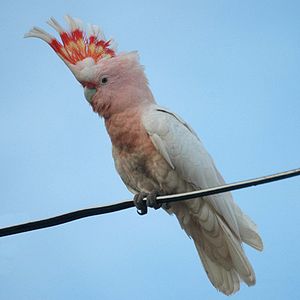
A Major Mitchell cockatoo, thought to be the oldest bird of its kind in captivity, has died at a US zoo.
Cacatua leadbeateri -SW Queensland-8.jpg
A Major Mitchell cockatoo
He had lived at Chicago's Brookfield Zoo since he was one year old.

Friday, 22 July 2016

Sex in the city: Peregrine falcons in Chicago don't cheat


Date: July 15, 2016
Source: Field Museum

Peregrine Falcons, in their normal habitat on isolated cliffs, mate for life. But some 25 pairs now nest on Chicago skyscrapers and bridges, and city living has them in much closer quarters than they used before humans dominated the landscape. A group of Field Museum and University of Illinois, Chicago scientists investigated whether typical breeding patterns hold true for these new city-dwellers and, in a paper published in PLOS ONE, confirmed that even in the big city, the birds that prey together, stay together.

"Peregrine Falcons that now live in the Chicago region are living in very different conditions than you'd normally see for these birds, so we wondered if the falcons' mating habits had changed too. They're in much closer proximity to each other than they'd be in a more rural environment, and we thought they might be more promiscuous with more potential mates nearby," explains co-author John Bates, Associate Curator of Birds at The Field Museum. "Each spring this population also has migratory Peregrines passing through on their way to all parts of Canada, so we didn't know what we were going to find, but it turns out that almost all of the mated pairs in the city remain monogamous through the years."

Peregrine Falcons nearly went extinct in the US in the 1960s due to thinning of their eggshells caused by the pesticide DDT. However, historic egg collections at the Field and other museums provided evidence for the harm caused by DDT, and it was banned. In the decades since, reintroduction efforts have enabled Peregrine Falcons to make a comeback in the Midwest, with populations thriving in urban areas in twelve states. Ninety percent of the breeding pairs in the Midwest nest on buildings and bridges in the Chicago area.

Friday, 25 March 2016

Invasive pest lures rare woodpecker to western Chicago suburbs

The pileated woodpecker, a crow-sized black bird with white stripes and a flaming red crest rarely seen in northeastern Illinois, is returning to the western Chicago suburbs with help from an unlikely source: the emerald ash borer.


The pileated woodpecker, a crow-sized black bird with white stripes and a flaming red crest, is returning to the western Chicago suburbs with help from an unlikely source: the emerald ash borer.

"Spotting a pileated in DuPage County is 'a big deal,'" wrote John Cebula, outreach coordinator for the DuPage Birding Club, in an email to theNaperville Sun. "That said, the species has been seen and heard fairly regularly on the east side of the Morton Arboretum in Lisle for the past month or so."

At the Forest Preserve District of DuPage County, ecologist Brian Kraskiewicz has reported recent pileated woodpecker sightings near Naperville and other spots around the county.

"A few lucky folks have recently observed the elusive pileated woodpecker in woodlands at Danada and St. James Farm" forest preserves, Kraskiewicz said. The bird also was spotted in Blackwell, Waterfall Glen, Wood Ridge and West DuPage Woods forest preserves.

Tuesday, 19 May 2015

Hundreds of birders flocked to Chicago's Montrose Harbor over the weekend in hopes of catching a glimpse of a species so rare that it nearly went extinct.

The Kirtland's warbler has been on the federal endangered species list since 1967, was once known to nest only in a small area of Michigan and has been seen in Illinois just a few times in the past two decades.

Kim Ainis, of Chicago, learned of the sighting Saturday through the Illinois Birders Exchanging Thoughts email listserv. When she saw the bird was still reported to be present Sunday at the harbor's Magic Hedge, she grabbed her binoculars and headed out.

Monday, 23 February 2015

Bird watchers, firefighters rescue unusual duck trapped in Fox River

A group of volunteers and firefighters helped rescue a duck trapped in fishing line in the Fox River over the weekend.

The Harlequin duck, believed to be a juvenile male, was pulled out of the water early morning on Jan. 31 and brought to a local rehabilitation center.

Annette Prince, director of the Chicago Bird Collision Monitors, said bird watchers who saw the duck struggling in the water contacted her group for assistance. Prince said people also had reached out to her group weeks earlier because they saw the duck apparently suffering from a leg injury but could not get to him to offer aid.

"Because they can fly, they're not reachable," Prince said. "His wings were fully functioning, so he was able to get to food sources."

Saturday, 19 July 2014

Family Says it Wasn't Notified of Contagious Parakeets

PetSmart removes parakeets from all stores due to bacterial disease

| Thursday, Jul 10, 2014 | Updated 6:29 PM CDT

PetSmart removes parakeets from all stores due to bacterial disease. NBC 5's Natalie Martinez reports.

PetSmart is alerting its customers about a bacterial disease found in parakeets at its stores that can be transmitted to humans, but one suburban Chicago family says their warning came too late.

The store has confirmed several cases of psittacosis, also known as parrot flu. When the bacterial infection is transferred to humans -- in some cases through the bird's droppings -- victims may develop cold or flu-like symptoms similar to a respiratory illness usually within one to two weeks after exposure to an infected bird.

The retailer says the infected birds have been traced to a single supplier and are asking anyone who purchased a parakeet from one of their stores between March 12 and May 20 to check their bird for illness.

The birds have been pulled from more than 500 of the retailer's stores.

New Lenox resident Wendi O'Brien bought a parakeet at an Orland Hills PetSmart in April. She learned about the sick birds after visiting the store to buy another on Tuesday night, and went she got home, her daughter discovered their pet was dead.

"The parakeet was chirping before we left. We had dinner at grandma's and we got home 9 o'clock and she started crying and brought the bird," O'Brien said.

O'Brien is upset because she says the store didn't notify them about the problem with the parakeets, and her bird had been flying around the house and exposed to elderly people and children at a birthday and graduation party.


Sunday, 28 October 2012

This Bird Migrated Into a Skyscraper

One overwhelming early morning, Flint Creek Wildlife treated 129 birds that had been gingerly collected off the sidewalks of downtown Chicago. It was fall migration season, and songbirds of all species were at it again, flying south for the winter and – many of them – along the way bumping into the city’s famously picturesque skyline.

Nature is full of jaw-dropping examples of wildlife learning to adapt to the city (you’ve heard ofbirds that sing over car horns and coyotes that comprehend traffic). But this is not one of them. Chicago, like Toronto, happens to have grown up beneath one of the four major North American migratory flyways that birds follow up and down the continent each spring and fall. And a migratory flyway is too big a thing in nature to mold itself around our metropolises.
"The first year was this emotional rollercoaster."

That means that most nights about this time of year, birds collect on the ground in Chicago, about half of them still living, half of them not. The only reason you rarely see one is because groups like Flint Creek Wildlife Rehabilitation make a point of getting there first.

"It’s a busy, bustling city, right?" says Dawn Keller, who founded Flint Creek eight years ago. "When people are walking from the train station to work they’re not necessarily paying attention to a little 8-gram bird that’s sitting on the sidewalk." This is why volunteers go out before dawn, before the city wakes up. Plus there are other problems that come with daylight. "I remember one time coming around a corner and having something catch my peripheral vision," Keller continues. "It was this little bird flapping as this gull was trying to swallow it whole."

 This Bird Migrated Into a Skyscraper

Friday, 12 October 2012

Rare Burrowing Owl Spotted in Chicago


The last time a Burrowing Owl—a bird typically found on the Great Plains and western deserts—showed up on the Chicago lakefront was in October 2008, and things did not end well for it. After being seen by birders throughout the morning, it eventually fell prey to an opportunistic Cooper’s Hawk.

Were birders responsible for its untimely death by making it fly too many times? This is a debate that still resonates in the birding community, so when Jerry Goldner and I independently discovered a Burrowing Owl this past Saturday along the lakefront, we had reservations about announcing it to the wider birding community.

Owls are nocturnal birds that are not accustomed to flying around during the day, and Burrowing Owls tend to spend the day perched on the ground hidden in grass or hiding in a burrow. Along the lakefront, this means it would probably spend its time trying to hide in the grasses in the beach, where it would be susceptible to being flushed by over-eager birders wanting to add it to their lists.

With many birds of prey flying around, we wanted to ensure that the bird was not disturbed while still allowing as many birders and passersby to enjoy the beautiful little owl.