As regular CFZ-watchers will know, for some time Corinna has been doing a column for Animals & Men and a regular segment on On The Track... particularly about out-of-place birds and rare vagrants. There seem to be more and more bird stories from all over the world hitting the news these days so, to make room for them all - and to give them all equal and worthy coverage - she has set up this new blog to cover all things feathery and Fortean.
Showing posts with label critically endangered bird. Show all posts

Wednesday, 20 February 2019

Conservation efforts intensify for WA’s rarest bird


Western ground parrots are critically endangered with under 150 existing in the wild
Captive program aims to determine feasibility of breeding an insurance population
Efforts are continuing to protect the western ground parrot, following a bushfire that burnt through some of the critically endangered birds’ habitat this month.
Lightning strikes on January 13 caused a bushfire in Cape Arid National Park on the south coast, which burnt 6,300 hectares. Western ground parrots only exist in the wild in Cape Arid National Park and the adjacent Nuytsland Nature Reserve.
In spring 2018, five parrots were caught in Cape Arid National Park – fitted with GPS collars – and returned to the wild so their movements could be studied as part of a recovery program led by the Department of Biodiversity, Conservation and Attractions (DBCA).
A ground search by DBCA last week located one of these five birds alive, and signals from two other birds were detected from the air. A ground search this week will establish if they also survived the fire. One location where birds were found in the spring season was burnt in the fire.

Wednesday, 26 September 2018

Three critically endangered hen harriers disappear in ‘suspicious circumstances’, says RSPB


Birds of prey 'vanish without a trace' within months of hatching, raising suspicions of illegal killing
Three critically-endangered birds of prey have disappeared from the British countryside “in suspicious circumstances”, raising fears they have been illegally killed.
The young hen harriers all “vanished without a trace” months after hatching, said the RSPB, which had tagged the birds with satellite trackers as part of a conservation programme.
Police are investigating the birds’ presumed deaths in Northumberland, the Peak District and North Wales.
“While we don’t yet know what has happened to these three birds, we do know that the main factor reducing the hen harrier population in the UK is the illegal killing of birds associated with the intensive management of grouse moors,” said Cathleen Thomas, project manager of the RSPB’s Hen Harrier Life project.
She said tags attached to each raptor had “inexplicably stopped” working. The devices typically continue to send details of their location if a bird dies of natural causes.
Hen harriers are one of the UK’s rarest birds of prey, with only nine successful nests recorded in England this year despite sufficient habitat for 300 breeding pairs.
Illegal persecution linked to moorland grouse shooting is thought to be principally to blame for their low numbers.
Two of the three birds that recently vanished were last known to have been over land that was managed for driven grouse shooting.
A young female harrier known as Hilma was recorded at moorland near Wooler, Northumberland, on 8 August, before going missing.
Another female, Octovia, vanished in the Peak District weeks later. She had hatched alongside three other chicks from a nest in the National Trust’s High Peak Moors in June, the first time the species had bred in the area for four years.


Monday, 1 February 2016

New Zealand Fairy Tern – critically endangered tiny tern faces new threat

By Karen Baird, Tue, 26/01/2016 - 02:22

Around half of the ten or so New Zealand Fairy Tern pairs remaining in the world breed at the beautiful Northland harbour of Mangawhai. They nest on the enormous sandspit where the Department of Conservation and NZ Fairy Tern Trust maintain a trapping programme for predators and the nests are closely monitored during the breeding season.  However in recent years the so-called Mangawhai Harbour Restoration Society (MHRS) have decided they want a mangrove-free harbour and applied to the planning authorities to allow removal of mangroves. In 2012 the Environment Court allowed for some removal in the middle harbour which was carried out this past winter. Conservationists have been concerned that removal of mangroves would deplete one of their major food resources, the gobies which live and feed amongst the mangrove pneumatophores. A foraging study was carried out by Karen Baird from the New Zealand BirdLife partner, Forest & Bird in collaboration with other scientists and published in Bird Conservation International (Ismar et al, 2014: Foraging Ecology and Choice of Feeding Habitat of the New Zealand Fairy Tern Sternula nereis davisae). The study showed that NZ Fairy Terns feed their chicks on these mangrove inhabiting gobies, preying on them when they move out of the mangroves at lower tide levels and into channels and pools on the tidal flats.  

MHRS have now unveiled plans for a ‘stage two’, to remove more mangroves. This is despite a ruling already by the Environment Court that the area they’ve targeted should remain. There is increasing pressure in northern New Zealand from Tauranga northwards for councils to relax planning rules around mangroves which have previously enjoyed reasonable protection due to their high ecological values.  

Mangroves are continually the target of prejudice, considerable misunderstanding and what amounts to a concerted campaign often based on misinformation.  These negative views on mangroves include that they are: an introduced ‘pest’ plant which is taking over our northern harbours, limiting people from enjoying open space for speed boats and jet skis;  obstacles to marina developments and reclamations, and are seen by developers as reducing the attractiveness of the coastal properties they hope to sell.

Mangroves are native to New Zealand. Their ecological value as nurseries for marine life is well known, they are home to threatened bird species such as the Australasian Bittern and Banded Rail, and act as natural buffers protecting shorelines from erosion.


Thursday, 19 March 2015

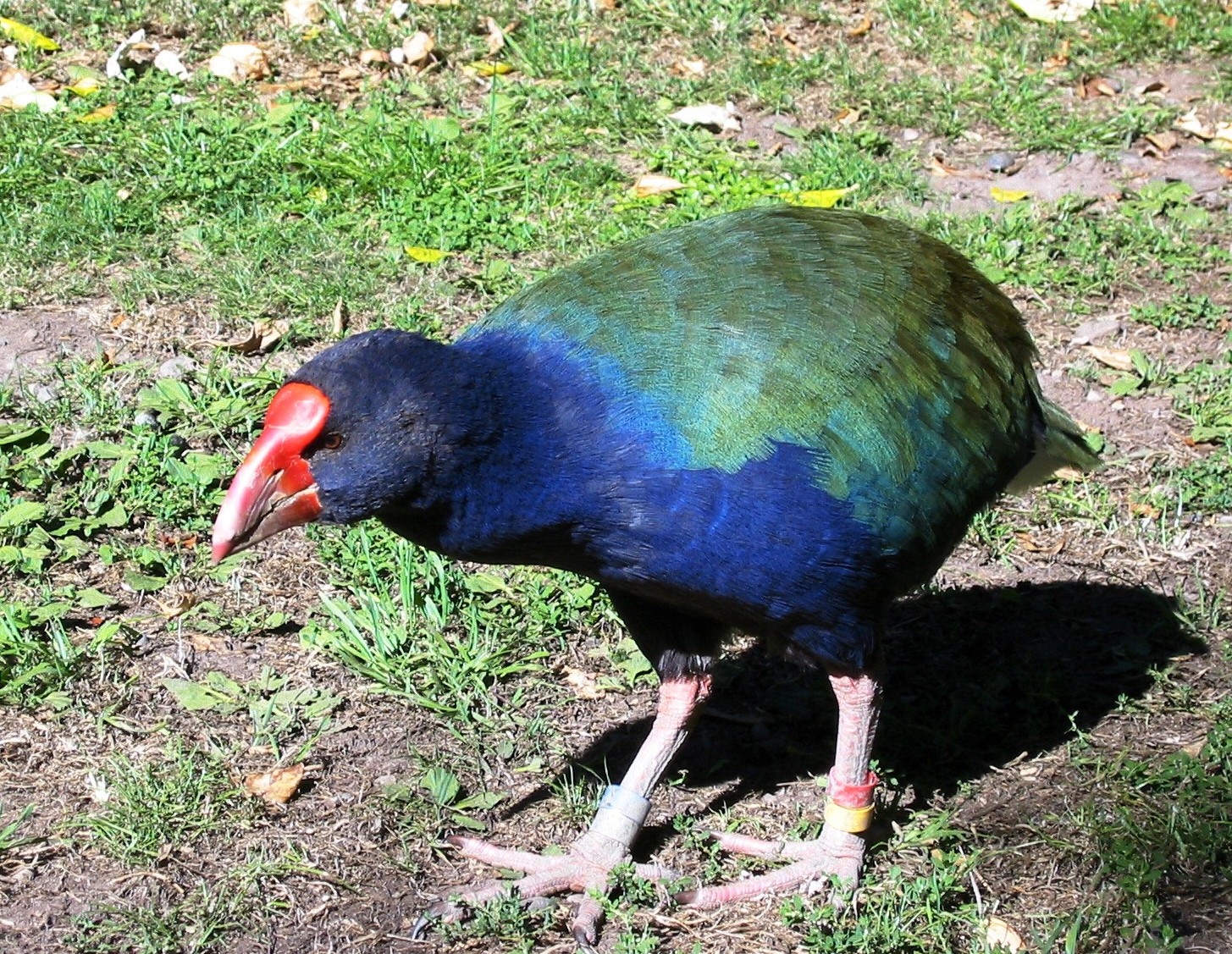
Taupō golf course becomes luxury retirement home for takahe

Thursday, 19 March 2015, 9:59 am

Taupō golf course becomes luxury retirement home for rare takahē

Critically endangered takahē have a new retirement home in Wairakei Golf + Sanctuary thanks to work undertaken by its bird-loving owner, Gary Lane, to secure the site from predators. The Department of Conservation (DOC) will deliver takahē pair, Grant and Flotsom, to the sanctuary near Taupō just after midday today(19 March 2015).

Through its 10-year partnership with Mitre 10 DOC has made significant progress in its Takahē Recovery Programme. With 40 chicks produced this year, the department has seen its best captive breeding season by far.

“This year’s incredibly successful breeding season has meant that we are under more pressure than ever to find safe homes for takahē away from the jaws of introduced predators, particularly stoats,” says DOC Takahē Ranger Phil Marsh.

Wednesday, 4 March 2015

Incredibly rare bird sighted

One of the world’s rarest birds has been sighted for the first time in almost four decades.

An ornithological search-team has caught a glimpse of the Critically Endangered Zapata Rail Cyanolimnas cerverai, one of the world’s most threatened waterbirds.

Faded museum specimen of short-tailed dumpy bird with brown upperparts, grey underparts, red eyes, bill and legs
Wikipedia
The bird was sighted at the Zapata Swamp in south-west Cuba, the location which gives the bird its name.
Fewer than 400 individual Zapata Rails are estimated to exist.

Island rails, often poor fliers, are vulnerable to predators and habitat destruction, and 15 species have become extinct since the 17th Century.

Tuesday, 10 February 2015

Technology solves disappearance mystery of one of Africa’s famous birds

The mystery of the gradual disappearance of the Bearded Vulture, one of Africa's most famous birds, has been solved using the technology of satellite tracking.

Once widespread throughout much of Southern Africa, the Bearded Vulture is now critically endangered, with a decline in nesting sites of nearly 50 per cent since the 1960s.

The remaining population is now restricted to the Drakensberg mountains in Lesotho and South Africa. But even in these isolated mountains they continue to decline.

Satellite trackers attached to 18 Bearded Vultures have confirmed conservationists' worst fears: humans are largely to blame with collisions with power lines and poisoning being the two major vulture hazards that killed half of the birds in the satellite tracking survey.

These are key findings contained in two new research projects published this month. The studies paint the most detailed picture to date of the challenges facing the Bearded Vulture, also known as the 'bone breaker' due to its habit of dropping bones from a height to feed from the marrow inside.

Thursday, 21 November 2013

A hand-reared sandpiper travels 8,000km

November 2013; A rare hand-reared spoon-billed sandpiper has been spotted for the first time in the wild, more than 8,000km from where it was released in Russia.

Twenty-five of the critically endangered birds have been raised over two years by an Anglo-Russia conservation team on the Russian tundra, before being released to join their wild-born counterparts in migrating to South-East Asia. However until now it was unknown whether any would be spotted until they return to Russia to breed aged two-years-old, so the news one has been seen in Thailand, on the coast near Bangkok, and another in southern China was welcomed.

Tuesday, 8 October 2013

China’s rarest seabird benefits from colony restoration


October 2013. Until this year, there were only two known breeding colonies of the Critically Endangered Chinese Crested Tern: the Mazu Islands off the coast of Fujian, and the Wuzhishan Islands off Zhejiang. However, this summer an innovative tern colony restoration project has apparently established another.


Earlier this year, a small island called Tiedun Dao in the Jiushan Islands - an archipelago where Chinese Crested Terns used to breed - was chosen for colony restoration. The restoration team expected it would take some years before there was any hope of attracting the birds back. Their plan was to use decoys and playback tern calls to initially attract Great Crested Terns to Tiedun Dao. It was hoped that the Great Crested Terns would initially colonise the island, their numbers would then gradually grow, and that Chinese Crested Terns, which have always been found nesting within large colonies of Great Crested Terns, might eventually follow too.

Immediate success
Yet by late September, and at the first attempt, a substantial new colony of Great Crested Terns had arrived on Tiedun Dao, raised hundreds of young and, among them, at least one Chinese Crested Tern chick also successfully fledged.

Thirty year study of Europe's Bonelli's eagle reveals endangered populations and critical links

Catalan eagles are Critically Endangered
October 2013. New research into Western Europe Bonelli's Eagle populations between 1980 and 2009 has found that the population in North Spain is at greatest risk.

The study, based long-term monitoring of Bonelli's Eagle populations in the Iberian Peninsula and France, revealed demographic relationships among different populations and provided an insight into population dynamics in Western Europe, the area where species is most endangered.

Bonelli's Eagle (Aquila fasciata) is one of the most typical -and most endangered - raptors of the Mediterranean region. The Conservation Biology Group of the University of Barcelona (UB) has been a leading centre of research into this species and in looking for solutions to improve its conservation Since 1980,.

Bonelli's Eagle: northern and southern edges
Joan Real, professor from the Department of Animal Biology and head of the Conservation Biology Group at UB, explains that "Bonelli's Eagle is not widespread in Europe. Its range extends to southern France and the most southern populations are in Portugal and Andalusia". "We have been performing an annual analysis of Bonelli's Eagle populations in Catalonia for thirty years. This work, together with other analyses carried out by European research groups, has covered the whole eagle population for the first time."

The research reveals that eagle populations located hundreds of kilometres apart may be essential to each other's survival. "This fact is not always taken into account; if it is not considered, unsuitable conservation actions must be taken which might affect species viability in a future", remarked the Real.

Friday, 13 September 2013

World’s rarest wading bird gets boost

Huge boost for New Zealand's critically endangered kakī
September 2013. The wild population of critically endangered kakī/black stilts received a much-needed boost when the NZ Department of Conservation (DOC) released 91 young birds in the Mackenzie Basin.

DOC Biodiversity Manager Dean Nelson said 65 of the birds had been raised at the Captive Breeding Centre run by DOC staff in Twizel. The remaining 26 birds had been raised at the Isaacs Wildlife Trust aviaries in Christchurch and then transported to the release site.

Set free in two releases near Lakes Tekapo and Pukaki, it was hoped that the nine month old birds would eventually disperse throughout the whole Mackenzie Basin.

Record breeding season
"These releases are a result of last summer's record breeding season, with 171 eggs brought to the Captive Breeding Centre. Not all the eggs hatched, but the 91 birds that have made it this far are going to massively increase the wild population. We released 31 juvenile birds earlier in the year because the breeding season was so successful," said Mr Nelson.

23 wild pairs
Another record was the number of adult kakī breeding pairs located last summer which now stands at 23 productive pairs in the wild.

Wednesday, 21 August 2013

New endangered giant ibis found in Cambodia

PHNOM PENH (AFP) – Jubilant conservationists expressed hope Tuesday for the survival of the critically-endangered giant ibis after a nest of the bird species was discovered in a previously unknown habitat in northeastern Cambodia.

Habitat loss and poaching has pushed the giant ibis to the edge of extinction, with around only 345 of the reclusive creatures -- distinctive for their bald heads and long beaks -- left anywhere in the world, 90 percent of them in Cambodia.

A farmer in Cambodia's Stung Treng province discovered the nesting site a few kilometres inland in the biodiverse Mekong Flooded Forest area last month, the World Wildlife Fund (WWF) said in a statement.

An inspection team from the WWF later saw an adult bird sitting on the nest with two eggs.

"The discovery of the giant ibis nest on the Mekong is extremely significant because it provides hope for the species' survival," said Sok Ko, Forestry Administration official and Bird Nest Project officer with WWF.