As regular CFZ-watchers will know, for some time Corinna has been doing a column for Animals & Men and a regular segment on On The Track... particularly about out-of-place birds and rare vagrants. There seem to be more and more bird stories from all over the world hitting the news these days so, to make room for them all - and to give them all equal and worthy coverage - she has set up this new blog to cover all things feathery and Fortean.
Showing posts with label Baird's sparrow. Show all posts

Sunday, 10 July 2016

3 Manitoba birds listed as species at risk

Baird's sparrow, horned grebe, buff-breasted now 'species of special concern' under Species at Risk Act

By Bryce Hoye, CBC News Posted: Jul 06, 2016 5:00 AM CT Last Updated: Jul 06, 2016 5:01 AM CT

The deteriorating state of three Manitoba bird species has caught the federal government's attention, and it comes as a welcome change for some in the wildlife world who have been waiting for the additions for several years.

"We were hoping that it was inevitable that they would pass," said biologist Christian Artuso with Bird Studies Canada. "It's just that under the previous government these things seemed to get stalled out."

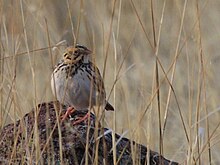
The Baird's sparrow, the horned grebe and the buff-breasted sandpiper were listed as species of special concern in June under the Species at Risk Act (SARA). Eight other wildlife species in other provinces were also added, while a handful of others that were already on the list received new designations.

The additions stem from recommendations made by the Committee on the Status of Endangered Wildlife in Canada (COSEWIC) over the past few years. The organization is made up of a group of wildlife experts who monitor species that are facing challenges staying alive in Canada.

COSEWIC makes these kinds of recommendations regularly. In an ideal world, Ottawa listens to those suggestions, which triggers the need for the Canadian Wildlife Service to come up with one-to-three year management strategies, depending on the status of the species, CWS species at risk biologist Ron Bazin said.

That hasn't exactly happened as planned recently; recommendations piled up under the Harper government.

Tuesday, 14 June 2016

Changing weather patterns threaten grassland sparrows

Date: June 8, 2016
Source: Central Ornithology Publication Office

Two of North America's declining grassland songbirds may be particularly vulnerable to altered weather patterns caused by climate change, according to new research in The Condor: Ornithological Applications.

Extreme heat waves have been known to kill adult birds, and droughts can cause birds to abandon nests or skip breeding altogether. To learn what species might be at greatest risk, Jessica Gorzo of the University of Wisconsin-Madison and her colleagues analyzed more than four decades of bird survey data from the Dakotas, Montana, and Wyoming, looking for patterns linking grassland bird abundance to temperature and precipitation.

Of the 14 bird species the researchers focused on, 5 showed significant associations with weather trends, their populations appearing to increase or decrease depending on whether a year had been particularly warm, cold, wet, or dry. Two, the closely related Grasshopper and Baird's sparrows, are already declining enough to concern conservationists, and this study shows that they may be particularly vulnerable to the warmer, drier conditions that are likely becoming more frequent due to climate change.

"With climate change, there are bound to be winners and losers," according to Gorzo. "Of the species we considered, Grasshopper and Baird's Sparrows may be imminently at risk. These species responded similarly to our weather metrics, which made sense in light of their shared life history traits. Knowing that these species need tall, lush grassland vegetation, increasingly dry conditions could inhibit the growth they need to be successful."

Tuesday, 13 May 2014

Study: Climate, land-use changes pushing breeding home of Baird's sparrow further into Canada

Dirk Lammers, The Associated Press
Sun, 11 May 2014 14:29:00 CST

SIOUX FALLS, S.D. - The Baird's sparrow, a small songbird that spends its summers in a mostly Canadian swath that dips into grassland prairies in North Dakota, Montana and far northern South Dakota, could be opting for sole Canadian residency in the coming decades.
Climate change and a continuing conversion of grassland into corn and soybean fields will likely push the species' breeding grounds further north of the border by 2025, according to research from the U.S. Geological Survey's Earth Resources Observation and Science (EROS) Center in South Dakota.

Though the research submitted for journal review looked at 50 bird species, the displacement of the Baird's sparrow stands out. That could affect tourism in North Dakota, which draws in avid bird watchers looking to check the Baird's sparrow off their must-see lists.

The bird prefers short grassland, but its summer breeding spots can change with variations in precipitation, said Terry Sohl, a research physical scientist at the centre who is leading the effort.

"They're a little bit nomadic ... and it tends to be tied to moisture. They don't like it too dry, they don't like it too moist," Sohl said.