As regular CFZ-watchers will know, for some time Corinna has been doing a column for Animals & Men and a regular segment on On The Track... particularly about out-of-place birds and rare vagrants. There seem to be more and more bird stories from all over the world hitting the news these days so, to make room for them all - and to give them all equal and worthy coverage - she has set up this new blog to cover all things feathery and Fortean.
Showing posts with label kiwi. Show all posts

Monday, 2 December 2019

NZ hatchery welcomes 2000th kiwi chick


14 November 2019

After two days of exhausting kicking and pecking through egg shell, the 2000th chick at New Zealand's National Kiwi Hatchery Aotearoa has been born.

And it already has a huge fan base, after its birth was livestreamed around the world.

Smitten viewers watched on as the egg started to jiggle. The chick then made a tiny hole in the air-filled sac inside the egg before poking the pink tip of its beak through the shell and breathing clear air for the first time.

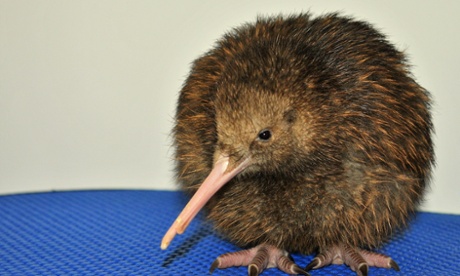
The fluffy chick, yet to be named, weighs a healthy 342.8 grams and is already using its long beak to find stability as it explores its new environment.

Its gender will be unknown for another month until DNA tests are completed.

Kiwi mums lay up to 100 eggs in a lifetime, yet New Zealand's wild kiwi population is declining by three per cent every year. Of every 100 kiwi eggs laid in burrows in the forest, only five kiwi chicks will make it to adulthood.

Without ongoing support, experts estimate the brown kiwi will be extinct in the wild within two generations.

The National Kiwi Hatchery Aotearoa at Rainbow Springs Nature Park in Rotorua is the leading kiwi hatchery in the world, incubating and hatching over 130 kiwi chicks each year - about 75 per cent of all kiwi incubated and hatched outside their natural setting in New Zealand.

Spokesperson Helen McCormick said she expected the new celebrity to draw thousands of fans to the hatchery.

"This is a wonderful time to visit the hatchery as hatching season is in full swing, visitors can join a guided tour and experience first-hand where the kiwi are incubated, the hatching process and hopefully see some newly hatched chicks," she said.

Kiwi are unusual birds in many ways. They can't fly, they sleep standing up, and they can run as fast as a human. They also have cool body temperatures that resemble mammals more than birds, have whiskers like cats, and big ears with keen hearing.

Friday, 2 November 2018

The fight for our national bird - and why it matters

2 Nov, 2018 5:00am

Looking at the plight of kiwi through the eyes of children, the generation who could grow up to see the last kiwi disappear from New Zealand. / Kiwisforkiwi

Science Reporter, NZ Herald

It's been two years since the Department of Conservation launched an ambitious plan to save our national bird. In the second of a two-part series, science reporter Jamie Morton looks at the strides made so far.

Before 2003, the rowi didn't exist – at least to us.

While set apart by its soft, slightly greyish plumage and occasional white facial feathers, the bird was long thought to have been a variety of the brown kiwi until researchers realised it was a distinct species.

Had this little bird not managed to hang on, our rarest kiwi species might have vanished without ever having been documented.

When the rowi recovery project kicked off in 2006, there were fewer than 200 birds.

Today, it's estimated about 600 exist, most within the Okarito Kiwi Sanctuary near Franz Josef.

By 2030, the Department of Conservation wants to push that figure out to nearly 900, under its 10-year draft plan to save all kiwi.

By turning an annual 2 per cent decline into a 2 per cent increase, DoC aspired to lift the total kiwi population from 70,000 to 100,000, all within just over a decade.

Backed by a new $3.6 million research programme, DoC also sought to restore the national distribution of all species of kiwi – particularly those closest to the brink, such as rowi and Haast tokoeka - and maintain their genetic diversity.

It was running in tandem with a collaborative effort overseen by charity Kiwis for Kiwi, which aimed to boost the number of kiwi chicks in predator-free creches.


Wednesday, 10 October 2018

Kiwi birds died from neglect at Cape Sanctuary in Hawke's Bay


1 Oct, 2018 8:41am
Hawkes Bay Today
Complaints to the Department of Conservation (DOC) have accused the Cape Sanctuary in Hawke's Bay of neglect.
It comes after Radio New Zealand revealed the complaints included concerns about high turnover of staff, the death of two kaka in cat traps in October 2017 and the death of nine Little Spotted kiwi in 2017.
Cape Sanctuary is situated on Cape Kidnappers, on three properties owned by American billionaire Julian Robertson, Andy Lowe and the Hansen family.
Music legend Sir Sir Paul McCartney made headlines last year at the sanctuary when he handled one of the kiwi, named Bubbalicious, who was reared at sanctuary.
Sir Paul's subsequent video was viewed more than 450,000 times and received more than 32,000 reactions.
The bird was one of nearly 200 to have been taken as an egg from Maungataniwha Native Forest as part of Forest Lifeforce Restoration Trust's (FLRT) Maungataniwha Kiwi Project which comes under the BNZ Operation Nest Egg initiative.
The sanctuary is the country's largest privately-owned and funded wildlife restoration project.


Wednesday, 22 August 2018

Large number of kiwi deaths likely going undetected, experts say


MALCOLM PULLMAN


Kiwi are dying in some of the most heavily-monitored areas of New Zealand, sparking concern for the rare bird elsewhere.  

Data on the cause of kiwi deaths in Northland for the past ten years, which was released under the Official Information Act (OIA), has revealed they are being attacked by dogs and killed by cars, while a large number are dying for reasons unknown. 

But the data is for tracked kiwi only, and the Department of Conservation say the deaths are just a fraction of actual moralities.

At least five kiwi were mauled to death by dogs in the Moehau Kiwi Sanctuary area, in the Coromandel, since Easter.

Last week, Moehau Environment Group chairwoman Lettecia Williams said it was the worst pile-up of dead kiwi the sanctuary has seen since protection was first put in place about 2000. 

The area experienced a noticeable decline in kiwi, which would suggest the eight deaths were just a fraction of other unreported deaths.


Monday, 11 June 2018

Save the kiwi: New Zealand rallies to protect its iconic bird

Experts are battling to save the remaining 68,000 kiwis in a country once home to millions

Eleanor Ainge Roy on Kapiti Island

Fri 1 Jun 2018 09.17 BSTLast modified on Fri 1 Jun 2018 22.00 BST

Below a mottled sky, a lone sea craft cuts across the water towards Kapiti Island. It’s been forsaken by people and gifted to the rare and vulnerable birds of New Zealand to forage undisturbed. Kiwi stepping carefully up the beach at midnight. Kokako waking no one with their shrill calls. And hihi flitting freely through the dense native bush. With no predators allowed, the birds are confident and thriving.

“New Zealanders are a shy and reclusive bunch, the kiwi is a bird we identify with,” says Paul O’Shea, an administrator for Kiwis for Kiwi, a conservation group set up to save the bird from extinction.

“It’s as vital to protect the kiwi in New Zealand as it is to protect the orangutan in Borneo, the sumatran tiger in Indonesia, and the panda in China. Losing these species from the planet might not affect your day-to-day life, but it is a loss to the human experience.”


Friday, 6 October 2017

Suggestion earthbound kiwi should make way for 'more elegant' shearwater pecked to pieces


10 Sep, 2017 5:32pm
By: Andrea Jutson
Kiwi may be earthbound, small and funny-looking, but recent arguments that they should move over on their pedestal for New Zealand's "more elegant" seabirds have been pecked to pieces.
Northern New Zealand Seabird Trust co-founder Chris Gaskin raised eyebrows by suggesting seabirds such as the Buller's shearwater (rako) were a better fit as a national symbol.
In front of an audience of seabird enthusiasts in Wellington yesterday, he argued that as great travellers, Kiwis - the people - were better represented by a long-distance flier like the shearwater or black petrel than a stubby-winged bird.
"These birds travel huge distances," Gaskin said.
"But seabirds have gone under the radar, and that's a real concern for us."
While he said his suggestion to that a shearwater or petrel should replace the kiwi was light-hearted, he really liked the New Zealand Navy's idea.
"Our Orions that go on fishing and search and rescue patrols actually have two symbols - the kiwi, and on the tail of the plane, a seabird that looks like a petrel."

Monday, 25 September 2017

Michaela Strachan and Chris Packham reunite to save the kiwi as they warn 'children risk never seeing the endangered bird'


The presenting duo are back on screen for The Kiwi Wild Show to help raise awareness of the plight of the kiwi

BYLAURA CONNOR
08:54, 21 SEP 2017

Former Really Wild Show presenters Michaela Strachan and Chris Packham have reunited for a special project after over a decade.

The duo are raising awareness to help save the Kiwi bird, which is flightless and has a distinctive beak.

New Zealand's national symbol is endangered, meaning most human Kiwis born today will never see one in real life.

New statistics revealed 99% of the population has declined in the space of just 80 years.
The hugely popular CBBC series last aired way back in 2006, but the pair are back together again for The Kiwi Wild Show.

Michaela and Chris have joined forces with New Zealand-based charity Kiwis for Kiwi for the one-off special.


Thursday, 7 April 2016

Paignton Zoo displays Manu, the 'UK's only' kiwi bird

The UK's only flightless kiwi bird has been put on show to the public at a zoo in Devon.

The endangered bird, named Manu, has come to Paignton Zoo from Frankfurt Zoo in Germany.

Before the bird arrived local metal detectors were used to check the new enclosure for "potentially dangerous bits of metal", the zoo said.

The bird, which lives in the wild in New Zealand and probes the soil for food, is the country's national symbol.
'Lays largest egg'

Jo Gregson, curator of birds. said: "Kiwis need special care and attention and the substrate is important because they probe down into the ground.

"You have to sieve sand and check dry leaves before you put them in."

Tuesday, 24 November 2015

Three kiwi killed by hunters

By Imran Ali
10:00 AM Wednesday Nov 18, 20153 comments

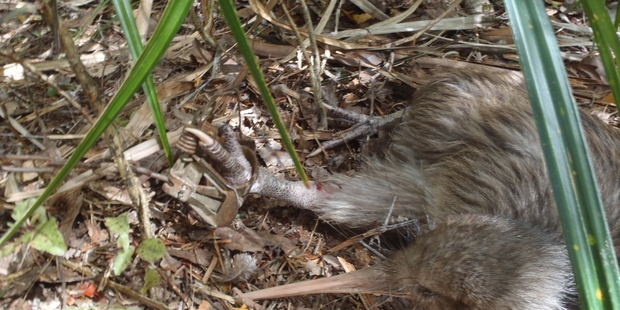
The ignorance of hunters using leg hold or gin traps that are laid on the ground are unnecessarily killing kiwis, a Northland bird expert has warned.

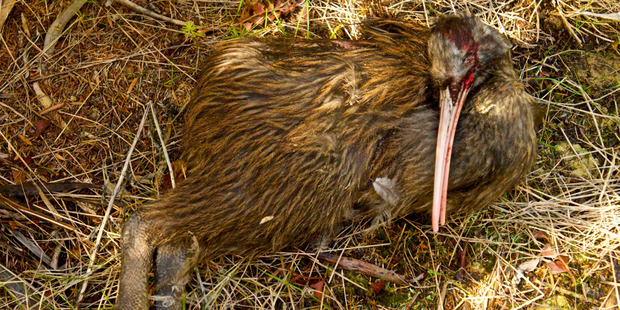
Northpower Native Bird Recovery Centre chairman Robert Webb this week received three seriously injured kiwis - two females and a male - which appeared to have been caught in traps that were not properly laid. All three had to be put down.

The 10 and 5-year-old females of breeding age suffered injuries to their leg and bill.

Mr Webb said the bird with a broken leg was brought by a landowner from Maromaku to the recovery centre on Maunu Rd over the weekend and the other female kiwi came from Parua Bay.

Another kiwi, a 10-day-old male, was found injured on the Mt Manaia walking track and brought in on Monday.

Checks revealed he had a compound fracture on his left leg, possible after it was caught in a trap.

Mr Webb said the bird could not be saved as infection had already set in the injured leg which would have damaged his kidney or liver.

"It's the worst part of our job to put down a bird which is a national icon due to human error. It's very hard to get the message through to people setting traps on the ground that it can kill a kiwi."

Tuesday, 27 October 2015

Quarry site to become bird haven

A Western Bay of Plenty quarry site is set to be transformed into a conservation sanctuary aimed at becoming home for more of New Zealand's native wildlife.

The Department of Conservation has reclaimed the 400 hectares of land at the top of No3 Rd, Te Puke, after permitting it out for quarry use in recent years.

It was now calling for public submissions on the proposal to change the land designation from a stewardship area to sanctuary area.

Partnerships ranger Mark Anderson said DoC hoped to bring the land back to an area of ecological integrity fit for habitat for New Zealand's native wildlife, flora and fauna.

Mr Anderson said the land bordered with a Western Bay catchment area already hosting kiwi. It was hoped that, by bringing the land into a lush conservation area, it would increase the living area for the endangered bird.


Thursday, 30 July 2015

Grim kiwi winter continues

By Peter de Graaf
9:30 AM Thursday Jul 30, 2015

Another kiwi has been killed by a dog as the national bird's grim winter in the Bay of Islands continues, with at least 12 victims of canines in the last month alone.

The latest death, of an adult male, occurred at Oromahoe, off State Highway 10 south of Kerikeri. The dog's owner was reluctant to hand the dead bird to the Department of Conservation (DoC) so delivered it to conservation group Bay Bush Action instead.

The Bay of Islands is a stronghold for kiwi but many have been killed by dogs this month. Seven mauled kiwi have been found in the Wharau Rd area, near Kerikeri - the total number killed is thought to be at least 10 - and at least five more in places such as Te Puna Inlet, Okaihau and Puketi Forest. One was killed on Golf View Rd in urban Kerikeri and one in Russell cemetery.The kiwi had been stripped of feathers and it had bite wounds to its head and neck.

Bay Bush Action trustee Brad Windust said the dog's owner handed over the kiwi killed at Oromahoe last week.

Thursday, 23 July 2015

Kiwi bird genome decodes growth of nocturnal animals

Last Updated: Thursday, July 23, 2015 - 11:11

London: In a first, the genetic code of the endangered Kiwi bird, identifying several sequence changes that give insights into the evolution of nocturnal animals has been discovered.


Researchers from University of Leipzig and the Max Planck Institute for Evolutionary Anthropology in Leipzig, Germany, found several genes in Kiwi involved in colour vision to be inactivated and the diversity of odorant receptors to be higher than in other birds.

It suggests an increased reliance on Kiwi's sense of smell rather than vision for foraging.

"It is very likely that the kiwi lost its colour vision since this was no longer needed for its new nocturnal lifestyle," said first study author Diana Le Duc from University of Leipzig.

"The kiwi's sense of smell - which was required for foraging in the dark of the night - became more acute and the repertoire of odorant receptors increased adapting to a wider diversity of smells," Le Duc added.

Kiwi, national symbol of New Zealand, gives insights into the evolution of nocturnal animals have a number of features that make them interesting for study.

They only have rudimentary wings, no tail and a very long beak with nostrils. They are mainly nocturnal with a low basal metabolic rate and the lowest body temperature among birds.

The team has now sequenced the genome of the brown kiwi (Apteryx mantelli). Their analysis show genetic changes that likely reflect adaptation to nocturnal life.

Monday, 1 December 2014

Rising kiwi numbers may mask inbreeding depression

A boom in the number of little spotted kiwi appears to be a conservation success story, but new research by a Victoria University of Wellington graduand shows that, in some populations, the rapid growth could be masking the potentially devastating impact of inbreeding.

Just over 100 years ago, the little spotted kiwi population experienced a bottleneck of just five birds. They were translocated to Kapiti Island where their descendants now number nearly 1,200. Subsequently, Kapiti Island birds were transferred to seven different predator-free locations, mostly offshore islands.

Helen Taylor, who graduates with a PhD in Ecology and Biodiversity in December, has studied the genetics of the two little spotted kiwi populations outside of Kapiti Island, that were founded with the least and most birds. One is on Long Island in the Marlborough Sounds (two founders; today around 50 birds) and the other in Wellington's Zealandia eco-sanctuary (40 founders; today around 120 birds).

Baby kiwi undergoes surgery to fix its crooked beak

Corrective surgery in New Zealand on the tip of the little kiwi’s bill means it will be able to lead a normal life

theguardian.com, Monday 1 December 2014 04.48 GMT

A baby kiwi has undergone two rounds of surgery to fix its crooked beak.

The 594-gram chick that is yet to be named was born in October with a misaligned bill.


Queenstown Kiwi Birdlife Park
It was a complicated birth, with the kiwi undergoing an assisted hatch after staff at Queenstown’s Kiwi Birdlife Park realised it wouldn’t be able to kick free of its shell because it had its foot caught over its head, similar to a breach birth for humans.

Once born, it became apparent the chick’s misaligned beak would hinder feeding and inhibit its ability to survive and grow.

Massey University in Palmerston North suggested fixing the beak with a new technique being developed by veterinary surgeons at its Wildbase hospital.

Sunday, 9 November 2014

Rarest Kiwi Species Gets Breeding Boost


By John R. Platt | November 5, 2014 

The views expressed are those of the author and are not necessarily those of Scientific American.

Fifty birds flew home last month. Now, 50 may not seem like much and flight might not sound all that unusual for birds, but we’re talking about the critically endangered rowi (Apteryx rowi), New Zealand’s scarcest kiwi species and one of the world’s rarest flightless birds.

Rowi have had a rough time in the wild. Invasive predators such as European stoats (Mustela erminea) and domesticated cats and dogs nearly wiped the species out in their sole habitat, the Ōkārito forest on New Zealand’s South Island. The remaining birds lay about 80 eggs a year, only 40 of which hatch. Of those 40, four manage to survive predators long enough to reach six months of age. On average, just two wild rowi make it to adulthood every year. After that they are usually safe, but a 5 percent survival rate is not a good start.

That’s where the New Zealand Department of Conservation (DOC) comes in. A few years ago the DOC started removing eggs from the wild, hatching them in a nearby nursery and then flying them hundreds of kilometers away to a secure facility where predators could not reach them. The point of the Operation Nest Egg program is less to hatch new birds than to let them grow up in safety until they are large enough to defend themselves. At about one kilogram, adult rowi are actually pretty tough and can easily counter predators with their sharp beaks and claws.

Sunday, 7 September 2014

Kiwi bird hatched after 78 days of incubation

The first week of spring has brought the first kiwi chick of the season.

Tuatahi, meaning first in Maori, hatched at Kiwi Encounter at Rainbow Springs in Rotorua, on Thursday.

Dad Para sat on the egg for 59 days in the Maungataniwha Forest in Hawkes Bay before the egg was lifted and delivered to the centre, where the team incubated it through to hatch, Kiwi Encounter husbandry manager Claire Travers said.

"After 78 days of incubation the chick was so keen to hatch that he/she kicked its hocks out of the rear end of the shell.

"Unlike other birds, kiwi chicks don't have an egg tooth to chip their way out of the egg, instead they rely on pushing their way out with their strong leg and neck muscles. So this chick needed a bit of assistance to hatch."

One of the keepers taped a pad over the hocks for the chick to push against, and after a few more pushes it hatched, weighing a healthy 375g, Ms Travers said.

There were 11 eggs in incubation at the centre that came from across the North Island, with more due over the next few days.

One of the eggs already in incubation was close to hatching, with the rest a week or so away from emerging, she said.

Friday, 20 June 2014

Kiwi falling victim to possum trappers

An adult female Northland brown kiwi that was caught in a leghold trap near Waipapa four weeks ago has been released back into its home territory by the land owner and Department of Conservation rangers after recuperating at the Native Bird Recovery Centre in Whangarei.
"This bird was lucky," Bay of Islands senior ranger Adrian Walker said.

"Most kiwi caught in traps have to be euthanased. We've had at least two other kiwi caught in leghold traps in the Mid North in the recent past, and that's two kiwi too many."

High prices for possum fur and access to cheap leghold traps had led to an increase in possum trappers, he added. Falling possum numbers was great news in terms of protecting native forests, but commonly-used leghold traps set on the ground in kiwi areas posed a significant risk to the birds.

"Thoughtless trapping such as this can undo many years of hard work done by many dedicated locals to protect kiwi," Mr Walker said.

Friday, 23 May 2014

Ancient DNA ends Australia's claim to kiwi origins

Date:
May 22, 2014

Source:
University of Adelaide

Summary:
Australia can no longer lay claim to the origins of the iconic New Zealand kiwi following new research showing the kiwi’s closest relative is not the emu as was previously thought. Instead, the diminutive kiwi is most closely related to the extinct Madagascan elephant bird -- a 2-3 meter tall, 275 kg giant. And surprisingly, the study concluded, both of these flightless birds once flew.


Sunday, 18 May 2014

Kiwi looking for mate killed by dog

Friday 09 May 2014 3:11p.m.


By 3 News online staff

A kiwi has been mauled to death by a dog near Wainuiomata, most likely while the bird was looking for a mate.

The Greater Wellington Regional Council is calling the death a tragedy, given Otautahi was of prime breeding age and could have fathered up to 20 chicks in his lifetime.

The bird was released into the Rimutaka Forest Park in July 2012 and was being monitored by volunteer trackers.

Rimutaka Forest Part Trust spokeswoman Melody McLaughlin believes if the dog had been on a leash, the kiwi would not have died.

"Kiwi are synonymous with what makes us New Zealanders, they are resilient birds provided we control introduced predators such as stoat and ferret and man’s best friend, our dogs," she says.


Monday, 27 January 2014

New Zealand's smallest kiwi bird egg will hatch in the next couple of weeks at Rotorua's Rainbow Springs.

25 January 2014 

Kiwi bird breeders are eagerly awaiting the hatching of what is believed to be New Zealand's smallest egg.

The egg, dubbed Mini, weighed just 217 grams when it arrived at Rotorua's Rainbow Springs Kiwi Wildlife Park - compared to the 442.1 grams its sibling weighed at the same time.

It is expected to hatch in about two weeks and staff are hoping its small size won't result in health problems.

Rainbow Springs says its next smallest egg was the prenatal home of McMurdo, who was born in 2012 and weighed 238.5 grams.