Showing posts with label grouse moors. Show all posts
Showing posts with label grouse moors. Show all posts
Wednesday, 31 July 2019
Birds risk wipeout if grouse moors unmanaged, landowners claim
Ending grouse moor management risks the decline or local extinction of ground-nesting birds, a study claims.
The Game & Wildlife Conservation Trust (GWCT) looked at the potential impact on threatened species such as the curlew, golden plover, lapwing, black grouse, hen harrier and merlin in southwest Scotland.
The organisation, which promotes shooting and other management as “an essential part of nature conservation”, found that the number of hen harriers on a keepered moor had increased but that they declined in areas without management.
Continued

Thursday, 4 July 2019
Scottish government urged to regulate grouse moors after golden eagles vanish
Call to
outlaw intensive grouse shooting after disappearance of two juvenile eagles
Severin
Carrell Scotland editor
Mon 1 Jul
2019 13.33 BST Last modified on Mon 1 Jul 2019 20.25 BST
Conservationists
have urged the Scottish government to regulate grouse moors after two golden
eagles disappeared within hours of each other on a shooting estate in
Perthshire.
The two
juvenile eagles were fitted with satellite tags which abruptly stopped sending
out signals on 18 April – the latest of a spate of cases where birds of prey
have disappeared or been found dead in the same area of Perthshire, known as
Strathbraan, near Dunkeld.
One of
the eagles was tagged last year by Andy Wightman, a Scottish Green party MSP
who is the golden eagle “species champion” in Scotland, as part
of a bird of prey conservation project led by the broadcaster Chris Packham and
Ruth Tingay, who blogs for Raptor Persecution UK.
Wightman
had named the bird Adam after the revered Scottish mountain ecologist Adam
Watson, who died
in January this year.
Wightman,
an expert on land reform, said the eagle’s disappearance had left him
distraught and he had written to Nicola Sturgeon, Scotland’s first minister,
asking her to outlaw intensive grouse shooting.
Wednesday, 12 June 2019
Hen harrier chicks to be reared in captivity to placate grouse moor owners
‘Brood
management’ trial criticised for failing to tackle persecution of bird of prey
Thu 6 Jun
2019 11.30 BSTLast modified on Thu 6 Jun 2019 13.46 BST
Hen
harrier chicks will be removed from their parents and reared in captivity this
summer in a controversial “brood management” scheme to placate grouse moor
owners.
Removing
young hen harriers from nests on grouse moors is designed to prevent
concentrations of the bird of prey on grouse shooting estates. Stopping hen
harriers from feeding on young grouse is designed to reduce the illegal killing
of the species, which is on the brink of extinction as a breeding bird in
England.
Last
summer was the
bird’s most successful breeding season for more than a decade with
34 chicks fledged from nine nests across northern England.
Natural
England, the government’s conservation watchdog, announced its brood
management scheme would begin this summer with “active” hen
harrier nests meeting the criteria for chick removal and landowners willing to
be part of the trial.
The
chicks would be raised in captivity and then released into suitable habitat
away from grouse moors. The hen harrier tends to nest in clusters and
proponents of the scheme argued that brood management provided reassurance to
grouse moor owners that concentrations of hen harriers would not build up on
their moors, predating grouse populations. This, it has been argued, would stop
gamekeepers and others illegally killing the bird.
Tony
Juniper, the chair of Natural
England, said: “Conservation and protection of the hen harrier is at
the heart of what we are doing in licensing this trial of brood management.
This decision takes forward but one element in a far broader recovery strategy
for the species.
“Natural
England is ready to take the next careful step, aware that the licensed
activity and the research will rightly come under close scrutiny from the
scientists on the advisory group, from ourselves as the licensing authority and
by those both supportive of and opposed to this trial.
“We, as
an organisation, must pursue all options for an important bird such as the hen
harrier, so that our children may enjoy this majestic species in the wild.”
Monday, 3 June 2019
In defence of British landowners (and the truth about grouse moors)
18 May
2019
9:00 AM
I was
surprised to read the article by Ben Macdonald in last
week’s Spectator urging Britain’s grouse moor owners to ‘rewild’
their estates. It argued that these Tory toffs had spent the past 100 years
‘destroying our natural heritage’, that the UK land under shoot management is
an ‘economic desert’ that is ‘destroying both jobs and wildlife’ and that the
‘acts of desecration’ involved in the creation of grouse moors is a ‘debt’ that
has ‘never been repaid’.
There was
a big clue that Macdonald might not know what he’s talking about early on in
the article. Berating the aristocracy for the ‘terrible mistake’ of
transforming their hunting estates into merciless charnel houses, he writes: ‘They
decided to turn red grouse into the equivalent of living clay pigeons — and
shoot them, without skill, in their thousands.’
Without
skill? Clearly, Macdonald has never tried to shoot one. They fly towards
you at up to 70 miles per hour, usually at head height, and rarely in a
straight line. Shooting one involves predicting where it’s going to be by the
time the shot reaches it, which varies according to its speed and angle of
approach. And given how quickly they are upon you, often in conditions of poor
visibility, your window of opportunity is rarely longer than a few seconds. Not
for nothing is the red grouse known as the ‘king’ of game birds.
Monday, 1 April 2019
Study suggesting widespread illegal killing of hen harriers on English grouse moors published
Research
published today in Nature Communications shows the likelihood of hen harriers
dying, or disappearing is ten times higher in areas covered by grouse moor
Published
19 March 2019
A new
study reveals that young hen harriers in England suffer abnormally high
mortality compared to populations in Orkney and mainland Scotland and the study
provides compelling evidence that the most likely cause is illegal killing in
areas associated with grouse moor management.
Published
today in Nature Communications this paper represents the culmination of a
10-year Natural England study involving 58 satellite tagged hen harriers. The
analyses have been led by the University of Cape Town and Aberdeen University
with the provision of land use data by the RSPB.
The study
showed the likelihood of hen harriers dying, or disappearing, was ten times
higher within areas predominantly covered by grouse moor, compared to areas
with no grouse moor. The study revealed that 72% of tagged harriers were either
confirmed or considered very likely to have been illegally killed.
The hen
harrier, sometimes called the ‘skydancer’ because of its amazing acrobatic
display in the breeding season, is one of England’s rarest birds and is legally
protected. Illegal killing of hen harriers has long been thought to limit their
population size, but identifying the scale of these crimes and their impact on
harrier populations has been difficult because they occur in remote areas and
evidence is likely to be destroyed, thus successful prosecutions are rare.
This
long-term study has enabled patterns of disappearances to be assessed across a
large number of birds. This provides overwhelming evidence that illegal killing
is occurring on some grouse moors, where some gamekeepers view hen harriers as
a threat to their grouse stocks.
Rob
Cooke, Natural England Director said:
This
research identifies the scale of the problem hen harriers have faced on grouse
moors. It makes for sobering reading and shows how vital it is that everyone
involved in the future of this wonderful bird pulls together. Natural England
is working in partnership with a wide range of stakeholders, including moorland
communities, conservation organisations, police and landowners to implement the
joint Hen Harrier Action Plan which aims to improve the conservation status of
this at-risk bird.
Last
year’s Hen Harrier breeding season was the most successful in over a decade
with 34 chicks fledged across the country. While this was very encouraging we
recognise that a continued partnership approach is required to combat illegal
persecution of these rare birds and ensure that numbers of breeding hen
harriers continue to grow.”
Sunday, 31 March 2019
OUTRAGE from UK's top shooters after ROGUE gunmen kill one of England's rarest birds
ROGUE
gunmen killing England’s rarest birds of prey over grouse moors have caused
outrage among the country’s top shooters.
PUBLISHED: 17:45,
Wed, Mar 20, 2019 | UPDATED: 19:06, Wed, Mar 20, 2019
Hen
harriers: RSPB warns of threat of hunting to birds of prey
Academic
proof that hen harriers are being illegally slaughtered has seen the country’s
leading shooting organisation warn how the killings are causing “terminal
damage” to the sport. A ten-year study tracking 58 satellite-tagged harriers
that vanished mysteriously has concluded almost three quarters were either
confirmed or highly likely to have been destroyed illegally. As the study was
published this week, the British Association for Shooting and Conservation
warned: “the criminals are wrecking shooting”.
The
plight of the hen harrier on moors managed for grouse shooting has become one
of conservation’s most controversial issues.
Harriers,
known as sky dancers because of their flamboyant breeding display flights, are
blamed for taking young red grouse and posing a serious threat to a countryside
tradition that has become big business and starts with a bang on the Glorious
Twelth of August.
Prestigious "driven shoots" can cost up to £15,000 a day for a party of eight guns, with a brace of grouse costing a shooter more than £140 to bag although they only fetch around £4 from game dealers for the table.
With far fewer legally protected harriers nesting on English uplands than conservationists believe the landscapes should be supporting, illegal persecution to protect game birds has long been suspected.
Prestigious "driven shoots" can cost up to £15,000 a day for a party of eight guns, with a brace of grouse costing a shooter more than £140 to bag although they only fetch around £4 from game dealers for the table.
With far fewer legally protected harriers nesting on English uplands than conservationists believe the landscapes should be supporting, illegal persecution to protect game birds has long been suspected.
By
analysing a tracking study from the Government’s wildlife agency, Natural
England, along with data supplied by the Royal Society for the Protection of
Birds, researchers from the University of Aberdeen and the University of Cape
Town found direct evidence of four tagged harriers being illegally killed while
another 38 disappeared in a way that makes them believe they were also
illegally slaughtered.
The findings prompted a stern response from BASC.
The findings prompted a stern response from BASC.
Thursday, 19 April 2018
Is grouse moor management murdering golden eagles?
A fresh front was in the war
between conservationists and shooting interests recently when a young
golden eagle disappeared over a grouse moor – the 12th to
have vanished over what has been described as a “black hole” for the birds.
RSPB Scotland spoke out after the
incident in the northern Monadhliath Mountains of Inverness-shire.
The charity pointed the finger at
grouse shooting interests, which are strongly suspected to have been
behind many attacks on birds of prey – including endangered white-tailed
sea eagles and peregrines.
Indeed, a young hen harrier
went missing from a grouse moor – on the so-called
glorious 12th of August, the day the shooting season began.
However, the grouse shooting
industry has hit back and has accused the RSPB of conducting a smear
campaign against it.
Like the guns booming over the
moors, the debate shows no signs of going quiet.
That’s why we’ve brought
both sides together to put their case. Here, Duncan Orr-Ewing of
RSPB Scotland and David Johnstone of Scottish Land and Estates explain
their positions in the great war of the grouse moors.
Monday, 9 April 2018
Scottish gamekeeper banned over alleged goshawk persecution
Three-year restriction on unnamed
keeper on Philip Astor’s estate after incident with baited trap
Severin
CarrellScotland editor
Mon 2 Apr
2018 17.00 BSTLast modified on Mon 2 Apr 2018 22.00 BST
A head keeper employed on one of
Scotland’s most illustrious grouse moors, Tillypronie in Royal Deeside, has
been banned from controlling birds for three years over an alleged wildlife
crime incident.
He worked on an estate owned by
Philip Astor, a member of the famous Anglo-American dynasty and vice-chairman
of the Game and Wildlife Conservation
Trust, an influential campaigning body which advised Astor on his pheasant
shoots.
The Guardian has established that
the conservation agency Scottish Natural Heritage (SNH) imposed the ban on the
head gamekeeper on 15 September last year, after an incident in March 2014
involving a baited trap near a goshawk nest on Astor’s estate. But neither he
nor the estate involved were named.
The incident was filmed by a
covert camera placed near the nest by the Royal Society for the Protection of
Birds as part of a wider investigation into illegal persecution of goshawks
across the surrounding area.
Astor sold Tillypronie – a 50 sq
km estate near Balmoral which boasts grouse and pheasant shoots, deer stalking,
tenant farms, and salmon and trout fishing on the river Don – in various lots
last year. It went on the market for offers over £10.5m.
Sunday, 13 August 2017
Grouse moors actually protect rare birds, study shows
Sarah Knapton, science editor 7 AUGUST 2017 • 12:01AM
Grouse moors owners have hit back at claims that shoots harm wildlife by commissioning a report showing rare birds are thriving on their land.
Last week Chris Packham called for an end to grouse shooting labelling the sport ‘moorland vandalism’ and criticised gamekeepers for killing hen harriers - Britain’s rarest bird of prey - to prevent them from eating chicks.
The RSPB also claims that intensive land management practices, such as burning and drainage of peatlands, tracks and the use of veterinary medicines and killing of mountain hares to reduce the incidence of disease in grouse, harm wildlife.
But a new study commissioned by a dozen grouse moors, and undertaken by Newcastle and Durham Universities which surveyed 18 moorland estates across England and Scotland between April and June this year, found some birds were flourishing.
Wednesday, 3 June 2015
Fourth hen harrier’s disappearance sparks fears of extinction by persecution
Conservationists link grouse shooting to a spate of mysterious vanishing of England’s most endangered breeding bird of prey
Tuesday 2 June 2015 17.19 BSTLast modified on Tuesday 2 June 201517.21 BST
The mysterious disappearance of a fourth hen harrier from a nest in the Pennines this spring has renewed fears that England’s most endangered breeding bird of prey is being persecuted towards extinction.
The RSPB and Cumbria Police have launched an appeal for information after the male bird vanished on 23 May from the RSPB’s Geltsdale reserve, where it had established a nest with a female. Without the male providing food for the incubating female, her clutch of five eggs was abandoned.
Wildlife campaigner Mark Avery called for driven grouse shooting to be banned after the latest spate of disappearances, which many conservationists fear are linked to the management of moors for grouse, a prey species for the hen harrier.
“Nobody knows what’s happened to these four birds but these disappearances just don’t happen in a normal hen harrier family,” said Avery, former conservation director at the RSPB . “We know it’s the most persecuted bird in Britain. There should be about 2,600 pairs in the UK and there are 600-800 pairs. The reason that there are so few is because of persecution and the only people interested in persecuting hen harriers are people who run grouse moors.”
Monday, 6 April 2015
Plight of Britain's hen harriers sparks one of the countryside's fiercest debates
Conservationists and the shooting lobby are at loggerheads. Could a country estate manager have the answer to the problem?

Sunday 05 April 2015
 Two weeks ago, Jake Fiennes witnessed a rare sight: a male hen harrier flying across the country estate he manages in south Norfolk. “It was a beautiful sight,” says the brother of the actor Ralph Fiennes as he drives his Land Rover down a narrow track on the 5,000-acre Raveningham Estate. “I’ve seen all sorts of raptors here and 90 species of other bird. We have wild hares, of course. But a hen harrier – I was very lucky indeed.”
The tale of the hen harrier is a grim one. There is enough habitat in England and Wales to support 300 breeding pairs, but only three or four pairs remain.
The birds’ plight has triggered one of the countryside’s fiercest debates. Conservationists accuse gamekeepers on upland grouse moors (and elsewhere) of slaughtering the birds on sight to protect grouse chicks.
Monday, 31 March 2014
RSPB says to stop burning heather
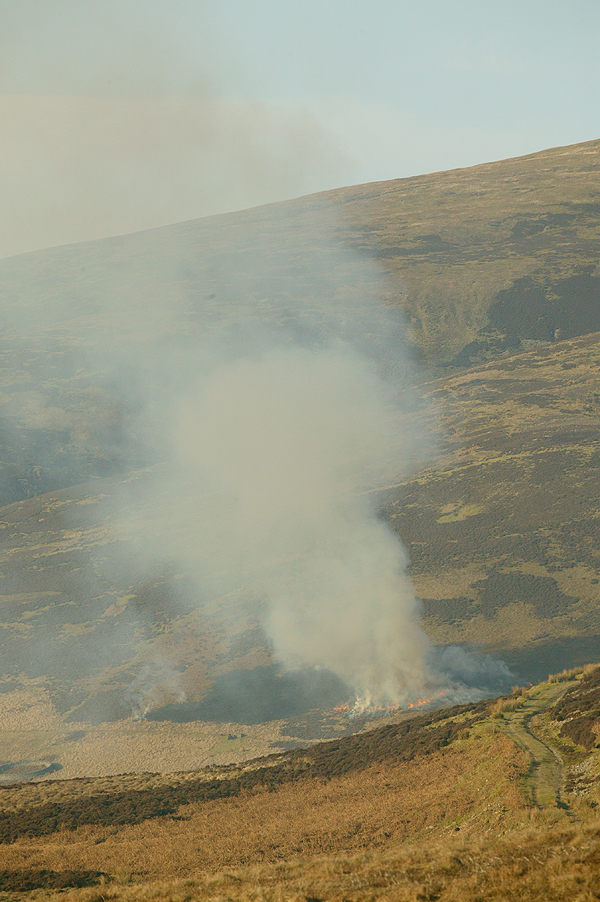 By Lucy King
Wednesday, 19 March 2014
Charity claims practice harms habitats
The Moorland Association has defended controlled heather burning after the RSPB called on Natural England to bring an end to the practice on protected uplands. The society claims that, along with draining to improve grazing for sheep, rotational burning, employed on many grouse moors, has led to a decline in the condition of much of Britain’s peatland. It suggests the practice damages the delicate habitats of rare plants and birds, prevents the re-growth of vegetation, releases stored carbon and contributes to increased flooding. The organisation’s chief executive, Dr. Mike Clarke, said: “For the benefit of wildlife, the environment and wider society, there is an urgent need to restore these landscapes by blocking drains, revegetating bare peat and bringing an end to burning.”
Subscribe to:
Posts (Atom)