As regular CFZ-watchers will know, for some time Corinna has been doing a column for Animals & Men and a regular segment on On The Track... particularly about out-of-place birds and rare vagrants. There seem to be more and more bird stories from all over the world hitting the news these days so, to make room for them all - and to give them all equal and worthy coverage - she has set up this new blog to cover all things feathery and Fortean.
Showing posts with label Orkney. Show all posts

Thursday, 8 August 2019

Plan to sell meat from wild geese shot in Orkney

Meat from wild geese shot in Orkney will go on sale across Scotland for the first time.

Islanders have been able to legally cull a set number of greylag geese since 2012 after the birds' booming population damaged farmers' crops.

In the first couple of years of the project the dead birds were sent to landfill.

But since then the meat has been licensed for sale in Orkney, with goose burgers among the products on offer.

Now, Scottish Natural Heritage (SNH) has announced a trial project to sell the meat across Scotland.
'Rapid rise'

Sales will be licensed from 1 August to 31 October.

Claudia Rowse, SNH's head of natural resource management, said: "Wild geese are an important part of Scotland's nature but their rapid rise in numbers has been challenging for farmers and crofters.

"Striking the balance between conservation, farming and hunting can be difficult

Monday, 13 May 2019

Why a rare owl sparked a news blackout


By Huw WilliamsBBC Scotland reporter
12 March 2019
When a rare Tengmalm's Owl turned up in Orkney last November, it was decided to "suppress" news of its exact location.
The bird, which had only been seen in Britain a handful of times, had been spotted on the island of Copinsay.
The presence of such a rare visitor would normally attract hundreds of birdwatchers desperate to see it for themselves.
But the exact location remained a tightly guarded secret, with only three people aware that it had taken up temporary residence in an outside toilet at the island's lighthouse.
The secrecy was because of Copinsay's role as an important seal breeding ground.
However, rumours of the owl's visit had begun to circulate, and the Scottish Birds magazine has now revealed the lengths gone to by some people in an attempt to get around the news blackout.
They included inventing a falconer who had supposedly lost a Tengmalm's Owl.
Martin Gray, who wrote the article with Alan Leitch from the RSPB, told BBC Radio Orkney: "It's an extremely rare bird. It's only occurred in Britain a handful of times.
"The last record that was widely available to the general public was in 1980.
"So there's been almost two generations of twitchers who've not had the chance to see one."


Monday, 9 November 2015

Twitchers hire PLANES to catch glimpse of rare bird on first UK visit

18:49, 29 OCT 2015
UPDATED 18:51, 29 OCT 2015
BY PAMELA PATERSON

Die-hard bird watchers have spent £500 to fly up to the Orkney islands to see the chestnut bunting, which is normally found in Asia

Chestnut Bunting (Emberiza rutila) Eocheong Island, Korea May 2012.jpgRare tweet: Twitchers have flocked to Papa Westray to see the chestnut bunting

A rare bird thought to have touched down in Britain for the first time on a remote island has got twitchers in flap - and are even hiring PLANES to catch a glimpse.

Keen birdwatchers have been spending hundreds of pounds to reach Papa Westray, Orkney, Scotland, to see the chestnut bunting.

It is believed to be the first appearance of the bird, which is normally found in Asia, on British soil.

Josh Jones, from birdwatching website birdguides.com, said: “It’s really quite a long way from home. If accepted it would be a first record of its kind for Britain.

“It’s kind of a big deal. Everyone is getting quite excited about it.”

The small bird was first spotted on October 19 and identified two days later before disappearing until Saturday.


Thursday, 5 November 2015

Rare red-necked phalaropes 'best Scottish season in years'

3 November 2015

A bird described as an "extremely rare" visitor to the UK has had one its best breeding seasons in years in Scotland.

Red-necked phalaropes migrate to the Western Isles and to Orkney and Shetland during the summer.

Thirty-six breeding males were counted on RSPB Scotland's reserve in Fetlar, Shetland, equalling the highest number that has ever been recorded there.

A pair also bred at an RSPB reserve at Balranald in North Uist for the first time in 31 years.
Argyll, the most southerly the birds breed in the UK, had its best year on record with six males present, RSPB Scotland said.


Wednesday, 28 May 2014

Spate of Orkney car fires sparked by nesting birds

Car owners on Orkney have been warned to check under their bonnets regularly after a spate of fires caused by birds nesting in vehicle engine compartments.

There have been at least three car blazes over the past few weeks which have been caused by nests.

Kim Patching, the owner of the car, said that it would not start and then in a matter of minutes smoke and flames emerged from under the bonnet.


Monday, 21 April 2014

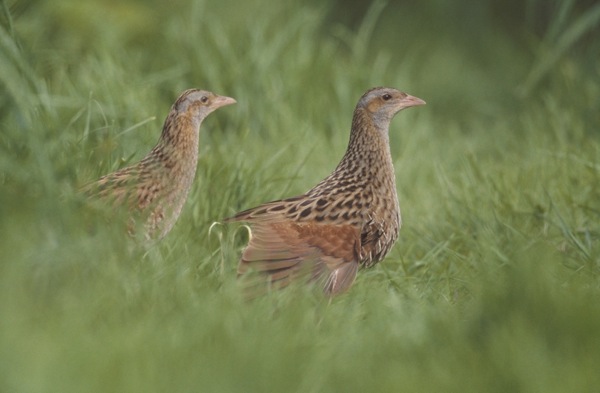
RSPB Scotland launches corncrake appeal

by NEWSROOM on SUNDAY, APRIL 20, 2014, AT 9:00AM

RSPB Scotland are asking the Orkney public to contact them if they hear the elusive bird’s call.

RSPB say that there has been a surprisingly early start to the corncrake season in Orkney this year and the charity are encouraging people to send them further records.

The first reported calling male was heard on April 8 in the East Mainland. Corncrakes spend the winter in Africa and are in Orkney for just a few months when they return to breed in the spring.

However corncrakes have suffered serious declines throughout the UK and much of Europe. In Orkney there were only 14 males last year. RSPB Scotland is asking for help to monitor the movements of these endangered birds so that their habitat can be protected in the future.

Corncrakes are elusive birds which tend to hide in tall vegetation and are rarely seen. They have a distinctive “crex crex” call, which is the sound of the males trying to attract a female.

To report a corncrake call, contact Inga Seator of RSPB Scotland by calling 01856 852029, emailing inga.seator@RSPB.org.uk or posting on the RSPB Orkney Facebook page.

Saturday, 22 September 2012

RSPB Scotland praised for harrier work


RSPB Scotland has received a special commendation at this year’s Watson Raptor Science Prize for its work on Orkney’s Hen Harrier population.

The study, which looked at the impacts of sheep grazing on the birds and their prey, showed that hill farming can play a fundamental role in assisting the fortunes of one of Britain’s most threatened birds.

Named in memory of two of Scotland’s most renowned ornithologists, Donald Watson and his son Jeff, the annual award recognises excellence in raptor science. This year’s prize was awarded to a team of scientists in Spain who studied the use of nest adornments by Black Kite.

Speaking on behalf of the harrier team, Professor Jerry Wilson, Head of Conservation Science, said: “RSPB Scotland is honoured to receive this commendation for our long-term research on Hen Harrier. It is a fitting recognition of the tireless commitment of co-author Eric Meek and his colleagues to nature conservation on Orkney. The study shows how important grazing management is to ensuring food supplies for Hen Harrier, and its findings will also help to improve conditions for other moorland birds of prey of high conservation concern, including Short-eared Owl and Merlin.”

Read on:
 http://www.birdwatch.co.uk/channel/newsitem.asp?c=11&cate=__12551