As regular CFZ-watchers will know, for some time Corinna has been doing a column for Animals & Men and a regular segment on On The Track... particularly about out-of-place birds and rare vagrants. There seem to be more and more bird stories from all over the world hitting the news these days so, to make room for them all - and to give them all equal and worthy coverage - she has set up this new blog to cover all things feathery and Fortean.
Showing posts with label Auckland. Show all posts

Wednesday, 3 October 2018

After 12,000km flight, godwits arrive in Auckland bay to large-scale developments


Matthew Rosenberg17:16, Sep 11 2018
Fears for godwit's future at Auckland estuary
The record-breaking bird may have to look for a new feeding spot.
A tiny bird renowned for its record-breaking 29,000 kilometre migration has more to worry about than surviving its epic return trip to Alaska, Forest and Bird says.
Every year, the bar-tailed godwit flies to the northern hemisphere for breeding before returning to New Zealand at the start of spring.
The birds have started arriving at Miranda, on the Firth of Thames, and are due to land in Auckland in the next six weeks.
But Forest and Bird is concerned large-scale developments at the edge of a North Shore estuary could create sediment issues at a popular feeding spot.
"[With] increased sedimentation, the risk is it smothers the food these birds rely on," Forest and Bird North Shore committee member Philip Moll said.
When godwits arrive back in New Zealand after their nine-day non-stop flight from Alaska, they're often ragged, hungry and keen to refuel at a local estuary.
"The only reason they [godwits] are here is for food . . . If you took away their food, then they're gone."
Construction close to the estuary includes two large developments  – 269 apartments as part of a Ryman retirement village in Devonport, and a 350-strong housing development called the Hillary Block, just around the corner.
However, both have stringent controls in place.


Friday, 31 August 2018

Rare and secretive bird spotted posing as a log in suburban Te Atatū, Auckland


Endangered bird caught on camera in West Auckland
Community Waitakere
The rare and endangered Australasian Bittern/Matuku has been filmed by a remote camera placed by Community Waitakere in Te Atatu Peninsula, West Auckland.
What looked like a log in a suburban Auckland wetland has turned out to be one of New Zealand's rarest and most endangered birds.
An infrared camera set up for two days last week at the Orangihina Wetlands in Te AtatÅ« in West Auckland captured footage of the matuku, also known as the Australasian bittern, wandering through the wetland.
Ecologist Dion Pou from Community Waitakere said he reviewed footage on the camera on the car ride back from the wetland thinking something had gone wrong with his motion-sensitive camera.
"At first I couldn't understand why this log had somehow gotten into the middle of the frame."
Matuku are secretive, rarely seen in pairs, shy away from other animals and are almost never seen near cities, Pou said.
When the Matuku tilts its head upwards it can look like a piece of dead wood.
Its trademark gesture involves the bird tilting its head to the sky exposing the markings on its neck making it look like a piece of dead wood to onlookers.
Over the last 50 years the matuku population has been in steep decline.
The bird is large, the size of a small white-faced heron, but requires wetlands with clean water to survive.
There are fewer than 1000 matuku left in New Zealand and a similar number in Australia along with around 50 in New Caledonia. 
Pou said those numbers made the matuku "as endangered as it gets" on a global scale.
Michael Coote from Forest and Bird said the discovery of the bird in suburban Auckland was a testament to its survival skills. 
In that environment the bird would face threats from off-leash dogs, cats, stoats and rats interested in its eggs.


Sunday, 17 December 2017

'All of us are guardians here' – Auckland Council and locals protecting endangered dotterel birds in urban environment


Wed, Nov 29

Auckland Council and local workers have banded together to protect a group of endangered dotterel birds which have found a new home down on Auckland CBD's waterfront after being pushed out of their native habitat.

The small birds have been forced away from beach nesting zones, settling in some unusual spots around Auckland city.

Senior Biodiversity Advisor for Auckland Council Ben Paris told 1 NEWS there was more than one reason the birds are making the shift inland.

"We think as the pressure on the beaches comes in from urbanisation and the population expands that they're actually coming into more of these urban areas. 

City dwellers urged to be careful around endangered dotterels moving into urban areas
The human housing squeeze could leave our native birds homeless again.

Source: 1 NEWS
"Being squeezed out of their environment by things like people on the beaches and dogs especially are a real big threat for these birds, so this is actually a relatively safe environment for them," Mr Paris said.

There are only around 1700 dotterels left in New Zealand, the birds are found mainly in Auckland and are in the middle of their nesting season, with three chicks making their home with mum and dad in a vacant lot on Auckland CBD's waterfront.


Monday, 10 July 2017

'Secretive' rare native bird found at west Auckland wetland for the first time

Banded rails are a native subspecies which inhabit wetlands throughout New Zealand. 

A rare native bird has been discovered at a west Auckland wetland for the first time. 

The banded rail, a small, secretive, ground living bird, was discovered at the coastal wetland by Rutherford College, in Te Atatu on July 1.

Senior biodiversity advisor at Auckland Council, Ben Paris, confirmed the banded rail, which has a conservation status of "at risk-declining" was captured on video footage from a camera trap.

Senior biodiversity advisor at Auckland Council Ben Paris said the onus was on west Aucklanders to help protect the Te Atatu wetlands. 

It's the first time banded rails - or moho pereru - had been seen in the area.

"We have suspected banded rails to be found in this mangrove habitat," Paris said.

Other than the video footage confirming their presence in the wetlands, there were also banded rail footprints in the salt marsh. 

"We know that they are in the salt marsh habitat of Harbourview Reserve on the east side of the peninsula, but this was great to confirm their presence on the other side too."

The birds are usually found in mangrove and saltmarsh habitats, in estuarine wetlands. Reluctant fliers, banded rails can travel long distances, mainly at night.


Thursday, 1 May 2014

New home for takahe at Tawharanui

10:15 AM Thursday Apr 24, 2014

A new haven for takahe, one of New Zealand's most threatened native bird species, will be set up north of Auckland at Tawharanui.

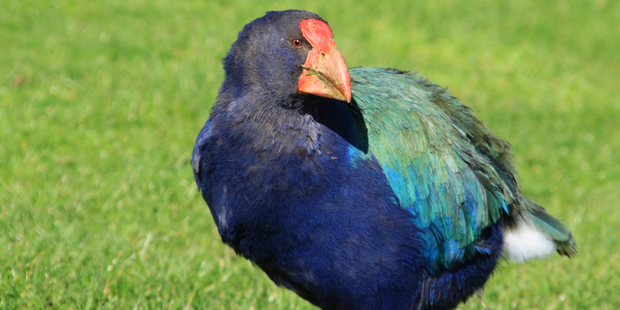
The large blue-green flightless birds were thought extinct until rediscovery in 1948. Only about 260 birds are left including about 60 safe breeding pairs.

A release of takahe to the largely predator-free Tawharanui Open Sanctuary within the Tawharanui Regional Park is planned for spring 2014. The sanctuary is already home to kiwi, saddlebacks, kakariki, bellbirds, robins and kaka.

"Welcoming a treasured species like takahe to Tawharanui is a sign of maturity for the open sanctuary and and a measure of success for this community-focused park," Auckland Council spokeswoman Christine Fletcher said.

"Takahe are a significant taonga for Maori and we look forward to working with iwi on this project."

The project is a partnership between the council, Tawharanui Open Sanctuary Society, Mitre 10 MEGA Warkworth and the Department of Conservation.


A new stretch of takahe-proof fence will need to be built before the birds are released.

While major sponsor Mitre 10 will make it possible to build the fence, the open sanctuary society is also appealing for donations to reach its $30,000 fundraising target to house and care for the birds.

Friday, 15 November 2013

$1000 reward for information leading to capture of a pest bird

The reward for sighting information that leads to the capture of an invasive pest bird - the red-vented bulbul - has been increased from $300 to $1000.

Red-vented bulbuls can cause significant damage to fruit and vegetable crops and are known to chase and attack other birds. The Ministry for Primary Industries, Department of Conservation (DOC) and Auckland Council are working together to track and eradicate the red-vented bulbul confirmed to be in Auckland.

On October 10, a reward of $300 was offered to anyone providing information leading to the capture of a red-vented bulbul by the response team working to eradicate this pest bird, which comes from Asia.

"The reward has raised awareness of the red-vented bulbul that’s been sighted throughout Auckland," says DOC spokesperson Liz Brooks. "We’ve had more than 70 calls about possible sightings since we offered the $300 reward, a month ago, but are still working to capture one of these birds."

Wednesday, 9 October 2013

Dramatic duckling rescue in Sandringham

Firefighters in central Auckland had a special emergency callout this afternoon - five ducklings stuck down a drain.

They spent an hour working carefully to save them, but one proved especially elusive.

"We got called to a number of ducks that had been stuck down a drain, with the mother duck quite anxious about it, so we've come down to see what we can do to help them out," says firefighter Mark Griffin.

What they did was search the drains, rescuing the ducklings one-by-one, until there was just one left. It had wandered too far in and couldn't be reached.

As mother and siblings looked on, the firefighters searched all the nearby drains.

When all that failed, they turned to their traditional tool - a hose - and flushed the duckling into a pond.

"We've picked it out from there, so a happy end in the end," says Mr Griffin.

Mum wasn't far away, and with her little ones in such safe hands she had no need to worry.

"It's not the sort of thing that we expect, but it happens from time to time, for sure."

One hour's work for these firefighters, and one happy feathered family waddling off together.