As regular CFZ-watchers will know, for some time Corinna has been doing a column for Animals & Men and a regular segment on On The Track... particularly about out-of-place birds and rare vagrants. There seem to be more and more bird stories from all over the world hitting the news these days so, to make room for them all - and to give them all equal and worthy coverage - she has set up this new blog to cover all things feathery and Fortean.
Showing posts with label satellite tracking. Show all posts

Thursday, 14 May 2020

How Satellite Tracking Is Helping Scientists Understand Cuckoos

13/05/2020
ROSAMMA THOMAS


Five cuckoos, one Oriental Cuckoo and four Common Cuckoos (they look very similar but sound different and are different species) were fitted with transmitters in June last year around the Khurkh Bird Banding Centre in Northern Mongolia. These birds take advantage of the explosion of insects in the summer in Siberia to breed. By autumn, they fly to warmer places and their long-distance flights are mostly by night. Since 2009, these birds have been on the Red List of Birds of Conservation Concern.

The transmitters, which fit as small backpacks, send signals that satellites orbiting the Earth pick up. This helps scientists trace the flight path of the birds, which migrate not in groups but often as solitary travellers. On occasion, small groups may also be found.

The project, a partnership between the Wildlife Science and Conservation Centre of Mongolia, the British Trust for Ornithology and Birding Beijing, seeks a deeper understanding of the flight of the birds, to determine the reasons for the decline in their numbers.

In the UK, in the past 20 years, cuckoo numbers have declined by over half, the website of the British Trust for Ornithology explains. The cuckoo tracking project is also an attempt to foster greater involvement of local communities in conservation.

Schoolchildren in Mongolia were encouraged to name the birds irds fitted with transmitters, all of which were male. They were named Nomad (the Oriental Cuckoo), Captain Khurkh, Namja (storyteller in Mongolian folklore), Bayan (Mongolian for ‘prosper’) and Onon (the name of a local river).

Wednesday, 21 November 2018

Air we go: Flamingo flights tracked for UAE conservation celebration


November 14, 2018
Updated: November 15, 2018 10:33 AM
The migrations of 10 frequent flyer flamingos are being tracked by satellite as part of a celebration of UAE wetlands conservation.
The Abu Dhabi Birdathon – launched by the Environment Agency Abu Dhabi and Etihad Airways – will count the air miles racked up by the flying squad to help better understand their migration patterns and raise awareness about Al Wathba Wetland Reserve, from which they are setting off.
The birds took flight on Tuesday and will be tracked until March 4 when the flamingo that reaches the farthest point will be the winner.
Since Al Wathba was established by the Founding Father, Sheikh Zayed, as a protected area in 1998 after observing the successful breeding of the flamingo for the first time at the site, the scheme has been launched to coincide with the Year of Zayed.
There are about 3,000 flamingos at the reserve, and the sea of pink is likely to increase when the migration season reaches its peak.
They begin to migrate to the area from August and settle there until mid February.
Each of the 10 tagged birds is being linked to major company, that will name the bird and encourage its staff and the public to follow its progress on the Birdathon website.
A team of six officials from the agency began setting traps to catch the participating flamingos to tag and release at 5am on Tuesday.
“We started setting up when it was really dark, so the birds didn’t see us,” said Dr Salim Javed, acting director of terrestrial and marine biodiversity at the agency.
The team waited from a distance for an hour until the first flamingo walked into the trap, with the second following 15 minutes later.
Details such as the bird’s weight and wing size were taken to make sure they were in good health, before a 45-gram tracker device was placed on them like a backpack.
Both birds were given some time to relax before being released at 8.30am.

Wednesday, 23 May 2018

Lappet-faced vulture tracked by satellite takes flight to Oman


Endangered species being tracked by Dubai Municipality’s Environment Department
Published: 16:29 May 8, 2018

An endangered lappet-faced vulture, the first vulture to be tracked by satellite in the UAE to determine its migratory path, was re-released at a ceremony held in Dubai’s Al Marmoum Desert Conservation Reserve.

Named Gareh 1, it was first attached with a satellite tracking transmitter with the number 41622 by the Environment Department of Dubai Municipality on March 14, the civic body said in a press release.

Gareh 1 stayed in the protected area of the reserve after the release for about 36 days, during which he adapted to the natural environment in the reserve.

Gradually, he joined the other group of vultures in the reserve to begin the journey back to the wild and took off to its migration path on April 19.

He was reportedly flying at 82 km/h speed in case of free flight and a speed of 55 km/h in case of soaring through the Hatta area, which is the main crossing for the vultures that breed in Oman to continue his journey on the same day to the province of Al Dhahra in Oman.


Friday, 29 December 2017

RSPB Ynyshir satellite tracking of white-fronted geese


Electronic tags fitted to one of Europe's rarest birds have revealed "vital data" that could help safeguard the species, researchers have said.

The RSPB estimates the population of Greenland white-fronted geese at its Ynyshir reserve near Machynlleth, Powys, has declined by 83% since 1990.

Very little is known about the birds.

But a study, funded by the Welsh Government, has provided new insights described as "a glimmer of hope".

The RSPB's Tom Kistruck told BBC Wales' environment correspondent Steffan Messenger what the trackers could tell them.

Monday, 3 October 2016

Fifth satellite-tracked bird of prey vanishes in Highlands


Chris Foote 10 hours ago 

The young hen harrier's tag stopped responding on the border of the Cairngorms National Park.

A satellite-tracked bird of prey has vanished in the Highlands for the fifth time this year.
The young hen harrier's tag stopped responding on the western border of the Cairngorms National Park last month.


Brian, who went missing on August 22, was last seen a few miles from Kingussie and his body has not been found.

The Royal Society for the Protection of Birds said there was no sign of any problems with his tracker before it went silent.

A spokeswoman for the animal charity said: "Brian was tagged on July 4 on an estate in Perthshire within the Cairngorms National Park.

"He fledged from the nest and stayed close to the nest site until the beginning of August when he moved north into southern Inverness-shire.

"Brian then spent the next few weeks over various areas of managed grouse moor within the National Park with frequent strong, clear transmissions from his tag providing detailed information about his daily travels.

Tuesday, 28 July 2015

East Anglia's rarest raptors fitted with satellite tags

28 July 2015 at 12:10pm

Three of the UK's rarest birds of prey - which nest in East Anglia - have been fitted with satellite tracking devices.

The RSPB said three Montagu's harriers had been fitted with the trackers this month, in an effort to learn more about them.

A close-up of Rowan, a Montagu's harrier.
Photo: RSPB
So far this year there have only been seven recorded nesting attempts of Montagu's harriers - and three of them were in East Anglia.

Researchers from the Dutch “Montagu’s Harrier Foundation”, together with conservationists from the RSPB, fitted one male and two female Montagu’s harriers with the lightweight tracking devices, which will last for the lifetime of the birds and relay real time location data back to the team.

Mark Thomas, who leads on Montagu’s harrier conservation work for the RSPB, said: “This is an exciting and important application of satellite tracking technology that will help us to monitor their movements and locate their feeding areas to understand more about these harriers’ not just here in the UK, but in their wintering grounds in Africa and on their migratory journey in between.”

Wednesday, 21 January 2015

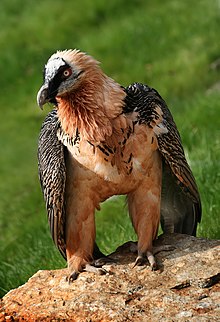
Satellite telemetry tracks bearded vultures

Date:
January 16, 2015

Bartgeier Gypaetus barbatus front Richard Bartz.jpgSource:
FECYT - Spanish Foundation for Science and Technology

Summary:
The Pyrenees are home to continental Europe's only wild population of bearded vultures, a species classified as endangered in Spain. A study compiled by Spanish researchers reveals -- in a level of detail until now unseen -- the size of the home range of this bird species using satellite tracking technologies.


Monday, 22 September 2014

RSPB plea to find missing Mongatu Harrier called Mo

Kieran LynchThursday, September 18, 2014 
6:30 AM

Bird fanatics have voiced their pleas in a hope to find Mongatu Harrier, Missing Mo.

The female bird is one of the rarest species in the UK , with just seven breeding pairs in the UK.

Mo was one of three Montagu harriers who were fitted with tiny satellite trackers to track migration routes earlier this year.

Mo’s transmission stopped sending signals on the morning of August 8, and her disappearance still remains a mystery.

Jim Scotts, site manager at RSPB Snettisham Nature Reserve, said: “The unfortunate likelihood is that she has died because of a fox or was illegal persecuted and the tag was destroyed.

“But you would like to think there has been a fault with the technology and that there are people out there with information on her disappearance.”

Norfolk Constabulary has launched an investigation into the bird’s disappearance.

Saturday, 10 August 2013

Andean Condor in Ecuador fitted with satellite tracking transmitter for first time

Endangered bird rescued, rehabilitated and released
August 2013. Wearing identification tag #1 on his wing, a young Andean Condor was released into the wild on high in the Andes Mountains of Ecuador, where he has become a national symbol for the effort to save the species from extinction.

Critically Endangered in Ecuador
It was the first time that a condor in Ecuador - where the birds are critically endangered - has been released with a satellite transmitter. Andean Condors are listed as "Near Threatened" on the IUCN Red List. The device will allow biologists to track his movements and study condor habitat requirements, foraging behaviour, and roosting sites.

"This is an important first step in better understanding the status of the Andean Condor in Ecuador," said J. Peter Jenny, president of The Peregrine Fund, an Idaho-based conservation group that is helping to fund the study.

Thursday, 28 March 2013

How video’s eagle eye helps protect rare birds from egg thieves


Published on Saturday 23 March 2013 00:01
VIDEO surveillance and satellite tracking are being used to tackle rogue egg hunters who are preying on some of Britain’s rarest species of birds in Yorkshire.

Police and enforcement officers from the Royal Society for the Protection of Birds (RSPB) have been sharing intelligence after evidence emerged that offenders are travelling from across the country to raid the nests of birds in the region.

Many egg hunters are also embroiled in other criminal activity, including drug dealing, to help finance their time-consuming searches for the nests of rare birds which often involve travelling long distances across the country.

North Yorkshire, which is home to species including red kites, peregrine falcons and ospreys, is one of the worst blackspots in the country for offences, according to the charity.

RSPB officials say they are employing increasingly sophisticated technology to hunt down egg collectors who are continuing to flout tougher laws, with jail terms of up to six months for offenders. Video surveillance is being used to monitor nests, while satellite tracking devices fitted to birds are helping to trace their movements to nesting sites.

An RSPB spokesman said: “While many of these species are showing signs of recovery, they do remain threatened and egg collectors are a very real problem.

“We do have close links with police and we are increasingly turning to new technology to help monitor birds’ nests. Offenders are continuing to operate across the country, but Yorkshire is a particular concern because of the number of species which live there and we are having to remain especially vigilant in the region.”

The Yorkshire Dales National Park Authority confirmed yesterday that efforts are underway to protect a pair of peregrine falcons which attract thousands of visitors every year to Malham Cove. Peregrines started nesting at the cove 20 years ago and have since raised more than 40 offspring.

Read more: http://www.yorkshirepost.co.uk/news/at-a-glance/general-news/how-video-s-eagle-eye-helps-protect-rare-birds-from-egg-thieves-1-5524739