As regular CFZ-watchers will know, for some time Corinna has been doing a column for Animals & Men and a regular segment on On The Track... particularly about out-of-place birds and rare vagrants. There seem to be more and more bird stories from all over the world hitting the news these days so, to make room for them all - and to give them all equal and worthy coverage - she has set up this new blog to cover all things feathery and Fortean.
Showing posts with label gentoo penguins. Show all posts

Wednesday, 11 October 2017

Geographic variation in Gentoo penguin calls


Date:  September 27, 2017
Source:  American Ornithological Society Publications Office

Summary:
Vocal communication is central to the lives of many birds, which use sound to attract mates and defend territories. Penguins are no exception, but we know little about how or why penguin vocalizations vary between isolated populations. A new study takes a broad look at vocalizations across the range of Gentoo penguins and concludes that while their calls do vary from place to place, we still have lots to learn about the processes at work.

Sunday, 28 May 2017

Time-lapse cameras provide a unique peek at penguins' winter behavior


Date: April 19, 2017
Source: American Ornithological Society Publications Office

Not even the most intrepid researcher wants to spend winter in Antarctica, so how can you learn what penguins are doing during those cold, dark months? Simple: Leave behind some cameras. Year-round studies across the full extent of a species' range are especially important in polar areas, where individuals within a single species may adopt a variety of different migration strategies to get by, and a new study from The Auk: Ornithological Advances uses this unique approach to get new insights into Gentoo Penguin behavior.

Gentoo Penguins are of interest to scientists because they're increasing at the southern end of their range in the Western Antarctic Peninsula, a region where other penguin species are declining. Little is known about their behavior during the nonbreeding season, so Caitlin Black and Tom Hart of the University of Oxford and Andrea Raya Rey of Argentina's Consejo Nacional de Investigaciones Cientificas y Técnicas used time-lapse cameras to examine patterns in Gentoo Penguins' presence at breeding sites across their range during the off season. They found both temporal and spatial factors driving winter attendance -- for example, more Gentoo Penguins were present at breeding sites when there was open water or free-floating pack ice than when the shoreline was iced in, and more Gentoo Penguins were at breeding sites earlier in nonbreeding season than later.

Wednesday, 17 February 2016

Penguin chicks huddle up for heat, protection

Location, environment influence when gentoo penguin chicks huddle

Date: February 3, 2016
Source: PLOS

Brown Bluff-2016-Tabarin Peninsula–Gentoo penguin (Pygoscelis papua) 03.jpgLocation and environmental conditions may influence when gentoo chicks huddle in cold, wet Antarctic conditions, according to a study published February 3, 2016 in the open-access journal PLOS ONE by Caitlin Black from the University of Oxford, and colleagues.

Many penguin species form aggregations for conserving heat, providing protection, and other purposes. Scientists have observed gentoo penguins aggregating during the post-guard period, a period when the parents leave the chicks without waterproof feathers daily to go find fish, but these aggregations have never been studied over a large spatial range in the Antarctic. The authors of this study observed the gentoo penguin aggregation behavior across four study sites along a latitudinal gradient. To examine the adaptive benefit of aggregations, they observed each colony during the post-guarding period of the 2012-2013 breeding season using time-lapse cameras.


Wednesday, 21 January 2015

Climate change does not bode well for picky eaters

Date:
January 20, 2015

Source:
Louisiana State University

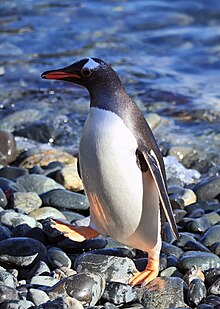
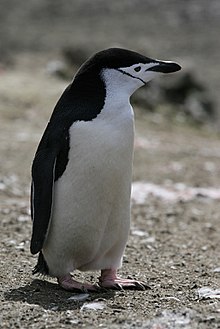
Gentoo Penguin at Cooper Bay, South Georgia.jpgChinstrap Penguin.jpgIn a part of the world that is experiencing the most dramatic increase in temperature and climate change, two very similar species of animals are responding very differently. New research suggests that how these species have adapted to co-exist with one another might be to blame.

Chinstrap penguins whose namesake describes the black stripe under their chins are decreasing in number while Gentoo penguins, recognizable by their bright orange beaks, are increasing at summer breeding colonies in the Antarctic Peninsula. This research sheds light on the different strategies these two similar species have carved out over time to reduce competition for food, and the ramifications these different strategies are having now during a time of rapid environmental change.