As regular CFZ-watchers will know, for some time Corinna has been doing a column for Animals & Men and a regular segment on On The Track... particularly about out-of-place birds and rare vagrants. There seem to be more and more bird stories from all over the world hitting the news these days so, to make room for them all - and to give them all equal and worthy coverage - she has set up this new blog to cover all things feathery and Fortean.
Showing posts with label Eastern Imperial eagle. Show all posts

Friday, 6 April 2018

Birds of prey found poisoned in southwestern Slovakia


The perpetrators might spend one to six years in prison if found guilty.

State conservationists have launched special inspections in areas inhabited by rare birds of prey, following the increased number of cases where poisoned animals were found close to municipalities in southwestern Slovakia.

Just during the past week, a female eastern imperial eagle from Hungary was found poisoned close to the village of Malý Cetín, and four white-tailed eagles were discovered in the district of Šaľa (both in the Nitra Region). Most recently, the police informed the public about two new cases from the Nitra Region on March 29, involving common buzzards and the western marsh harrier.

“All crucial measures are aimed at reducing the risk of this serious deed,” said Martin Lakanda, head of the State Nature Protection of Slovakia (ŠOP SR), as quoted by the SITA newswire. “The employees of ŠOP SR, in cooperation with the relevant subjects, are carrying out a special inspection of affected areas and will intensify the guarding of selected localities.”

Read on 

Monday, 19 March 2018

Eastern Imperial Eagle spotted at Sarola for first time


| Monday | 12th March, 2018

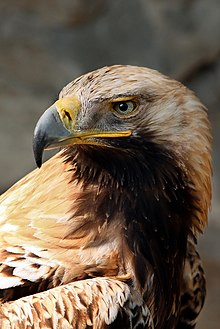
Aurangabad: The Eastern Imperial Eagle also known as ‘Shahi Garud’ has been spotted in Sarola area, around 20 kilometer from the city, taking bird experts by surprise.The migratory bird is said to have been sighted for the first time in Aurangabad region. However, it is the first time that the rare bird has entered Aurangabad area.”Nearly 85 centimetre in size, Eastern Imperial Eagle has white patches on the shoulder, a golden buff crown and nape. The International Union for Conservation of Nature (IUCN) has listed the eagle as a ‘vulnerable’ species.Environmentalist Kishor Pathak, who spotted the bird on the bank of a pond located near the entrance of Sarola, said Eastern Imperial Eagles are relatively bolder in nature compared to other varieties of eagle.Pathak said, “The bird is spotted in some parts of Maharashtra during winter as they tend to migrate during the season. The bird feeds on rats, reptiles, birds and even small mammals. Hence, deforestation has been shrinking their habitats.
Aurangabad: The Eastern Imperial Eagle also known as ‘Shahi Garud’ has been spotted in Sarola area, around 20 kilometer from the city, taking bird experts by surprise.The migratory bird is said to have been sighted for the first time in Aurangabad region.

The International Union for Conservation of Nature (IUCN) has listed the eagle as a ‘vulnerable’ species.Environmentalist Kishor Pathak, who spotted the bird on the bank of a pond located near the entrance of Sarola, said Eastern Imperial Eagles are relatively bolder in nature compared to other varieties of eagle.Pathak said, “The bird is spotted in some parts of Maharashtra during winter as they tend to migrate during the season.


Tuesday, 19 April 2016

Impressive Imperial Eagle conservation in Georgia and Azerbaijan


By Guille Mayor and Elchin Sultanov, Tue, 12/04/2016 - 09:07

The Eastern Imperial Eagle is listed as Vulnerable on the IUCN Red List. Its global population estimates range from 3,500 to 15,000 individuals. This embattled bird is a lowland species whose population is globally declining and that has been pushed to higher altitudes by persecution and habitat loss in Europe. In central and eastern Europe, it breeds in forests up to 1.000 m above sea level, in steppe and agricultural areas with large trees, and nowadays also on electricity pylons. 

Breeding sites are threatened by intensive forestry in the mountains, and by the shortage of large indigenous trees in the lowlands. Other threats are shortages of small and medium-sized prey species, loss of habitat to agriculture, human disturbance of breeding sites, nest robbing and illegal trade, shooting, poisoning and electrocution by powerlines.

Neighbouring countries Georgia and Azerbaijan are doing their bit to save this species from extinction.

In Georgia, the species has its main breeding grounds in the east of the country, a vast bushy steppe and farmland area. According to recent surveys, no more than 40 breeding pairs remain in the country, mainly restricted to nesting in riverine forests and electric pylons due to the lack of suitable trees to build nests in throughout the land.
Since November 2015, SABUKO (Society for Nature Conservation) is carrying out conservation activities to improve the status of the Eastern Imperial Eagle (Aquila heliaca) through direct conservation measures, awareness raising and education.

Before the start of the project, funded and supported by CLP (Conservation Leadership Programme), several breeding surveys were carried out during 2014 and 2015 to assess the population size of the Eastern Imperial Eagle in Georgia and the locations of the nests. Several abandoned electric pylons were also checked for suitability to install artificial nests, as the species is known to nest in them in some countries in the Balkans.