As regular CFZ-watchers will know, for some time Corinna has been doing a column for Animals & Men and a regular segment on On The Track... particularly about out-of-place birds and rare vagrants. There seem to be more and more bird stories from all over the world hitting the news these days so, to make room for them all - and to give them all equal and worthy coverage - she has set up this new blog to cover all things feathery and Fortean.
Showing posts with label York. Show all posts

Thursday, 2 March 2017

Birdwatch: Big flocks of yellow birds are all too rare a treat


The yellowhammer population fell 54 per cent between 1970-98 and is now red listed as a bird of conservation concern. 

The yellowhammer population fell 54 per cent between 1970-98 and is now red listed as a bird of conservation concern.

A flock of yellowhammers along with other buntings and finches feeding around a winter stubble field is a welcome sight for birdwatchers, especially when the flock contains a male pine bunting still present this week at Dunnington near York. But such a big flock; more than 250 at one stage, is a rare sight in the English countryside. 

The yellowhammer population fell by 54 per cent between 1970-98 and, along with a number of other farmland birds, it is now red listed as a bird of conservation concern. The main problem is probably a lack of available grass and weed seeds to sustain them during winter because of intensive farming. As a result fewer yellowhammers and other farmland birds survive until spring. 

They will seek out areas where they can find food including any remaining winter stubble fields, root crops with weeds among them and field margins where grain has been spilt while being fed to livestock. Yellowhammers continue to do well where seed is provided on nature reserves or on farmland where seed rich wildlife strips are in place through Higher Level Stewardship. 

Farmers have also been encouraged to help them by planting perennial ryegrass. This is cut in late May and turned into silage to feed cattle, then grown again until a second cut is taken. Cattle graze what is left. But if at least some of this second crop at field edges is left uncut huge amounts of seed are produced which will last birds through the winter well into March and the RSPB asks farmers to consider doing this. It is unclear what the impact on farming and the environment will be after Brexit. 

There have been assurances that Entry and Higher Level Stewardship schemes already in place will continue to be honoured but the long term situation is unknown. Conservation body BirdLife International blames the EU’s Common Agricultural Policy for the huge loss of farmland birds across Europe and perhaps, given greater flexibility, our farmers will be allowed to manage their land in a more environmentally friendly way again.

Read more at:


Tuesday, 2 June 2015

Social structure 'helps birds avoid a collision course

'Date: May 21, 2015

Source: University of York

Summary: The sight of skilful aerial maneuvering by flocks of Greylag geese to avoid collisions with York's Millennium Bridge intrigued a mathematical biologist. It raised the question of how birds collectively negotiate human-made obstacles such as wind turbines that lie in their flight paths.

Wednesday, 4 June 2014

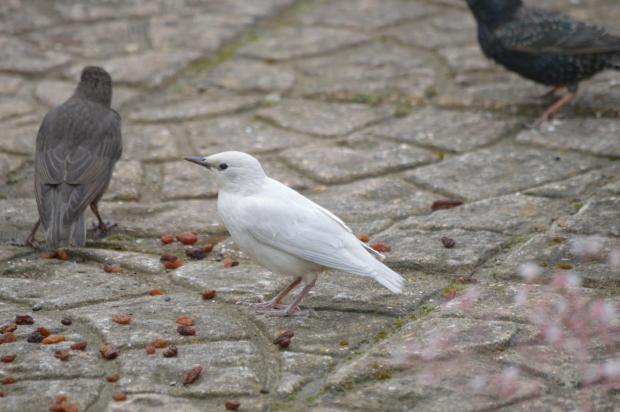
Snowy the starling is rare sight for York couple

8:01am Monday 2nd June 2014 in News

You could have knocked Derek and Sandra Shewan down with a feather when a rare white bird swooped onto their patio.

At first they though the starling they christened Snowy was an albino but they then spotted it did not have pink eyes.

The couple, from Hemlock Avenue, Huntington, discovered the bird was a Leucistic starling, sightings of which are occasionally reported in national wildlife magazines.

Experts say Leucism is a very unusual condition whereby the pigmentation cells in an animal or bird fail to develop properly.


This can result in unusual white patches appearing on the animal, or, more rarely, completely white creatures.

Retired Royal Mail sorting office worker Derek, 66, said: “From what I have read it is more rare than an albino.

Thursday, 29 November 2012

Waxwing ringing project gets underway in York


Waxwing year gets underway with large flocks on Skye and in Yorkshire and Humberside
November 2012. 

Britain has seen a large influx of several thousand waxwings this autumn. With distinctive bright red tips at the end of their dusky pink plumage, square-ended yellow tail feathers and a black ‘highwayman' band running across their eyes, these colourful little birds have big characters. A flock of 1,000 was seen round the Isle of Skye, and several flocks of up to 300 birds have been present in Yorkshire and the Humber region as the birds move south after having depleted berry crops further north. 

Rowan tree
Natural England staff and volunteers from the Lower Derwent Valley National Nature Reserve (NNR) came to nearby York to ring waxwings around the York Walls. With permission from the City of York Council, nets were set round a rowan tree beneath the city walls and 12 waxwings were soon caught. This was a great result in terms of successfully ringing birds to gather scientific evidence; and a fantastic opportunity to tell the watching public more about waxwings and how bird ringing projects work.

Craig Ralston, Natural England's Senior Reserve Manager from the Lower Derwent Valley NNR, waxed lyrical about the ringing project. He said: "This ringing project - which forms part of a wider scientific data collection programme - brings fascinating conservation work more often found on our nature reserves, right into the heart of the city. It's a great way of engaging with people about the surprising natural wonders that can be found on our doorsteps."