As regular CFZ-watchers will know, for some time Corinna has been doing a column for Animals & Men and a regular segment on On The Track... particularly about out-of-place birds and rare vagrants. There seem to be more and more bird stories from all over the world hitting the news these days so, to make room for them all - and to give them all equal and worthy coverage - she has set up this new blog to cover all things feathery and Fortean.
Showing posts with label OTT. Show all posts

Thursday, 14 May 2020

Birdwatchers report rare sighting of Garganey duck on Arran

12th May


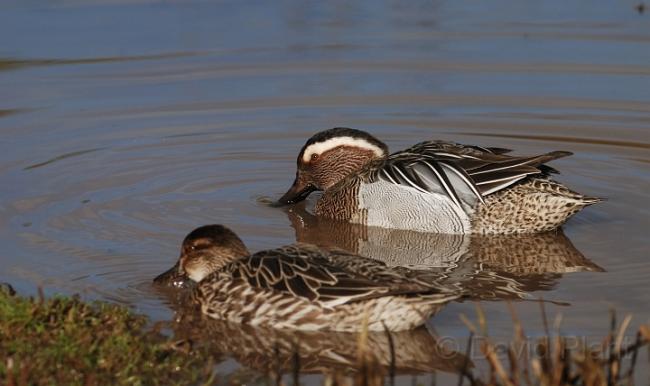
Garganey Duck Male and Female

A pair of Garganey ducks have been spotted on the Isle of Arran for only the second time.

Arran Birding, who record all sightings of unusual birds on the island, reported the sighting of a male and a female on Sunday, May 3.


They said the birds were spotted on Sliddery Shore amongst Teal, a duck more common to the area.

According to Arran Birding the last time Garganeys were seen on the island was back in May 2012.

Garganeys are native to Europe and Asia, but it’s rare to see them in the UK with most breeding pairs confined to East Anglia.

The RSPB describes the Garganey as being: “Smaller than a mallard and slightly bigger than a teal. The male is most easily recognised with a broad white stripe over the eye.”

Monday, 30 March 2020

Coronavirus: Police send home twitchers searching for rare bird


26 March 2020

Birdwatchers who flocked to a beauty spot in Gloucestershire to catch a glimpse of a rare bird have been sent home, police have said.

About 15 twitchers from across England congregated at an undisclosed spot in Cleeve Common, near Cheltenham, after the ring ouzel was reportedly spotted.

Ignoring the government's advice, the group had travelled from as far as Birmingham to see the bird.

The RSPB said it was "totally unacceptable" in the current situation.

Following the government crackdown on social distancing, people are being asked to stay at home, not travel unnecessarily and not gather in groups of more than two people.

'Go home'

Police said 10 cars and 15 people had set themselves up next to one another with long-sighted cameras and binoculars.

Wildlife crime officer PC Nick Westmacott said: "All of their details were obtained, and they were politely told to go home.

"On checking where they had travelled from, they had come from Birmingham, Swindon, Gloucester, Cheltenham and some from local Cotswold areas.

Thursday, 20 February 2020

Hooded Merganser rescued from Ipswich cosmetics shop


30/01/2020

A drake Hooded Merganser has been escorted out of a high street shop in central Ipswich.

The exotic duck had to be removed from a cosmetics store on Tavern Street on Wednesday [28 January] by local security.

The yellow-ringed bird is well known in Suffolk, having arrived on the Blyth Estuary at Blythburgh in late October 2018, where it remained for several weeks before relocating to Ipswich in 2019. It has lingered around the town since then and has become a popular attraction, usually being seen either in Christchurch Park or along the River Orwell.

The Kiko Milano store contacted Ipswich Central at 09:30 to report that a 'pigeon' was loose in the shop and needed to be rescued.

Street rangers from Ipswich Central arrived at the scene shortly after, only to find that it was in fact the Hooded Merganser, which had made its way almost 1 km down the high street to the cosmetics chain's store and then somehow found its way inside.

Friday, 14 February 2020

Very rare black-throated thrush brings flocks of birdwatchers to Grimsby


Sightings of a black-throated thrush, a bird rarely seen in the UK, has brought dozens of twitchers from across the UK to the town

Corey Bedford Live News Reporter
14:43, 2 FEB 2020

Rare black-throated thrush spotted in Grimsby

Birdwatchers have flocked to Grimsby after a black throated thrush was spotted on the grounds of the Grimsby Institute

Enthusiastic twitchers have travelled from across the UK to see a rare bird that has arrived in Grimsby.

A black-throated thrush has been spotted on the campus of the Grimsby Institute, which has caused quite a stir in the bird-watching community.

The birds are native to Asia, but are occasionally seen elsewhere as vagrant birds, which is when a bird strays far outside its expected breeding, wintering, or migrating range.

Sightings of the black-throated thrush in the UK are incredibly rare, with some bird watchers saying they only appear here once or twice a year.

One twitcher said: "You get a maximum of about two sightings a year in the UK, so it's a very rare occurence.

"We all have apps on our phone such as Bird Guide, which can let you know when a rare bird is spotted somewhere in the UK.

"I've only travelled from Hull, myself, but I have seen people from all over the UK coming to see it, they've been coming and going all morning."

The bird is currently on the green area in front of the Grimsby Institute, and has been hopping from tree to tree throughout the day.

A black-throated thrush can be recognised by its black bill with yellow base, grey plumage, and black tail.

Their breeding range extends from very Eastern Europe to Western Siberia and north-west Mongolia.

Bird watchers calling foul after hunt interrupts search for rare duck near Shrewsbury


By Lucy Todman | Shrewsbury | News | Published: Feb 5, 2020

Bird watchers hoping to spot a rare European duck on a pool near Shrewsbury claim their chances were ruined by members of a hunt.

Around 30 bird spotters were in hides at Venus Pool, between Cross Houses and Cressage, when the hunt’s hounds found their way on to the nature reserve.

Members of the Shropshire Ornithological Society (SOS) say the disturbance led to the birds taking flight, spoiling their observations of the red crested pochard.

John Arnfield, chair of SOS, said: “Horses and riders were observed all over the reserve, including in ‘no-go’ areas.

"Considerable disruption to the birds on the pool occurred and the many visitors were frightened and upset.

“We had between 20 and 30 people in the hides at the pool eager to catch sight of the red crested pochard, which is a rare bird from Europe.

"However, at around 11am, the hunt, which started in Eaton Mascot entered the reserve.

"The dogs put up all the birds from the lake.

"We could see them riding around the reserve on both sides of the lake.”


Friday, 7 February 2020

Suffolk Little Owl 'too fat to fly'


29/01/2020

A Little Owl, unceremoniously rescued from a Suffolk ditch as it was unable to fly, has been declared "extremely obese" by the Suffolk Owl Sanctuary.

The soggy owl was found in a ditch in the county in early January and, in these circumstances, wildlife rescue centres generally find that birds are carrying injuries, or occasionally have become waterlogged.

However, Suffolk Owl Sanctuary was surprised to find that it was in fact extremely overweight. Upon assessing the owl, a female, it weighed in at a rather chunky 245 g – roughly a third heavier than a healthy adult female Little Owl. It was unable to fly due to the large fatty deposits around its body.

It is extremely unusual for wild birds to get into this condition naturally, so the vets decided to investigate some obvious scenarios – the first being that it was possibly an escaped aviary bird. There was no indication of rings or chip identification, and asking around in the local area also didn't produce any leads.

They therefore decided to observe the rotund bird over a period of time for signs of a captive history – familiarity with 'artificial' foods used in aviaries, such as bright yellow chicks, can be a telltale sign. However, the owl didn't show any hints of previous confinement and has readily taken 'wild' food types, such as dark mice.

Wednesday, 5 February 2020

Support worker shocked to glimpse 'rarest garden bird in UK' in Somerset village


The ultra-rare bird was spotted in a local garden

A local support worker has spoken of his shock after catching a glimpse of the "rarest breeding garden bird in UK" in a Somerset village.

Paul Galvani, from Yeovil, was working at a home in Martock when he spotted a Black Redstart in the back garden.

The keen birdspotter even captured a picture of the orange-tailed rarity sitting on a fence as it fluttered around the area on Friday, January 24.

"I managed to get a superb photo of one of the rarest garden birds in Britain," said Mr Galvani.

"Over the last decade there is estimated to be less than 100 breeding pairs in the whole of the UK.

"When I first saw it, I thought it could be a pigment anomaly or a juvenile bird of another species, but after speaking with other birdspotters, it was confirmed to be a Black Redstrat.


"It was just a fantastic feeling to get a photograph of the bird"

Wren retains top spot as the UK’s commonest bird

The latest report on bird populations by the British Trust of Ornithology has revealed the UK’s most common birds, and the wren has beaten other species to the top of the list.

February 4, 2020 at 3:22 pm

Following the RSPB‘s Big Garden Birdwatch which concluded the first month of the new decade, the latest report from the British Trust of Ornithology (BTO) suggests the wren has become the UK’s ‘commonest bird’, with over 11 million pairs.

They led the way in the last report from 2013, with a population of 8.5 million pairs. It’s thought that milder winters are probably benefitting the species.

Out of a total of 249 breeding species assessed in the report, 21 species have estimates of more than one million pairs.

Monday, 20 January 2020

Young sea eagle takes up residence among Oxfordshire's red kites

Bird is one of six released on Isle of Wight as first residents in England for 250 years


Fri 17 Jan 2020 12.39 GMTLast modified on Fri 17 Jan 2020 19.40 GMT

It is one of the country’s top predators, with a 2.4-metre (8ft) wingspan and a preference for plucking fish from the ocean.

So a young sea eagle’s choice of landlocked Oxfordshire as its home is unexpected. More surprising still is that the bird has lived for four months almost completely unnoticed by the public close to the M40 and the commuter belt.

The eagle, known as G3-93, is one of six satellite-tracked specimens released on to the Isle of Wight last summer, when they became England’s first resident sea eagles, or white-tailed eagles, for 250 years.

“He thinks he’s a red kite,” said Steve Egerton-Read, a project officer for the reintroduction programme led by Forestry England and the Roy Dennis Wildlife Foundation. “Like all young birds, he tries to learn from other birds. In the absence of other eagles, he’s learning from red kites. He flies around picking up bits of dead stuff – dead rabbits, dead game birds.”

Scavenging carrion is normal for young sea eagles, which rarely learn to hunt live animals in their first year. According to Egerton-Read, G3-93 is living on private land where the bird is safe from persecution by humans.

“Oxfordshire is full of game shoots but there’s no ill-will towards it and the landowners are very pleased to have another exciting bird to add to their list,” he said. “I don’t have many concerns for their safety over southern England and there is much more food for them here than in Scotland.”

Sunday, 8 December 2019

Rare birds spotted on the Isle of Wight


16th November

Exclusive by Dominic Kureen Reporter
THE Isle of Wight has had the pleasure of some rare visitors this week.
A bevy of black swans were spotted at Newport Harbour and along the River Medina.
Black swans are large, nomadic water birds that breed mainly in Australia.
Notable for their mostly black plumage and red bills, the large birds are not often spotted on the Island.

Wednesday, 6 November 2019

Least Bittern – a new species for Ireland


09/10/2019

An unusual bird was discovered by my good friend John O'Donoghue on the back lawn of his house in Farranfore, Co Kerry, at 5 pm on Monday 7 October. It was a quiet, mild evening with sunshine and a clear sky at the time of finding. The specimen was in very poor condition and could not fly, so John decided it was best to pick it up and bring it inside to save him from his dog. However, unfortunately, some 30 minutes later, it had passed on.

On Tuesday morning, John called over to me at work, across the road from his house, to show me what he had found. A Google search produced nothing even close to the bird, so I decided to make contact with Birdwatch Ireland. After some discussion with them it transpired the bird was a Least Bittern and had originated from North America – little did we know at the time the interest this small, misfortunate bird would attract.


Monday, 14 October 2019

Yellow-billed Cuckoo found dead in East Sussex


02/10/2019

A Yellow-billed Cuckoo was discovered in residential Seaford, East Sussex, on the morning of 2 October.

The bird, which was very freshly dead and had presumably only just perished, was discovered lying between two large brick pillars on the path which runs out to Splash Point at the end of Gerald Road at around 09:30 by Mary-Anne Carter, who lives on Gerald Road and was out walking her dog.

She passed the unusual corpse to her neighbour, Robert Lawson, who commented: "I thought the bird looked like a cuckoo, or possibly a shrike.

"I took it home and looked in the Collins Bird Guide, and was able to identify it as a Yellow-billed Cuckoo."

This represents the second record for East Sussex and unfortunately bears a striking resemblance to the previous occurrence, which flew into a wall in Eastbourne and was picked up dead on 4 November 1952. There is also a single record from West Sussex, which again involved a freshly dead bird at Middleton-on-sea on 14 December 1960.

Incidentally, another Yellow-billed Cuckoo was found on St Mary's, Scilly, on the morning of 2 October, but happily was still alive. However, it quickly disappeared into gardens after its discovery and hasn't yet been seen again.


Monday, 30 September 2019

'Extremely rare' bird seen at Nottinghamshire nature reserve after 45 years


The black-winged stilt was spotted at the Idle Valley reserve in Retford
By
Gurjeet Nanrah Community Reporter
11:04, 4 SEP 2019
An 'extremely rare' bird was spotted this weekend at a nature reserve in north Nottinghamshire.
The black-winged stilt was seen at Idle Valley nature reserve in Retford over the weekend - marking its first sighting in Nottinghamshire for 45 years.
It is a long-legged wader bird that is also rarely seen elsewhere in the UK.
Members of Nottinghamshire Wildlife Trust, the charity that looks after the nature reserve along the River Idle, believe the sighting shows how the wetland reserve has great potential as a location for wildlife watching.
The trust’s head of communications Erin McDaid said: “The bird has caused real excitement. It arrived over the weekend and was still on site this Monday so a number of people have been able to see and photograph it.
"It’s a very rare visitor for Nottinghamshire, the last one was recorded in 1974 and they are still quite a rarity across the UK.”
The sighting comes ahead of the first Explore North Notts weekend on September 14 and 15 - which is part of the Heritage Open Days Festival - and is aimed at celebrating the county's historic buildings, country parks and open spaces.
September is considered a good time to visit the reserve as many birds begin their autumn migration, meaning birds that could be seen include flycatchers, garganeys, wheaters and whinchats.
A guided bird walk will take place on Sunday, September 15 from 9.30am to 11.30am, so visitors can explore the reserve and children aged 8-12 can take part in the Wildlife Watch Group’s ‘In the Swim’ event the day before which focuses on fishes and other animals that live in water.


Sunday, 29 September 2019

Amazing pictures show rare white stork in Cornwall

The bird is believed to be part of 24 which were released in West Sussex last week

12:59, 30 AUG 2019
A rare white stork has been spotted in Cornwall.
The incredible pictures were taken by Nathaniel Barry, a 23-year-old amateur wildlife photographer from the Perranporth area.
He spotted the majestic birds on Tuesday (August 27) at Hayle Estuary.
He said: "I had heard that there had been releases by a Sussex organisation.
"We were at Hayle Estuary, at a place called Ryan's Field. Suddenly all the birds decided to take off."
That's when Nathaniel saw a white stork for the first time in his life.
"The culprit arrived," he wrote on his Nathaniel Barry Photography Facebook page.
"With most of the estuary birds never seeing a white stork before, they weren't taking any chances!
"Why would you? Seven feet wingspan, 4ft in height... The previous largest bird there was a grey heron. But after the stork arrived I didn't see the heron return for the next four hours I was there!"
A total of 24 juvenile white storks were released on Monday, August 12, at the Knepp rewilding project in West Sussex.
There has since been reported sightings at Drift Reservoir and other spots in Cornwall.
It was part of The White Stork Project, a pioneering partnership of private landowners and nature conservation charities, which aims to restore a population of at least 50 breeding pairs in Southern England by 2030 through a phased release programme over the next five years.
According to participant Durrell, all of the storks that are part of the project have unique coloured rings on their legs, so anyone who spots a stork in the British countryside can report their sightings on the project website.
This information will help scientists to understand the movements of the birds.

Rare Roseate tern spotted nesting near Jersey


20 September 2019 at 1:04pm
Britain's rarest breeding seabird has been spotted on rocks off the coast of Jersey.
As many as 3 Roseate terns were sighted nesting among Common terns at Les Ecrehous off the north east coast of the island over the summer.
The bird is red listed and only four colonies remain in Europe, nesting in sites in England, Southern Ireland, Brittany.
The Roseates were the last birds to complete the 3,500 mile trip from West Africa and are believed to have stayed on Les Ecrehous between June and August.
The area has been a common nesting site for common terns. However, the nesting seabirds have faced pressure from an increase in tourism in the area, with hundreds of visitors from France and Jersey visiting the site every day during the summer.
Around 80 nests were recorded in 2019 but some of the birds did not breed as successfully, which was most likely due to human disturbance.
Last updated Fri 20 Sep 2019


Friday, 30 August 2019

The elusive birds attracted by this British summer, from the corncrake to the brown booby

Rachael Turner August 29, 2019


The brown booby, Savi's warbler and corncrake are among the unusual species of bird spotted in the UK this summer.

Earlier this month, birdwatchers flocked to St Ives in Cornwall to spot a brown booby, whose more regular habitats are Mexico and the Caribbean

Cornwall Bird Watching & Preservation Society (CBWPS) said it was believed to be the first sighting in the UK.

‘Brown boobies just do not belong around here,’ said Mark Grantham, chairman of the CBWPS.

‘It is one of those strange birds that sometimes find themselves on the wrong side of the Atlantic.

‘It’s probably found a good food source but with a change in the weather it might not hang around.’

Globally threatened corncrakes have also been spotted this summer.

Two pairs of the species, known for their secretive behaviour and rasping call, were recorded on Rathlin Island in Northern Ireland.

Liam McFaul, the island’s RSPB warden, said it is the first time since the 1980s that the island has two breeding males.

Meanwhile, a pair of Savi’s warblers have nested in Wales for the first time.

The birds were spotted at the Cors Ddyga reserve on Anglesey, following the successful establishment of other rare species in the same area.

Bitterns and marsh harriers have nested on the reserve for the fourth consecutive year, having been missing for several decades.

The little tern has also enjoyed a boost for its population, and 2019 has been recorded as its most successful season in almost 30 years.

The good news comes as scientists carry out a survey into seabirds in St Kilda.

The archipelago, which lies about 40 miles west of North Uist, Scotland, is home to almost a million seabirds, including gannets, shearwaters and storm petrels.

It has been almost 20 years since birds on Boreray and Soay had been surveyed, due to difficulty in landing on the islands from a boat.


Thursday, 15 August 2019

Savi's Warbler nests in Wales for first time


15/08/2019

Savi's Warbler has nested in Wales for the first time ever, according to RSPB Cymru.

Following the discovery of a singing male at the RSPB's Cors Ddyga reserve, Anglesey, on 14 June, a second individual was seen there a month later. Volunteers kept a close eye on the birds and saw behaviour that confirmed they were breeding, including carrying food to an unseen nest.

Savi's Warbler, known for its long, buzzing song that carries across reedbeds, is a rare visitor to Britain, with most appearing in the south and east of England. There are only eight previous records in Wales – including one at Cors Ddyga back in 1999. While common in southern Europe, they are at the very limit of their range here and breeding attempts are sporadic, though perhaps under-recorded given the species' shy and retiring nature. Most records are of singing males that stay just for a few days, which makes confirmed nesting an exciting result for the staff, volunteers and birdwatchers on the reserve.

This follows the successful establishment of other rare species on the reserve – Eurasian Bittern and Western Marsh Harrier have both nested for the fourth consecutive year. Prior to 2016, neither species had nested in Wales for several decades.

Ian Hawkins, RSPB Cors Ddyga Site Manager, said: "We're absolutely thrilled to confirm that the first pair of Savi's Warblers are nesting here on the reserve. It goes to show that all the work we've put in to restore the wetland habitats has paid off and it's safe to say that Cors Ddyga is a nationally important place for nature. Let's hope our work will attract new species as their breeding ranges move northwards and westwards in response to climate change."

Monday, 29 July 2019

Corncrakes return to Rathlin Island for first time in 30 years

Two pairs of corncrakes have been recorded on Rathlin Island for the first time in 30 years, with one of the males potentially ‘coupled up’ with two female birds.

Amy Forde on 28 Jul 2019

For the first time in 30 years, it has been confirmed that there are two pairs of corncrakes on Rathlin Island, off the coast of Ballycastle, Co Antrim.

The corncrake is a red-listed species in Ireland, meaning it is a bird of high conservation concern.

Rathlin is the only place in Northern Ireland where the birds have been heard in recent years, according to the Royal Society for the Protection of Birds.

A male has been heard calling in one location on Rathlin each year since 2016 and now RSPB Northern Ireland staff have recorded two breeding males in two separate sites on the island this summer.

Known for their unmistakeable "crex-crex" call, corncrakes are highly secretive and like to settle in early growing tall vegetation such as nettles, cow parsley and irises.

One of the sites - in Church Bay - is on land owned by an islander but managed by RSPB NI that has had nettles planted by staff and teams of volunteers to encourage the birds – summer migrants from western Africa – to return to Rathlin.

Thursday, 25 July 2019

Roller takes boat ride off Lundy Island


05/07/2019
A European Roller was seen and photographed on a boat in the Bristol Channel between Milford and Lundy Island, Devon, on 30 June 2019.
The bird arrived on deck when the vessel was some 10 miles off Lundy and stayed with the bewildered crew for some time until the boat came within a few miles of the island.
Skipper David Milledge explained: "It stayed with us for about two hours, mainly perched on the crosstrees high on the mast. It took a few short flights but always returned to perch.
"It was about the size of a large thrush. When we looked in the book it was rather the colour of the bee-eater, but the tail was fan-shaped with no central tail feathers."
David sent the photos to Lundy Warden Dean Jones, who was able to confirm that the bird was indeed a European Roller, an identified which David had suspected, and then kindly passed the news onto BirdGuides. The bird is presumed to have flown towards Lundy, as it was seen leaving the boat not far from the island, but was not seen there and news only came to light on the evening of 4 July.
Find out more about Lundy Island at lundybirds.blogspot.com and www.landmarktrust.org.uk/lundyisland.

Monday, 22 July 2019

The first star tern in the Dee estuary for almost 60 years


Bird Notes columnist Julian Hughes of RSPB Cymru reveals what birds have been spotted in the past week and lists 16 upcoming wildlife events
Andrew ForgraveRural Affairs Editor
00:17, 9 JUL 2019
Young birds are fledging from North Wales’ colonies of nesting terns, seabirds that will head for a southern hemisphere summer in just a few weeks.
Wardens looking after Little Terns at Gronant , Sandwich Terns at Cemlyn Bay, and Common and Arctic Terns on The Skerries , report a good breeding season so far.
Much rarer in North Wales was a Gull-billed Tern in the Dee estuary at the weekend, making occasional forays into Wales.
More thickset than our native terns, Gull-billed Terns nest in the Mediterranean. This was only the fifth in the region, and was the first in Flintshire since 1960.