As regular CFZ-watchers will know, for some time Corinna has been doing a column for Animals & Men and a regular segment on On The Track... particularly about out-of-place birds and rare vagrants. There seem to be more and more bird stories from all over the world hitting the news these days so, to make room for them all - and to give them all equal and worthy coverage - she has set up this new blog to cover all things feathery and Fortean.
Showing posts with label Wellington Zoo. Show all posts

Friday, 20 October 2017

Wellington Zoo urges people to make little blue penguin Bird of the Year


18 Oct, 2017 7:40pm

Wellington Zoo is throwing its weight behind the little blue penguin in a bid to get it voted in as Bird of the Year.

They're only about 25cm tall and weigh about 1kg, but the native New Zealand seabird can eat 40 per cent of its body weight per day, a fact that the zoo's senior keeper of birds Philip Wisker likes to tell visitors during his penguin talks.

As part of Conservation Week, the zoo is pushing for people to vote in the penguins, which can be found around Wellington, for Bird of the Year.

At the time of print, the bird had 541 votes.

They are currently classed as vulnerable thanks to threats such as loss of food and being hit by cars, as well as falling prey to cats and dogs.

There are five little blue penguins at Wellington Zoo, all of which have been brought in from the wild.

Malteser has been a resident at the zoo for five years, after he was attacked by a dog and brought in by a member of the public. The zoo runs an animal hospital called The Nest Te Kohanga, which often takes in native birds.

"They were able to patch him back together but unfortunately they couldn't rescue his eye, so he's got an eye missing," said senior keeper of birds, Philip Wisker.

With the partial loss of that sense, Malteser couldn't be sent back into the wild, so instead lives at the zoo with his partner, Squidge, a penguin that was brought in as a baby.

"Squidge was found when she was very, very young, she was a little ball of fluff."

Someone thought she was abandoned, so brought her in, Wisker said.


Monday, 15 June 2015

Physiotherapy for zoo's recovering animals

ROSS GIBLIN and CAMERON BURNELL/Dominion Post

Wellington Zoo vet nurse Sarah van Herpt gets up close and personal to Fiordland crested penguins and a kea.

Physiotherapy is not an easy thing to get recovering animals at Wellington Zoo's Nest hospital to undertake. So vet nurse Sarah van Herpt has to be creative.

The Nest nurses hundreds of native birds brought in with illnesses and injuries every year. The small enclosures that allow them to heal also mean when they have recovered, many are out-of-shape and unstimulated - and like many of their human counterparts, will not do prescribed physio exercises without some form of reward.

Unfit birds will choose to walk rather than fly, so zoo staff will position their favourite treats so they can only reach them by giving their wings some much-needed exercise, van Herpt said.

For parrots like kea and kaka, keeping their brains stimulated is as important as giving their muscles a work-out.

"We do things like hiding their food, in things like woven flax baskets and cardboard boxes," she said. "We tailor it to the individual birds. We just released two kaka, and they really liked the enrichment using bamboo shoots, stuffing it with paper or drilling holes in it and putting seeds in so they have to roll it around."

Van Herpt presented her tips and experiences at an international conference zoo and wildlife organisations in Beijing last month.

Thursday, 5 February 2015

Kea thriving at Wellington Zoo

Press Release: Wellington Zoo

5 February 2015

Kea thriving at Wellington Zoo

200 years ago, Kea, the world’s only alpine parrot and endemic to New Zealand, numbered in the hundreds of thousands. But from the late 1800s high-country sheep farmers saw them as a threat to their flocks, and a bounty was placed on their heads and a price tag on their beaks. Due to ongoing persecution and threats from introduced predators, their wild population is now vulnerable, and their conservation status was updated to ‘nationally endangered’ in 2013, with only an estimated few thousand birds remaining today.

Most city-dwelling New Zealanders have never encountered a Kea up close. But lovers of these fascinating native birds can still get up close to Kea on the other side of the Cook Strait – by paying a visit to the family that reside at Wellington Zoo.

“We care for five Kea at Wellington Zoo – a pair of adults and three healthy young chicks, hatched in November last year. The chicks have been staying in their nest box, closely guarded by their mother. Now that they’ve fledged, they’ve started to venture out and visitors can see them,” said Philip Wisker, Wellington Zoo Bird Keeper.

Wednesday, 19 February 2014

RARE BIRD NEWS: Rare Pateke at Wellington Zoo

Tuesday, 18 February, 2014 - 11:15

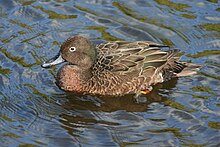
Wellington Zoo recently welcomed three juvenile Brown Teal (Pāteke) to The Nest Te Kōhanga for a health screening.

Pāteke are a small duck species endemic to New Zealand. Once widespread throughout the country, they are now our rarest waterfowl species on the mainland.
"There are fewer than 2500 Pāteke left, which makes our work with them a very special opportunity," explained Wellington Zoo Veterinarian Baukje Lenting.

"On physical examination all the birds were a good weight and looked healthy. We’re now waiting for the faecal sample results to come back, so we can then determine the next course of action," added breeder Craig Shepherd.

The three Pāteke are in quarantine on Craig’s private property in Wellington, and once given a clean bill of health will make the journey down south to Peacock Springs Wildlife Park - part of the Department of Conservation’s breed for restoration plan for the birds. The Pāteke will eventually be restored to various release sites in the South Island.


Thursday, 10 October 2013

Ninth kiwi dies at Wellington Zoo

The sole surviving kiwi of a group of nine rowi which had been brought to Wellington Zoo for treatment has died.

The birds were brought to the zoo from Motuara Island in the Marlborough Sounds in August to receive medical treatment for dermatitis.

Last week, eight of the birds died of a respiratory illness after inhaling the fungus Aspergillus in the bark they were being housed on.

The surviving kiwi was believed to have remained alive because it was off its food and not foraging in the bark.

Wellington Zoo Veterinary Science Manager Lisa Argilla says the zoo is deeply saddened by the deaths.

"This little rowi was hanging in there – he was a real fighter, this bird. However he was in critical condition.

"We kept him as comfortable as possible while he was struggling with the infection in his lungs, but sadly he didn’t make it," she says.

Dr Argilla says the post-mortem showed signs consistent with a respiratory tract infection. 

Wellington Zoo and the Department of Conservation are working together to share the learning from this case with other care providers.

The population of rowi kiwi is believed to be about 400.


Read more:

Friday, 4 October 2013

Eight rare kiwi die at Wellington Zoo

Eight of the rarest type of kiwi have died from a respiratory tract infection at Wellington Zoo.

The young rowi, who had been living on predator-free Motuara Island in the Marlborough Sounds, were being treated for a type of worm at the zoo when they started showing signs of respiratory problems, thought to be caused by the bark they were being housed on.

DOC's Franz Josef biodiversity manager Jo Macpherson said the bark was regularly used by the zoo with no adverse effects, and the birds' weakened immunity had made them more susceptible to the illness.

The respiratory tract infection was caused by a fungus called Aspergillus spp which is common to the natural environment but can cause severe damage to the lungs and air sacs in birds.

''This is an extremely rare and unfortunate occurrence and has come as a great blow,'' she said.

Ms Macpherson said it a difficult disease to treat and the zoo and DOC staff are devastated by the loss.

Wednesday, 6 February 2013

Rare bird gets zoo treatment

Taiko

One of the world's rarest birds arrived at Wellington Zoo today for treatment, after failing to leave its nest.

The taiko, also known as a magenta petrel, was flown from the Chatham Islands for treatment when monitoring showed the young bird was severely underweight.

The bird will be treated at the Zoo's hospital, the Nest, by the same team that treated Happy Feet, the penguin found on Peka Peka Beach in June 2011.

The juvenile seabird is one of the rarest bird species, currently critically endangered, with as few as 120 remaining in the wild.

The Zoo veterinary team, led by Dr Lisa Argilla, will run tests on the sick bird during the weekend.

Members of the public will be able to catch a glimpse of the rare fledgling when x-rays are taken of it on Sunday.

Only one other taiko has been brought to the New Zealand mainland from the species' breeding ground in the Chatham Islands - another sick bird successfully treated by Wellington Zoo in 2011.

Taiko once bred in huge numbers in the southwest of Chatham Island before the species was decimated by introduced mammals.

The birds were considered extinct until 1978 when a small number were rediscovered by New Zealand ornithologist David Crockett.

They are currently closely monitored by the Conservation Department and the Chatham Islands Taiko Trust.