As regular CFZ-watchers will know, for some time Corinna has been doing a column for Animals & Men and a regular segment on On The Track... particularly about out-of-place birds and rare vagrants. There seem to be more and more bird stories from all over the world hitting the news these days so, to make room for them all - and to give them all equal and worthy coverage - she has set up this new blog to cover all things feathery and Fortean.
Showing posts with label Oregon. Show all posts

Sunday, 14 April 2019

Bird Advocates Question Raven-Killing Plans To Protect Sage Grouse

March 21, 2019 11:15 a.m.

Deep in Oregon’s sagebrush country, there’s one county with an abundance of ravens. Biologists say those ravens like to eat sage grouse eggs, and they’ve come up with plans to take care of the raven problem.

That’s got bird advocates questioning whether killing one bird for the sake of another is the right move.

Sage grouse in Baker County are isolated. Their numbers have declined by 75 percent since 2005.

“The Baker (population) is the most imperiled in the state,” said Lee Foster, Oregon’s sage grouse coordinator. “We haven’t seen a similar decline anywhere else.”

A big problem in this county on Oregon’s eastern border: ravens. Foster said no other area in Oregon has so many ravens on the landscape. He said if sage grouse have trouble recovering because of predation, other habitat improvement projects won’t help.

To that point, the state has come up with plans to lethally remove up to 500 ravens in the area every year for three years.

Monday, 26 November 2018

AUTHORITIES INVESTIGATING MASS BIRD DEATH IN HILLSBORO


Some birds have been taken to a U.S. Fish and Wildlife Service lab in Ashland for testing.
Posted: Nov. 17, 2018 10:30 AM
Updated: Nov. 18, 2018 12:58 AM
Posted By: Associated Press
HILLSBORO, Ore. (AP) - Federal and state authorities are investigating a mass bird death in northwestern Oregon.
Officials say a bald eagle, red-tailed hawk and dozens of red-winged blackbirds and European starlings were found dead in a field in Hillsboro earlier this week.
Oregon State Police are investigating, and some birds have been taken to a U.S. Fish and Wildlife Service lab in Ashland for testing.
Portland General Electric says crews checked a nearby transformer but it's designed to be safe for birds, and it's unlikely the birds were electrocuted.
Audubon Society of Portland Conservation Director Bob Sallinger says it's possible the smaller birds were poisoned, and the larger, predatory birds died after eating them.

Sunday, 19 August 2018

Conservation groups sue Oregon to help protect tiny seabird, the marbled murrelet


by By STEVEN DUBOIS , Associated Press
Thursday, August 2nd 2018

PORTLAND, Ore. (AP) — Conservation groups sued the Oregon Department of Fish and Wildlife Commission on Thursday for failing to strengthen protections for the marbled murrelet, tiny seabirds that venture inland to raise their young and depend on old-growth forests for nesting.
The groups petitioned the commission in 2016 to reclassify the bird's status from threatened to endangered under the state Endangered Species Act. A listing as endangered would require the state to develop a management plan and survival guidelines for the birds that are about 9 inches (22 centimeters) long and weigh 7 to 8 ounces (198 to 255 grams).

The commission denied the petition in June by a 4-2 vote, after hearing testimony from officials in timber-rich coastal counties who worried about the economic impact of restricting logging to save the birds. Commissioners opposed to reclassification said researchers from Oregon State University are in the early stages of a 10-year study about the seabird, and they wanted to wait for results.

The defeat was tough for conservationists because the commission in February had accepted a recommendation to grant the petition.

Thursday, 26 April 2018

Rare brown booby bird from California found stranded on Oregon coast


Posted: Apr 12, 2018 8:15 PM GDTUpdated: Apr 12, 2018 8:28 PM GDT
By FOX 12 Staff
NEWPORT, OR (KPTV) -

A rare brown booby bird was found stranded on the Oregon coast.

The young bird was discovered around noon Sunday, hours after a storm battered the Pacific Northwest.

The Oregon Coast Aquarium was notified of a large, unique-looking bird on the beach adjacent to South Beach State Park.

Aquarium staff typically requests injured birds be brought to their facility in Newport, however in cases such as this, with the bird being large and potentially dangerous, aquarium workers responded to the scene.

Aviculturists identified the bird as a juvenile brown booby.

Brown booby birds are typically found in tropical or subtropical zones off the coast of Central America. In the past few decades, however, the range of the birds has expanded northward. Last fall, biologists discovered the first instance of the seabirds nesting as far north as California in Channel Islands National Park.

Wednesday, 28 March 2018

Murrelet status upgraded


Published March 13, 2018 at 08:16PM

Bird no longer a threatened species

There’s good news and bad news this week about the status of the iconic marbled murrelet.

The Oregon Fish and Wildlife Commission announced the good news: The coastal bird has been relisted from being a threatened species to an endangered one.

The bad? Circumstances that led to the new listing.

Now the state will have to draft survival guidelines and a management plan to ensure the seabird survives — and thrives — in Oregon.

The murrelet was first listed as a threatened species 23 years ago, and the petition to “uplist” the bird began in 2016 by Cascadia Wildlands, Oregon Wild, Coast Range Forest Watch, the Center for Biological Diversity, the Audubon Society of Portland and the Oregon Chapter of the Sierra Club.

The birds
Marbled murrelets are dove-sized seabirds that range along the North American coast from southeastern Alaska to Northern California. They forage in marine waters, usually within a few miles of shore, dive for schooling fish such as sand lance, anchovy or herring, and like puffins or murres, their close relatives, they are characterized by a stubby bodies and wings. Unlike puffins or murres, they do not form breeding colonies, nesting nowhere near rocky headlands or islands.


Friday, 7 October 2016

Migratory bird struggles for shelter as chimneys torn down


GILLIAN FLACCUS Associated Press

PORTLAND, Ore. (AP) — A crowd of several hundred people gathered in the growing darkness outside Chapman Elementary School in Portland, Oregon, before the first Vaux's Swift darted into view high above.

Minutes later, thousands of the tiny birds were swooping and swirling like a cloud of pulsating black ink as they circled a tall brick chimney silhouetted by the fading light.

The humans below, watching from a patchwork of blankets and empty picnic baskets, cheered as the flock poured into the chimney all at once, like water spiraling down a drain.

The swifts' noisy migratory stopover each fall has made this chimney famous with bird lovers as far away as Europe and is a quirky Portland tradition so embraced by locals that the school keeps the diminutive Vaux's Swift as its mascot.

But in recent years, fewer of the beloved birds have shown up. The birds were already struggling because of the destruction of old-growth forests and now some scientists believe they are being further impacted by the destruction of old brick chimneys along their migratory path.

The birds can fly for about 100 miles at a time between stops as they travel from Canada to Mexico and back each year and roost in large numbers in tight, enclosed spaces because their body temperature drops at night.

But the decades-old smoke stacks they've adopted are getting torn down and capped off along the West Coast because of redevelopment, seismic concerns and an urban annoyance with swift poop and noisy flocks. When a chimney that's been a major roosting site disappears, no one is sure exactly where they go.

Friday, 6 February 2015

Owl attacks joggers and steals their hats - update

Friday 6 February 2015 01.55 GMT

Oregon officials are warning early morning joggers and park visitors in the state capital, Salem, to watch out for an owl that steals hats after at least four people were attacked in a month.

No one was seriously hurt in any of the incidents but Brad Hilliard, 36, is one of the joggers who have lost headwear in a brush with the bird.

“It was kind of amazing how it just swooped down and grabbed my hat like that,” Hilliard said.

“It just pulled it right off my head like it was nothing!”

Keith Keever, the city’s parks superintendent, said officials had never heard of a case like it before.

Thursday, 22 January 2015

Large bird attacks Oregon jogger; owl is blamed for strikes

January 19, 2015 12:39 PM

SALEM, Ore. (AP) — An Oregon jogger thought someone knocked him in the head or he got hit by lightning or may have suffered a stroke when he felt a big blow to the head last week as he was jogging in Bush's Pasture Park.

When the 58-year-old man, Ron Jaecks of Salem, was struck a second time he saw a large winged animal he thought was a massive bat.

Monday, 5 January 2015

Sea bird die-off puzzles scientists

POSTED ON JANUARY 4, 2015
The Associated Press


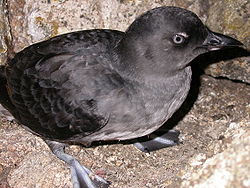
Cassins Auklet.jpgSALEM, Ore. — Scientists are trying to figure out what’s behind the deaths of seabirds that have been found by the hundreds along the Pacific Coast since October.

Mass die-offs of the small, white-bellied gray birds known as Cassin’s aucklets have been reported from British Columbia to San Luis Obispo, Calif.
It’s normal for some seabirds to die during harsh winter conditions, especially during big storms, but the scale of the current die-off is unusual.

“To be this lengthy and geographically widespread, I think is kind of unprecedented,” Phillip Johnson, executive director of the Oregon Shores Conservation Coalition, told the Salem Statesman Journal. “It’s an interesting and somewhat mysterious event.”

The birds appear to be starving to death, so experts don’t believe a toxin is the culprit, said Julia Burco, a wildlife veterinarian for the Oregon Department of Fish and Wildlife.

But why the birds can’t find food is a mystery.

Sunday, 28 December 2014

Goose Takes A Wrong Turn, Winds Up Bird Celebrity In Oregon


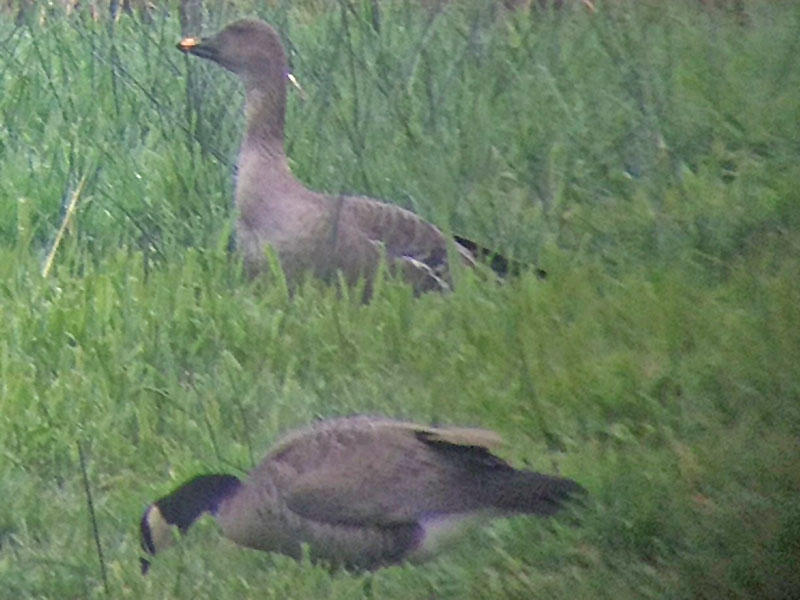
A tundra bean-goose (top) has been spotted at the Nestucca Bay National Wildlife Refuge in Oregon.

Sarah Swanson The Must-see Bird Blog
A bird rarely seen in North America has turned a small bay on the Oregon Coast into a major destination for bird watchers this winter.

Sarah Swanson and her husband Max Smith run a blog in Portland called the Must-See Bird Blog. They tried to explain what it's like to spot a tundra bean-goose at Nestucca Bay in Oregon.

“It's just so exciting, I'm trying to compare it something for a non-birder,” Swanson said.

“Maybe it's like running into a celebrity at the mall, someone you've always idolized,” Smith suggested.

Yes, in the celebrity news of bird watching this has been a top story. It's the first-ever confirmed sighting of a tundra bean-goose in the lower 48. Usually these brown and gray geese spend their winters in Asia and Europe.

Thursday, 27 November 2014

Dozens of dead crows found in Portland parks


ODFW will conduct necropsies, Audobon Society helping to investigate
By Ken Boddie and KOIN 6 News StaffPublished: November 26, 2014, 11:45 am Updated: November 26, 2014, 4:59 pm

PORTLAND, Ore. (KOIN 6) — About 30 dead crows were found along the Willamette River waterfront and some Portland parks, and officials don’t have any idea at this time what caused their deaths.

Several crows were seen suffering seizures and flopping on the ground at Waterfront Park, police said, and several dead crows were seen nearby. Other dead crows were found around Chapman and Lownsdale Square parks and the Lovejoy Fountain.

PPB Sgt. Roger Axtelm said the bureau “had a number of phone calls from citizens calling about the blackbirds that were down and apparently ill. Some were deceased.”

A few of the birds were alive but in bad shape. Bob Sallinger with the Portland Audobon Society said the ones still alive “were convulsing.”

Continued ...

Sunday, 26 October 2014

Romanian princess, husband sentenced for Oregon cockfighting ring

By Courtney Sherwood


PORTLAND Ore. (Reuters) - A princess fifth in line for the Romanian throne and her husband who admitted running a cockfighting ring in rural Oregon have both sentenced to probation and ordered to forfeit $200,000 from the sale of the property, federal prosecutors said on Thursday.

Irina Walker and her husband John Walker pleaded guilty in July to one count of running an illegal gambling operation with at a barn-like structure on their ranch in Irrigon, near the Washington state border, where they held cockfighting "derbies."

Prosecutors said the cockfighting events came complete with a chef cooking Mexican food and alcoholic drinks. They said the Walkers charged attendees $20, while participants paid $1,000 to enter up to five roosters in fights.

As part of a plea agreement with prosecutors that saw additional charges dropped, the couple admitted to financing, supervising and owning the cockfighting venture during 2012 and 2013.

Saturday, 26 April 2014

Pet Duck Attack Lands Owner $275,000 Lawsuit

By Jonathan Kaminsky

OLYMPIA, Wash., April 22 (Reuters) - A woman visiting her mother in Oregon is suing her neighbor, seeking $275,000 for pain, suffering and other damages she says were inflicted when a pet duck ambushed her for no apparent reason.
Cynthia Ruddell, 62, of Washougal, Washington, was on her mother's property in Estacada, Oregon, about 25 miles (40 kilometers) southeast of Portland, when a neighbor's duck attacked her without provocation, according to the suit filed in Oregon state court last Friday.

In her attempt to run away from the agitated waterfowl, Ruddell fell to the ground, breaking her right wrist and spraining an elbow and shoulder, the suit claims. The incident occurred in May of 2012.

The complaint accuses the bird's owner, Lolita Rose, of failing to maintain control of her pet or "to warn or otherwise inform neighbors of her duck's dangerous propensity in attacking individuals."


Wednesday, 26 March 2014

ODFW plans hazing of fish-eating coastal birds

Driving at cormorants in boats, firing small pyrotechnics
By KTVZ.COM news sources
POSTED: 9:33 AM PDT March 24, 2014 

TILLAMOOK, Ore. -

Hazing of double-crested cormorants is set to begin soon in several areas along the Oregon coast in an attempt to improve survival of juvenile salmon and steelhead as they migrate from inland waters to the Pacific, the Oregon Department of Fish and Wildlife said Monday


Double-crested cormorants are large, fish-eating waterbirds that occur throughout Oregon, and are particularly prevalent in the state’s estuaries during April through September. Research suggests that cormorants may eat significant numbers of juvenile salmon and steelhead that migrate to the ocean during this time.

To reduce threat to young fish, the Oregon Department of Fish and Wildlife is working with several nonprofit and local governmental organizations to haze cormorants in six coastal estuaries over the next two to four months.

Hazing will take place as early as March 27 and continue in most areas through May 31 in the Nehalem, Nestucca, and Coquille river estuaries and in Tillamook and Alsea bays. The program could continue through July 31 in Astoria, where the Clatsop County Fisheries Project manages a salmon rearing program.

Hazing generally will take place during the morning and evening hours, when cormorants feed most actively, in the bays and estuaries where young fish tend to linger as they make the transition from fresh to salt water.

Wednesday, 5 March 2014

Fighting eagles lock talons in Portland tree

By KOIN 6 News staffUpdated: Monday, March 3, 2014, 2:14 pmPublished: Monday, March 3, 2014, 12:43 pm

Two bald eagles appeared to be stuck together in a tree in Southeast Portland on Monday, March 3, 2014. (KOIN 6 News/Dean Barron)

PORTLAND, Ore. (KOIN) — Two fighting eagles spiraled down into a tree in Southeast Portland and became locked by their talons, but flew off and continued fighting when wildlife officials approached.

Lacy Campbell with the Portland Audobon Society told KOIN 6 News the eagles took off once she and a wildlife veterinarian got within three feet of them in the tree at SE 55th Avenue and Division.

Crews from both the Oregon Fish & Wildlife Department and the US Fish & Wildlife plus the Audobon Society went to the site after they were called.

It’s normal at this time of the year for eagles to fight, Campbell said. Largely these are territorial battles, and she said the eagles continued to fight even while they were in the tree.

Once they flew off, the eagles continued fighting, with one chasing the other.

Sometimes the eagles will fight to the death, Campbell said, or until there’s a clear winner.

Saturday, 8 February 2014

Oregon settles seabird suits, cancels timber sales

By JEFF BARNARD, Associated Press
Updated 8:57 pm, Wednesday, February 5, 2014

GRANTS PASS, Ore. (AP) — The Oregon Department of Forestry has agreed to cancel more than two dozen timber sales on state forests because they threaten the survival of the marbled murrelet, a seabird that nests in large old trees.

The proposed settlement filed Wednesday in U.S. District Court in Eugene comes in a lawsuit brought by three conservation groups, Cascadia Wildlands, theCenter for Biological Diversity, and Audubon Society of Portland.


Thursday, 29 August 2013

Princess Faces Charges Over Cockfighting Ring

A Romanian princess and her husband, a former US sheriff's deputy, are among several people arrested in connection with an alleged cockfighting ring in Eastern Oregon.

Irina Walker, 60, and John Wesley Walker, 67, are accused of hosting cockfighting derbies and illegal gambling at their ranch outside the small Morrow County town of Irrigon.

The Walkers and four other people from Irrigon and Hermiston were to be arraigned in federal court in Portland on charges of operating an illegal gambling business.

Twelve others from Oregon and Washington face lesser charges of conspiracy to violate the Animal Welfare Act through illegal animal fighting.

They were due to be arraigned in Portland and Yakima, Washington State.

A US indictment said 10 different cockfighting derbies were held at the Walker's ranch between April 2012 and April 2013, bringing in as much as $2,000 (£1,300) a day.

Blades were attached to the birds' legs, spectators were charged admission, and food and drink were sold, the indictment said.

The four others charged with being part of the gambling business are Mario Perez, 62, of Hermiston; David Sanchez, 29, of Irrigon; Jose Luis Virgen Ramirez, 48, of Hermiston; and Aurelia Garcia Mendoza, 33, of Irrigon.

Sunday, 18 August 2013

Osprey Gets A Lift From Human Helpers

Born this spring, a juvenile osprey in Warrenton needed a little help getting back to its nest Wednesday.

The young bird of prey was discovered Tuesday in a yard near Alder Avenue and Southwest 16th Street, not far from its parents’ platform nest.

Sharnelle Fee, director of Wildlife Center of the North Coast, was contacted to come and take a look. She discovered that the bird’s feathers were just growing in and likely had glided to the ground in an attempt to fly. She and others monitored the osprey to see if it could take off.

“We were hoping he would fly, but his feathers haven’t grown out yet,” Fee said. “This one is a little behind.”

The osprey’s sibling and parents paid little attention to the situation. In an effort to keep the bird safe, it was placed on a woodshed over night. After the other ospreys continued to ignore the juvenile Wednesday, Fee said people decided to take action.

Melisa Colvin, a volunteer with the wildlife center for nearly three years, settled down the juvenile while Fee fed it an electrolyte solution and small whole fish. She suspected that it hadn’t eaten anything since Monday morning. However, they wanted to make sure it was able to still eat something.

Saturday, 27 July 2013

Feds advance plan to kill barred owls in Northwest

GRANTS PASS, Ore. Federal wildlife officials plan to dispatch armed bird specialists into forests of the Pacific Northwest starting this fall to shoot one species of owl to protect another that is threatened with extinction.

The U.S. Fish and Wildlife Service on Tuesday released a final environmental review of an experiment to see if killing barred owls, which are bigger, more aggressive and less picky about food, will allow northern spotted owls to reclaim territory they’ve been driven out of over the past half-century.

The agency has been evaluating the idea since 2009, gathering public comment and consulting ethicists, focus groups and scientific studies. It will issue a final decision on the plan in a month.

“If we don’t manage barred owls, the probability of recovering the spotted owl goes down significantly,” said Paul Henson, Oregon state supervisor for Fish and Wildlife.

The agency’s preferred course of action calls for killing 3,603 barred owls in four study areas in Oregon, Washington and Northern California over the next four years.

The plan is expected to cost about $3 million and requires a special permit under the Migratory Bird Treaty Act, which prohibits killing nongame birds.

Saturday, 13 April 2013

Protection considered for bird that needs wildfire


By JEFF BARNARD AP Environmental Writer
Posted:   04/08/2013 03:12:04 PM PDT
Updated:   04/08/2013 06:27:26 PM PDT

GRANTS PASS, Ore.—A woodpecker that depends on intense wildfires for the standing dead trees where it feeds on insects is being considered for protection under the Endangered Species Act.

The U.S. Fish and Wildlife Service said Monday it will take a closer look at the black-backed woodpecker. A decision is due in a year but could take longer due to budget cuts.
Fish and Wildlife is considering two populations of the woodpecker—one inhabiting the Sierras of California and eastern Cascade Range of Oregon, and another in the Black Hills of South Dakota and Wyoming. Another Northern Rockies population is not under consideration.

The agency said conservation groups that petitioned to protect the birds presented substantial scientific information that they were suffering a loss of habitat because of fire suppression, salvage logging that removes fire-killed trees, and thinning to reduce the intensity of wildfires.

The decision is giving conservation groups hope the bird can force changes in national wildfire policy the same way the northern spotted owl overhauled the idea of logging old-growth forests.

Chad Hanson, staff ecologist of the John Muir Project of the Earth Island Institute, said the woodpecker has already figured in lawsuits to stop salvage logging.

"We hope as a result of this, the Forest Service will in fact not only pay more attention to species like this, but do a proactive job of educating people that when fire happens, it is not a bad thing, wildlife rely upon it," Hanson said. "These notions of catastrophic wildfire are really just politics and ignorance, and reflect outdated thinking."

Forest Service spokesman Larry Chambers said the agency's wildfire policy was not changing because the bird was not yet listed as a threatened or endangered species. He added that the agency already took "science-based actions to protect its habitat."

The agency has also said budget cuts this year will force it to let more fires burn—a prospect Hanson said would benefit the woodpecker and a broad range of species.

Continued:  http://www.mercurynews.com/breaking-news/ci_22981392/protection-considered-bird-that-needs-wildfire