As regular CFZ-watchers will know, for some time Corinna has been doing a column for Animals & Men and a regular segment on On The Track... particularly about out-of-place birds and rare vagrants. There seem to be more and more bird stories from all over the world hitting the news these days so, to make room for them all - and to give them all equal and worthy coverage - she has set up this new blog to cover all things feathery and Fortean.
Showing posts with label Cumbria. Show all posts

Sunday, 24 March 2019

Cumbrian seabird spotted in South Africa


9th March

A RARE species of seabird that hatched in Cumbria last year has been photographed in South Africa.
The sighting of the sandwich tern bird delighted staff and volunteers from the RSPB, Natural England and Cumbria Wildlife Trust, who work in partnership with Lancaster University, to conserve these special birds in the county.
The tern in question was ringed at the RSPB Hodbarrow nature reserve in Millom last year as part of a study into their movements.
Several young terns at Hodbarrow and Cumbria Wildlife Trust’s Foulney Island Nature Reserve were ringed during the last breeding season with coded, coloured rings.
This is a scientific method whereby birds are fitted with light-weight, coloured, individual identification rings on their legs that can be read from a distance, to help monitor their movements without the need to re-catch them.

Monday, 8 October 2018

Figures show scale of crime against birds of prey in Cumbria

24th September

BIRDS of prey continue to be illegally killed in Cumbria, according to the latest figures.
The Royal Society for the Protection of Bird's Birdcrime report has revealed that there were four confirmed incidents of bird of prey crime in the county last year.
These include the shootings of a buzzard, two short-eared owls and a peregrine.
Between 2012 and 2017 there were 19 confirmed bird of prey crimes in Cumbria, making it the joint sixth worst county in the UK for raptor persecution.
Nationally, there were 68 incidents of bird of prey persecution in 2017.
The Birdcrime report found there were 48 shootings, nine poisoning, three trappings, four nest destruction and four other incidents of illegal persecution against raptors.
The RSPB said the numbers were "just the tip of the iceberg ", with charity bosses saying many illegal killings had gone undetected or unreported.
The charity also pointed out there were only four raptor persecution-related prosecutions in the UK in 2017 and only a single conviction.
Martin Harper, RSPB conservation director, said: “Birds of prey are part of our heritage and inspire us.

Continued  

Monday, 10 September 2018

RSPB vows to crackdown on wild bird shooting after gamekeeper found guilty of killing owls


The RSPB have vowed to crackdown on illegal wild bird shooting after a gamekeeper is found guilty of killing two owls.
Timothy Cowin was caught by RSPB officers shooting two short-eared owls on Whernside Moor in Cumbria last April.
Cowin attempted to hide the body of the wild birds, but they were found by RSPB officers on the moors.
Police officers were called to the scene where they pursued Cowin on foot. He was later arrested.
Officers believed Cowin, 44, was using a device to attract the birds to the area in order to shoot them.
Cowin pleaded guilty to three charges concerning the killing of the owls. He also pleaded guilty to one charge relating to the possession of items capable of being used to commit offences against wild birds.
On Tuesday, Cowin appeared at Yorkshire Magistrates' Court. He was fined £400 for each of the two birds and £200 for possession of the device. As well as this, he was ordered to pay £170 costs and £40 victim surcharge - a total of £1,210.
Last updated Wed 29 Aug 2018

Sunday, 10 June 2018

RSPB appeal after three hen harriers disappear in Scotland and Cumbria

22nd May

Police and the RSPB are appealing for information following the disappearance of three protected, satellite-tagged hen harriers in Scotland and Cumbria.

After monitoring her progress since she fledged last June, a hen harrier named Saorsa suddenly ceased sending transmissions in February 2018 whilst located in the Angus Glens, Scotland. She has not been seen or heard of since.

A male bird, named Blue, then raised concerns in March this year when his tag, which had also been functioning perfectly, suddenly and inexplicably cut out near Longsleddale, South Lanarkshire.

In the same month, a tagged bird named Finn – after young conservationist Findlay Wilde – vanished near Moffat, Scotland. Finn was tagged as a chick in 2016 from a nest in Northumberland, one of only three hen harrier nests to fledge young in the whole of England that year.

Read more  

Friday, 8 June 2018

Single pair of blackbirds builds ten nests along ladder in Cumbria


25th May

Up and down the country birds have been racing to find a mate and get on the property ladder ahead of the breeding season. And as a couple of RSPB members found in their back garden, one busy pair of blackbirds have taken it a step further with a real life game of ‘birds and ladders’.

As Bill and Jo Maddams were giving their garden in Penrith, Cumbria, a spring clean they noticed something unusual between the rungs of a ladder hanging on the wall. They say practice makes perfect but one pair of hard-working blackbirds took it to a new level by building 10 nests side by side giving themselves plenty of options.

Bill Maddams, who first spotted the nests, said: “By leaving out a supply of food and water in our garden we’re always joined by a variety of different birds such a robins, blue tits and goldfinches. However, as I looked out my window one morning it was a busy pair of blackbird that caught my eye. Over a number of days they were furiously building something and it wasn’t until we started our garden spring clean that the true extent of their efforts was revealed.”


Sunday, 3 December 2017

Appeal after rare bird of prey goes missing from Cumbria


The bird had been satellite-tagged as part of a protection project

Police and the RSPB are appealing for information following the disappearance of a satellite-tagged bird of prey in Cumbria.

The hen harrier, named Manu, was one of a nest of two chicks monitored and protected by the Northumberland Hen Harrier Protection Partnership and tagged as part of the RSPB’s EU-funded Hen Harrier LIFE+ project in July this year.

Manu’s tag had been functioning perfectly until it suddenly stopped on the morning of October 18.

Data from Manu’s tag indicated he had been in the same location near Denton Fell, on the Cumbria/Northumberland border, for around three weeks.

However, the last signal was sent from Blenkinsopp Common, east of Brampton, shortly before 10am and he has not been seen or heard of since.


Wednesday, 6 July 2016

Rare birds breeding in Cumbria

27 Jun 2016 / Sara Royle

A PAIR of rare birds have begun breeding in Cumbria.

The hen harriers are breeding at RSPB Geltsdale, the nature conservation charity have revealed.

Wardens visited the nest under licence last week and were delighted to discover the female bird of prey was incubating five eggs.

Steve Westerberg, site manager at RSPB Geltsdale, said: "We’re delighted that we have hen harriers breeding on the reserve once again. It’s an incredibly nerve-wracking time but we’re crossing our fingers that we’ll see fledged young in a few months time.


"Staff and volunteers are watching the nest around the clock to prevent unnecessary disturbance, and we have spoken to our neighbouring estates about the birds so they can play their part in helping to ensure that the birds are safe when they leave our reserve to hunt."

The hen harrier nest is believed to be one of only three in England this year.

Monday, 25 April 2016

Bird of prey attacking members of the public along popular Furness walking route


19 April 2016 2:44PM

WALKERS are being warned about a swooping buzzard which has been targeting members of the public. 

A sign has been put up at the beginning of the Furness Railway line walk between Broughton and Coniston after a number of people have been attacked by a bird of prey. 

Andy Jackson was on the path on Saturday when his wife Toni was targeted by the buzzard. Mr Jackson, from Silecroft, said his wife, a Sellafield employee, was left with visible injuries after the bird swooped on her. 

"I was taking the dog for a walk and she was running, the bird just swooped down out of nowhere and attacked her, drawing blood on her head," Mr Jackson, a decorator, said. 

"Some of the people who came over after it happened said they've heard it's happened a few times, mainly to people who are jogging or running, and they've had to put a sign up warning people."

Louise Clews works in the Manor Arms pub in Broughton and said a number of people had been attacked by the bird in recent weeks. 

She said: "It has happened quite a few times, a lot of people in the village are talking about it, it's like Buzzardgate. 

"It only seems to be runners it has a problem with, maybe it's the lycra? But more than likely it's the running motion. 

"Apparently the buzzard has been here a while but it hasn't attacked people in previous years that we're aware of. But it's only runners it takes offence to, you're ok if you're just walking."

Wildlife expert and birdwatcher Joe Murphy, from Cumbria Wildlife Trust, said it was "very rare" for a bird of prey to attack a human. 

"I've never heard of anything like it," he said.

Friday, 4 September 2015

BEE EATER CHICKS EXPECTED TO DRAW BIG CROWD TO QUARRY NESTING SITE

By Jenny Brown

Last updated at 09:51, Saturday, 29 August 2015

Crowds of bird watchers are expected to flock to north Cumbria over the bank holiday weekend with the hope of being the first to see the chicks of exotic rare birds.

Experts say young bee-eater chicks could fledge from their nest at Hanson UK’s Low Gelt quarry, near Brampton, any day.

Bee-eaters, which are one of Europe’s most striking birds, have been living in the sand quarry since June and in the past month more than 5,000 people have visited the site with the hope of catching a glimpse of their kaleidoscopic feathers.

RSPB bee-eater warden Jason Moule said they were expecting a surge of visitors in the coming days.

“It’s still pretty busy and pretty steady at the moment but it could be that the chicks are going to fledge at any time now. It could be any day. It is very exciting,” she said.

They are almost at the stage where they are ready to fly and it will be the first time anyone has had the chance to see them.

The RSPB is expecting three or four chicks but bee-eaters can lay any amount of eggs between four and a maximum of 10.

Jason said: “They’ve been taking a lot of food in but at the moment now that’s starting to die down a bit because they’re trying to drop the weight of the chicks because they’re actually a lot heavier than the adults at this stage. They’re trying to get their weight down so they can fly.”

There were originally two pairs but one has moved on. Jason explained that until they can investigate the nest they can only guess the second pair left due to weather or because they sensed their eggs weren’t fertilising properly.

Another helper male has arrived and is also feeding the chicks.

Tuesday, 25 August 2015

CARLISLE FIREFIGHTERS RESCUE BIRD STUCK IN TREE

Published at 16:47, Monday, 24 August 2015


It has to rank as one of the most unusual rescue operations undertaken this year by Cumbrian firefighters.

Sky the Harris hawk decided to go exploring after the lead which secures him to his perch snapped.

Initially, his owner Jonathon Graham, 20, was not too worried as the bird of prey was never likely to stray too far from his regular source of food at his home in Harraby Grove, off London Road, Carlisle.

But Jonathon was horrified when he caught up with Sky just along the road – and saw his bird’s tether had become tangled in a tree branch 50ft off the ground.

But thanks to the skill of firefighters Janice Scott and Steve Johnston expert help was at hand.

Sunday, 2 August 2015

Bee-eaters breed in Cumbria

Published by surfbirds on August 2, 2015 courtesy of RSPB, surfbirds archive


Two pairs of rare bee-eaters have set up home and are raising chicks at a quarry in Cumbria. With their kaleidoscopic plumage, bee-eaters are one of Europe’s most striking and beautiful birds.

They are normally found nesting in southern Europe and are a very rare breeding bird in the UK. However, visits have increased in recent years, prompting speculation of colonisation.

Last year, two pairs successfully raised chicks on the Isle of Wight and prior to this, birds nested in Herefordshire in 2005, County Durham in 2002, and in Sussex in 1955

Wednesday, 26 November 2014

UK zoo owner convicted of allowing invasive species to escape

The owner of South Lakes Wild Animal Park (SLWAP) in Cumbria, David Stanley Gill, along with the zoo itself, has been convicted of allowing an invasive bird species to escape, contrary to the Wildlife and Countryside Act 1981 Sec. 14(1).

In July 2013 last year a Sacred Ibis had been sighted on the Cumbrian coast in the region of Dalton-in-Furness a number of times. An expert ornithologist working for Animal and Plant Health Agency (APHA) established it was the Sacred Ibis and the birds were originating from SLWAP.

The Sacred Ibis does not occur naturally in Great Britain, and if it was allowed to colonise it would pose a significant threat to the natural fauna of Britain. As such it is one of only a handful of species that the government has put an action plan in place to deal with if it does colonise. 

The case was then picked up by officers from Cumbria Police and the NWCU, who with APHA, searched the zoo. During the visit officers found a large open enclosure housing just 27 Sacred Ibis, when the zoo’s records indicated that there should be 36. The officers also witnessed and filmed the birds flying out to the park. 

Wednesday, 5 November 2014

Cumbria one of worst spots in country for 'bird crime', says charity

First published 09:07 Wednesday 5 November 2014 in Newsby Katie Dickinson


THE RSPB has issued a plea for the shooting community to ‘clean up its act’ as figures reveal Cumbria is one of the worst counties in England for ‘bird crime’.

A report released by the charity showed that in 2013 there were 164 reports in the UK of illegal killings of birds of prey – including shootings, poisonings and pesticide-related offences.

Cumbria, Lancashire and North Yorkshire were among the top hotspots for the incidents in England.

The RSPB believes that reported incidents are just ‘the tip of the iceberg’, as the crimes tend to take place in remote areas and go undetected and unreported.

Sunday, 6 July 2014

CUMBRIA NEST CAMERA ALLOWS BIRD FANS TO SEE OSPREY CHICKS


Last updated at 15:11, Friday, 04 July 2014

IT’S the Kodak moment you don’t want to miss – capturing the newborn. But that’s exactly what Cumbria Wildlife Trust had to contend with before announcing the arrival of their first osprey chicks.

THESE spectacular birds of prey arrived at Foulshaw Moss from West Africa in late March and April. 

The fish-eating birds are catching prey from the estuary between Arnside and Milnthorpe. You can get to the reserve straight off the A590 near Witherslack.

There is a small car park and the nest can be seen from a new viewing point. There is a short walk around a boardwalk and a platform with lovely views of the whole nature reserve. 

Binoculars are essential and the adults can clearly be seen bringing back several fish a day to feed the chicks. Keep up to date with the Foulshaw Moss osprey viewpoint blog as the chicks grow rapidly and eventually fledge.Unfortunately a glitch with the nest camera at Foulshaw Moss Nature Reserve meant the trust couldn’t confirm the eagerly-anticipated news until it had evidence.

Now that the osprey nest camera is back online, three healthy chicks are clearly visible.

Andrea Simpson, publications officer for Cumbria Wildlife Trust, said: “It’s been so exciting for us. At first the camera was taking photos pretty much in the dark. For a good couple of weeks, even though the behaviour was indicating there were chicks, we didn’t have conclusive photographic evidence. When we got those definitive pictures we were thrilled.”

Saturday, 5 July 2014

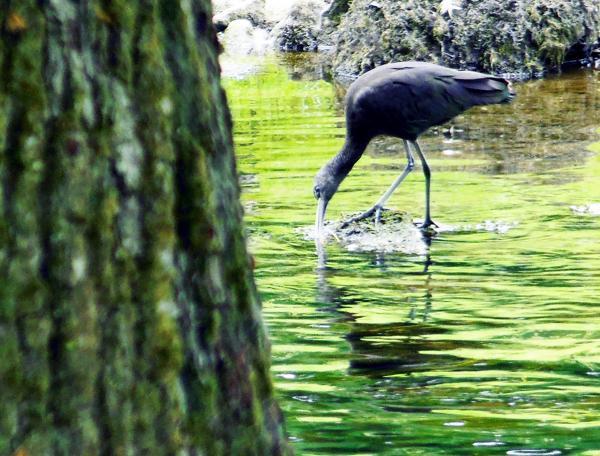
PICTURE: Rare bird turns up for a wade in South Lakeland water after Greece and Turkey turns too hot

Updated 9:09am Thursday 3rd July 2014 in NewsBy Katie Dickinson, Reporter
AN exotic visitor to the River Bela has been attracting birdwatchers from Cumbria, Lancashire and beyond.

The rare glossy ibis was first spotted just south of Milnthorpe on June 17 and has been sighted most days since.

An RSPB spokesperson said the wading bird was ‘a fairly rare sighting but not unheard of’ in the UK.

The glossy ibis would normally be in Greece or Turkey at this time of year after spending the winter in north Africa.

There have been around ten sightings across the UK so far this year.

Saturday, 10 May 2014

Ospreys seen at new site in South Lakes

8th May 2014

By Tom Murphy, Reporter

THOUSANDS of bird enthusiasts have been keeping their eyes on the skies for a glimpse of the Bassenthwaite ospreys since they began nesting in 2001.

A picture from the camera overlooking 
the nest at Foulshaw Moss

But now hopes are high that the rare birds will be spotted further south in Cumbria after a pair of the birds settled at a peatbog near Witherslack.

John Dunbavin, reserve manager at Foulshaw Moss Nature Reserve, said the ospreys arrived from Africa in early April.

He is hopeful that the site will get its first chicks later this year and has set up a blog so those interested can folllow any progress.

Monday, 24 March 2014

THREATENED BIRD SPECIES: Keep a look out for Hen Harriers


Birdwatch News Archive

Posted on: 12 Mar 2014
The RSPB is asking people who spend time in the uplands of Cumbria to keep their eyes peeled for Hen Harrier, England’s most threatened bird of prey.

The conservation charity has relaunched its Hen Harrier Hotline, now in its seventh year, in the hope of discovering where these birds are potentially breeding. The uplands of Northern England has the ecological potential to hold at least 320 pairs of breeding Hen Harriers, but last year not a single chick was raised in the whole of England.


Monday, 15 July 2013

Rare buzzards beaten to death by gamekeeper

With four brutal blows, Colin Burne smashes the protected bird of prey until its life ebbs away.

Seconds later, he repeats the outrage, grabbing another trapped buzzard and pummelling the bird to death with a wooden stake.

In a final act of defilement for one of the countryside’s most beautiful creatures, the 64-year-old gamekeeper hurls the lifeless birds into a bucket.

Unknown to Burne, each graphic moment of the 90-second onslaught was being captured by a covert camera set up to watch a bird-trap on land managed by a private shooting syndicate in Whinfell Forest, near Penrith, Cumbria. RSPB investigators had begun the surveillance operation after a tip-off and were left stunned at the brazen way Burne killed the protected birds. When officers from Cumbria Police and the RSPB later searched the site they found the remains of several other buzzards.


Only 70 days jail sentence?  Suspended for a year due to ill-health?  Oh come on.......

Tuesday, 19 March 2013

RSPB Objects to proposed Killington Lake 433ft giant wind turbines


The RSPB has objected to the Banks Renewables planning application to install three giant wind turbines next to Killington Lake in Cumbria. The developer has calculated that 1 Osprey would collide with the Turbines every 3.5 years or 6.5 birds killed over the life of the scheme (25 years).

The RSPB are not comfortable with this figure bearing in mind that there are only 180 breeding pairs of Osprey in the UK (figure from BTO).  The RSPB are also very concerned with the impact these turbines will have on the 3000+ nesting pairs of Black Headed Gull which nest on Killington Lake. This is the largest nesting colony in Cumbria and at this level they make up 2.34% of the nationalpopulation. The colony is therefore of national significance based on established criteria for the selection of biological Sites of Special Scientific Interest.


Saturday, 6 October 2012

Wildlife killings add weight to calls for law changes, says RSPB

The fatal shooting of a bird of prey in Cumbria was one of a catalogue of killings in a bad year of wildlife crimes.

A tawny owl died after being shot in the back of its head with an airgun pellet at Glasson Moss, near Port Carlisle.

It is one of a string of cases the RSPB believes add weight for calls to changes in wildlife law and policing so that crimes against animals can be given greater priority.

Other confirmed cases of birds of prey being illegally killed in Cumbria during 2011 include the poisoning of a red kite. Another red kite was also shot in the Lake District.

The RSPB today published its annual wildlife crime figures which it says showed cases of poisoning, shooting and trapping for red kites, golden eagles, peregrine falcons, goshawks and other persecuted species.


Continued: http://www.newsandstar.co.uk/news/wildlife-killings-add-weight-to-calls-for-law-changes-says-rspb-1.1002329?referrerPath=news