As regular CFZ-watchers will know, for some time Corinna has been doing a column for Animals & Men and a regular segment on On The Track... particularly about out-of-place birds and rare vagrants. There seem to be more and more bird stories from all over the world hitting the news these days so, to make room for them all - and to give them all equal and worthy coverage - she has set up this new blog to cover all things feathery and Fortean.
Showing posts with label Bristol Zoo. Show all posts

Thursday, 3 August 2017

Extremely rare bird is born at Bristol Zoo…with a face only its mother could love


Extremely rare bird is born at Bristol Zoo...with a face only it's mother could love 
An extremely rare bird has been born at a UK zoo for the first ever time — with a face only its mother could love.
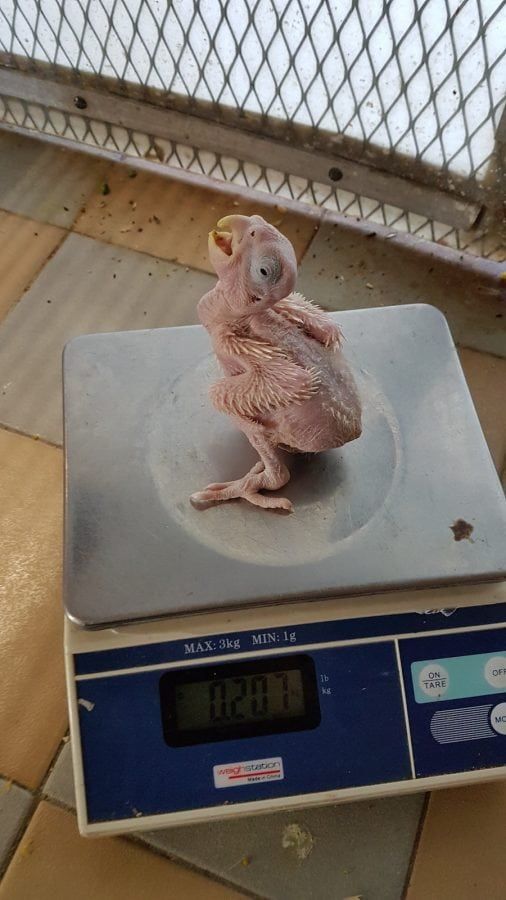
The Philippine cockatoo chick, which has not yet been named, hatched last week weighing a tiny 0.207 lbs.

But the chick quickly became a contender for the ugliest bird in the world with its saggy, featherless skin and crusting, undeveloped beak.

It will, however, find comfort in the fact that one day he will grow up to be a beautiful white bird, with bright orange and yellow tail feathers on its underside.

This extremely rare chick has been hatched at Bristol Zoo Gardens for the first ever time.
The chick’s arrival at Bristol Zoo gardens is particularly significant because the breed of bird is on the International Union for Conservation of Nature’s red list.

The critically endangered species has seen a rapid population reduction owing to extensive loss of its lowland habitats and trapping for the cagebird trade.

The chick’s family is now being kept under close surveillance because the parents have never reared any young before.

Its parents were brought to Bristol Zoo in 2004 and have since divided their time between there and the Wild Place Project near Cribbs Causeway.

Bristol Zoo Gardens team leader of birds, Trevor Franks, said during his ten years at he had only previously seen one egg from this pair of Philippine cockatoos – and that had been broken.

Continued  

Saturday, 29 November 2014

Bristol zoo asks John Lewis to help its penguin appeal – the answer is no

Zoo relies on public donations after retailer, whose Christmas ad is about boy seeking friend for his lonely penguin, disappoints


The Guardian, Thursday 27 November 2014 16.32 GMT

When Bristol Zoo urgently needed help to raise money for orphaned penguins this Christmas a large retailer that based its festive promotion around a lonely, flightless bird with a fondness for fish, seemed the obvious choice. But then came the twist: the company, John Lewis, said no.

Bristol Zoological Society this month started an appeal for £20,000 to help care for African penguin chicks abandoned by their parents and being cared for at a rehabilitation centre in South Africa, a project led by the zoo.

The species, commonly known as the jackass penguin, is endangered. The bird’s population fell 70% between 2001 and 2013 and fewer than 18,000 breeding pairs are left in the wild off the South African and Namibian coast. A lack of action could end in extinction, the zoo says.

Every year many chicks are abandoned by parents foraging for food. The Southern African Foundation for the Conservation of Coastal Birds, outside Cape Town, usually takes in about 450 over a three-month period. But this year the centre has seen 460 arrive in November alone.

Monday, 24 September 2012

Rare Socorro dove hatches at Bristol Zoo

Photo: ZSL
One of the rarest birds in the world has been bred at Bristol Zoo.

The Socorro dove, which originates from Socorro Island off Mexico, died out in the wild in the 1970s as a result of human disturbance and habitat loss.

The latest arrival was one of two birds to hatch, but one did not survive. It is the first time the doves have bred successfully at the zoo in five years.

There are 100 Socorro doves in captivity around the world, including 25 birds in six UK zoos.

Bristol Zoo's curator of birds, Nigel Simpson, said: "Sadly these birds now only exist in captivity, so to have this chick hatch and survive 40 years after they were last seen in the wild is a great achievement."

Continued:
  http://www.bbc.co.uk/news/uk-england-bristol-19684907


More information on the Socorro Dove (Zenaida graysoni):