As regular CFZ-watchers will know, for some time Corinna has been doing a column for Animals & Men and a regular segment on On The Track... particularly about out-of-place birds and rare vagrants. There seem to be more and more bird stories from all over the world hitting the news these days so, to make room for them all - and to give them all equal and worthy coverage - she has set up this new blog to cover all things feathery and Fortean.
Showing posts with label Virginia. Show all posts

Thursday, 28 March 2019

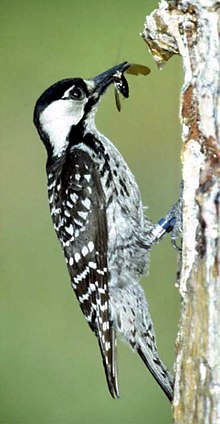
Endangered Woodpeckers Find New Home In “Big Woods Wildlife Management Area”


March 21, 2019
The Virginia Department of Game & Inland Fisheries (DGIF) is has announced that a federally endangered species, the red-cockaded woodpecker, has moved in to Big Woods Wildlife Management Area (WMA) in Sussex County.
This is the first documented occurrence of red-cockaded woodpeckers residing on the WMA. The pair of woodpeckers are banded and originated from The Nature Conservancy’s Piney Grove Preserve, which neighbors Big Woods WMA.
The Preserve has long harbored the sole remaining population of red-cockaded woodpeckers in Virginia, although a second population is in the process of being re-established in the Great Dismal Swamp National Wildlife Refuge by the U.S. Fish and Wildlife Service, the DGIF and partners.
The DGIF’s Executive Director Bob Duncan lauds this discovery as a conservation success for Virginia. “The long-term commitment of our agency and its partners to acquire and actively manage the Big Woods WMA for red-cockaded woodpeckers, and many other species, is tremendous, said Duncan. The arrival of these red-cockaded woodpeckers at the WMA marks a major landmark in DGIF’s conservation efforts for this endangered species. Under the federal Endangered Species Act, the DGIF has a Cooperative Agreement with the U.S. Fish and Wildlife Service to serve as the lead agency for the conservation of protected animal species in Virginia, including red-cockaded woodpeckers.  The Big Woods WMA was purchased in 2010 with funds provided in part by the U.S. Fish and Wildlife Service’s Recovery Land Acquisition program, which provides grant funds to support the conservation of habitat for endangered and threatened species.”

Sunday, 5 June 2016

A kiwi is born! Rare flightless New Zealand bird hatched at National Zoo’s Virginia research facility

It’s taken nearly six years, but two endangered flightless birds have a chick that hatched in May at the National Zoo’s research facility, a spokeswoman said.

The brown kiwi, which is native to New Zealand, made its debut May 10 at the Smithsonian Conservation Biology Institute in Front Royal, Va.

Devin Murphy, a zoo spokeswoman, said this is the first time a chick has hatched at the biology institute. And the little one is special: It’s the first offspring of two kiwis — Ngati Hine Rua and Ngati Hine Tahi — that were given as a gift from the government of New Zealand in 2010.

The birds — which are similar in size to chickens — mate for life, Murphy said. And when the chick’s parents arrived in Virginia six years ago, they were the first kiwis to leave New Zealand in 20 years.

After the chick’s mother, Ngati Hine Rua, laid the egg, she did not incubate it. Female kiwis do not incubate eggs, which typically weigh about 20 percent of the mama’s body weight, Murphy said. Instead, male kiwis do most of the work, and in this particular case, officials said, a kiwi named Iwi incubated the egg for 30 days before keepers placed it in an incubator.

Sunday, 14 February 2016

At least 18 birds, other wildlife being treated after exposure to Potomac River oil slick

BY MICHELLE ALTENBERG, JEFF GOLDBERG, ABC7 FRIDAY, FEBRUARY 5TH 2016

ARLINGTON, Va. (ABC7) — A petroleum-based oil slick on the surface of the Potomac River has sent at least 18 birds and an unknown number of fish into rehabilitation, the Coast Guard said Friday.

Seven geese with an oily sheen covering their feathers could be seen waddling along the riverbank Friday afternoon. Experts were preparing to recover the birds and take them in for treatment, according to ABC7 Reporter Jeff Goldberg.

The oil slick, which extends along the Potomac from Reagan National Airport to Wilson Bridge, poses no public health threat, according to the Coast Guard.

Officials said crews are working around the clock to clear the river of the petroleum product, but there is still no estimated completion date.

The Coast Guard said there is a heavy concentration of the oil at Roaches Run, but the origin of the oil is still unknown.


Monday, 26 October 2015

Secret nocturnal lives of wood thrushes

Date:October 21, 2015
Source:Central Ornithology Publication Office

We know surprisingly little about what songbirds do after the sun goes down, but past studies have provided tantalizing hints that many forest birds roost for the night in different habitat from where they spend the day. For a study forthcoming in The Auk: Ornithological Advances, Vitek Jirinec of the College of William and Mary and his colleagues captured and radio-tagged Wood Thrushes (Hylocichla mustelina) to track their movements during both day and night. Their results, the first broad description of roosting ecology for a migratory North American songbird during breeding season, show that the birds often move out of their daytime ranges to sleep, seeking dense areas of vegetation where they're safe from predators.

Jirinec and his colleagues tracked 47 birds on the coastal plain of southeastern Virginia during the breeding seasons of 2013 and 2014, including 37 males and 10 of their mates. They found that males were not faithful to particular roosting spots, regularly moving from night to night, and overall one third of the roosting locations were completely outside the birds' daytime ranges. Remote sensing data showed that those nighttime roosts were located in areas with higher-than-average canopy density, and the researchers suggest that the birds could have been making these commutes in order to roost in safer sleeping spots, where they would be well-hidden from predators.

Friday, 22 August 2014

Fake slithery thing helps protect Camdenite’s birds

It’s a dog-eat-dog world out there, or in this case a climbing predator-eat-baby-bird world, so Camden resident Richard Dunwoodie seems to have employed a rubber snake to scare off whatever animal might climb or fly up for a look-see. According to Melissa Mayntz, birding/wild birds expert for the Web site About Home (www.about.com), ‘Nesting season is hazardous for birds, and there are many predators that consider eggs, hatchlings and even brooding adult birds a tempting, tasty meal,’ Mayntz says. ‘By taking steps to protect bird houses from hungry predators, it is possible to help nesting birds raise their families in safety.’ She says the most common culprits targeting bird houses include snakes, raccoons, squirrels, mice, rats, oppossum, bears and chipmunks. Dunwoodie can cross bears off his list of predator concerns.

Thursday, 29 May 2014

Rare woodpecker clings to existence in Virginia forest

There are only 13 pairs of these once-common woodpeckers left in the entire state.

Posted: Tuesday, May 27, 2014 11:10 pm

By Rex Springston | Richmond Times-Dispatch


WAVERLY — Flopping around on a towel on the floor of a pine forest, a tiny chick represented hope — if hope can be blind, pink and naked.
This object of optimism, no more than a blob with a beak, was a baby red-cockaded woodpecker, one of the rarest and most peculiar birds in Virginia.

Using climbing gear and an aluminum ladder that he stacked in three 10-foot sections, biologist Bryan Watts had reached the chick’s nest hole in an old-growth pine and extracted the bird with a snarelike tool.

Another biologist, Mike Wilson, put a series of leg bands on the 7-day-old chick. The scientists band the woodpeckers to identify individual birds and learn more about their habits in an effort to build the Virginia population.

“Hope for the future, that’s what you’ve got there,” Watts said.

There are just 13 pairs of these once-common woodpeckers in Virginia, all here in a Sussex County preserve about 55 miles southeast of Richmond.

The work of Watts, Wilson and others is part of an effort to bring back not just a little bird most people will never see but also to restore its majestic wild home — open, parklike pine savannas that once defined Eastern coastal regions but that, like the bird, have been devastated by human actions.

Sunday, 2 March 2014

Vultures return after bird cannon removal

By Joe Beck

The bird cannon is gone, and the black vultures have returned to the Jamestown Road and Cavalier Drive neighborhood in Front Royal.

The police department's experiment with using a booming cannon to prod the unwanted birds into finding a different perch came to an end when neighbors complained about the noise.

Chief Norman Shiflett is taking some consolation that fewer vultures are being seen in the neighborhood than a few months ago.

"I don't believe there are as many vultures as there were before we put the cannon in place," Shiflett said.

The vultures arrive dependably every evening around dusk and roost in a stand of pine trees next to a long vacant house. They take to the sky in the morning in search of animal carcasses to feed on and return again in the evening.

Police rolled out the bird cannon a little over a month ago after years of complaints by neighbors upset over vulture droppings as well as the birds' smell and unsightly appearance.

Kelly Walker, a neighborhood resident, said last week she noticed about a dozen vultures back in the trees after the bird cannon disappeared.

Friday, 14 February 2014

Birds found with lead poisoning


Birds from all over the state of Virginia are suffering from lead poisoning. Every year, the Virginia Wildlife Center receives 15 to 25 birds with symptoms of lead poisoning, including bald eagles and vultures.

On Wednesday, the Wildlife Center received a turkey vulture that was hit by a car. Upon further testing, it was discovered that the bird had lead in its blood system. The Center believes the vulture scavenged upon the remains of a deer that was killed during the illegal hunting season.

Tuesday, 11 February 2014

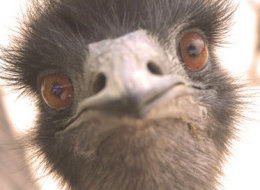
Someone Shot Mary The Emu, And This Animal Rescue Wants Justice

Mary the emu did not like hanging out with the other emus at Rikki's Refuge, a Virginia animal sanctuary about 90 miles southwest of Washington, D.C.
The giant bird -- who was, in fact, male, but named after a refuge volunteer -- came to Rikki's in 2006 after evading capture by animal control in nearby Spotsylvania County.
The 367 private acres at Rickki's are home to more than 1,000 animals, including emus, pigs, horses, sheep, rabbits, cows, cats, dogs and peacocks and at least one very patient goat:

Tuesday, 24 September 2013

Helicopter called in to save seagull stuck in power lines


VIRGINIA BEACH, VA (CNN) - A dramatic rescue unfolded in Virginia Beach Thursday.

A helicopter was called in to save a seagull.

Witnesses reported the bird had been tangled up in the power line since Tuesday.

A spokeswoman for Virginia Dominion Power said the seagull was too high up for a bucket rescue.

So the company sent in the helicopter it usually uses for special equipment.

Workers managed to free the bird.

It was then taken to the Virginia Beach Society for the Prevention of Cruelty to Animals, where it's expected to be treated for its injuries.

Sunday, 26 May 2013

Danville Man Finds Birds Nest in Unusual Place

Danville, VA -- Some resilient birds have found a home in a very strange and dangerous place. 

In Dennis Haley's backyard, you just hear the sounds of birds chirping. And those birds need a little extra help. Luckily, as a Danville police officer, helping comes as a natural instinct for Haley. 

"It was very incessant chirping. You could tell they were hungry," he said. 

When Haley heard lost baby birds calling for assistance, he couldn't help but come to their rescue. 

"We made the bug mush and I've got a pair of forceps that I used to feed them," said Haley. 

But how did those birds just sitting in their nest get so turned-around? Well, their home drove off. 

"It was a surprise," said Haley. 

Haley took his Jeep to work Thursday like any other day, then made a stop at Food Lion. 

"I was in the parking lot, putting the groceries in the back of the Jeep. I heard a lot of chirping and started looking around. And it took a second or two, but I found them in the rear wheel well of the Jeep," said Haley.


Friday, 28 September 2012

Women claim dead animal found in rice package

GOOCHLAND, VA (WWBT) -

Two women say they found a dead animal carcass in their Uncle Ben's Ready Rice packet. They purchased the rice in Goochland.

These pictures in the slide show show what Chris Browning and Brooke Pleasants say came out of the rice. The women think it is a bird, but say state inspectors are testing to see what it is.

"I was ill," said Browning, describing the scene as whatever it was plopped onto her plate. "Just the smell alone was enough to…cause it looked like a cooked creature."

"It has a beak and you could see it's eyeball," added Pleasants. "It was clearly visible that it was a bird."

They say they just opened the rice package and what looked like a bird fell out onto their plate.

"It smelt like rotten flesh just like, just death and pure death," said Pleasants. "Death for days."

"I couldn't even think about eating," added Browning.

The women say they immediately called the store where they got it, Uncle Ben's and the state. The Virginia Department of Agriculture and Consumer Services stopped by to sample the rice.

Continue reading and watch video here: http://www.fox19.com/story/19598163/women-claim-dead-animal-found-in-rice-package