As regular CFZ-watchers will know, for some time Corinna has been doing a column for Animals & Men and a regular segment on On The Track... particularly about out-of-place birds and rare vagrants. There seem to be more and more bird stories from all over the world hitting the news these days so, to make room for them all - and to give them all equal and worthy coverage - she has set up this new blog to cover all things feathery and Fortean.
Showing posts with label dotterel. Show all posts

Friday, 3 May 2019

‘Tame’ mountain birds stop over for Great Orme photo sessions


Bird Notes columnist Julian Hughes of RSPB Cymru reveals what birds have been spotted in the past week and list no fewer than 19 upcoming wildlife events
Andrew Forgrave Rural Affairs Editor
00:08, 30 APR 2019
UPDATED00:11, 30 APR 2019
Hundreds of birdwatchers have been enjoying point-blank views of birds that are en route to their Scottish or Scandinavian breeding peaks.
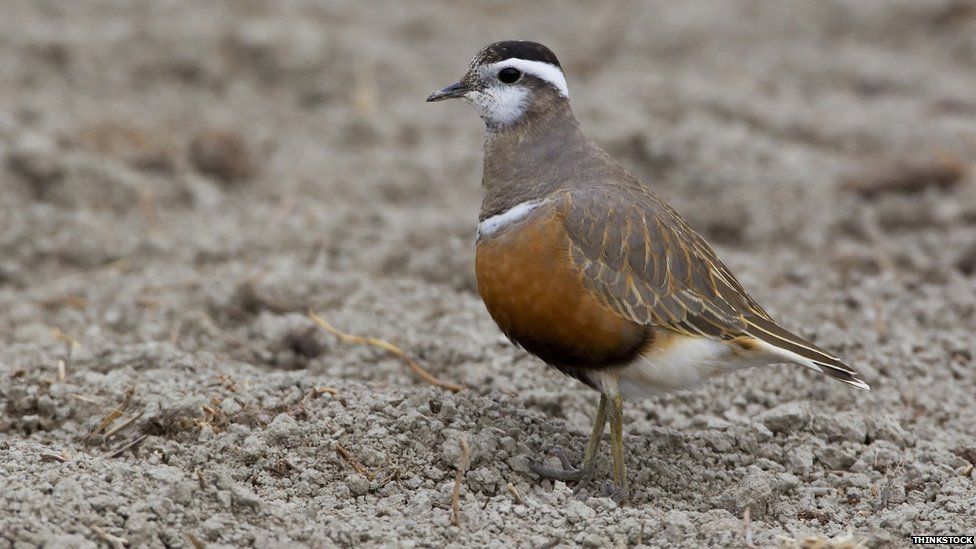
The northern tip of the Great Orme, Llandudno, is a regular spot for migrating Dotterels to stop over, but three present for a week up to Monday proved typically tame - an attribute that made them easy to catch and so vulnerable to being trapped or shot as a delicacy in the Middle Ages.
On Saturday, the Great Orme Three were joined by another seven Dotterels, the whole flock flying out to sea. An hour later the original group returned to the headland.
Small groups of Dotterels (the collective noun is a “trip”) are rare but regular on the Orme, RSPB South Stack and the high peaks of the Carneddau in May or June.
Sightings on Mynydd Hiraethog are less common, so two there on Sunday were unusual.

Sunday, 17 December 2017

'All of us are guardians here' – Auckland Council and locals protecting endangered dotterel birds in urban environment


Wed, Nov 29

Auckland Council and local workers have banded together to protect a group of endangered dotterel birds which have found a new home down on Auckland CBD's waterfront after being pushed out of their native habitat.

The small birds have been forced away from beach nesting zones, settling in some unusual spots around Auckland city.

Senior Biodiversity Advisor for Auckland Council Ben Paris told 1 NEWS there was more than one reason the birds are making the shift inland.

"We think as the pressure on the beaches comes in from urbanisation and the population expands that they're actually coming into more of these urban areas. 

City dwellers urged to be careful around endangered dotterels moving into urban areas
The human housing squeeze could leave our native birds homeless again.

Source: 1 NEWS
"Being squeezed out of their environment by things like people on the beaches and dogs especially are a real big threat for these birds, so this is actually a relatively safe environment for them," Mr Paris said.

There are only around 1700 dotterels left in New Zealand, the birds are found mainly in Auckland and are in the middle of their nesting season, with three chicks making their home with mum and dad in a vacant lot on Auckland CBD's waterfront.


Thursday, 3 December 2015

Taylor Swift film crew denies harming endangered dotterels in New Zealand shoot

The company accused of harming rare birds in New Zealand while shooting a Taylor Swift video says the singer had nothing to do with the incident.

Campaigners claim Cherokee Films took too many vehicles to Bethells Beach near Auckland and could have crushed endangered Dotterel nests.

The company has issued a statement defending Taylor Swift.

It denies causing any harm to the birds and says the singer wasn't involved in the planning for the video shoot.

Dotterel
"Taylor Swift and her management team were in no way at fault and did not do anything that violated permits or ordinances," said Cherokee Films.

"Cherokee Films has a long history of responsible film shoots across Auckland, including Bethells Beach, where we have filmed many times.

"Our shoots have always been with the guidance and support of the relevant local authority - most recently Screen Auckland and Parks - and landowners.

"In acknowledgement of the concern this has added to those in charge of protecting local Dotterel population Cherokee Films will make a donation to the breeding program as we support your concerns."

Wednesday, 11 December 2013

Scottish rare mountain bird declining at rapid rate, says RSPB


DotterelOne of the UK’s rarest and most beautiful breeding birds, the dotterel, is declining at a rapid pace, the latest UK’s bird report reveals.
The report, by the Royal Society for the Protection of Birds (RSPB) said the population of the elusive mountain species had fallen by 40 per cent.

The authors said the breed was found only on the highest mountain tops of Scotland, as such more research is needed to establish what might be causing the decline, and if climate change is a factor.

According to RSPB, the dotterel is unusual in that the brightly-coloured females lead in courtship before leaving the smaller, drabber males to incubate the eggs and raise the young. 

Mark Eaton of RSPB, who described the findings as “concerning”, said new research would be conducted with Aberdeen University and SNH to examine the possible causes of the dotterel decline.

Monday, 23 September 2013

Police seize trapping nets and protected rare birds – CABS

Update: CABS have said the Dotterel trapper from Sarraflu filmed by CABS this morning was identified and is being questioned in the Victoria police station at the moment.

Earlier this afternoon CABS said that its volunteers today caught a bird trapper who was trapping dotterel (Birwina) with a huge net installation near Sarraflu, Gozo. According to the conservationists, early this morning at around 08.15 a Bird Guards team filmed a man in a blue T-shirt – probably in his late twenties – activating a clap net and setting out cages containing live decoy birds.

“Shortly before the arrival of the police the man received a phone call and began to deactivate the nets. As he realised that the officers had almost reached the site, he panicked and fled with the birds in their cages,” reports CABS member Craig Redmond, whose team had discovered the site.

“His flight will not rescue him from the long arm of the Maltese law however. “We have photos of the man setting his net and with the decoy birds in his hand. Identification should be no problem for the police.” Craig Redmond comments.

CABS said that when the police arrived on the site “they discovered four 50 m long clap nets, a pond and plastic decoys and a single live Dotterel in a cage. After an exhaustive search of over an hour the Bird Guards found a further 6 cages and live birds that the man had discarded along the path of his hasty flight.


Sunday, 12 May 2013

Scottish climate change could wipe out rare birds

By JULIA HORTON 
Published on 10/05/2013 00:00

Some of Scotland’s rarest birds could be wiped out by the end of the century as a new UK report highlights “profound” climate change in the Highlands, experts have warned.

Ptarmigan, dotterel and snow bunting have already been forced to the tops of the highest Scottish peaks as global warming has shrunk the cooler high- altitude habitat which they need to survive.
snow bunting

Experts yesterday published a new report highlighting numerous accepted predictions that climatic conditions in the birds’ territory will have altered so much that within 100 years they will be squeezed out completely because there will be nowhere left for them to go.

The latest warning was made in the Terrestrial Biodiversity Climate Change Impacts Report Card, the first assessment of its kind in the UK bringing together research by 40 scientists to produce an overview of the affects of climate change on biodiversity now – and predictions for the future.

Environmental groups in Scotland, including Scottish Natural Heritage (SNH) which helped to create the report card, voiced grave concerns over the affect of the changing climate on the birds’ niche Highlands habitat.

Professor Des Thompson, SNH principal advisor on biodiversity, stressed that “generations of study” were needed to get a clear picture of the effect of climate change on the Scottish mountains.

But he added: “From what we know, yes, there have been changes and, yes, they appear to have been profound, but we need further time to appreciate all the factors at work here. A 30- or 50-year period of study is in effect a very small snapshot but what is extraordinary is seeing how this habitat has changed over quite a small timeframe.


Saturday, 30 March 2013

Rare birds recovering from maritime oil spill

One of the world's rarest birds appears to have recovered in numbers after New Zealand's worst-ever maritime environmental disaster, experts announced Wednesday.
Monitoring of the New Zealand dotterel population, which is endangered and estimated to number just 1,700 in the wild, showed birds captured after the oil spill from a Liberian-registered cargo ship in October 2011 had recovered well, according to the Massey University.

About 120 dotterels were in the area when the Rena grounded on the Astrolabe Reef, off the eastern North Island, and 60 were taken into captivity to keep them out of the path of the oil and kept as an "insurance" population.

Relocation of the birds and release elsewhere would have only resulted in them quickly returning to their breeding territories, said a statement from the university.

Independent shorebird ecologist Dr. John Dowding, who had been monitoring the birds since they were released at the end of 2011, said more than three-quarters of the dotterels taken into captivity were alive a year later.

"There were some losses in the first month after release -- probably due to the respiratory condition that killed six birds while they were captive -- but after that survival has been normal, " Dowding said in the statement.

Once dotterels begin breeding, they typically remain at the same site for many years.

"As it was not always possible to catch both birds in a pair, some pairings were disrupted during the pre-emptive capture," he said.

However, most of the survivors were paired and breeding again and numbers at most of the important sites were similar to those before the grounding.


Read more: http://www.china.org.cn/environment/2013-03/28/content_28385100.htm

Friday, 23 November 2012

Rare bird eggs found on beach


Two rare birds have laid eggs at Wairarapa's Riversdale Beach and a temporary fence has been built to protect them.

Two nationally endangered New Zealand dotterel (tuturiwhatu) laid three eggs on a precarious sandspit between the lagoon at Riversdale and the sea.

They were spotted at the beach last month and began attempting to incubate three eggs just north of the Riversdale Surf Club last week.

Greater Wellington Regional Council staff and residents have done all they can to protect the nest from vehicles and dogs, although little can be done about the elements.

Regional council biodiversity adviser Robyn Smith said the birds usually lay eggs in a small scrape in the sand on exposed beaches but many of them choose a safer spot than this pair.

"We've placed a temporary fence about 20 metres back from the nest and put up some signs to give the birds a bit of space from vehicles, people and dogs. However, there isn't much we can do about the lagoon or the sea. If there's heavy rain or heavy seas, the nest will probably get inundated," she said.