As regular CFZ-watchers will know, for some time Corinna has been doing a column for Animals & Men and a regular segment on On The Track... particularly about out-of-place birds and rare vagrants. There seem to be more and more bird stories from all over the world hitting the news these days so, to make room for them all - and to give them all equal and worthy coverage - she has set up this new blog to cover all things feathery and Fortean.
Showing posts with label Cassin's auklets. Show all posts

Monday, 5 January 2015

Sea bird die-off puzzles scientists

POSTED ON JANUARY 4, 2015
The Associated Press
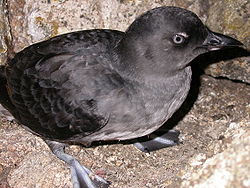

Cassins Auklet.jpgSALEM, Ore. — Scientists are trying to figure out what’s behind the deaths of seabirds that have been found by the hundreds along the Pacific Coast since October.

Mass die-offs of the small, white-bellied gray birds known as Cassin’s aucklets have been reported from British Columbia to San Luis Obispo, Calif.
It’s normal for some seabirds to die during harsh winter conditions, especially during big storms, but the scale of the current die-off is unusual.

“To be this lengthy and geographically widespread, I think is kind of unprecedented,” Phillip Johnson, executive director of the Oregon Shores Conservation Coalition, told the Salem Statesman Journal. “It’s an interesting and somewhat mysterious event.”

The birds appear to be starving to death, so experts don’t believe a toxin is the culprit, said Julia Burco, a wildlife veterinarian for the Oregon Department of Fish and Wildlife.

But why the birds can’t find food is a mystery.

Monday, 17 November 2014

High ocean temperatures endangering seabirds?


POSTED: 11/16/2014 02:47:43 PM PST0 COMMENTS| UPDATED: A DAY AGO

Small seabirds are washing up dead on local beaches, an unusual phenomenon that suggests high ocean temperatures are causing starvation.

Cassins Auklet.jpg
The hardy gray birds, call Cassin's auklets, are rarely sighted in offshore waters. They normally live in the distant open ocean, feeding on small crustaceans in the cold Pacific Ocean.

But this month, large numbers of thin, dying or dead birds are being seen along our coast. Most reports come from San Mateo County beaches, such as Pescadero's Gazos Creek and Pacifica's Linda Mar. Bodies also have been found on the coasts of Marin and Sonoma counties.

A preliminary analysis of the bodies of five young birds by the National Wildlife Health Center concluded that they were in poor or emaciated body conditions, "consistent with a lack of zooplankton," according to Beach Watch, a monitoring project of the Farallones Marine Sanctuary Association, which found and submitted the birds.

Barbara Kossy, of Moss Beach, recently spotted one while she kayaked on Half Moon Bay.

"This bird seemed sort of listless and didn't react in any way," said Kossy, a board member of the San Mateo Resource Conservation District. It was an unusual sighting, and she kept her distance.

"Typically, they look at you -- or, if startled, they either fly or dive," she said. "The bird was clearly unwell."