As regular CFZ-watchers will know, for some time Corinna has been doing a column for Animals & Men and a regular segment on On The Track... particularly about out-of-place birds and rare vagrants. There seem to be more and more bird stories from all over the world hitting the news these days so, to make room for them all - and to give them all equal and worthy coverage - she has set up this new blog to cover all things feathery and Fortean.
Showing posts with label endangered species act. Show all posts

Thursday, 16 August 2018

Piping Plover Newly Threatened in Proposed Changes to Endangered Species Act


By TRIMMEL GOMES WISCONSIN NEWS CONNECTION • JUL 25, 2018

MADISON, Wis. - Bird enthusiasts and conservation groups say the Trump administration's plans to change the Endangered Species Act would make it more difficult to recover threatened or endangered birds.

The proposal, announced last week by the Interior and Commerce departments, would end the practice of extending similar protections to species regardless of whether they are listed as "endangered" or "threatened."

Steve Holmer, vice president for policy at the American Bird Conservancy, said those distinctions matter, especially in the case of the piping plover, which is considered endangered around the Great Lakes and threatened in other areas of the country. "It's a very charismatic bird that nests on beaches," he said, "but now, under this rule, it could be easier to remove some of that habitat because they wouldn't look at it one project at a time. They would try to bury it within the whole entire habitat."

Deputy Interior Secretary David Bernhardt described the proposal as an effort to fulfill President Donald Trump's executive order to scale back government regulation. Holmer said he'll make his concerns known during the 60-day public comment period through the U.S. Fish and Wildlife Service and another government website.

Wednesday, 25 May 2016

One Small Bird Faces Off With the Lone Star State to Keep Its Protection

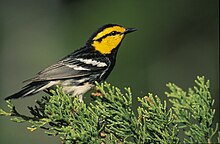
The Endangered Species Act is all that stands between the Golden-cheeked Warbler and extinction.
    
May 23, 2016

Dendroica chrysoparia1.jpg
A well-funded group of anti-conservation interests wants to strip the warbler of its endangered status.
And it may be the first of many victims.

In the four decades since the Endangered Species Act (ESA) became law, it hasn't just protected the hundreds of species that have found themselves on the Endangered Species List; it has also inspired proactive collaboration to protect species before a listing becomes necessary. Last year, when the Greater Sage-Grouse was able to remain off the list thanks to a groundbreaking joint effort by different interest groups to develop a plan to protect its habitat, it was a major victory for birds, landowners, and conservationists alike.

But the Greater Sage-Grouse success doesn't mean the ESA is obsolete—not by a long shot. The protections of the ESA are crucial to the survival of species like the endangered Golden-Cheeked Warbler, a small pin-striped bird that breeds and rears its young exclusively in Texas, which has found itself at the center of a delisting effort by groups that have an interest in developing its habitat.

In 
an article for The Huffington Post, Audubon CEO David Yarnold outlines the challenges facing the Golden-cheeked Warbler:

"The U.S. Fish and Wildlife Service put the warbler on the endangered species list in 1990 because its habitat in Hill Country was being sliced up and sold off to developers at such an alarming rate.

Even with the protection of the act, an estimated 1.5 million acres (nearly a third of the Golden-cheeked Warbler’s home range) disappeared between 1999 and 2011.
And now a coalition of groups and individuals would like to strip the warbler of its safety net altogether so developers have an easier time paving over more Hill Country habitat. 

The little songbird is up against some Goliaths that include former Texas Comptroller, Susan Combs and current Texas Land Commissioner George P. Bush—grandson of former President George H. W. Bush—along with a foundation supported by billionaire David Koch."


Thursday, 31 December 2015

California's 'Passenger Pigeon' Wins Protection... For Now

December 14, 2015 4:00 PM

A vanishing songbird that was once the most common bird in California is being formally considered for protection under the state's Endangered Species Act. On Friday, the state's Fish and Game Commission agreed to make the tricolored blackbird a candidate for listing under CalESA, reversing a controversial decision made in June to let protections lapse.

The tricolored blackbird (Agelaius tricolor), which once numbered in the uncountable millions in California, has dwindled to the point of near-extinction as a result of damage to its wetland and grassland habitat throughout the state. Though individual flocks may still number in the tens of thousands, that seeming abundance actually makes the tricolored vulnerable: by gathering in massive breeding colonies on the agricultural lands that have replaced its native habitat, the bird can lose huge chunks of its population to a single ill-timed pass of a tractor.

"There's no question that tricolored blackbirds desperately need this long-overdue protection to avoid their slide toward extinction," said Ileene Anderson, a senior scientist with the Center for Biological Diversity, which had petitioned the Fish and Game Commission to list the bird. "The California Fish and Game Commission made the right decision, based on the overwhelming science documenting the ongoing population declines of these birds."

"The Fish and Game Commission made the right decision," said Brigid McCormack, executive director of Audubon California on Friday. "We are pleased that this consideration triggers protections for this struggling species."

Friday, 14 November 2014

Feds list bird as threatened

BY MATT HILDNER THE PUEBLO CHIEFTAIN
Published: November 13, 2014; Last modified: November 13, 2014 11:30PM


VILLA GROVE — Federal officials Wednesday listed the Gunnison sage grouse as threatened under the Endangered Species Act.

While roughly 80 percent of the birds reside in the Gunnison basin, a small population estimated at 15 birds by the U.S. Fish and Wildlife Service in 2012 lives on the south side of Poncha Pass.

Service officials said in a press release that the birds in small populations like the one on Poncha Pass and others scattered on the Western Slope needed the protections of the act to ensure the species’ survival should the Gunnison basin population decline.


Wednesday, 2 July 2014

Cockatoos Get Protection to Curb Illegal Pet Trade

By RAMONA YOUNG-GRINDLE 

WASHINGTON (CN) - Three species of cockatoos have received final listing status under the Endangered Species Act, according to the U.S. Fish and Wildlife Service. The Philippine cockatoo and the yellow-crested cockatoo are listed as endangered, while the white cockatoo is listed as threatened.

Because the white cockatoo is listed as threatened, the USFWS has also issued a special rule for that species under the ESA to allow import, export and interstate commerce of the birds without a permit if they are captive-bred or already in captivity at the time of listing, as long as those activities were in compliance with the Convention on International Trade in Endangered Species of Wild Fauna and Flora (CITES) and the Wild Bird Conservation Act, according to the agency's press release. The ESA's special rule clause is not applicable to species listed as endangered.

The Friends of Animals (FOA) petitioned the USFWS to list the cockatoos and 11 other parrot species in 2008. In 2010, the FOA and the WildEarth Guardians sued the agency for failure to issue a 12-month finding on the petition. A 2010 settlement agreement outlined a timetable for determining listing status for the species and the three cockatoos were proposed for listing in August 2011, according to the action.


Sunday, 23 March 2014

Court backs Cape Wind permit, orders review of bird, whale impacts

Friday, March 14, 2014

By:

A U.S. District Court judge today ruled that two federal agencies violated the Endangered Species Act in their review of Cape Wind but rejected the request of the project’s opponents to vacate the Interior Department’s granting of the nation’s first offshore wind lease to Cape Wind.

Judge Reggie B. Walton ruled that the U.S. Fish and Wildlife Service and the National Marine Fisheries Service need to revisit Cape Wind’s impacts on migrating birds and endangered right whales in Nantucket Sound due to violations of environmental protection law.

“This is good news for environmentalists and for all of us who want to see the fragile and unique environment of Cape Cod protected,” said Audra Parker, president and CEO of the Alliance to Protect Nantucket Sound. “The court has validated that federal agencies have taken unacceptable shortcuts in their review of Cape Wind.”

Walton ruled against the coalition of environmental advocates and other groups, however, in their four lawsuits challenging Cape Wind’s permitting approval by the Department of Interior, although those rulings may be appealed.

“These are incredibly important legal victories for Cape Wind,” said Cape Wind President Jim Gordon. “It clears the way for completing the financing of a project that will diversify New England’s electricity portfolio by harnessing our abundant and inexhaustible supply of offshore wind. It will help pave the way for other coastal regions to utilize this clean energy resource for energy independence, a healthier environment, and new jobs.”

Wednesday, 19 March 2014

RARE BIRD SPECIES: States' Plan to Save Rare Bird Stirs Debate in Texas

March 13, 2014

Environmental officials in five states, including Texas, say surging interest in a conservation plan to save the quickly disappearing lesser prairie chicken should persuade the federal government not to list the bird as "threatened" under the Endangered Species Act. 

The wide-ranging plan aims to help energy companies, developers and landowners, who say such a designation could threaten their activities in areas where the chicken roams, which include West Texas and the Panhandle. If the bird is listed, penalties for harming it could include heavy fines and even jail time. 


Sunday, 2 March 2014

ENDANGERED BIRDS: Wildlife photographer pleads guilty to violating Endangered Species Act

Jim Neiger could face one year in prison


female (Wikipedia)
KISSIMMEE, Fla. —A local wildlife photographer has entered a guilty plea to violating the Endangered Species Act.

According to court papers, the photographer in question was observed more than a half dozen times by a group of researchers harassing an endangered bird and violating federal law.
Lake Toho is paradise for lovers of exotic bird species. But in some cases, you must keep your distance.

The Endangered Species Act requires people to stay at least 500 feet from nests of the Snail Kite, an endangered raptor.

According to federal court papers, eight times between 2010 and 2011, a group of University of South Florida researchers observed Kissimmee wildlife photographer Jim Neiger wedge his pontoon boat into the reeds near snail kite nests.


Saturday, 13 April 2013

Protection considered for bird that needs wildfire


By JEFF BARNARD AP Environmental Writer
Posted:   04/08/2013 03:12:04 PM PDT
Updated:   04/08/2013 06:27:26 PM PDT

GRANTS PASS, Ore.—A woodpecker that depends on intense wildfires for the standing dead trees where it feeds on insects is being considered for protection under the Endangered Species Act.

The U.S. Fish and Wildlife Service said Monday it will take a closer look at the black-backed woodpecker. A decision is due in a year but could take longer due to budget cuts.
Fish and Wildlife is considering two populations of the woodpecker—one inhabiting the Sierras of California and eastern Cascade Range of Oregon, and another in the Black Hills of South Dakota and Wyoming. Another Northern Rockies population is not under consideration.

The agency said conservation groups that petitioned to protect the birds presented substantial scientific information that they were suffering a loss of habitat because of fire suppression, salvage logging that removes fire-killed trees, and thinning to reduce the intensity of wildfires.

The decision is giving conservation groups hope the bird can force changes in national wildfire policy the same way the northern spotted owl overhauled the idea of logging old-growth forests.

Chad Hanson, staff ecologist of the John Muir Project of the Earth Island Institute, said the woodpecker has already figured in lawsuits to stop salvage logging.

"We hope as a result of this, the Forest Service will in fact not only pay more attention to species like this, but do a proactive job of educating people that when fire happens, it is not a bad thing, wildlife rely upon it," Hanson said. "These notions of catastrophic wildfire are really just politics and ignorance, and reflect outdated thinking."

Forest Service spokesman Larry Chambers said the agency's wildfire policy was not changing because the bird was not yet listed as a threatened or endangered species. He added that the agency already took "science-based actions to protect its habitat."

The agency has also said budget cuts this year will force it to let more fires burn—a prospect Hanson said would benefit the woodpecker and a broad range of species.

Continued:  http://www.mercurynews.com/breaking-news/ci_22981392/protection-considered-bird-that-needs-wildfire

Thursday, 14 March 2013

This Bird Has Spent Nearly 20 Years Waiting For Endangered Species Protection


Hundreds of species of plants and animals have been waiting literally decades to even be considered for protection under the Endangered Species Act. Thankfully, that's about to change.

That guy up there is a Kittlitz's murrelet, a small bird in the auk family native to the rocky southern coast of Alaska, from Anchorage out to the Aleutian Islands, and also along the coast on the Russian side of the Bering Sea. It's one of about 25,000 Kittlitz's murrelets in the world, we think. The species has had a very difficult time in the past few decades; it's dependent on glaciers, which are melting due to global warming, for one thing. It's estimated that the Exxon Valdez oil spill back in 1989 killed as many as 10 percent of the global population. Its population has been rapidly, disastrously declining.

The Endangered Species Act, signed into law in 1973 by President Nixon, is designed to protect animals just like Kittlitz's murrelet. The law has had some success; several species, including the bald eagle, grey wolf, and whooping crane, have all come back from the brink of extinction thanks to the Endangered Species Act. But the Kittlitz's murrelet isn't on that list, because it's not officially a protected species. Instead, it's been a candidate for consideration...since 1994.

While the Kittlitz's murrelet has sat on the candidate list, waiting to be considered for federal protection, its population has decreased by an estimated 80 to 90 percent.

And it's just one of several hundred species that have sat on the wildly backlogged candidate list. The Dakota skipper butterfly has been on the candidate list since 1975. It's now extinct in Indiana and Iowa. The eastern massasauga rattlesnake has been a candidate since 1982. The list goes on, for hundreds of species of birds, reptiles, plants, insects, and every other corner of the natural world.

The problem of the backlog isn't due to a single cause; the individual departments in the United States Fish and Wildlife Service and the National Oceanic and Atmospheric Administration tasked with doing this kind of work are extremely underfunded. Sometimes they have to choose between spending money to protect species that are on the list, or deciding whether to go into the backlog and add new species--and choose the former. Management issues have plagued the efforts; during President Bush (43)'s two terms, control of the program was taken away from the department heads and given to political appointees. Pressure from lobbyists, especially from the oil industry, has also slowed the program's progress.

Continued:  http://www.popsci.com/science/article/2013-03/bird-has-been-under-consideration-endangered-species-protection-nearly-20-years

Sunday, 13 January 2013

Utah officials grouse over proposal to list bird as endangered


SALT LAKE CITY — Brilliantly plumed and about the size of a chicken, the imperiled Gunnison sage grouse is being proposed for listing under the Endangered Species Act, a move praised by environmentalists and bemoaned by Utah officials.

Only about 120 of the birds exist in Utah in the southeastern section of the state in San Juan County, where an active, on-the-ground conservation effort has been under way since the mid-1990s, before the bird was even recognized as a distinct species in 2000.

“We did everything we could to preclude a listing under the Endangered Species Act, but we were fighting an uphill battle,” said Kevin Bunnell, wildlife section chief of the Utah Division of Wildlife Resources.

In its announcement of the proposed listing, the U.S. Fish and Wildlife Service said the bird is in danger of extinction, and in 2006 the National Audubon Society named it as one of North America’s 10 most endangered birds.

Biologists believe the bird has lost 90 percent of its historic habitat and now exists in only seven distinct populations.